
Our dishwasher broke on a Friday, and the repair quote was $240 for a part I had never heard of, plus labour. I said I would think about it. That was fourteen months ago, the dishwasher is still sitting there unrepaired, and I have not missed it once.
This is not an article against dishwashers. For a large family they make obvious sense, and I understand why most kitchens have one. It is an article about what happened when a household of two stopped using theirs — the money, the water, the noise and the strange calm of a sink full of warm water.
Key takeaways
- A dishwasher cycle costs roughly 30 to 50 cents in electricity, water and detergent — over $150 a year for a daily cycle.
- Hand-washing two people’s dishes takes about ten minutes a day, less than loading and unloading the machine.
- Our water and power bills both fell slightly once the machine stopped running daily.
- The kitchen got quieter, the sink got cleaner, and the glasses stopped coming out cloudy.
- A broken appliance is a good moment to test whether you actually need it.

What a cycle actually costs
Nobody thinks about the cost of a dishwasher cycle because it is small: roughly 30 to 50 cents once you add electricity, water, detergent and rinse aid. Run it daily and that is $110 to $180 a year — before repairs and parts. Our machine was ten years old and needed a $240 repair, then a new seal six months later for $90. The machine was costing more than the convenience was worth.
The honest comparison is not dishwasher versus nothing; it is dishwasher versus ten minutes at the sink. For a household of two, the dishes fit in one sink of hot water, and the whole job takes less time than loading the machine, unloading it and putting everything away. The machine saved no time at all — it just moved the work around. The same small-costs-add-up logic sits behind the best ways to save money on utilities, where the wins are all small and all real.
The noise nobody notices
A dishwasher is loud in a way you stop hearing. Ours hummed and sloshed for ninety minutes every evening, right through dinner and conversation, and we had all learned to talk over it. The first quiet evening after it broke felt strange — then it felt peaceful. The kitchen became a room you could think in again.
Noise is the hidden cost of every appliance, and it adds up across a house: the fridge, the washing machine, the extractor fan, the dishwasher. I had not realised how much of our background stress was background noise until some of it stopped.
The water question
Everyone told me hand-washing wastes more water than a dishwasher, and the studies mostly agree — for a full machine. But we never ran a full machine. Two people do not generate a full load a day, so we either ran it half-empty or waited two days while dirty plates piled up and the smell grew.
Hand-washing uses one sink of hot water for the whole day’s dishes, with a quick rinse under a running tap kept short. Our water bill fell by a few dollars a month — not a fortune, but a fall, not the rise everyone predicted. The efficient choice depends on how you actually live, not on the laboratory test. A machine designed for a family of five is not efficient for two people who eat simply.
What I do instead
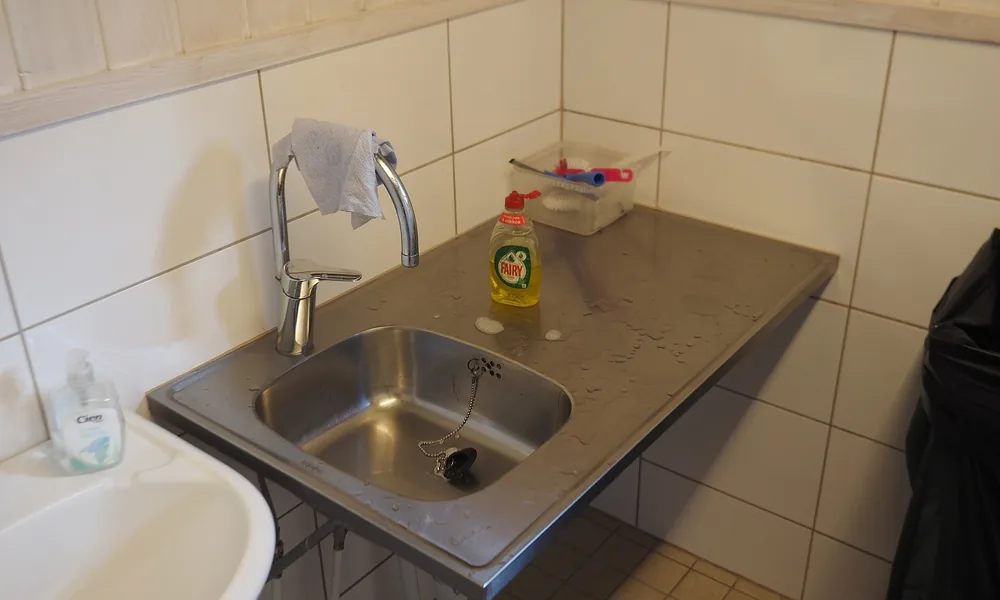
The routine is simple and it has not changed in fourteen months. After each meal, the plates go into the sink, I wash them in hot soapy water while the kettle boils for tea, and they dry on the rack. Ten minutes a day, usually less. Pots get a soak while we eat. Glasses get washed first, while the water is cleanest, and they come out clearer than the machine ever left them.
Nobody here enjoyed emptying a dishwasher — the steam, the wet plastic, the mugs that fill with water upside down. Now clean dishes go straight from the rack to the cupboard as they dry. The kitchen stays tidier, because a sink full of clean water invites washing up and a full dishwasher invites leaving things until later.
What the money does now
Between the cycles, the detergent, the rinse aid and the repairs, stopping saves us roughly $250 a year. It is not life-changing money, and I would not pretend otherwise. But it is $250 we used to spend without thinking, and it now goes into the same holiday pot as every other small saving.
The bigger saving is attention: one less machine to maintain, one less thing that can break, one less subscription to detergent and parts. The same logic applies to the rest of the house: when something breaks, ask whether you need it at all before you pay to fix it — the best ways to save money in 2026 all start with that one question.
What I miss — honestly
I miss it on the big days. After a dinner party for eight, hand-washing a mountain of plates while everyone else relaxes is a lonely job, and on those nights I wish the machine still worked. I miss it when I am ill, too: a sink of dishes is the last thing anyone wants with a fever.
What I do not miss is the noise, the smell of a machine left closed for two days, or the repair bills. If we move house or the household grows, I will happily use a dishwasher again — but I will use it as a tool I choose, not a machine that runs because it is there. Stopping taught me the same lesson as stopping buying things I don’t need: the things you stop doing can matter as much as the things you start.
Your dishwasher checklist
- Work out your real cost per cycle: power, water, detergent, rinse aid.
- Count how often you run a half-empty machine — that is the waste.
- Try two weeks without the machine before you pay for a repair.
- Wash glasses first, while the water is cleanest.
- Put the saved money somewhere visible, so the trade feels real.
Frequently asked questions
Does hand-washing dishes use more water than a dishwasher?
A full dishwasher usually uses less water than hand-washing a full load. But a household that rarely fills the machine often uses less water washing by hand, because a half-empty cycle wastes the saving.
How much does a dishwasher cost to run per year?
A daily cycle costs roughly $110 to $180 a year in electricity, water and detergent, before repairs and parts. Older machines cost more, and a single repair can add $200 or more.
Is it hygienic to wash dishes by hand?
Yes, with hot water, soap and a clean drying rack. Wash glasses first, change the dishcloth regularly, and let dishes air-dry rather than drying them with a damp towel.
The bottom line
I stopped using the dishwasher because a $240 repair made me ask whether two people needed a machine at all. Fourteen months later, the answer is no: ten minutes at the sink, $250 a year saved, a quieter kitchen and glasses that actually come out clean. The machine is still there, unrepaired, and it has become a useful reminder — when something breaks, check whether you need it before you pay to fix it.

Keep what speaks to you.
Leave room for your own perspective.