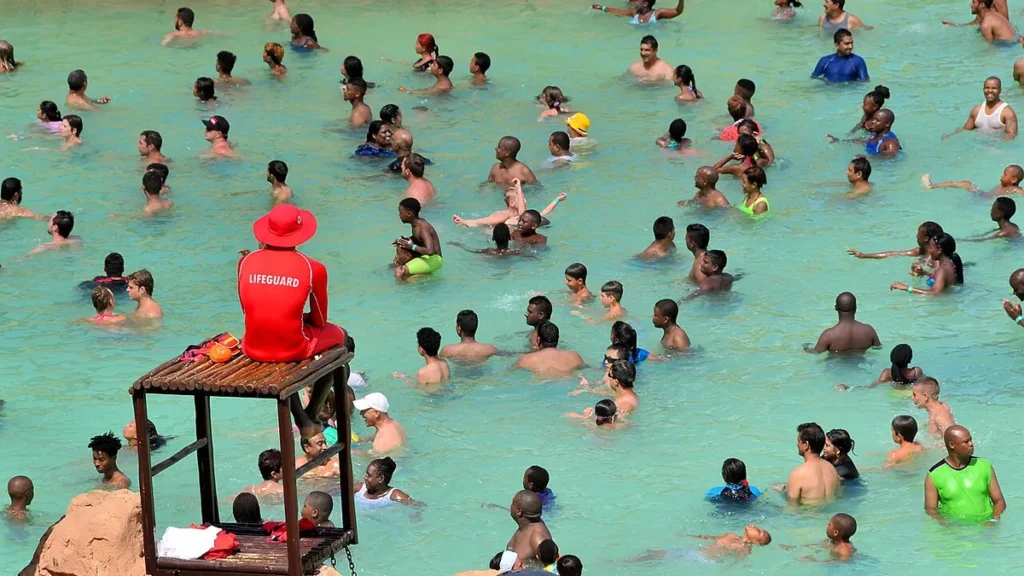
Lifeguarding is one of the most straightforward ways to get paid for being in and around the water. The work is active, the hours are often flexible, and the barrier to entry is a single recognised qualification.
This guide walks through the process in order: checking you are ready, getting certified, finding your first job, working out what you will earn, and planning the year so the money does not stop when summer ends.
First, Check You Can Do the Job
Before you spend money on a course, check the basic requirements. Most lifeguard courses ask you to swim around 200 metres without stopping, tread water, and retrieve an object from the bottom of the pool. If you cannot yet swim that far, spend a few weeks building up at a public pool.
Many employers hire lifeguards from 16, and some take trainees from 15, but you will usually need to be 16 or older to work unsupervised on the pool deck. You do not need to be a competitive swimmer, but you do need to be confident in the water and fit enough for a long shift. Expect a background check too, since most pool and camp jobs involve children.
Choose the Right Certification
The certificate is the whole key to this job. Without it, no pool, beach, or water park can put you on duty. Start with a pool lifeguard qualification unless you already know you want beach work. Pool courses are shorter, cheaper, and accepted by the largest number of employers, including leisure centres, schools, hotels, and gyms.
Look for a course run by a recognised national body, such as the Red Cross or the Royal Life Saving Society, or one your local employers explicitly accept. Ask two or three employers which certificate they want before you book. A standard pool course usually takes four to six days and typically costs between $200 and $400 including the exam.
Get Certified, Step by Step
Book the course at least two months before you want to start earning. Courses fill up fast in spring, when everyone is preparing for summer, and a full course means waiting for the next one. When you book, confirm what is included: the training, the exam, the first aid element, and the certificate itself.
The course mixes classroom learning with practical work in the water. You will learn to scan a pool, spot a swimmer in trouble early, carry out rescues with and without equipment, and manage a spinal injury in the water. The exam usually has a written paper, a timed swim, and a practical rescue assessment. Once you pass, your certificate is normally valid for two years.
Find Your First Lifeguard Job
Start applying as soon as you are booked on a course, not after you pass. Employers hire ahead of the season, and the best shifts go to the people who applied first. The main employers are council and community pools, leisure centres, schools, hotels, holiday parks, summer camps, and water parks. Check their websites, and walk in and ask too.
Keep your application short. State your certificate and its expiry date, your availability, and any experience around water, even if it is only swimming, volunteering, or helping at a swim club. The interview is usually practical: a swim test, a short rescue exercise, and questions about how you would handle a difficult swimmer. A trial shift often follows. Turn up on time, scan the water properly, and stay focused when nothing is happening.
Work Out What You Will Earn
Pool lifeguarding typically pays $15 to $25 per hour, with beach and waterfront work often paying a little more, at $18 to $30 per hour. At fifteen to twenty hours a week, that works out to roughly $900 to $2,000 a month before tax.
Your real income depends on hours, not just the hourly rate. When comparing offers, ask how many hours are guaranteed, how shifts are allocated, and whether the job runs through winter. A slightly lower rate with guaranteed year-round hours is often worth more than a high summer rate that ends in September. Once you have a season behind you, you can raise your rate by adding a swim instructor qualification and teaching lessons, which typically pay $30 to $75 per hour. If teaching appeals to you, read our guide to the best ways to make money as a lifeguard to compare the routes side by side
Plan for the Seasons
The hardest part of earning as a lifeguard is the calendar. Outdoor pools, beaches, and water parks peak in summer and quieten down sharply in winter, so a guard who only works outdoors can lose most of their income for months. The fix is to line up indoor work before the outdoor season ends. Indoor pools, school pools, and hotel leisure clubs run all year, and they start hiring for winter in late summer, so apply in August and September rather than waiting until the outdoor work dries up.

A simple year looks like this: beach, outdoor pool, or water park work from late spring to early autumn, then indoor pool shifts through winter Seasonal work follows the same pattern in other outdoor jobs. Our guide on how to make money as a gardener shows another seasonal trade where planning the quiet months matters just as much as the busy ones.
Grow the Income Without Changing Jobs
You do not need to leave lifeguarding to earn more from it. The usual path is to add one qualification at a time and let each one open a higher-paying duty. After a season on the pool deck, the next step for many guards is a swim instructor qualification, then a coaching qualification, and then a supervisor or head lifeguard role, which typically pays $20 to $35 per hour and brings steadier year-round work.
If management does not appeal to you, teaching first aid and CPR courses is another way up: instructors typically earn $25 to $50 per hour, and the work runs all year round. Keep a simple record of your shifts, qualifications, and renewal dates: managers promote the guard whose paperwork is in order.
Mistakes That Cost New Lifeguards Money
The first mistake is letting a certificate lapse. Renewal courses are shorter and cheaper than the full course, but only if you renew before expiry. Miss the date and you may have to start again, and you cannot work while you are unqualified. The second mistake is turning down indoor winter work because the hours look dull next to a busy summer. Winter shifts keep your income steady and your name known to managers, and they are often the route to a supervisor role.
The third mistake is accepting shifts without checking the pay: confirm the rate, the overtime rate, and how you will be paid before your first shift, and keep your own record of hours worked. Finally, do not spend your first pay on extra qualifications you have not yet decided to use. One add-on at a time, chosen because an employer or a client has already asked for it, is a far better investment than three certificates and no work to use them in. The same habit applies in our guide to the best ways to make money as a tour guide: plan the peaks and use the quiet season to qualify for the next step.
Lifeguarding pays best when you treat it as a trade, not a summer job. Get the right certificate, apply early, keep your paperwork current, and line up your winter work before summer ends. Do that, and the pool deck becomes a reliable income that grows a little every year

Keep what speaks to you.
Leave room for your own perspective.


