The best AI tools for toilet installation startups in 2026 do the quiet work that used to eat a new founder’s evenings: answering the phone while a crew is on its knees setting a bowl, turning a photo of a cracked flange into a firm quote, keeping wax rings and closet bolts on the van, and reminding a customer that their new water-efficient toilet is due its first check. A toilet installation startup lives on jobs that are small, frequent, and easy to lose to a faster competitor, so the software that wins is the software that books the job, prices it correctly, and follows up before the customer forgets your name.
A toilet install looks simple from the outside, and that is exactly why it punishes sloppy operations. The rough-in measurement has to be right before the toilet is ordered, because a 10-inch rough-in will not accept a 12-inch model without an offset flange or a different unit. The flange has to sit level and sound, the wax ring has to seal on the first set, and the supply line, shut-off valve, and floor condition all have to be checked before the old toilet comes out. When any of that is handled from memory or a paper notebook, the crew arrives with the wrong model, the job runs over, and the margin on a fixed-price install disappears in a second trip.
This guide compares the best AI tools for toilet installation startups across the work a young company actually does: quoting installs from photos and rough-in measurements, scheduling one-van and two-van days, tracking flanges, wax rings, and water-efficient models, selling bidet seats as an upgrade, invoicing on site, and winning the reviews that fill the next week. Every tool was judged on the same practical questions: does it save time on a real toilet install, does it work from a phone on a job site, and can a small crew learn it in a week. Owners who want the wider trade picture can compare our guide to the best AI tools for plumber startups, but everything below is chosen for toilet installs first.
Key takeaways
- Start with one job platform, one AI answering and messaging tool, and one review tool. Those three carry most of the revenue for a new toilet installation startup.
- Quote speed wins toilet installs. A clear fixed price sent within the hour beats a perfect price sent the next day, because most customers are replacing a broken toilet.
- Measure the rough-in before you quote the model. A wrong rough-in is the most expensive avoidable mistake in toilet installation.
- Sell the bidet seat and the water-efficient upgrade at the quote stage, not after the install, when the customer has already decided what to spend.
- Keep the customer record single. One record per home, with every measurement, photo, model number, and invoice in the same place, stops second trips and forgotten follow-ups.

How the best AI tools for toilet installation startups compare
Use this table to narrow the list before reading the detail. The right choice depends less on which tool has the longest feature list and more on the size of your crew, the share of emergency replacements in your diary, and whether you need deep reporting or simply a tidy schedule that never loses a job.
| Tool | Best for | Standout AI feature | Starting point |
|---|---|---|---|
| Jobber | Small toilet install crews starting out | AI quote drafting and smart scheduling | Affordable monthly plans |
| Housecall Pro | Fast-growing replacement businesses | AI dispatch and automated follow-ups | Mid-range monthly plans |
| ServiceTitan | Larger crews and multi-van teams | AI call scoring and pricebook automation | Premium, quote-based pricing |
| ServiceM8 | One-van and two-van startups | AI job cards and photo workflows | Low-cost monthly plans |
| FieldEdge | Dispatch-heavy install teams | AI routing and flat-rate pricebook | Mid-range monthly plans |
| Tradify | Fast quotes from photos and price lists | AI quote templates and job tracking | Low-cost monthly plans |
| Fergus | Installers who price from a parts catalogue | AI job costing and supplier price updates | Affordable monthly plans |
| Commusoft | Maintenance plans and repeat visits | AI reminders and service scheduling | Mid-range monthly plans |
| Thryv | Startups that need marketing as well | AI review requests and customer messaging | Mid-range monthly plans |
| NiceJob | Review-led growth on a small budget | Automated review invites after every install | Low-cost monthly plans |
How we chose the best AI tools for toilet installation startups
Every tool in this guide was judged on the same practical questions: does it save time on a real toilet install, does it work from a phone on a job site, does it cost less than the work it replaces, and can a small team learn it in a week. We favoured tools with clear pricing, a free trial or a low starting plan, and features built for short fixed-price jobs rather than whole-house construction.
We also weighted toilet-specific work. Rough-in measurements, flange condition, wax ring stock, water-efficient model selection, and bidet seat upsells matter far more here than they do in general plumbing software. Tools that handle those details well earned their place here, even when a bigger platform looked more impressive on paper.
The best AI tools for toilet installation startups in detail
The sections below explain how to use each tool on real toilet installation work, what to look for before you pay, and where small teams usually go wrong. Read the full reviews for the two or three tools that fit your crew size, then trial one on live jobs before committing.
1. Jobber
Jobber is the most natural starting point for a small toilet installation startup because it covers the whole job in one place: the quote, the schedule, the invoice, and the follow-up. A customer sends a photo of their old toilet and the bathroom floor, and Jobber’s AI drafting turns that into a quote that lists the new toilet, the wax ring, the closet bolts, the supply line, and the labour as separate lines, so the customer can see exactly what they are paying for. That clarity matters on fixed-price installs, where a vague quote invites haggling and a detailed one builds trust.
On the scheduling side, Jobber handles the short, repeatable shape of toilet installs well. Most jobs take one to two hours, so a day can hold four or five installs with travel time between them, and the smart scheduling view makes it easy to cluster jobs by area. The crew sees the rough-in measurement, the model number, and the customer’s notes on the job card, which means fewer calls back to the office from a bathroom floor. Payment links on the invoice let the customer pay before the crew has left the driveway, which keeps cash flow tight for a young business.
Jobber is at its best for crews of one to five people who want one system and a short learning curve. It is less suited to a company that needs deep multi-van dispatch or complex pricebook rules, but for a startup doing straightforward installs, that simplicity is the point. Start on the lowest plan, use the quote templates for your three most common installs, and add the review requests once the first month of jobs is complete.
2. Housecall Pro
Housecall Pro fits a toilet installation startup that is growing fast and needs dispatch and follow-up to keep pace with demand. Its AI dispatch looks at the day’s installs, the crew’s skills, and the travel time between homes, then suggests an order that keeps vans moving instead of crossing town twice. For a business where most jobs are booked within 48 hours of the first call, that routing saves real hours every week.
The automated follow-ups are where Housecall Pro earns its keep on toilet work. A customer who asked for a quote but did not book gets a polite reminder with the price and the next available slot. A customer whose install finished yesterday gets a thank-you message and a review request while the experience is still fresh. A customer whose toilet is a year old gets a reminder about a check-up or a bidet seat offer. None of that needs a person at a desk, and all of it fills the diary.
The trade-off is cost and setup time. Housecall Pro sits in the mid-range, and the fuller feature set takes a week or two to configure properly. It is the right choice when the phone is already ringing more than one person can handle, and the wrong choice when the business is still doing a handful of installs a week from a single van.
3. ServiceTitan
ServiceTitan is the heavyweight option, built for larger crews and multi-van teams that need every part of the business measured. Its AI call scoring listens to recorded booking calls and flags the ones where a toilet replacement was discussed but never booked, so the owner can hear exactly where the sale was lost. Its pricebook automation keeps the price of every toilet model, wax ring, flange repair, and bidet seat consistent across the whole team, which stops one technician quoting one price and another quoting something different.
For a toilet installation startup, ServiceTitan makes sense only once the team is big enough to need that control. The reporting shows which models are most profitable, which technicians have the highest bidet seat attachment rate, and which neighbourhoods produce the most repeat work. That data is genuinely useful, but it comes with premium, quote-based pricing and a longer onboarding process than a small startup usually wants.
Choose ServiceTitan when you have several vans, a dispatcher, and a sales process to manage. Do not choose it for a one-van startup, where its power will sit unused while its monthly cost eats the margin on every install.
4. ServiceM8
ServiceM8 is built for the one-van and two-van startup, and it shows in the way the job card works. The technician opens the job on a phone, sees the customer’s address, the rough-in measurement, the toilet model, and the photos from the quote, and ticks off each step as the install progresses. Photos of the old flange, the new wax ring, and the finished install are attached to the same record, which protects the business if a customer later claims a leak was caused by the install.
The AI job card features reduce the typing that technicians hate. A short voice note or a few photos can become a tidy job summary, and the invoice is generated from the completed card rather than written from scratch at the end of the day. That matters when the crew is doing four installs a day and the paperwork would otherwise pile up until the weekend.
ServiceM8 is low-cost and quick to learn, which makes it a strong first system. Its limits show up when the business needs marketing automation or complex reporting, but those are problems for a later stage. For a startup that needs tidy jobs, honest invoices, and a photographic record of every flange, it is hard to beat.
5. FieldEdge
FieldEdge suits a toilet installation team where dispatch is the daily bottleneck: several vans, a full diary, and jobs that must be sequenced tightly to fit. Its AI routing groups installs by area and travel time, and its flat-rate pricebook gives every technician the same price for the same job, so a customer in one part of town pays the same as a customer in another. That consistency is valuable when the business advertises fixed prices for standard installs.
The pricebook is the feature to configure first. Build entries for your standard installs: a like-for-like replacement, a replacement with a flange repair, a water-efficient upgrade, and an install with a bidet seat. Once those are set, quoting becomes a two-minute job on site, and the technician can show the customer the price on a tablet before any work starts. FieldEdge also tracks parts usage, so the owner can see when wax rings and supply lines need reordering before the van runs out.
FieldEdge is a mid-range system with a setup curve. It rewards a business that invests a day in building its pricebook and training the crew, and it frustrates a business that wants to start quoting in the first hour. Pick it when dispatch and pricing consistency are already problems, not before.
6. Tradify
Tradify is the quoting specialist of this list, and quoting is where toilet installation startups win or lose. Its AI quote templates turn a photo and a rough-in measurement into a professional quote in minutes, with the toilet model, the parts, and the labour itemised. A customer who is comparing three installers will usually book the one whose quote arrived first and looked the most professional, and Tradify is built to make that happen.
Job tracking in Tradify is straightforward rather than deep. Jobs move from quoted to scheduled to completed, the crew sees what they need on their phones, and the invoice follows the job without retyping. It does not try to be a marketing platform or a full dispatch system, and that focus keeps it cheap and easy to learn.
Tradify is the right pick for a startup whose biggest problem is slow or sloppy quoting. Pair it with a separate review tool if reviews matter to your growth, and move to a bigger platform only when dispatch or reporting becomes the bottleneck.
7. Fergus
Fergus is built around job costing and parts, which makes it a good fit for installers who price from a catalogue rather than from memory. The system holds your toilet models, wax rings, flanges, supply lines, and bidet seats with their supplier prices, and its AI features flag when a supplier price has changed so your quotes do not quietly lose margin. For a startup buying toilets in small quantities, that protection matters more than it looks.
On site, Fergus gives the technician a clear job sheet with the model number, the parts list, and the customer’s notes. Time tracking is simple, and the job costing view shows the real margin on each install once parts and labour are counted. That visibility is what lets a young business raise prices on the jobs that lose money and promote the ones that pay.
Fergus has a smaller add-on marketplace than its larger rivals, so check that it connects to your accounting software and your review tool before committing. If it does, it is a strong, affordable system for a parts-conscious installer.
8. Commusoft
Commusoft earns its place through maintenance plans and repeat visits, the part of a toilet installation business that smooths out quiet months. After an install, the system can schedule a check-up visit, remind the customer when it is due, and keep the toilet’s model number and warranty on file. A customer who bought a water-efficient toilet is a natural candidate for a bidet seat offer a year later, and Commusoft keeps that opportunity from being forgotten.
Its AI reminders handle the routine chasing that a small team never has time for: service due notices, warranty expiry notes, and follow-up messages after an install. The scheduling view is built for repeat work, so it is easy to see which homes are due a visit and to fill gaps in the diary with them.
Commusoft needs tidy customer records to work well, so invest time in entering model numbers and install dates properly from the first job. It is a mid-range system best suited to a startup that wants repeat revenue, not just one-off installs.
9. Thryv
Thryv is the option for a toilet installation startup that needs marketing as well as job management. Its AI messaging drafts replies to common customer questions, such as how long an install takes or whether the old toilet is removed, and its review requests go out automatically after each job. For a business with no marketing person, that automation is the difference between a steady flow of reviews and none at all.
The job management side is solid without being deep: quotes, scheduling, invoicing, and payments are all present, and the customer record holds the conversation history alongside the job history. That single view helps when a customer calls back months later and the person answering needs to know what was installed.
Thryv is mid-range and best for an owner who wants one system for jobs and marketing. If you already have a marketing tool you like, a cheaper job-only platform may serve you better.
10. NiceJob
NiceJob does one thing and does it well: it turns finished toilet installs into reviews. After each job, it sends the customer a short, well-timed invite to leave a review, and its AI features help draft replies to the reviews that come in. For a local installation business, a page full of recent five-star reviews is the most effective advertising there is, and NiceJob automates the asking.
It is not a job management system, so it works best alongside one of the platforms above, particularly a low-cost one such as ServiceM8 or Tradify. The combination gives a startup tidy jobs and a growing review profile for less than the cost of a single larger platform.
Choose NiceJob when reviews are your growth engine and you want the asking to happen without anyone remembering to do it. It is the cheapest way to make every install work for the next booking.
Getting the rough-in, flange, and wax ring right
No software can save a toilet install when the measurements are wrong, but the right tools make wrong measurements rare. The rough-in is the distance from the finished wall to the centre of the floor drain, and most homes use a 12-inch rough-in, with older homes often using 10 inches and some using 14 inches. A quoting tool that forces the technician to record the rough-in before the quote is sent will prevent the most common and most expensive mistake in this trade: ordering a toilet that does not fit the bathroom.
The flange deserves the same discipline. A cracked, corroded, or low flange will rock the toilet and break the wax seal, and the leak that follows can damage the floor before anyone notices. Job cards in ServiceM8 and Jobber let the technician photograph the flange and note its condition, so the office can add a flange repair to the quote before the install day instead of discovering it mid-job. The wax ring itself is cheap, but a failed seal is not, so the system should treat it as a tracked part on every job, not as a consumable that is assumed to be on the van.
Build your pricebook around these realities. A like-for-like replacement, a replacement with a flange repair, and a replacement that needs an offset flange are three different jobs with three different prices, and quoting them as one price guarantees that one of them loses money. The tools in this guide all support that kind of pricebook, and the hour spent building it will repay itself on the first week of jobs.
Water-efficient models and bidet seats: where the margin lives
The profit in toilet installation is rarely in the basic replacement. It is in the upgrade: a water-efficient model that uses 1.28 gallons per flush or less, and a bidet seat that turns a standard toilet into a comfort product. Customers who are already paying for an install are open to both, provided the offer is made at the quote stage with a clear price and a plain explanation of the benefit. A bidet seat offered after the install is a second sale that rarely happens; a bidet seat offered on the quote is an option the customer can simply tick.
Your quoting tool should make the upgrade easy to present. A quote that shows the standard model, the water-efficient model, and the bidet seat as three clear options lets the customer choose without a sales conversation, and the AI drafting in Jobber and Tradify handles that layout well. Record which option the customer chose on the job card, because the warranty and the follow-up offer depend on it. Homeowners planning a wider bathroom project often compare these choices with the design-led work in our guide to the best AI tools for bathroom remodeling startups, so a clean, professional quote helps your startup look like the right team for the next project too.
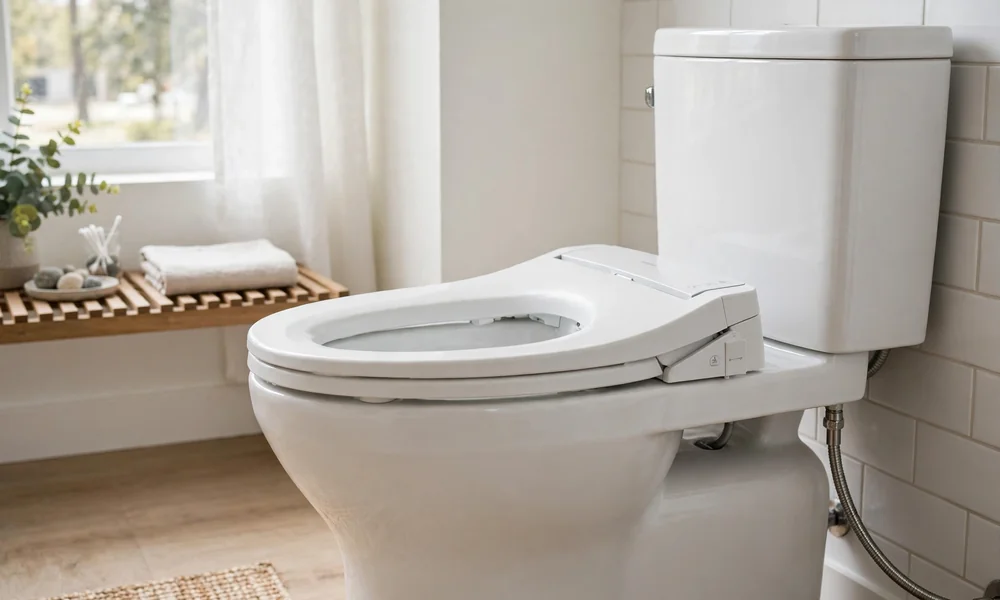
Water-efficient models also give the startup a story worth telling in reviews and follow-ups. A customer who saves water every day is a customer who remembers the installer fondly, and a follow-up message a year later can mention the savings and offer a check-up. Commusoft and Housecall Pro handle that follow-up automatically, which turns a single install into a relationship rather than a one-off transaction.
What a toilet installation startup should expect to pay
Most of the tools in this guide start between 30 and 90 dollars a month for a small crew, with the larger platforms moving into quote-based pricing once several vans are involved. The cheapest stack that works is a low-cost job platform such as ServiceM8 or Tradify paired with NiceJob for reviews, which together cost less than a single wasted install each month. A growing business will usually add Housecall Pro or Jobber as the diary fills, and only the larger teams need to consider ServiceTitan or FieldEdge.
Judge the cost against the jobs it saves. A single missed call is a lost install worth several hundred dollars. A single wrong rough-in is a second trip, a restocking fee, and a damaged reputation. A single forgotten follow-up is a bidet seat sale that never happened. Any tool that prevents one of those each month has paid for itself, and the tools in this guide are priced to do exactly that.
Start with a free trial on live jobs, not on demo data. Quote five real installs, schedule a real week, and invoice real customers before deciding. The tool that feels easiest on a real bathroom floor is the right one, whatever its feature list says.
Toilet installation startup checklist
Use this checklist before you spend money on software. It covers the foundations that make the tools in this guide work, and it is worth completing in order.
- Record the rough-in on every quote. Measure from the finished wall to the centre of the drain, and never order a toilet without that number on the job record.
- Photograph the flange before every install. A photo of the flange condition protects the business and lets the office price a repair before install day.
- Build a pricebook with at least four entries: like-for-like replacement, replacement with flange repair, water-efficient upgrade, and install with a bidet seat.
- Put the bidet seat and water-efficient options on every quote. Customers choose upgrades they can see, not upgrades they are told about afterwards.
- Send a review request after every install. A steady flow of recent reviews is the cheapest marketing a local installer can buy.
- Keep one customer record per home. Every measurement, photo, model number, and invoice should live in the same place, so the next visit starts with knowledge rather than guesswork. Owners building a wider trade business can see how the same discipline scales in our guide to the best AI tools for plumbing startups.
Frequently asked questions
How much do AI tools for toilet installation startups cost?
Most tools in this guide start between 30 and 90 dollars a month for a small crew, with larger platforms moving to quote-based pricing for multi-van teams. A low-cost combination such as ServiceM8 or Tradify with NiceJob for reviews is the cheapest stack that works, and it usually costs less than a single wasted install each month.
What is a toilet rough-in, and why does it matter?
The rough-in is the distance from the finished wall to the centre of the floor drain, usually 12 inches, with 10 inches and 14 inches also common. It matters because a toilet built for one rough-in will not fit a bathroom with another without an offset flange or a different model. Recording it on every quote prevents the most expensive avoidable mistake in toilet installation.
Should a toilet installation startup sell bidet seats?
Yes, and the best time to offer one is on the quote, as a clear tick-box option with its own price. A bidet seat offered after the install rarely sells, while a bidet seat offered at the quote stage is simply a choice the customer makes. It is also the highest-margin add-on most toilet installers have.
Which tool is best for a one-van toilet installation startup?
ServiceM8 and Tradify are the strongest choices for a one-van startup. ServiceM8 gives the best photo-led job cards and records, while Tradify gives the fastest professional quotes. Either one paired with NiceJob for reviews covers the first year well, and both are low-cost and quick to learn.
How do AI tools help with toilet installation quoting?
They turn a photo and a rough-in measurement into a professional, itemised quote in minutes, with the toilet model, the wax ring, the flange work, and the labour shown as separate lines. That speed wins jobs, because a customer replacing a broken toilet usually books the installer whose clear price arrived first.
Do I need a separate review tool?
Not necessarily. Jobber, Housecall Pro, and Thryv all send review requests automatically after each install. A separate tool such as NiceJob is worth adding only when reviews are your main growth channel and you want the asking and replying handled with more focus than a job platform provides.
The bottom line
The best AI tools for toilet installation startups are the ones that make the small, repeatable parts of the job impossible to get wrong: the rough-in recorded before the quote, the flange photographed before the install, the wax ring tracked on every job, the bidet seat offered at the right moment, and the review requested while the customer is still pleased. None of that needs an expensive platform. It needs one job system the crew actually uses, one answering and messaging tool that never lets a call go unanswered, and one review tool that turns every finished install into the next booking.
Start small, trial on live jobs, and build the pricebook before the diary gets busy. A toilet installation startup that quotes fast, measures once, and follows up every time will outgrow its first software, and that is exactly the problem these tools are built to solve.

Keep what speaks to you.
Leave room for your own perspective.