Ghee is one of those ingredients that seems simple at first glance and yet carries centuries of history, a distinct flavour, and a long list of uses in the kitchen. If you have ever watched a cook spoon a golden liquid into a hot pan, there is a good chance it was ghee.
At its simplest, ghee is butter heated gently until the water has evaporated and the milk solids have separated out, leaving a clear golden fat. That one step changes almost everything: it lasts longer, takes higher heat without burning, and develops a rich, toasted flavour.
This Face Zem guide explains what ghee is, where it comes from, how it is made, and how to use it well. It covers nutrition facts, a comparison with butter and oil, storage, home preparation, and who should use it in moderation.
Key takeaways
- Ghee is clarified butter: butter simmered until the water and milk solids are removed, leaving pure golden fat.
- It comes from South Asian cooking traditions and has been used for thousands of years in everyday meals and festive dishes.
- Ghee has a high smoke point of around 230°C (450°F), so it suits frying, roasting, and sautéing.
- It keeps for months at room temperature in a sealed jar and does not need refrigeration once properly made.
- Ghee is almost entirely fat, so it adds rich flavour and energy and is best enjoyed in sensible amounts as part of a balanced diet.
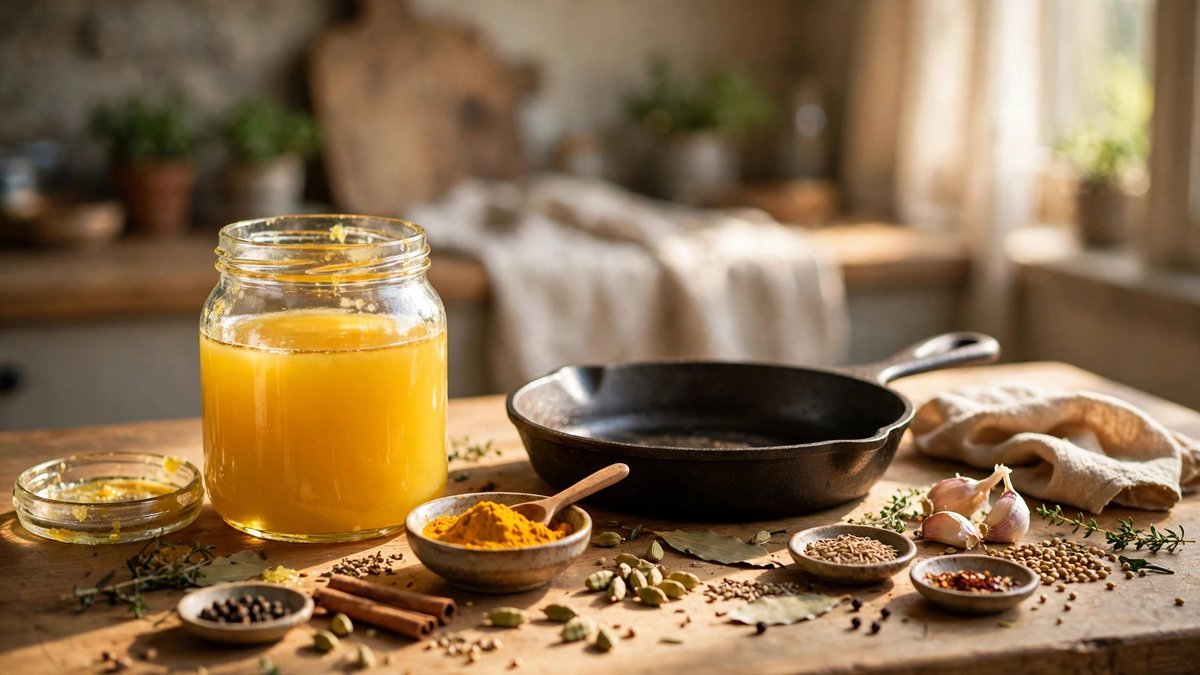
What Is Ghee?
Ghee is a form of clarified butter. It starts as ordinary butter, made by churning cream until the fat separates from the liquid. Butter contains water, milk solids, and fat, and the milk solids give butter its creamy texture and its tendency to burn in a hot pan.
Ghee is what remains when butter is heated slowly and the water evaporates while the milk solids are skimmed or strained away. The result is a clear, golden liquid when warm and a soft, grainy solid when cool. Melted butter, by contrast, still holds water and milk solids, so it spoils faster and burns more easily.
Where Ghee Comes From
Ghee has its roots in South Asia, where it has been part of everyday cooking for thousands of years. It appears in the oldest food traditions of India, Pakistan, Bangladesh, Nepal, and Sri Lanka, and it remains a central ingredient in those cuisines today.
Long before refrigeration, removing the water and milk solids from butter was a practical way to keep a valuable fat from spoiling in a warm climate. In these food cultures, a spoonful is swirled into hot rice or lentils, brushed over fresh bread, or used to fry spices. Over time it spread with migration and trade, and today it is sold worldwide.
How Ghee Is Made
Making ghee is a slow, gentle process, and patience matters more than speed. It begins with unsalted butter, placed in a heavy pan and melted over low to medium heat. As the butter melts, it foams and bubbles, and the water inside it begins to evaporate.
Do not rush this stage: high heat can scorch the milk solids before they separate cleanly. As simmering continues, the bubbling slows, the liquid clears, and the milk solids sink and turn a light golden brown, releasing a warm, nutty aroma. The hot ghee is then strained through a fine sieve or cheesecloth into a clean jar, leaving the browned solids behind.
What Ghee Tastes and Smells Like
Ghee has a flavour that is richer and deeper than ordinary butter. Where butter tastes creamy and mild, ghee tastes warm, nutty, and faintly caramelised, with a toasted note from the milk solids browning during cooking. It adds depth to a dish without overpowering it.
The aroma is part of the appeal. A jar of good ghee smells sweet and buttery with a hint of toasted nuts, and the scent grows stronger when it hits a hot pan. Not all ghee tastes the same: the flavour varies with the butter it was made from, how long the solids were browned, and whether the milk came from cows or buffalo.
Ghee’s High Smoke Point
One of ghee’s most useful qualities is its high smoke point, the temperature at which a fat begins to break down and smoke. Once a fat passes that point it can develop bitter flavours and unwanted compounds. Butter has a low smoke point of around 150°C (300°F) because its milk solids burn easily.
Ghee, with those solids removed, has a smoke point of around 230°C (450°F), among the highest of any common cooking fat. That makes it a reliable choice for searing, shallow frying, and roasting vegetables, and it is forgiving too: a pan that is a little too hot will not ruin a dish as quickly.
How to Use Ghee in Cooking
Ghee is a versatile fat. It is excellent for frying and sautéing, because it handles heat well and adds flavour at the same time: try it for frying eggs, browning onions, or searing vegetables. It is also a natural choice for roasting, where a spoonful tossed with vegetables helps them crisp and caramelise.
In South Asian cooking, ghee is often used to bloom spices. A spoonful is heated in a pan, spices are added, and the mixture is stirred until the spices release their aroma into the fat. For a crisp homemade snack, ghee is a good frying fat, and a recipe such as how to make banana chips shows how a hot, stable fat gives thin slices a golden crunch.
Before you cook with ghee, run through this quick checklist:
- Use a clean, dry spoon every time so no water or food gets into the jar.
- Heat the ghee gently and let it melt fully before adding food to the pan.
- Match the amount to the dish: a little goes a long way with such a rich fat.
- Pair ghee with bold spices and hearty ingredients that suit its nutty flavour.
- Store the jar away from the stove so the ghee stays cool and fresh between uses.
- Taste as you go, because ghee adds richness quickly and a dish can be finished with less than you expect.
Ghee Nutrition Facts
Ghee is almost entirely fat. A single tablespoon contains roughly 100 to 115 calories and around 12 to 14 grams of total fat, most of which is saturated fat, with smaller amounts of monounsaturated fat. It contains no carbohydrate, no protein, and no sugar, and virtually no lactose or casein, since the milk solids are removed.
Like other animal fats, ghee contains cholesterol, and it provides small amounts of the fat-soluble vitamins A, E, and K. The amounts in a typical serving are modest. It is a traditional cooking fat that can be part of a balanced diet in sensible amounts, much like butter or olive oil.
Ghee vs Butter vs Oil
Ghee, butter, and cooking oil are often used in similar ways, but they are not interchangeable in every situation. Each has its own flavour, smoke point, and storage behaviour, and the right choice depends on the dish and the heat involved.
| Feature | Ghee | Butter | Cooking Oil |
|---|---|---|---|
| What it is | Clarified butter with milk solids removed | Churned cream with water and milk solids | Fat pressed or extracted from plants or seeds |
| Flavour | Rich, nutty, lightly caramelised | Creamy, mild, and sweet | Varies: neutral to fruity or nutty |
| Smoke point | About 230°C (450°F), very high | About 150°C (300°F), low | About 200–230°C (400–450°F), varies by type |
| Storage | Months at room temperature in a sealed jar | Needs refrigeration, lasts weeks | Months at room temperature, away from light |
| Lactose and casein | Virtually none | Present in small amounts | None |
| Best for | High-heat frying, roasting, spice blooming | Spreading, baking, gentle cooking | Everyday frying, dressings, baking |
Ghee’s strengths are its heat tolerance and keeping quality. Butter wins for a creamy spread or a gentle, milky flavour in baking, and oil wins for a neutral fat or a plant-based option. Match the fat to the temperature: for high-heat cooking, ghee or a high smoke point oil is the safer choice.
How to Store Ghee
Storing ghee is straightforward, and its long shelf life is one of its biggest advantages. Because it contains almost no water, the conditions that allow bacteria and mould to grow are largely absent, and a jar of properly made ghee can keep for several months at room temperature.
Keep it in a clean, airtight container, such as a glass jar with a tight-fitting lid, in a cool, dark place away from sunlight and heat. Always use a clean, dry spoon, and avoid storing the jar next to the stove. You can refrigerate ghee if you prefer, and it will last even longer, often up to a year. Discard it if it develops an off smell, a sour taste, or visible mould.
How to Make Ghee at Home
Making ghee at home is simple, and many cooks find the result tastes better than shop-bought jars. You need only one ingredient, unsalted butter, and a little patience. Cut a block of good-quality unsalted butter into pieces, place it in a heavy-bottomed pan over medium-low heat, and let it melt slowly, stirring occasionally.
As the butter simmers, the water will evaporate and the milk solids will sink to the bottom. Keep the heat gentle and stir so the solids do not catch and burn. After ten to twenty minutes, the bubbling will quieten, the liquid will turn clear and golden, and the solids will be a light amber colour. Take the pan off the heat, let it cool for a few minutes, then strain the hot liquid through a fine sieve lined with cheesecloth into a sterilised glass jar. If you enjoy learning how ingredients work in the kitchen, a guide such as what is a binder in cooking is a good companion read, because it explains another small kitchen idea that changes how a dish comes together.
Who Should Use Ghee in Moderation
Ghee can be enjoyed by most people as part of a balanced diet, but it is a rich, energy-dense fat, and some people should be more careful with it. Because it is high in saturated fat and calories, large amounts can add up quickly, and anyone watching their weight or their saturated fat intake should use it in small amounts rather than pouring it freely.
People advised by a doctor or dietitian to limit saturated fat, including those managing high cholesterol or heart health concerns, should be especially mindful. Portion size matters, and it is worth asking a health professional how much fits into their overall diet. People sensitive to dairy often ask about ghee too: it contains virtually no lactose or casein, and many with mild lactose sensitivity tolerate it. Even so, it is not guaranteed free of milk proteins, and people with a diagnosed milk allergy should check with their doctor first.
Frequently Asked Questions
Is ghee the same as clarified butter?
Yes, ghee is a type of clarified butter, but it is cooked a little longer. In both cases the water and milk solids are removed, but for ghee the solids are allowed to brown gently before straining, which gives it its nutty flavour and golden colour.
Does ghee need to be refrigerated?
No. A properly made jar kept in a clean, sealed container in a cool, dark place will last for several months at room temperature. Refrigeration will extend its life further, but it is a choice rather than a necessity.
Can you use ghee instead of butter?
In most cooking, yes. Ghee can replace butter in frying, roasting, and sautéing, and it is often the better choice at high heat. In baking it can usually be swapped in equal amounts, though the result may taste slightly nuttier.
Is ghee suitable for people who avoid lactose?
Many people with lactose sensitivity can tolerate ghee because the milk solids, which contain the lactose, are removed during the making process. However, trace amounts of milk protein can remain, so people with a diagnosed milk allergy should speak to a doctor first.
How long does ghee last?
Homemade or shop-bought ghee typically lasts for several months at room temperature in a sealed jar, and up to a year or more if refrigerated. Discard the jar if it develops an off smell, a sour taste, or any mould.
What does ghee taste like in everyday food?
Ghee tastes rich, buttery, and faintly nutty, with a warm toasted note. In everyday food it adds depth without dominating: a spoonful in rice, lentils, or roasted vegetables makes the dish taste fuller. It is also a natural partner for a generous table, where a thoughtful pairing, such as a bottle chosen with the help of a guide to the best inexpensive wines, can round off the evening.
Bottom line
Ghee is a simple ingredient with a long history and a clear set of strengths. It is butter taken one step further, and that step gives it a nutty flavour, a high smoke point, and a shelf life that butter cannot match. It has fed families across South Asia for thousands of years and earned its place in kitchens around the world.
The best way to think about ghee is as a cooking fat to use with intention. A spoonful to fry spices, to roast vegetables, or to finish a bowl of lentils adds richness few other fats can match. Used in sensible amounts as part of a balanced diet, it is a pleasure rather than a problem.
Note: This Face Zem article is general information about ghee for everyday cooking and is not medical advice. If you have a health condition, a milk allergy, or a diet prescribed by a doctor or dietitian, please speak to a qualified health professional before changing how you use ghee or any other fat.

Keep what speaks to you.
Leave room for your own perspective.