
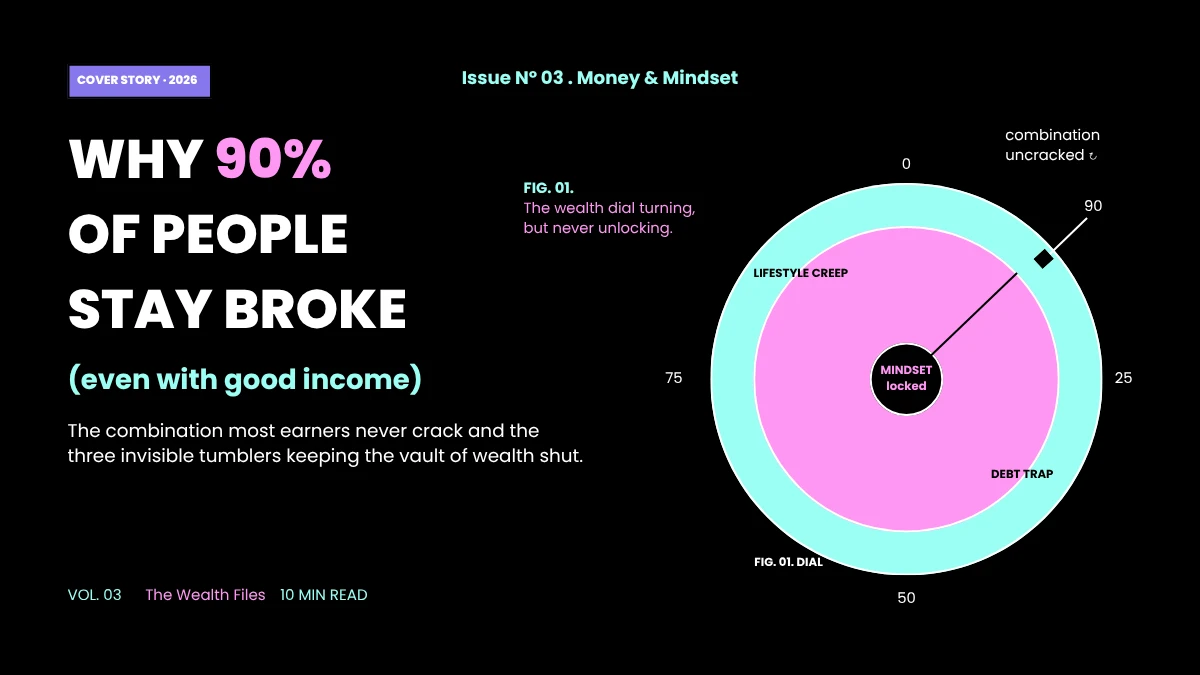
The question “Why people stay poor” often isn’t about income but about invisible financial leaks, lifestyle inflation, and poor systems. Many individuals remain trapped in a paycheck-to-paycheck cycle, choosing immediate gratification over long-term financial stability. This trade-off for comfort now costs them future freedom, highlighting the importance of better financial practices.
Introduction
Many people wonder why people stay poor even when they earn a decent salary. The hard truth is that staying “broke” often has less to do with the number on your paycheck and more to do with invisible financial leaks, lifestyle inflation, and a lack of structured systems. Most individuals remain trapped in a cycle of living paycheck-to-paycheck because they prioritize immediate gratification over long-term stability, essentially trading their future freedom for present-day comfort.
At facezem, we believe that understanding the mechanics of money is the first step toward breaking the cycle of poverty and moving toward genuine wealth.
The Illusion of the High-Income “Broke” Person
It is a common misconception that a high salary automatically equals wealth. You might see someone driving a brand-new luxury SUV or living in a sprawling suburban home and assume they are financially set. However, many of these individuals are just one missed paycheck away from disaster. This is one of the primary financial mistakes people make; they confuse high consumption with high net worth.
When your expenses rise at the same rate as your raises, you aren’t actually getting richer. You are simply living a more expensive version of being broke. This phenomenon, often called “lifestyle creep,” is a major reason why middle class stays stuck in a perpetual loop of debt and stress.
The Psychology of Spending
Human psychology is wired for short-term rewards. When we get a bonus or a raise, our brain’s dopamine response encourages us to “celebrate.” This usually leads to poor financial habits like upgrading a phone that works perfectly fine or eating out five nights a week. Without a conscious shift in mindset, even a six-figure income won’t save you from being broke.
5 Major Reasons Why the Cycle Continues

Understanding why people stay poor requires a deep dive into daily behaviors. It isn’t usually one massive mistake that ruins a person; it is the accumulation of small, daily money management errors that build a wall between you and financial independence.
1. The Trap of Lifestyle Inflation
As people earn more, they tend to spend more. This is the classic reason why middle class stays stuck. Instead of investing the surplus, they buy a bigger house or a faster car. This keeps their “burn rate” high, leaving zero room for savings or investments.
2. High-Interest Debt Addiction
Using credit cards for consumer goods is one of the most damaging poor financial habits one can have. When you pay for a meal or clothes using high-interest debt, you are paying 20–30% more for that item over time. This effectively drains your purchasing power.
3. Lack of an Emergency Fund
Life is unpredictable. Without a safety net, a single car repair or medical bill can force a person into more debt. This lack of preparation is among the top financial mistakes people make, as it turns a minor inconvenience into a long-term financial setback.
4. Ignoring the Power of Compounding
Many people wait until they have “enough money” to start investing. By waiting, they miss out on the most valuable asset: time. Small amounts invested early grow significantly more than large amounts invested late.
5. Social Comparison
In the age of social media, the pressure to “keep up” is intense. Trying to match the lifestyle of influencers or neighbors leads to significant money management errors, as you are spending money you don’t have to impress people you don’t even like.
Breaking Down the Numbers: The Cost of Inaction

To visualize how these habits affect your bank account, let’s look at an estimated comparison of two different financial paths over a 10-year period.
| Financial Habit | Person A (Standard Habits) | Person B (Wealth-Building) |
| Savings Rate | 5% of Income | 20% of Income |
| Debt Usage | High-interest Credit Cards | No Consumer Debt |
| Investment Style | None (Savings only) | Diversified Index Funds |
| 10-Year Outcome | Vulnerable to inflation | Significant Net Worth |
| Financial Status | Why people stay poor | On the path to freedom |
As shown above, the difference isn’t necessarily the starting salary, but the allocation of those funds. Facezem.com advocates for a “pay yourself first” model to avoid these common pitfalls.
Common Money Management Errors to Avoid
If you want to stop wondering why people stay poor, you have to look at the structure of your monthly budget. Most people treat their savings as “whatever is left over” at the end of the month. Usually, what’s left over is zero.
Tracking Every Penny
You cannot manage what you do not measure. One of the most frequent money management errors is the “mental math” budget. People think they know where their money goes, but they often overlook subscriptions, daily coffees, and “impulse” Amazon orders.
The “I’ll Earn More Later” Fallacy
Relying on future income to solve current debt is a dangerous game. This mindset is a core reason why middle class stays stuck. You must build the habits of a wealthy person while you are still earning a modest income; otherwise, you will simply become a “richer” version of a broke person later on.
Why the Middle Class Stays Stuck in 2026
The economic landscape of 2026 presents unique challenges. With the rise of “subscription-everything” models and high-cost housing, the barriers to entry for wealth are higher. However, the reason why middle class stays stuck often comes down to a lack of financial literacy. We are taught how to work for money, but rarely how to make money work for us.
The Impact of Hidden Inflation
While official figures might show one thing, the cost of “lifestyle essentials” often rises faster. Failing to account for this is one of the subtle financial mistakes people make. If your income doesn’t grow faster than your cost of living, you are effectively taking a pay cut every year.
Practical Steps to Change Your Financial Future

Changing your trajectory requires a radical shift in poor financial habits. It starts with a commitment to living below your means, regardless of how much those means increase. At facezem, we suggest starting with these fundamental shifts:
- Automate your savings: Move money to your investment account the moment your paycheck hits.
- Audit your subscriptions: Cancel anything you haven’t used in the last 30 days.
- Build a 6-month cushion: This prevents you from falling back into the debt trap during emergencies.
- Invest in assets, not liabilities: Buy things that put money in your pocket (stocks, real estate, skills) rather than things that take money out (cars, designer clothes).
Summary of Financial Habits

To make it easier to digest, here is a comparison of the mindsets that lead to different outcomes.
| The “Stay Broke” Mindset | The “Build Wealth” Mindset |
| Thinks about monthly payments | Thinks about total cost + interest |
| Saves what is left after spending | Spends what is left after saving |
| Views a raise as a reason to upgrade | Views a raise as a reason to invest |
| Blames the economy or “the system” | Focuses on personal cash flow control |
By identifying these poor financial habits early, you can pivot before the damage becomes permanent. Remember, why people stay poor is often a result of these invisible choices made every single day.
Conclusion
The reason why people stay poor is rarely tied to a single event; it is the result of a lifestyle designed around consumption rather than production. From money management errors like ignoring small expenses to the massive financial mistakes people make regarding debt and housing, the path to being “broke” is paved with good intentions and bad systems.
If you find yourself wondering why middle class stays stuck, look at the gap between your income and your expenses. Closing that gap and investing the difference is the only proven way to exit the cycle. It takes discipline, a shift in perspective, and a refusal to settle for poor financial habits. Start your journey toward clarity today with the resources available at facezem.
Frequently Asked Questions
Why do people with high salaries still struggle financially?
This usually happens due to lifestyle inflation. When income increases, people often increase their overhead (mortgages, car loans, luxury goods), leading to money management errors where their expenses equal or exceed their new salary.
What is the biggest mistake people make with their money?
One of the most common financial mistakes people make is carrying high-interest consumer debt. Paying interest on things that lose value (like clothes or electronics) is a guaranteed way to stay financially drained.
Why is the middle class struggling to build wealth?
A primary reason why middle class stays stuck is the “dual-income trap” where families rely on two incomes to support a lifestyle that leaves no room for savings, making them highly vulnerable to any economic shift.
How can I stop the cycle of being broke?
You must address poor financial habits by creating a strict budget, building an emergency fund, and automating your investments. Redirecting your money toward assets rather than status symbols is the key to changing why people stay poor into how people get rich.