
Passive income is money that keeps arriving after the work is done. You build something once, or you buy an asset, and it pays you again and again without you trading an hour of your time for each dollar. Rent from a property, dividends from shares, royalties from a book, and interest from savings are the classic examples. The idea is simple, and that is why it is so popular: most people earn money by working, and passive income is the opposite of that. Your money, or your earlier work, does the earning instead.
The phrase is used loosely, though, and that causes confusion. Some income that feels passive is not passive at all. This guide explains what passive income really is in 2026, how the tax rules treat it, the main types worth knowing, and how to start building a stream of your own.
Key Takeaways
- Passive income is money earned without ongoing work, usually from owning an asset or from work completed in the past.
- The everyday meaning is broader than the tax meaning: the IRS counts only rental activities and businesses you do not materially participate in as passive.
- Every passive stream needs something up front: money, time, or skill, and usually all three.
- Passive income is taxed, and the rate depends on the type of income, not on how passive it feels.
What Is Passive Income?
Passive income is income you receive without actively working for it on an ongoing basis. You do the work once, or you invest money once, and the income continues: rent each month, dividends each quarter, royalties each time a book sells. None of them has to clock in to make that payment happen.
That is the everyday definition, and it is the one most people mean when they talk about passive income. It hides an important truth: almost no income is fully passive. A rental needs tenants and repairs, a portfolio needs occasional rebalancing, and a book needs writing, editing, and marketing before it earns a royalty. The work does not disappear. It moves to the beginning.
Think of it as a spectrum: a salary depends on hours worked this week, while interest on a savings account arrives with no effort at all. Most passive income sits in between.
The Everyday Meaning vs the Tax Meaning
There are two definitions of passive income, and they matter for different reasons. In everyday conversation, passive income means any money that arrives without ongoing work: dividends, interest, rent, royalties, and income from a website or a digital product. In tax law, the definition is much narrower, and it is the tax definition that decides how your income is treated.
Under the rules of the Internal Revenue Service, passive income comes from only two sources: rental activities, and a trade or business in which you do not materially participate. Material participation is the key test. The IRS generally treats you as materially participating if you spend more than 500 hours on the activity during the year, if you do substantially all of the work in it, or if you spend at least 100 hours and that is as much as anyone else involved.
This narrow definition has a surprising consequence. Interest, dividends, and most investment gains are not passive income under the tax rules at all. They are portfolio income, a separate category. Royalties that are not earned through a business are portfolio income too. Losses from passive activities can generally only offset passive income, not wages or portfolio income. There is one well-known exception. People who actively participate in rental real estate can deduct up to $25,000 of rental losses a year against other income, with that allowance phasing out between $100,000 and $150,000 of modified adjusted gross income.
How Passive Income Works
Every passive income stream follows the same pattern. First, you put something in. That something is usually money, time, or a skill. Then the asset starts producing income, which you maintain with a small amount of ongoing effort.
The Main Types of Passive Income
Passive income comes in several forms, differing in money needed, work involved, and tax treatment.
Rental Income
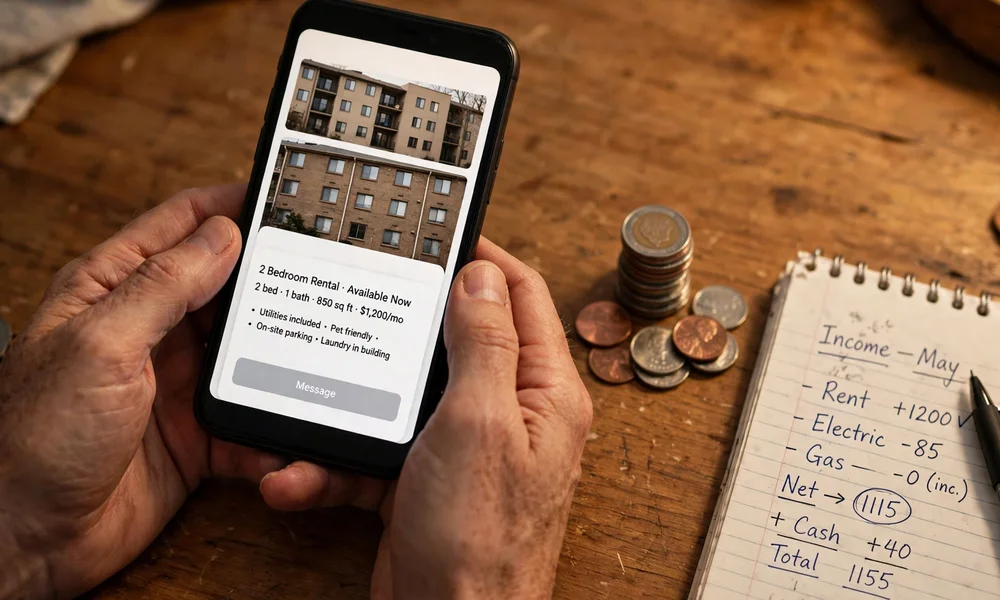
Rental income is the money you receive from letting out property. It can be a whole house, an apartment, a room in your own home, or even a parking space or a storage unit. It is the oldest form of passive income, and for tax purposes it is the clearest example of one. It takes the most capital to start, and a property manager can handle the day-to-day work for a fee.
Dividends
Dividends are payments companies make to their shareholders from their profits. You buy shares, and the company pays you a share of its earnings, usually every quarter. Dividend income needs capital to start, and the payments depend on the company doing well and choosing to pay a dividend. Once you own the shares, the payments arrive on their own. The best index funds for beginners in 2026 are a common way to start, because a fund spreads your money across many companies instead of betting on one.
Interest
Interest is what you earn for lending your money: to a bank through a savings account or a certificate of deposit, or to a government or a company through bonds. It is the most passive income of all, because it requires no work at all after the deposit is made. It is also usually the lowest-returning, and after tax and inflation, the real return on a savings account is often close to zero. Interest is taxed as ordinary income in the year you receive it.
Royalties
Royalties are payments for the use of something you created: a book, a song, a photograph, a patent, or a piece of software. You do the creative work once, and you are paid each time it is used or sold. Royalties can last for years, but they depend on the work staying in demand, and the up-front effort is large. Writing a book or recording a course is months of work before the first payment arrives.
Real Estate Investment Trusts
A real estate investment trust, or REIT, is a company that owns income-producing property and pays most of its income to shareholders as dividends. Buying shares in a REIT gives you a slice of rental income without buying a building or dealing with tenants. It is a middle ground between owning property directly and owning shares, and it is one of the simplest ways to add property income to a portfolio. The best ETFs for long-term growth in 2026 include funds that hold REITs alongside other assets.
Digital Products and Online Income
Digital products are files you create once and sell many times: templates, printables, presets, e-books, and online courses. A website or a channel can also earn money from advertising and affiliate links long after the content is published. This is the fastest-growing form of passive income, and it is also the most misunderstood. A course or channel that pays while you sleep still needs updating and marketing, and the tax rules usually treat it as an active business unless someone else runs it.
What Is Not Passive Income
Not everything that arrives without a boss is passive income. A side hustle that needs your hours every week is active income, even if you enjoy it and work from home. Freelancing, driving, tutoring, and selling handmade goods are all active work: the money stops when you stop. A one-off sale, such as selling a used car, is not income at all in the passive sense. It is a single transaction, not a stream.
Many online sellers promise income with no work, no money, and no risk. That combination does not exist: every stream needs an investment of money, time, or skill, usually all three.
Starting With Little Money
You do not need a property or a large portfolio to start. The smallest streams need time and skill instead of money. A digital product costs almost nothing to create beyond the hours you put in. A high-yield savings account pays interest on whatever you have, even if the amount is small. A dividend fund can be started with a modest regular contribution, and the dividends can be reinvested so the stream grows on its own.
The realistic path for most people is to start with one small stream and let it grow. Save a little each month, put it into an income-producing asset, and reinvest what it pays. The first payments will be tiny, and that is normal. The best retirement accounts for beginners in 2026 are worth considering too, because some of them hold the same income-producing assets inside a tax-advantaged wrapper.
How Passive Income Is Taxed
Passive income is taxed, and the rate depends on the type of income. Qualified dividends and long-term capital gains are taxed at lower rates than wages: 0, 15, or 20 percent depending on your income. For 2026, the 0 percent rate covers taxable income up to $49,450 for single filers and $98,900 for joint filers. Interest, nonqualified dividends, and net rental profit are generally taxed at ordinary income rates, although rental profit is often reduced by depreciation and deductible expenses.
Two other rules are worth knowing. Dividends, interest, and rental income are generally not subject to Social Security or Medicare tax, because they are not wages. But higher earners may owe an additional 3.8 percent net investment income tax on investment income when modified adjusted gross income passes $200,000 for single filers or $250,000 for joint filers.
Common Mistakes to Avoid
The most common mistake is believing the income will be fully passive from day one. Every stream needs building and maintenance, and underestimating that work is how people end up with a rental they cannot manage or a course nobody buys. The second mistake is putting all your money into one stream. A single property with a bad tenant, or a single stock that cuts its dividend, can wipe out the income. Spreading across two or three different types is safer.
The third mistake is ignoring the costs. A rental has repairs, insurance, and empty months. A digital product has platform fees and refunds. A dividend portfolio has taxes. The income that matters is what is left after all of those, not the number on the listing or the advertisement.
How to Start Building Passive Income in 2026
Start by deciding what you can invest: money, time, or skill. With savings, an income fund or a savings account is the simplest first step. With time and a skill, a digital product may suit you better. Property is an option if you have both money and patience, but learn the local market first.
Then pick one stream, not five. Learn how it works, start small, and track what it actually pays after costs. Reinvest the early payments instead of spending them, so the stream compounds. Review it every few months, and fix it or move on if it stops paying. One working stream is worth more than five half-built ones.
Frequently Asked Questions
What is passive income in simple terms?
Passive income is money that keeps arriving after the initial work or investment is done, such as rent, dividends, interest, or royalties, without you trading hours for each payment.
Is passive income really passive?
Almost never completely. Every stream needs work to build and some work to maintain. The honest description is income with a lot of up-front effort and little ongoing effort, not income with no effort at all.
How much money do I need to start earning passive income?
It depends on the stream. A savings account or a dividend fund can be started with a small regular amount. Rental property needs far more. Digital products need time and skill rather than money.
Do I have to pay tax on passive income?
Yes. Passive income is taxable, and the rate depends on the type. Qualified dividends and long-term gains get lower rates, while interest and rental profit are generally taxed at ordinary rates, with rental income reduced by deductible expenses.
The Bottom Line
Passive income is real, but it is not magic. It is money earned by an asset or by work you did in the past, and it arrives while you do other things. It takes capital, time, or skill to build, it is taxed, and it needs maintenance. Start small, pick one stream, reinvest what it pays, and let it grow. That is how passive income actually works in 2026.

Keep what speaks to you.
Leave room for your own perspective.