A home warranty is a service contract that pays to repair or replace the major systems and appliances in your home when they break down from normal wear and tear. You pay a yearly fee, and when something covered stops working, you call the warranty company, pay a service fee, and it sends a technician to fix it.
This guide explains what a home warranty is in plain terms, what it usually covers and excludes, what it costs, how a claim works, and when it actually pays off.
What a Home Warranty Actually Is
A home warranty is a contract with a warranty company. For a set period, usually one year, it covers the repair or replacement of specific items in your home, in return for an annual premium plus a smaller service fee on each claim.
Think of it as a maintenance plan rather than insurance. It does not cover sudden accidents, storm damage, or theft. It covers breakdowns that happen because things get old and wear out: a furnace that stops heating, a water heater that leaks, a dishwasher that will not drain.
Most plans are bought by new home buyers, by sellers offering one as part of a sale, or by owners of older homes whose systems are ageing at the same time. If you are weighing up the purchase itself, our guide to renting vs buying a home and which builds wealth faster sets out the bigger financial picture first.
What It Usually Covers
Coverage falls into two groups: home systems and appliances. A basic plan normally covers the systems that keep the house running, and a more complete plan adds the appliances.
Home systems usually include heating and air conditioning, electrical wiring and panels, plumbing pipes and drains, and the water heater. Appliances usually include the refrigerator, oven and hob, dishwasher, washing machine, tumble dryer, and built-in microwave.
What matters is not the headline list but the limits behind it. Every plan has a payout cap per item and per contract term. If the repair costs more than the cap, you pay the rest.
What It Does Not Cover
First, it does not cover problems that existed before the contract started. If the furnace was already failing when you bought the plan, the claim will be refused as a pre-existing condition. Many companies also impose a waiting period of about thirty days after purchase, during which no claims are accepted at all.
Second, it does not cover damage from accidents, misuse, or lack of maintenance. A washing machine that breaks because it was overloaded, or a boiler that fails because it was never serviced, is likely to be refused.
Third, structural parts of the house are not covered. The roof itself, the walls, the foundations, windows, and doors are outside a standard home warranty. So are outdoor items such as pools, spas, and septic tanks, unless you buy a specific add-on.
What It Costs
The cost has two parts: the yearly premium and the service fee you pay on each claim. The premium for a basic plan is typically a few hundred dollars a year, while a plan that covers systems and appliances together costs more.
The service fee, sometimes called a trade call fee, is charged every time a technician visits. It is usually somewhere between seventy-five and a hundred and twenty-five dollars per visit.
There is also the cost of anything the plan does not cover. When you are budgeting for a first home, our guide to how to save for a house deposit covers the full picture of what buying involves.
How a Claim Works
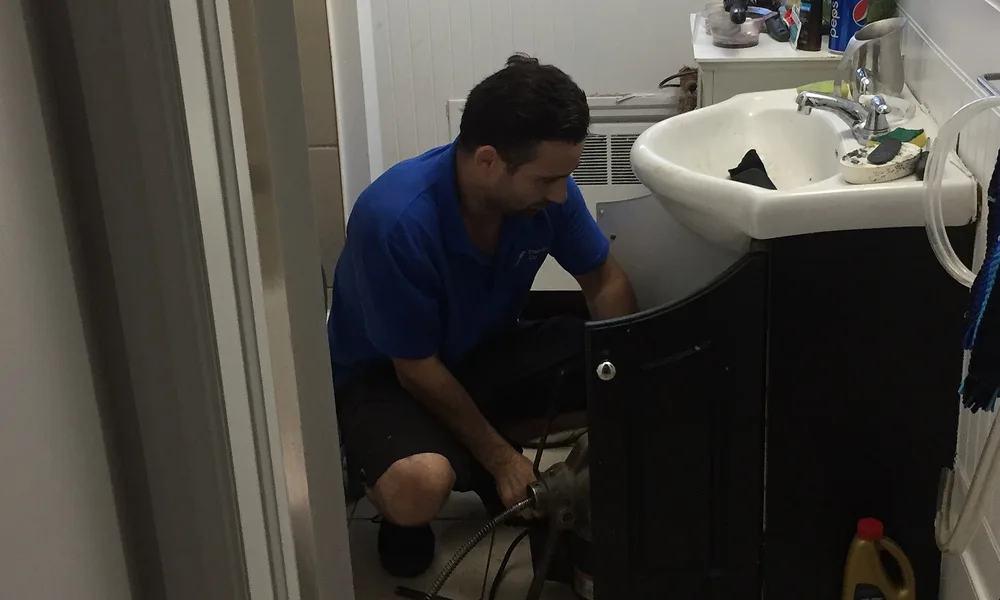
Making a claim follows a set routine. First you contact the warranty company and describe the problem. You do not call your own repairer. The company decides whether the item is covered and then assigns one of its own approved technicians.
The technician visits, diagnoses the fault, and reports back to the company. If the repair is approved, the work goes ahead and you pay the service fee. If the item cannot be repaired, the company may replace it or pay you a cash amount up to the cap.
Two things catch people out here. The first is timing: you cannot choose the technician, and in busy periods the wait for a visit can stretch to days. The second is the quality of the repair, since the technician works for the warranty company’s network, not for you.
When It Pays Off
A home warranty pays off when a covered item breaks in an expensive way during the contract, and the repair or replacement costs far more than the premium plus the service fees you paid. That is most likely when the house is older and several systems are near the end of their expected life at once.
It pays off least when the house is new, the appliances are new, and everything is still under the manufacturer’s guarantee. In that case you are paying for cover you already have.
A simple way to judge it is to add up a year of premiums and likely service fees, then compare that total with the cost of the single most likely repair. If a new water heater would cost roughly the same as two years of premiums, and yours is fifteen years old, the cover starts to look sensible.
The other factor is your cash position. A warranty turns a large unpredictable bill into a smaller predictable one, which matters if a thousand-dollar repair would force you onto a credit card. If savings could absorb it, the warranty is harder to justify, and our guide to how to build an emergency fund fast shows how to build that cushion.
Home Warranty vs Homeowners Insurance
People often confuse the two, but they cover different things. Homeowners insurance covers sudden, unexpected damage: a fire, a storm, a burst pipe that floods a room, a burglary. A home warranty covers breakdowns from wear and tear: a motor that burns out, a heating element that fails, a compressor that gives up.
The two do not overlap much, and one does not replace the other. Your mortgage lender will require homeowners insurance. Nobody requires a home warranty. Insurance is about disasters; a warranty is about old age.
How to Choose a Plan
If you decide a warranty is worth considering, the choice is in the contract, not the advert. Read the full terms before you pay. Check the payout caps per item and per year, the waiting period, the rules on pre-existing conditions, and the exclusions section in full.
Ask how claims are handled: how quickly a technician is sent, and what happens if the item cannot be repaired. Compare at least three plans on the same basis, premium plus service fee plus caps, rather than comparing premiums alone. Finally, check whether the plan renews automatically and what the renewal price is, since some plans rise sharply in the second year.
The Bottom Line
A home warranty is a service contract that covers the repair or replacement of home systems and appliances when they break down from normal use. It costs a yearly premium plus a service fee per claim, with payout caps and exclusions, and it is not a substitute for homeowners insurance.
It is worth it when your home is older, your systems are ageing, and a big repair bill would hurt. It is poor value when everything is new and still under guarantee, when the caps are low, or when you already have savings set aside for repairs. The right decision is a calculation: add up the premium and the likely fees, look at the age of what is covered, and compare the total with the cost of the repair you are most likely to face.

Keep what speaks to you.
Leave room for your own perspective.