
Seder Meal: Traditions and Foods Explained
A seder meal is a ritual dinner held on the first night, or first two nights, of Passover, the Jewish spring festival that recalls the Exodus from Egypt. It is part meal, part lesson and part family gathering, and it follows a set order that has been repeated for centuries. Guests do not simply sit down to eat. They read, ask questions, taste symbolic foods, sing and talk, and the meal itself arrives in the middle of the evening rather than at the start.
For many families, the seder is the most familiar Jewish ritual of the year, even for people who do not observe other holidays closely. The table is set with care, a special plate holds small portions of symbolic foods, and a book called the Haggadah guides the evening from the first cup of wine to the final songs. Children have a visible role, and the story is told as though everyone present had lived through it.
This guide from Face Zem explains what happens at a seder, what each food on the seder plate means, how the evening is ordered, and how families celebrate it today. Whether you have been invited to your first seder or you are hosting one, the details below will help you follow the evening with confidence and enjoy it more.
Key takeaways
- A seder is the ritual meal of Passover, held on the first night, or first two nights, of the festival in spring.
- The evening follows fifteen ordered steps, from the first blessing over wine to songs sung after the meal.
- The seder plate holds six symbolic foods, each one recalling a different part of the Exodus story.
- Matzah, unleavened bread, is eaten instead of leavened bread throughout Passover.
- Four cups of wine or grape juice are drunk at set points, marking freedom, joy and the stages of the story.
What a Seder Meal Is
The word seder means order, and that is exactly what the meal is built around. It is a structured evening with fifteen steps, each with its own blessing, reading, food or song, so a guest in any home, in any country, will recognise the same sequence. At its heart, the seder teaches the story of the Exodus, the departure of the Israelites from slavery in Egypt. The meal is also a celebration of freedom, with guests often reclining as free people, yet bitter herbs are eaten to remember hardship, so joy and memory sit together.
When the Seder Happens
Passover begins on the fifteenth day of Nisan in the Hebrew calendar, which falls in spring, usually in March or April. The seder is held on the evening that begins the festival. In Israel, most families hold one seder, on the first night; outside Israel, many families hold two, on the first and second nights. The festival lasts seven days in Israel and eight days elsewhere, and the avoidance of leavened bread continues for the full week, but the seder is the evening when the story is told in full.
The Story the Seder Retells
The story told at the seder is the Exodus, as recounted in the Torah: the Israelites enslaved in Egypt, Moses sent to demand their freedom, the ten plagues, and the final night when the Israelites left in haste, their bread having no time to rise. The seder does not rush through this story. It lingers over it, discusses it, and invites everyone at the table to see themselves in it. The bitterness of the herbs, the salt water that recalls tears, and the dry matzah are all meant to make the story something you experience, not just something you hear.
How the Evening Is Ordered
The seder follows fifteen steps, often printed on a card at each place setting. The evening begins with Kiddush, the blessing over the first cup of wine. Then hands are washed, a green vegetable is dipped in salt water and eaten, and the middle matzah is broken, with half hidden away for later as the afikoman. The story is told in the central section, called Maggid, which includes the Four Questions, the Exodus, the ten plagues and songs of praise. After the story comes the meal, ending with the afikoman, found and eaten as the last taste of the evening. Grace after the meal is said, a third and fourth cup of wine are drunk, and the evening closes with songs, including the familiar Chad Gadya.
The Seder Plate at a Glance
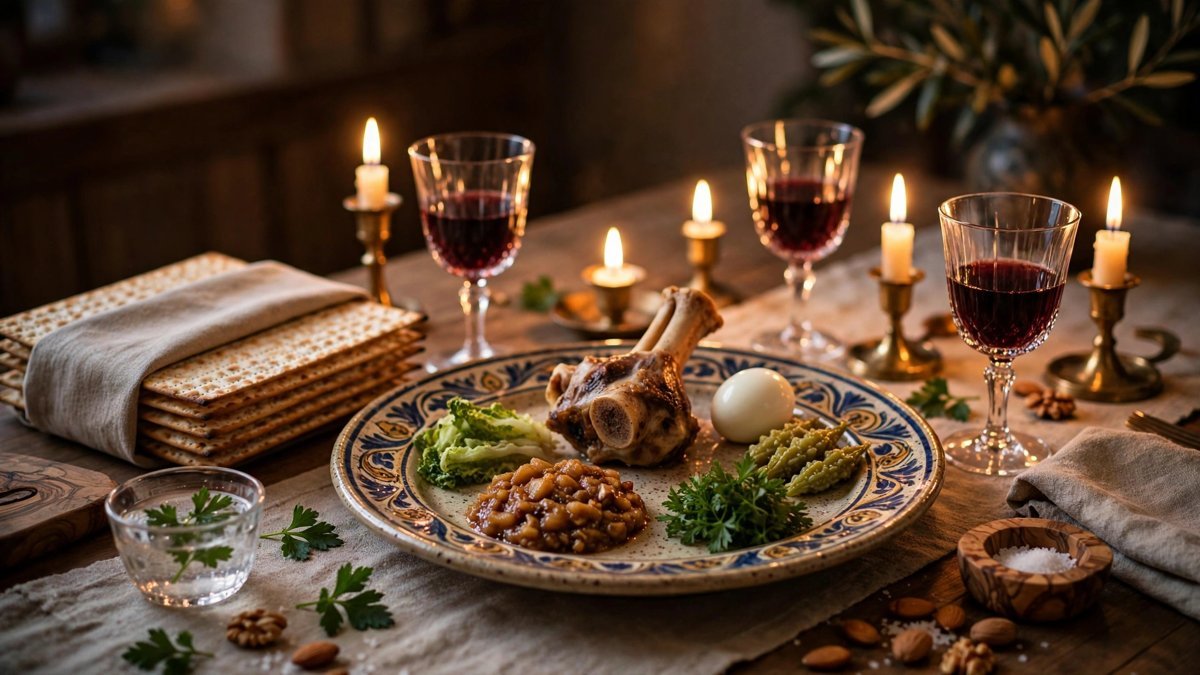
The seder plate sits at the centre of the table and holds six symbolic foods. Each one has a place on the plate and a meaning that is explained during the evening, and the foods are tasted in small amounts at set moments, so the plate is a teaching tool as much as a serving dish.
| Food | What it is | What it recalls |
|---|---|---|
| Zeroa | A roasted shank bone | The Passover lamb offering and the strength of the Exodus |
| Beitzah | A roasted or hard-boiled egg | Renewal, spring and the cycle of the seasons |
| Maror | Bitter herbs, often horseradish | The bitterness of slavery in Egypt |
| Chazeret | A second bitter herb, often romaine lettuce | Bitterness, used in the sandwich eaten later in the evening |
| Charoset | A paste of apples, nuts and wine | The mortar and bricks made by enslaved workers |
| Karpas | A green vegetable, often parsley | Spring, growth and new life |
Not everything on the plate is eaten in a full portion. The shank bone, for example, is displayed rather than eaten. The point of the plate is not to feed the table but to give everyone something to look at, touch and taste as the story is told, so the meaning of each symbol is clear.
Matzah: Why Unleavened Bread Matters
Matzah is flat, crisp unleavened bread, and it is the most important food of Passover. It is eaten at the seder and throughout the festival, in place of ordinary bread, because when the Israelites left Egypt in haste, their dough had no time to rise, so they baked flat cakes on the journey. At the seder, matzah is eaten at several points: a blessing is said over it, it is eaten with bitter herbs, and it is used to make a sandwich with charoset and herbs. The final piece eaten, the afikoman, is the half hidden earlier, and children often search for it after the meal, with a small prize for whoever finds it.
The Four Cups of Wine
Four cups of wine, or grape juice for those who do not drink wine, are drunk during the seder at set points in the order, each one introduced with a blessing. The first cup opens the evening, with the Kiddush blessing that sanctifies the festival. The second is drunk after the story has been told, the third follows the grace after the meal, and the fourth is drunk near the end of the evening, after the songs of praise. Wine at the seder is a symbol of joy and freedom, and guests are encouraged to lean to one side when they drink, a small gesture that recalls the freedom the festival celebrates.
Foods Beyond the Plate
Once the ritual foods have been eaten, the festival meal itself is served, and it varies widely from family to family and from country to country. Common dishes include roast chicken or brisket, fish such as gefilte fish, matzah ball soup, vegetable sides and desserts made without leavened flour. Modern hosts also adapt the meal to their guests, and vegetarian and vegan seders are now common. Some families include a dairy dish on another night of the festival, and this guide to what is cotija cheese explains a cheese that sometimes appears on a modern spring table.
How Families Celebrate Today
Today, the seder takes many forms. Some families keep it strictly traditional, reading the whole Haggadah and singing every song. Others use a shorter Haggadah, add modern readings about freedom and justice, or invite guests of different faiths to join the table. The core order stays the same, but the conversation around it changes with each family and each year. Passover also falls as the weather turns warmer, and many families spend the days around it outdoors. Ideas for outdoor food are in this collection of best picnic recipes, and for a walk in bright spring sun, this guide to best hiking hats covers options that work well for a long walk.
Hosting Your First Seder: A Checklist
- Choose a Haggadah and decide how much of it you will read, so guests know what to expect.
- Set the table with a seder plate, a cup for Elijah, candles, matzah and a pillow for reclining.
- Prepare the six symbolic foods and place each one in its spot on the seder plate.
- Buy enough matzah and wine or grape juice for four cups per guest.
- Plan a festival meal that suits your guests, including any dietary needs.
- Hide the afikoman before the evening begins and keep a small prize ready for the child who finds it.
Frequently Asked Questions About the Seder Meal
What is the difference between a seder and an ordinary Passover meal?
A seder is a ritual meal with a set order, readings, blessings and symbolic foods, held on the first night or first two nights of Passover. Other meals during the week follow the festival rules, such as eating matzah, but do not include the full order of readings and ceremonies.
Do you have to be Jewish to attend a seder?
No. Many families invite friends and neighbours of other faiths, and guests are welcome to take part in the readings and songs. Ask your host beforehand whether there is anything you should bring or know, but no special knowledge is needed to enjoy the evening.
How long does a seder last?
A seder usually lasts between two and four hours, depending on how much of the Haggadah is read and how long the meal and discussion take. Guests should expect a long, relaxed evening rather than a quick dinner.
What should I bring if I am invited to a seder?
Flowers, a bottle of kosher wine or a dessert that follows the rules of Passover are all thoughtful choices. Check with your host first, because many hosts keep a kosher-for-Passover kitchen and cannot use food or wine that does not meet those rules.
Why is matzah eaten instead of bread at Passover?
Matzah recalls the haste of the Exodus, when the Israelites left Egypt before their dough had time to rise. Eating unleavened bread for the week of Passover remembers that night in every meal, not just at the seder table.
Can children take part in the seder?
Yes, children are central to the seder. The youngest child asks the Four Questions, children search for the hidden afikoman, and many families give children their own Haggadah or a part to read. The evening is designed to be taught to the next generation.
Bottom line
The seder meal is a ritual dinner, a history lesson and a family celebration in one evening. Its fifteen steps, its symbolic foods and its four cups of wine all point back to the same story: a people leaving slavery for freedom, in haste, with bread that had no time to rise. Each year, the story is told again, so that everyone at the table can hear it, taste it and pass it on.
Note: Customs around the seder vary between families, communities and countries, and some details in this guide may differ from the way your host or your own family celebrates. If you are unsure about a particular custom, ask your host, follow their lead at the table, and enjoy the evening as it is shared with you.

Keep what speaks to you.
Leave room for your own perspective.


