
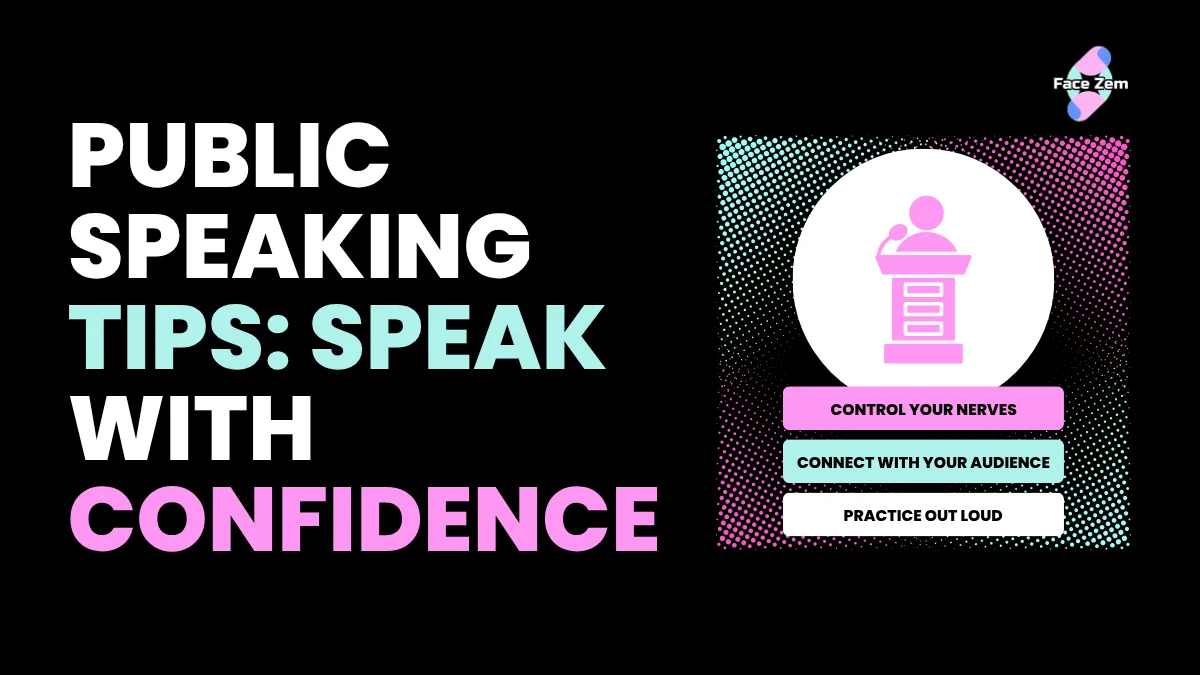
Key Takeaways
- Control breath to calm nerves
- Map core message before slides
- Speak to individual eyes directly
- Turn nervous energy into enthusiasm
- Practice out loud with feedback
Have you ever stood in front of a crowd, felt your heart race, and suddenly forgot your own name? We have all been there. Public speaking can feel scary, but getting your point across does not have to be a nightmare.
The secret is simple: stop trying to give a perfect performance and start having a genuine conversation with your audience. Mastering a few practical public speaking tips helps you calm your nerves, share your ideas clearly, and sound natural every single time you step up to speak.
AI Overview
Public speaking tips help individuals speak with confidence, manage anxiety, and deliver clear messages to any audience. By focusing on simple preparation, steady breathing, body language, and audience connection, anyone can improve their communication skills. Based on available data, consistent practice in real-world settings is the fastest way to overcome stage fright and deliver memorable presentations naturally.
Why Public Speaking Feels So Terrifying

Ever wondered why your hands shake right before a major presentation? It is just your body’s natural protection mechanism kicking in during high-pressure moments.
When all eyes turn toward you, your brain senses high stakes and automatically triggers a fight-or-flight stress response.
That sudden burst of physical adrenaline is completely normal for almost everyone. Even seasoned professional speakers feel it before stepping out under the stage lights.
The main goal is not to eliminate that natural energy entirely from your body. You just need to learn how to guide that energy in a productive direction.
Understanding this biological reaction takes away much of its mystery. You realize your body is simply gearing up to perform at its peak level.
When you stop fighting the physical sensation, you gain immediate control. You transition from panic to purposeful action smoothly.
Mastering Mindset and Managing Nerves
Nervousness is just excitement without proper breathing techniques. When you change how you view stage fright, your physical reaction changes along with it.
Reframe Your Anxiety
Instead of telling yourself you are terrified, tell yourself you are ready and deeply energized.
This small mental shift changes how your brain processes stress signals almost instantly.
It transforms terrifying pressure into helpful focus that keeps your brain sharp and alert.
Breathe to Reset

Take three slow, deep breaths through your nose before walking up to the microphone.
Inhale deeply, hold for two seconds, and exhale fully to slow your heart rate right down.
Controlled breathing sends a clear message to your brain that you are completely safe.
It prevents your voice from shaking and keeps your mind clear under pressure.
Focus on Your Listener
Your audience wants you to succeed from the moment you begin speaking. They are not waiting around for you to fail or make a mistake.
Shift your focus away from your self-doubt and focus entirely on helping the people listening to you today.
When your primary goal is serving others, self-consciousness vanishes quickly.
You stop worrying about how you look and focus on how much value you provide.
Essential Preparation Steps
Great speeches are built long before you ever step on a physical stage. Clear preparation eliminates most of your daily presentation anxiety.
| Preparation Step | Focus Area | Expected Outcome |
| Audience Research | Needs and interests | Relevant, engaging topic |
| Core Outline | 3 main points max | Clear, logical message flow |
| Rehearsal | Out-loud practice | Smooth, natural delivery |
| Tech Check | Audio and slides | Zero mid-talk surprises |
Define Your Core Message

What is the one main takeaway you want people to remember when they leave the room?
If you cannot explain your main point in one clear sentence, your speech is probably too complex right now.
Spend time stripping away unnecessary clutter until your core premise shines through effortlessly.
A clear core message keeps both you and your listeners completely focused throughout the session.
Structure for Clarity
Keep your message structure as simple as humanly possible for your audience to follow.
Use a basic setup: introduce your idea clearly, support it with two or three simple points, and summarize at the end.
Avoid complex tangents that confuse your audience or pull you off track.
A simple logical roadmap ensures your listeners digest every important point you share.
Delivering Your Speech with Confidence
How you deliver your words matters just as much as the actual words you choose. Body language carries massive weight in every presentation environment.
Body Language Basics

Stand tall with your feet shoulder-width apart to ground yourself properly before speaking.
Keep your hands open and available rather than tucked away deeply in your pockets or folded tightly across your chest.
Open body language signals honesty, warmth, and complete confidence to everyone watching you.
It also relaxes your physical spine, allowing your voice to project naturally without straining your throat.
Eye Contact Strategy
Do not scan the room in a continuous, fast panic like a lighthouse beam searching in the dark.
Pick one specific person, complete a single full thought while looking at them, and then move to another person smoothly.
This simple micro-connection strategy transforms a massive cold audience into a group of individual personal chats.
People in the crowd feel personally seen and remain significantly more engaged throughout your talk.
Speech Pacing and Pauses
Most speakers talk far too fast whenever they start feeling nervous on stage.
Slow down intentionally so your words carry real weight and authority.
Embrace quiet pauses to let your key points sink in properly before moving onward.
A well-placed silence projects ultimate authority and allows you to gather your thoughts comfortably.
Engaging Your Audience Naturally

An engaged room is an easy room to talk to. Keep them involved from the very start of your talk.
Ask Open Questions
Start your presentation with a quick rhetorical question to get everyone thinking actively right away.
This breaks the invisible wall between you and the room almost instantly.
It forces listeners to switch from passive observers to active participants in your narrative.
Once their minds are actively working with you, holding their attention becomes remarkably simple.
Tell Simple Stories
People forget raw statistics very quickly, but they remember great stories for a long time afterward.
Share brief personal anecdotes or real-world examples to make your core concepts memorable and relatable.
Stories create emotional hooks that make dry information fascinating and instantly digestible for everyday audiences.
Using modern communication platforms like Facezem can help you practice sharing these stories online and get comfortable speaking before hitting a real stage.
Building a regular practice routine on digital platforms removes the lingering fear of public visibility.
Deepening Connection with Advanced Techniques

Once you master the basics of speaking, you can start incorporating advanced connection techniques that elevate your impact significantly.
Vocal Variety and Tone
Monotone speaking quickly puts even the most interested audience to sleep.
Vary your pitch, volume, and speaking speed to match the emotional context of your message.
Raise your voice slightly when sharing exciting achievements or lower it to a whisper during dramatic reveals.
Dynamic vocal changes keep human ears attentive and deeply connected to your story progression.
The Power of Purposeful Movement
Do not freeze behind a wooden lectern like a statue, but avoid pacing back and forth aimlessly either.
Move with clear intent across the stage whenever you transition to a brand-new main topic.
Step closer to the audience when delivering a crucial point to create an intimate atmosphere.
Return to center stage when summarizing key insights or wrapping up your final thoughts.
Practice Techniques That Actually Work

Practicing silently in your head does not count as real rehearsal. You need to practice out loud to build true vocal muscle memory.
The Mirror and Video Method
Record yourself delivering your talk using your smartphone camera on a simple tripod.
Watching your recordings helps you spot annoying filler words and physical fidgeting habits you never noticed before.
It allows you to view your talk objectively from the perspective of an actual audience member.
You can tweak your tone, adjust your timing, and perfect your posture before real presentation day.
Simulated Speech Practice
Try presenting your draft in front of a trusted friend, family member, or colleague first.
Gathering early constructive feedback points out confusing sections that need further simplification or clearer transitions.
Tools like Facezem offer great environments to practice speaking virtually and gain practical confidence before presenting to large groups.
Virtual practice spaces give you repeated low-stakes exposure that builds mental resilience rapidly over time.
Useful Speaking Strategies Compared
Here is how different presentation styles stack up in everyday professional situations.
| Delivery Method | Best Used For | Primary Advantage | Main Risk |
| Memorized | Very short pitches | Precise wording | Sounds robotic or fake |
| Extemporaneous | Most presentations | Flexible and natural | Requires solid notes |
| Impromptu | Q&A sessions | Highly authentic | Can drift off-topic |
Top Public Speaking Tips for Success

Here are actionable public speaking tips you can apply right now:
- Arrive early to get comfortable with the room layout, lighting, and sound equipment.
- Drink warm room-temperature water before speaking to relax your throat muscles properly.
- Start strong with a personal story instead of a boring generic greeting.
- Use purposeful physical movement on stage rather than nervous back-and-forth pacing.
- End on a clear, memorable call to action that inspires your audience.
Common Public Speaking Mistakes to Avoid
Avoid these frequent traps to keep your talk smooth:
- Reading directly from your presentation slides word for word without eye contact.
- Overloading your slides with dense text and endless raw data points.
- Apologizing to the crowd for being nervous or unprepared early on.
- Rushing through your final conclusions due to poor time management.
- Ignoring strict time limits set by event organizers and running late.
Handling Unexpected Surprises on Stage
Even with flawless preparation, unexpected events can happen during live presentations. Knowing how to adapt keeps you in total control.
Technical Glitches

Microphones cut out and projector slides freeze unexpectedly in real-world settings.
Take a calm breath, laugh it off lightly, and continue speaking naturally without relying strictly on visuals.
When audiences see you handle tech issues with grace, their respect for your leadership increases instantly.
Your calm reaction reassures the room that everything is under control regardless of technical difficulties.
Tough Q&A Questions
If someone asks a difficult question you cannot answer immediately, do not panic or fake your way through.
Acknowledge the great question honestly, state that you will confirm the exact details, and promise a quick follow-up.
Honesty builds tremendous authority and trust far better than making up inaccurate answers on the spot.
It demonstrates high professional integrity and mature confidence under direct audience pressure.
Final Thoughts
Mastering public speaking is a continuous lifelong process, not an overnight instant transformation. By focusing on simple preparation, steady breathing, and real human connection, you can step up to any podium with genuine confidence.
Practice these steps regularly, leverage modern tools like Facezem to refine your delivery, and remember that your audience is always rooting for your ultimate success.
Frequently Asked Questions
How can I stop being nervous before speaking?
Deep breathing, thorough preparation, and reframing anxiety as positive energy help calm your nerves effectively in most cases.
What is the best way to start a speech?
Start directly with a compelling story, an unexpected fact, or a thought-provoking question to hook your listeners immediately.
How do I eliminate filler words like “um”?
Pause intentionally whenever you need to think. Silent pauses sound authoritative, whereas filler words distract from your message.
How long should I practice a presentation?
Rehearse your presentation out loud at least three to five times until your flow feels conversational and completely unhurried.