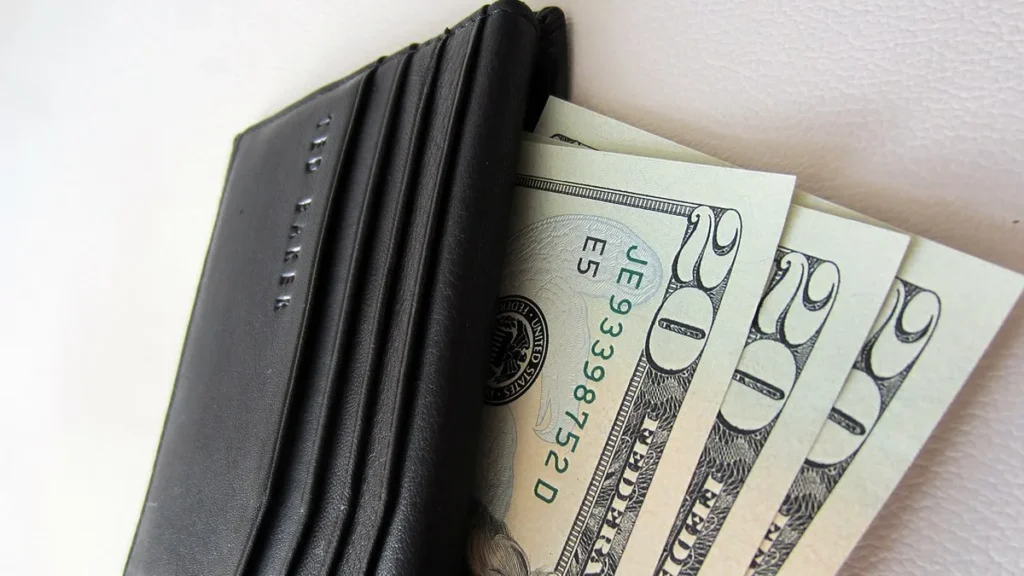
Living paycheck to paycheck is one of the most stressful ways to live, and it is far more common than most people admit. You earn a decent salary, the money arrives on Friday, and by the following Thursday it is already spoken for — rent, bills, groceries, fuel, a subscription or two, and then the slow, familiar slide toward zero before the next payday. It is not always a sign of reckless spending. In 2026, rising housing costs, food prices, transport, childcare and debt payments have squeezed millions of households that are doing their best, and the gap between what comes in and what goes out has never felt narrower.
The good news is that the paycheck-to-paycheck cycle is breakable, and it does not require a lottery win, a huge pay rise or a life of misery. It requires a clear picture of where your money actually goes, a plan that fits your real life rather than a fantasy version of it, and a series of small, repeatable steps that compound over weeks and months. The people who escape the cycle are rarely the ones who make the most money. They are the ones who decide, once and for all, to give every pound or dollar a job before the month begins, to build a small cushion before anything else, and to keep going even when progress feels slow.
This guide walks you through a practical 2026 plan to stop living paycheck to paycheck, step by step. You will learn how to track your spending without drowning in spreadsheets, how to build a budget you can actually stick to, how to create an emergency fund even on a tight income, how to pay down expensive debt, how to cut costs without feeling deprived, and how to grow your income so the maths finally works in your favour. None of it requires perfection. It only requires a start — today, with the money you already have.
Key takeaways
- Track every pound or dollar for 30 days first — you cannot fix a leak you cannot see, and most people find at least one surprising expense.
- Build a starter emergency fund of $500 to $1,000 before attacking debt aggressively; a small cushion stops one flat tyre from becoming a credit-card crisis.
- Give your budget a simple structure, such as 50/30/20, and automate transfers on payday so saving happens before spending can.
- Attack high-interest debt with a clear method — avalanche or snowball — and stop adding new debt while you do it.
- Grow the gap from both sides: cut the costs that do not matter to you and add income through skills, overtime or a side hustle.

Why So Many People Live Paycheck to Paycheck
The first thing to understand is that living paycheck to paycheck is usually a system problem, not a character problem. Wages in many industries have grown slowly while the big fixed costs — housing, energy, food, transport, insurance and childcare — have climbed much faster. A household can be careful, hardworking and sensible and still find that there is nothing left at the end of the month, because the fixed costs alone consume nearly everything that comes in.
On top of that, modern money is almost invisible. Contactless payments, subscriptions that renew silently, food delivery apps and buy-now-pay-later options make it easy to spend without ever feeling the money leave. A decade ago you could see your wallet getting thinner; today the numbers on a screen barely change until the account is suddenly empty. That invisibility is one of the biggest reasons budgets fail — not because people are careless, but because the spending happens in dozens of small, forgettable taps.
Debt makes the cycle tighter still. Credit card interest, personal loans and overdraft charges take a slice of every payday before you have even bought groceries, which means the same income has to stretch further each month. And when there is no emergency fund, every unexpected bill — a car repair, a broken boiler, a dental bill — goes straight onto a card, adding to the debt and the interest. It is a loop, but loops can be broken, and the break starts with seeing the whole picture clearly.
It is also worth naming the emotional side. Money stress is exhausting, and exhaustion leads to avoidance: unopened bank statements, ignored balances, and spending for a brief moment of relief. If that sounds familiar, you are not alone and you are not failing. The plan in this article is designed to reduce that stress, not add to it. Small wins, tracked visibly, rebuild confidence faster than any lecture about willpower ever will.
Step 1: Know Exactly Where Your Money Goes
Before you change anything, spend 30 days simply watching your money. Download your last two or three bank and card statements and sort every transaction into a handful of categories: housing, utilities, food, transport, debt payments, subscriptions, fun and everything else. Do not judge the numbers yet. Your only job is to see them honestly.
Most people discover two things in this exercise. First, the fixed costs are usually bigger than they remembered — rent or mortgage, council tax or property tax, energy, insurance and phone bills add up fast. Second, there is almost always a leak: a subscription nobody uses, daily takeaway coffees that quietly total a serious sum, delivery fees, or impulse purchases that felt small at the time. Finding a leak is good news, because a leak can be fixed without any sacrifice that actually hurts.
Keep the tracking simple enough to sustain. A notes app, a basic spreadsheet or a budgeting app all work; the best tool is the one you will actually open. Check in once a week for ten minutes rather than trying to record every purchase in real time. After a month you will know your real numbers — your real income, your real fixed costs and your real flexible spending — and every step after this one gets easier because it is built on facts instead of guesses.
While you track, also list every debt you owe: the balance, the interest rate and the minimum payment. Write down every subscription and its monthly cost. This inventory takes an hour at most, and it becomes the foundation of your escape plan. You cannot negotiate with numbers you have not written down.
Step 2: Build a Budget That Actually Fits Your Life
A budget is not a punishment. It is a plan for your money that you write before the month begins, so that you decide where it goes instead of wondering where it went. The most durable budgets are simple, and one of the simplest is the 50/30/20 rule: roughly 50 percent of your take-home pay for needs, 30 percent for wants and 20 percent for savings and extra debt payments. If your needs currently take 70 percent, do not panic — use 70/20/10 as a starting point and move the ratios a little each month.
The key is to choose a method that matches your personality. Some people love detailed categories and a spreadsheet for every pound; others need something they can remember without opening an app. If you want to compare the options properly, our guide to the best budgeting methods in 2026 breaks down the most popular systems — including 50/30/20, zero-based budgeting, the envelope method and pay-yourself-first — so you can pick the one you will actually stick with.
Whatever method you choose, build it around your real paydays. If you are paid monthly, budget monthly; if you are paid weekly or fortnightly, budget in those cycles. Give every category a number before the money arrives, and include a small amount for fun — a budget with zero joy in it is a budget you will abandon by the second week. Even twenty or thirty pounds a month of guilt-free spending keeps the plan sustainable.
Finally, review the budget once a month, not once a year. Life changes: energy prices move, a subscription ends, a pay rise arrives. A monthly ten-minute review keeps the plan honest and lets you redirect money toward whatever matters most right now — usually the emergency fund or the most expensive debt.
A Sample Monthly Budget on a $3,500 Take-Home Pay
| Category | 50/30/20 Target | Starter Target (If Needs Are High) |
|---|---|---|
| Needs — rent, utilities, food, transport, insurance | $1,750 | $2,450 |
| Wants — eating out, streaming, hobbies, fun | $1,050 | $350 |
| Savings and extra debt payments | $700 | $700 |
| Total | $3,500 | $3,500 |
Notice that even the starter budget protects $700 a month for savings and debt. That is the point: the future gets paid first, even when the present is tight. If your income is lower, scale the numbers down but keep the principle — a fixed amount, however small, goes to your future on every payday.
Step 3: Build a Starter Emergency Fund First
Before you throw every spare pound at debt, build a small emergency fund of $500 to $1,000. This sounds backwards, but it is the step that stops the cycle from restarting. Without a cushion, the next unexpected bill goes straight back onto a credit card, and you are back where you started. With even a small cushion, a flat tyre is an annoyance instead of a crisis.
Keep the starter fund in a separate savings account — ideally one that is slightly inconvenient to reach, so you are not tempted to dip into it for takeaways. A high-yield savings account is ideal, but any separate account works; separation matters more than the interest rate at this stage. Automate a transfer for payday, even if it is only $25 or $50 a week. Small automatic transfers beat large irregular ones, because they happen whether you feel motivated or not.
Once the starter fund is in place, you can attack debt with confidence, knowing that a surprise will not derail you. Later, once expensive debt is gone, grow the fund toward three to six months of essential expenses. That larger fund is what turns a job loss or a major repair from a catastrophe into a manageable problem — but do not wait for the big fund before starting. The $500 cushion comes first, and it changes everything.
To reach $500 fast, try a 30-day sprint: pause one subscription, cook at home for a month, sell something you no longer use, and redirect every saving into the fund. Many people reach their starter fund in three to six weeks this way, and the speed of the win builds momentum for everything that follows.
Step 4: Attack High-Interest Debt With a Plan
Debt is the heaviest weight in the paycheck-to-paycheck cycle, and high-interest debt is the heaviest of all. Credit card balances charging 20 percent or more grow fast enough to swallow your progress, so they deserve a deliberate plan rather than vague hope. There are two proven methods, and either one works — the best is the one you will follow.
The avalanche method targets the highest interest rate first while paying minimums on everything else. It saves the most money in interest and is the mathematically best choice. The snowball method targets the smallest balance first, whatever its rate, because clearing a whole debt quickly delivers a motivating win. If you need momentum to keep going, choose snowball; if you want maximum savings and can stay disciplined, choose avalanche. Both end in the same place: zero.
While you pay debt down, stop adding to it. That means no new charges on the cards you are paying off, no buy-now-pay-later purchases, and no borrowing to cover everyday spending. If willpower alone is not enough, remove saved card details from shopping apps and leave the cards at home. This is not forever — it is until the balances are gone.
Also consider whether a lower-cost option exists for your debts. A balance-transfer card with a genuine zero-percent introductory period, a lower-rate personal loan from a reputable lender, or a call to your card provider to ask for a rate reduction can all cut the cost of the same debt. Never pay a fee to a company that promises to make your debts disappear, and never take on a new loan to pay an old one unless the rate and the terms are clearly better and you have a plan to avoid running the old balances up again.
Step 5: Cut Spending Without Feeling Deprived
Cutting spending fails when it feels like punishment. It works when you cut the things you barely notice and protect the things you genuinely enjoy. Go through your subscriptions and cancel anything you have not used in the last month — streaming services, apps, memberships and boxes you forgot about. The average household is surprised by how much leaks out this way, and cancelling a subscription you do not use costs you nothing at all.
Food is usually the biggest flexible cost, and the biggest opportunity. Cooking at home most nights, planning meals around what is already in the cupboard, shopping with a list, and cutting back on delivery apps can save hundreds a month without anyone going hungry. Pack a lunch for work, keep a few cheap standby meals in the freezer for tired evenings, and treat takeaways as a planned pleasure once a week rather than a default.
Look at transport, energy and insurance too. Could you walk, cycle or share a lift once or twice a week? Is your energy tariff still the cheapest available? When was the last time you compared car or home insurance quotes? Each of these is a single phone call or a twenty-minute comparison that can save real money every month for a year.
The rule for every cut is simple: if removing it makes your life noticeably worse, keep it or find a cheaper version. If removing it changes nothing, remove it today. The goal is not to live on nothing — it is to spend deliberately on what matters and ruthlessly on what does not.
Step 6: Grow Your Income — Even a Little Changes Everything
Cutting costs has a floor, but income has no ceiling, and even a modest increase can transform a tight budget. Start with what you already have: ask for a pay review if you have taken on extra work, apply for overtime or extra shifts, or use a skill you already own to earn on the side. Freelancing, tutoring, selling handmade goods, pet sitting, delivery driving and remote evening work are all realistic options, and the best side income is usually the one closest to skills you already use every day.
Think about the long game as well as the quick win. Learning a skill that employers pay more for — data analysis, digital marketing, bookkeeping, coding, a trade qualification — is one of the highest-return investments you can make, and many quality courses are free or cheap. A single promotion or a move to a better-paying employer can be worth more than years of careful coupon-cutting, so give your earning power the same attention you give your spending.
It also helps to keep your ambitions visible. Many people who escape the paycheck-to-paycheck cycle stay motivated by reading about how ordinary people built real wealth from modest starts — the habits, the patience and the decisions that compounded over decades. Our article on how to become a millionaire by 30 is a useful reminder that big financial goals are usually reached through small, consistent steps rather than one dramatic move, and that starting early matters far more than starting rich.
Whatever extra income you earn, decide in advance where it goes. The simplest rule: half of every extra pound or dollar goes to your goal — emergency fund or debt — and half is yours to enjoy. That way extra work feels rewarding immediately and still moves you forward fast.
Step 7: Automate Everything on Payday
Willpower is unreliable, but automation is not. Set up automatic transfers so that the moment your pay arrives, money moves to savings, to the emergency fund and to extra debt payments before you have a chance to spend it. This is the pay-yourself-first principle, and it is the single most effective habit in personal finance: you do not save what is left after spending; you spend what is left after saving.
Automate the bills too. Direct debits for rent, utilities, insurance and minimum debt payments remove late fees and the mental load of remembering dates. Then set a weekly money check-in — ten minutes every Sunday, for example — to look at balances, confirm the plan is on track, and adjust anything that needs adjusting. Ten minutes a week prevents the slow drift that quietly undoes a good budget.
Automation also protects you from yourself on the hard days. When you are tired, stressed or tempted, the transfers have already happened, the bills are already paid, and the emergency fund is already growing. You do not need to make a good decision every day; you need to make one good decision — setting up the automation — and let it repeat.
Step 8: Build Habits That Keep You Out of the Cycle for Good
Escaping the paycheck-to-paycheck cycle once is an achievement; staying out of it is a habit. The difference between people who escape and stay free and people who slip back is rarely income — it is the small daily routines that keep money visible and intentional. Checking your balance, cooking at home most nights, waiting a day before non-essential purchases, and reviewing your goals monthly are all tiny actions that compound into lasting security.
If you want a ready-made set of routines to adopt, our guide to 10 financial habits that will transform your money routine covers the daily and weekly practices that keep spending intentional, savings automatic and progress visible — including the 24-hour rule for impulse buys and the habit of reviewing your money every week.
Also plan for the expenses you know are coming. Christmas, birthdays, car insurance renewals, school costs and holidays are not surprises — they happen every year — yet they catch millions of people off guard because no money was set aside for them. Create small sinking funds for each predictable expense: a little each month into a labelled pot, so that when December arrives the money is already there. This single habit eliminates an entire category of financial emergencies.
Finally, be patient with yourself. Breaking a cycle that took years to build will not happen in a weekend, and there will be months when progress stalls or an unexpected bill sets you back. That is normal. What matters is the direction, not the speed. Every month you end with even a little more than you started, you are winning.
Your 6-Point Paycheck-to-Paycheck Escape Checklist
- Track all spending for 30 days and sort it into needs, wants and debt payments.
- Build a starter emergency fund of $500 to $1,000 in a separate savings account.
- Choose a budget method you will stick with and automate transfers on payday.
- List every debt and attack the most expensive (or smallest) balance first while paying minimums on the rest.
- Cancel unused subscriptions, cut food and delivery costs, and review insurance and energy deals.
- Add income — overtime, freelancing or a side hustle — and send half of every extra pound to your goal.
Frequently Asked Questions
How long does it take to stop living paycheck to paycheck?
Most people feel real relief within three to six months: the starter emergency fund is built, a budget is working and debt is visibly shrinking. Becoming fully secure — with three to six months of expenses saved and no high-interest debt — typically takes one to three years depending on income and debt levels. The timeline matters less than the direction; every month with a growing cushion is progress.
What if my income barely covers my essential bills?
Then the income side of the equation matters more than the spending side. You cannot cut what is not there. Focus on earning more — extra shifts, a better-paying role, freelancing or a side hustle — while keeping a basic budget so any extra money is captured rather than absorbed. Even an extra $200 a month changes the maths completely when it goes to an emergency fund or debt.
Should I pay off debt or save first?
Do both in order: save a small starter emergency fund of $500 to $1,000 first, then attack high-interest debt aggressively, then build the fund up to three to six months of expenses. The starter fund exists so that an emergency does not send you straight back into debt while you are paying it off.
What is the 50/30/20 budget rule?
It is a simple framework: about 50 percent of take-home pay for needs, 30 percent for wants and 20 percent for savings and debt repayment. If your needs cost more than 50 percent right now, start with your real numbers and shift the ratios gradually — for example 70/20/10 — rather than forcing a plan you cannot follow.
How much should my emergency fund be?
A starter fund is $500 to $1,000. A full fund is three to six months of essential expenses — rent, utilities, food, transport and minimum debt payments. Single-income households and freelancers should aim toward six months, because their income is less predictable. Build it in stages rather than waiting until you can save the whole amount at once.
Is living paycheck to paycheck always caused by overspending?
No. Rising housing, energy, food and childcare costs mean many careful households still struggle, and low or irregular income can make the cycle unavoidable without extra earnings. Overspending makes it worse, but the solution is the same either way: know your numbers, protect a small cushion, reduce expensive debt and grow the gap between income and outgoings from whichever side you can.
The Bottom Line
Stopping living paycheck to paycheck in 2026 is not about a single dramatic decision. It is about a sequence of small, practical ones: seeing where your money goes, choosing a budget that fits your real life, building a starter emergency fund, paying down expensive debt, cutting the spending that does not matter to you, growing your income, and automating the whole system so it keeps working even on your tired days. Each step is modest on its own. Together, they change the shape of your financial life — from a monthly scramble to a steady climb, with a cushion beneath you and a plan ahead of you.
Start today, with the step that feels easiest. Track your spending, cancel one subscription, or set up a $25 automatic transfer to a separate savings account. Then take the next step next week, and the one after that. A year from now, you will not remember the day you started — but you will feel the difference every single payday.
Note: This article is general educational information from Face Zem, not personalised financial advice. If you are struggling with serious debt, consider speaking to a qualified financial adviser or a free, reputable debt advice service in your country before making major financial decisions.

Keep what speaks to you.
Leave room for your own perspective.