
Starting a pet grooming business in 2026 is one of the most practical ways to turn a love of animals into a real income. Pet owners spend more on their dogs and cats every year, grooming appointments are repeat business by nature, and you can start small from home before ever signing a lease.
Key Takeaways
- A home-based grooming setup can start for roughly $3,000 to $8,000, while a salon runs $15,000 to $50,000 or more and a mobile van $30,000 to $80,000.
- Most US states do not require a specific grooming licence, but you still need a business licence, plus general liability and animal bailee insurance.
- The average full groom in the US costs about $62 to $120 depending on the dog’s size, with a typical price near $85.
- Regular clients are the whole business: rebooking at the appointment, reminders, and a simple loyalty offer fill a calendar faster than any advert.
- Start lean, price for profit from day one, and keep two to three months of operating expenses in reserve.
Why Pet Grooming Is a Strong Business in 2026
The US pet grooming industry is worth more than $14 billion and is growing roughly 7 to 9 percent a year, according to 2026 industry guides. Owners treat grooming as routine health and hygiene rather than a luxury, and a large share now book every four to eight weeks. A client who books every six weeks is worth eight or nine appointments a year, and a book of 150 regular clients can keep a solo groomer busy full time.
Grooming also suits a solo operator. You do not need staff to open, you can work from a converted garage or spare room, and your skills are the product, which keeps margins healthy once the equipment is paid for. The trade-off is physical: grooming is hard on your back, hands, and knees, so good equipment and sensible scheduling matter as much as marketing. Anyone comparing solo careers should also look at the best freelance jobs in 2026.
Step 1: Choose Your Business Model
Most first-time owners start at home, then move to a salon or a van once the client book is full. That order keeps the risk low: you prove the demand before you take on rent or a vehicle loan.
There are three proven models. Home-based is the cheapest way in, a mobile van earns the most per appointment, and a commercial salon gives you walk-in visibility and room for a team.
| Model | Typical startup cost | Monthly running cost | Best for |
|---|---|---|---|
| Home-based | $3,000–$8,000 | About $150–$650 | Lowest risk start, testing demand |
| Mobile van | $30,000–$80,000 | About $1,250–$2,800 | Highest revenue per appointment |
| Commercial salon | $15,000–$50,000+ | About $1,800–$4,800+ | Building a team and walk-in trade |
Most first-time owners start at home, then move to a salon or a van once the client book is full. That order keeps the risk low: you prove the demand before you take on rent or a vehicle loan.
Step 2: Budget Your Startup Costs Honestly
Costs vary enormously by model, and underestimating them is one of the most common reasons new grooming businesses struggle in the first year. The figures below are published 2026 estimates, so treat them as a planning range rather than a quote.
| Cost item | Home-based | Mobile van | Salon |
|---|---|---|---|
| Equipment (table, tub, dryers, clippers, shears) | $2,000–$6,000 | $5,000–$12,000 | $5,000–$15,000 |
| Vehicle or build-out | Minimal | $40,000–$100,000+ (van conversion) | $10,000–$50,000 (lease and fit-out) |
| Licensing, LLC, permits | $200–$800 | $300–$1,200 | $300–$1,200 |
| Insurance (first year) | $360–$720 | $600–$1,800 | $600–$1,500 |
| Booking software | $49–$199 a month | $49–$199 a month | $49–$199 a month |
| Opening supplies | $200–$400 | $200–$400 | $300–$600 |
On top of the one-off costs, hold two to three months of operating expenses in reserve as working capital. Most grooming businesses are not profitable from day one. If you are weighing this against other low-cost starts, the best online business ideas in 2026 are worth a look too.
Step 3: Get Trained and Certified
You can legally groom pets in most US states without a licence, but training is what keeps dogs safe and clients coming back. A reputable course teaches coat types, safe handling, clipper work, and how to spot health problems worth referring to a vet. Certification from the National Dog Groomers Association of America (NDGAA) or the International Professional Groomers (IPG) builds trust fast.
If you have never groomed professionally, work for an established salon for six to twelve months first. You will learn speed, handling, and pricing on someone else’s client book. While you train, consider a structured course to sharpen the business side too; the best online courses for making money in 2026 include practical business and marketing training that pairs well with grooming skills.
Step 4: Handle the Legal Basics
Register before your first paying client. Most solo groomers form an LLC, get an Employer Identification Number (EIN) from the IRS, and open a dedicated business bank account. You will also need a general business licence from your city or county, and a home-occupation or zoning permit if you groom from home. A handful of states regulate grooming facilities, so check your own state’s rules.
Two practical points matter more than the paperwork. First, check zoning before you spend anything: some residential areas restrict home businesses, client parking, or signage. Second, keep your records clean from day one, with separate accounts and receipts for every purchase.
Step 5: Get Insured Before Your First Dog
Insurance is not optional. General liability covers you if a client is hurt or their property is damaged, and animal bailee cover pays if a pet in your care is injured, lost, or dies. Standard general liability does not cover the animal itself, so ask for animal bailee cover by name. Published 2026 figures put general liability for groomers at a median of about $50 a month through Insureon, around $65 a month for mobile groomers, with a business owner’s policy averaging roughly $80 to $86 a month.
Buy the policy before your first appointment, and read the exclusions: some policies limit the breeds covered or exclude services such as de-matting severely neglected coats. If you hire anyone, you will also need workers’ compensation cover, which varies by state and payroll.
Step 6: Buy the Right Equipment
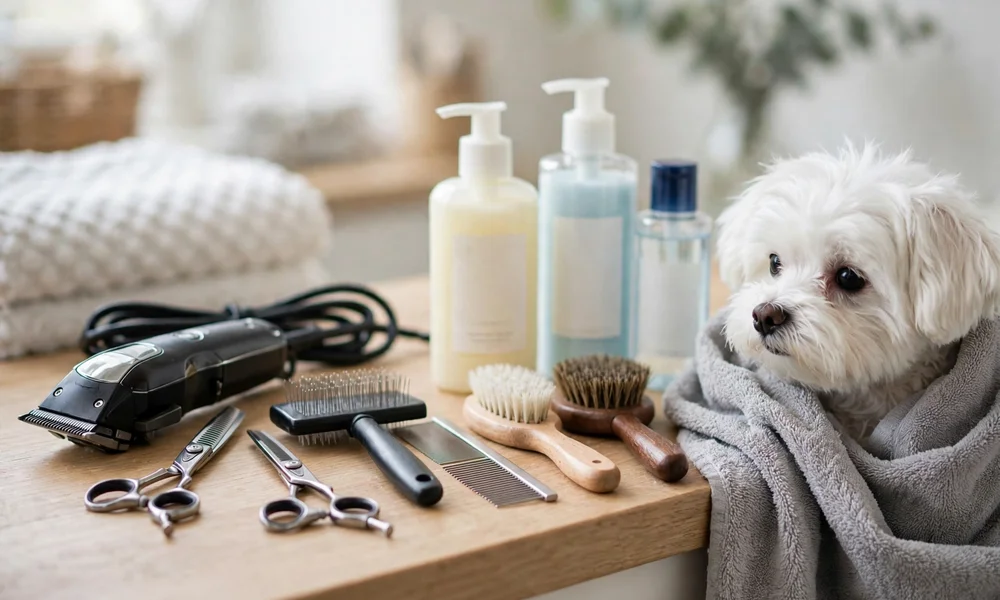
Good equipment is a safety issue, not a luxury. A hydraulic or electric grooming table with a non-slip surface and a grooming arm and loop keeps the dog secure and saves your back. A high-velocity dryer cuts drying time dramatically, especially on double-coated breeds. You need two sets of professional clippers, a blade set covering the common sizes, and three to five pairs of quality shears: straight, curved, and thinning. A tub with a decent sprayer and a ramp protects your back, and a solid stock of shampoos, brushes, combs, and nail clippers rounds out the kit.
Buy the big equipment used and the sharp equipment new. A tub, dryer, and table are fine secondhand, but clippers, blades, and shears are worth buying new, because a dull edge is a safety risk. Keep blades sharp and clippers serviced on schedule.
Step 7: Set Prices That Actually Pay You
Undercharging is the most common mistake new groomers make. Price by your skill, the breed, the coat condition, and your local market, not by what a chain salon paid you as an employee. Published 2026 figures put the average US price for a full groom at about $62 to $120 depending on the dog’s size, around $77 for a medium dog and about $85 overall. Mobile groomers typically charge $15 to $25 on top of the salon price.
Build your price list around the dog, not the clock. A small short-coated dog that takes an hour is a different job from a large doodle with a matted coat that takes three. Charge extra for de-matting, flea baths, nail grinding, and teeth cleaning, and publish those add-ons clearly so clients never feel ambushed at checkout.
Step 8: Set Up Booking and Day-to-Day Systems
A grooming business lives or dies on its diary. Use booking software from the start: it takes deposits, sends reminders, stores coat notes and vaccination records, and lets clients rebook before they leave. Most grooming-specific tools cost $49 to $199 a month, and the reminder feature alone pays for itself by cutting no-shows. Keep a card for every dog with its temperament, coat, and cut.
Step 9: Find Your First Regular Clients
Your first twenty clients matter most. Start with a Google Business Profile, which is free and is where most local owners search, and fill it with real photos of your work, your services, and your prices. Ask every happy client for a review the same day. Offer a simple rebooking incentive at the appointment itself: book the next groom before they leave and the diary fills itself.
Local partnerships bring clients faster than social media alone. Vets, pet shops, dog walkers, and trainers all meet your ideal client every day, and a small referral arrangement costs almost nothing. Post before-and-after photos consistently and show the dogs, not just the salon. A modest launch offer gets the first bookings in, but set an end date for it: a discount with no end date becomes your price.
Growing Beyond the First Year
Once the diary is full two to three weeks ahead, you have a decision to make. You can raise prices, which is usually the right first move, add a second groomer, or move into a bigger space. Hiring changes the business: you need an employment contract, workers’ compensation, and training standards. Many owners hire a bather first, which frees the groomer to do more full grooms a day.
Retail is the simplest extra revenue line: shampoos, brushes, treats, and bandanas sold at the till add income with almost no extra labour. Published estimates put a well-run salon’s net margin at roughly 10 to 15 percent, and mobile grooming can reach 15 to 18 percent.
Common Mistakes to Avoid
- Underpricing to win clients. Cheap prices attract price shoppers, not regulars, and raising them later loses those clients.
- Skipping insurance. One injured dog without animal bailee cover can end a new business.
- Overbooking the day. Rushing dogs causes nicks, stress, and bad reviews.
- No rebooking system. If clients leave without a next appointment, you must win them back every time.
- Ignoring the numbers. Track revenue per groom, no-show rate, and rebooking rate monthly.
- Grooming every breed at the same price. A matted doodle and a smooth-coated beagle are not the same job.
Frequently Asked Questions
How much does it cost to start a pet grooming business in 2026?
A home-based setup typically costs $3,000 to $8,000 including equipment, licensing, and insurance. A commercial salon runs $15,000 to $50,000 or more, and a fully outfitted mobile van can reach $30,000 to $80,000 or more.
Do I need a licence to groom pets?
Most US states do not require a specific grooming licence, but you still need a general business licence, and a few states license grooming facilities. Certification from the NDGAA or IPG is not legally required in most places, but it builds client trust.
How much can a pet grooming business earn?
It depends on model and volume. A solo groomer doing six dogs a day at an $85 average groom, five days a week, grosses roughly $2,550 a week before costs. Published estimates put a well-run salon’s net margin at about 10 to 15 percent, with mobile grooming reaching 15 to 18 percent.
Is pet grooming a good business in 2026?
Yes, for owners who treat it as a business rather than a hobby. Demand is growing, grooming is repeat business, and startup costs are low compared with most service businesses. The risks are physical strain, underpricing, and a slow first few months.
How long does it take to get fully booked?
Most new groomers take three to six months to build a steady diary. Rebooking at the appointment, reviews, and local referrals speed it up more than paid advertising does.
The Bottom Line
Starting a pet grooming business in 2026 is a realistic, low-cost route into self-employment, but only if you treat the business side as seriously as the grooming itself. Choose the model your budget can carry, get trained and certified, register and insure the business before your first dog, and price for profit from day one. Then fill the diary one regular client at a time, rebook at every appointment, and let the repeat bookings do the growing for you.

Keep what speaks to you.
Leave room for your own perspective.


