
A honeymoon should feel like the best trip of your life, not the most expensive one. Yet for many newly married couples, the honeymoon is where the wedding budget finally catches up with them. After months of paying for a venue, catering, flowers, and a photographer, the idea of spending several thousand more on a single holiday can feel overwhelming, and plenty of couples either overspend in the excitement or skip the trip altogether because the numbers look impossible.
The good news is that a memorable honeymoon has very little to do with how much money you spend and almost everything to do with how deliberately you plan it. The couples who come home happiest are rarely the ones who booked the most expensive resort. They are the ones who chose a destination that matched their budget, travelled at the right time, and spent their money on the handful of experiences that actually mattered to them instead of spreading it thinly across everything a travel brochure suggested.
This guide walks you through exactly how to save money on a honeymoon in 2026 without turning the trip into a bargain-hunt that feels like a compromise. You will learn how to set a realistic budget, pick the right dates and destinations, cut the cost of flights and hotels, eat well for less, and avoid the hidden charges that quietly inflate most honeymoon bills. Every strategy here is practical, proven, and easy to apply whether you are planning a two-week escape or a long weekend close to home.
Key takeaways
- Set your honeymoon budget before you choose a destination, and let the budget pick the place, not the other way around.
- Travelling in shoulder season can cut flights and hotels by 30 to 50 percent compared with peak dates.
- Booking flights and accommodation separately often beats a package, but always compare both before you commit.
- Food, transport, and activities are where most honeymoon budgets leak, so plan a daily spending cap for each.
- A honeymoon registry lets guests fund experiences instead of toasters, and it can cover a surprising share of the trip.
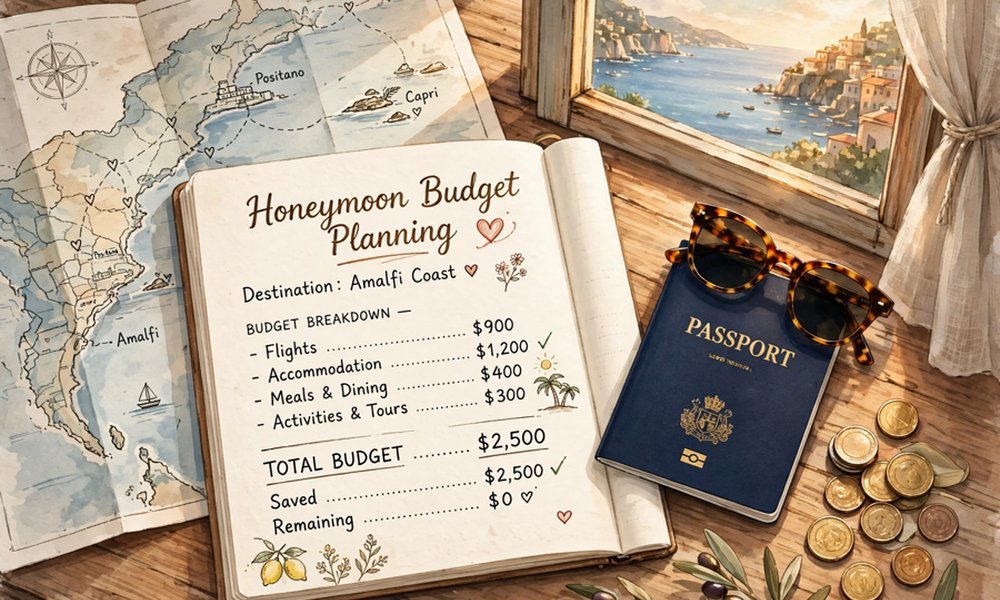
Start With a Budget, Not a Destination
The single biggest mistake couples make is falling in love with a destination first and checking the price second. A week in the Maldives, Santorini in August, or a luxury safari sounds wonderful until the quotes arrive, and by then the heart has already decided. Starting with a budget flips the process around. Decide together what you can genuinely afford, including a buffer of at least ten percent for surprises, and then find the best possible trip inside that number.
Sit down together and agree on a total figure that covers everything: flights, accommodation, food, transport, activities, travel insurance, visas, and spending money. Many couples forget at least two of those categories, which is why honeymoons so often run over budget. Write the number down, split it into daily amounts, and treat it as a shared decision rather than one person’s worry. Money arguments are the last thing a honeymoon needs, and a clear budget agreed in advance prevents most of them.
It also helps to be honest about what kind of travellers you are. If you are happiest lying on a beach with a book, you do not need a destination packed with expensive excursions. If you love food, budget more for restaurants and less for a fancy room you will barely use. If adventure is the point, pick somewhere the activities are affordable rather than somewhere the hotel is five-star. Matching the trip to your real preferences is the fastest way to spend less and enjoy more, because you stop paying for things you do not actually value.
Once the budget is set, research destinations that fit it instead of stretching the budget to fit a dream location. Southeast Asia, parts of Central America, Portugal, Greece outside peak weeks, and domestic coastal escapes all deliver romance at a fraction of the price of the classic luxury honeymoon spots. A beautiful trip is not defined by its postcode. It is defined by how present you both are, and that costs nothing at all.
Choose Your Dates Like a Strategist
When you travel matters almost as much as where you travel. Peak season prices exist because everyone wants the same weeks, and honeymooners who can be flexible with their dates hold a powerful advantage. Shoulder season, the weeks just before or just after the busiest period, usually offers the same warm weather and open attractions with far smaller crowds and much lower prices.
For many European destinations, late May, early June, September, and early October are the sweet spots. The sea is warm, the restaurants are open, and hotels that charge premium rates in July and August often drop their prices by a third or more. In the Caribbean, the weeks after Easter and before the summer holidays can be excellent value, and in Southeast Asia the shoulder months bring lower rates even if you accept the occasional tropical shower.
If your wedding date is fixed, consider delaying the honeymoon. There is no rule that says you must fly out the morning after the wedding. A delayed honeymoon, sometimes called a minimoon followed by a bigger trip later, lets you travel in the cheapest season, recover from the wedding, and even save for a few extra months. Many couples find the second trip more relaxing precisely because it is not rushed, and the savings can be substantial.
Weekday departures also help. Flying on a Tuesday or Wednesday is usually cheaper than flying on a Friday or Sunday, and the same applies to hotel check-ins. If you can shift your trip by even two or three days, compare the prices before you book. Small changes in timing routinely save hundreds of dollars on a two-person trip, and that money can go straight into an experience you will actually remember.
Save Money on Flights Without the Stress
Flights are often the largest single cost of a honeymoon, especially for long-haul destinations, so this is where smart planning pays off most. Start by comparing prices across several search tools and the airlines’ own websites, because the cheapest fare does not always appear in the same place. Set price alerts early, ideally three to six months before departure, and watch how fares move before you commit.
Flexibility is your best friend. Being willing to fly at less popular times, accept a connection instead of a direct flight, or depart from a nearby airport can cut the fare dramatically. A one-stop flight that adds two hours to the journey might save several hundred dollars, and for a honeymoon that is a trade worth considering. Similarly, flying into a major hub and taking a short local flight or train to your final destination is often cheaper than flying directly to a small resort airport.
Consider budget airlines for shorter legs and use points and miles wherever you can. If either of you has a travel credit card, check whether the points you already hold can cover one or both flights. Many couples discover they are sitting on enough points for a free flight simply because they never looked. Even partial redemptions help, and booking early gives you the widest choice of reward seats.
Finally, be careful with extras. Airlines now charge separately for seat selection, checked bags, priority boarding, and meals, and those add-ons accumulate quickly for two people. Pack light and share a checked bag if you can, bring your own snacks, and skip paid seat selection unless sitting together genuinely matters on a short flight. On a long-haul flight it usually does, so pay for that one and skip the rest.
Find Accommodation That Feels Special for Less
Your honeymoon hotel does not need to be the most expensive room in the destination to feel special. What matters is a comfortable bed, a good location, and a little atmosphere, and those are available at many price points. Start by deciding how much time you will actually spend in the room. If you plan to explore all day, a clean, well-located mid-range hotel or apartment beats a luxury resort you barely see.
Consider alternatives to traditional hotels. Boutique guesthouses, serviced apartments, and well-reviewed holiday rentals often offer more space, a kitchen, and a local feel for less money than a resort. A kitchen alone can save a significant amount, because even preparing breakfast and the occasional simple dinner cuts your food bill noticeably over a week or more.
Do not be shy about mentioning that it is your honeymoon. Hotels, guesthouses, and even apartment hosts often offer small upgrades, a better room, a late checkout, or a complimentary bottle of something to celebrate. None of this is guaranteed, and you should never expect it, but a polite note at booking or check-in costs nothing and frequently leads to a nicer stay. Timing matters too: booking a room for a weekday stretch rather than a weekend can lower the nightly rate at many properties.
Location is another quiet money saver. Staying one street back from the beachfront, or in a charming neighbourhood a short walk from the centre, can halve the room rate while barely changing the experience. You will walk a little more and spend a little less, and you will probably eat at better, cheaper restaurants because you are away from the tourist strip. Before booking, check what is included: breakfast, parking, resort fees, and taxes can add a surprising amount to the headline price, so compare the total cost rather than the nightly rate.
Eat Well Without Eating Your Budget
Food is one of the great pleasures of a honeymoon and one of the easiest places to overspend. The trick is not to eat badly but to eat smart. Plan for one special meal a day rather than three expensive ones. A memorable dinner at a restaurant you have researched is worth far more than three mediocre tourist-menu lunches, and it costs less overall.
Breakfast is the easiest meal to make cheap. If it is included in your room rate, use it well. If not, buy fruit, bread, and coffee from a local shop and eat on a balcony or in a park. Lunch is where most couples waste money without noticing, usually on overpriced food near major attractions. Walk two streets away from any famous landmark and prices often drop by half while quality goes up.
Follow the locals. Restaurants full of residents rather than tourists are almost always better value, and street food in many destinations is both delicious and extremely cheap. Ask your host, a taxi driver, or a shopkeeper where they eat, and you will find places no guidebook lists. Markets are another gift: fresh produce, bread, cheese, and local snacks make wonderful picnic lunches, and a picnic on a beach or in a park is often more romantic than a formal restaurant anyway.
Drink costs deserve attention too. Alcohol, especially cocktails and wine in resort areas, can quietly double a food bill. Enjoy a drink with dinner, but buy bottles from a local shop for your room or balcony rather than paying bar prices all evening. And always check whether your accommodation offers a happy hour or a complimentary drink, which many boutique hotels do.
Plan Activities and Experiences Wisely
Activities and excursions are often where honeymoon budgets quietly double. A sunset cruise here, a guided tour there, a spa treatment, a cooking class, and suddenly you have spent more on activities than on the hotel. None of these things is wrong, but choosing them deliberately rather than booking everything on impulse makes an enormous difference.
Before the trip, list the experiences that genuinely matter to both of you and rank them. Most couples find that two or three standout activities are enough to make a trip feel special, and the rest of the time is happily spent exploring, relaxing, and simply being together. A private dinner on the beach, one unforgettable day trip, or a single spa afternoon will stay in your memory far longer than five average tours.
Look for free and low-cost experiences too. Beaches, hiking trails, old towns, viewpoints at sunset, local festivals, and public gardens cost nothing and are often the most romantic parts of a trip. Many cities offer free walking tours, museums have free days, and national parks charge a fraction of what a private excursion costs. Build your days around a mix of one paid highlight and several free pleasures, and the trip will feel rich without being expensive.
Book activities directly with local operators where possible rather than through your hotel or a large tour company, because the markup on hotel-booked excursions is often steep. Compare prices online, read recent reviews, and book the big-ticket items in advance while leaving smaller decisions for when you arrive. You will know the weather, your energy levels, and what you actually feel like doing, and you will avoid paying for activities you end up too tired to enjoy.
Packages Versus Booking It Yourself
Travel agents and online package deals promise convenience, and sometimes they genuinely save money, especially for popular resort destinations where flights and hotels are bundled at a discount. But packages are not always cheaper, and the only way to know is to compare. Price the trip both ways before you commit: once as a package and once as separate flights and accommodation, using the same dates and a similar standard of hotel.
Booking separately gives you control. You can choose a cheaper flight, a better-located hotel, and an apartment with a kitchen, and you can adjust each part independently if plans change. Packages give you simplicity and sometimes included transfers, meals, or perks that are hard to price separately. For a honeymoon, a package that includes airport transfers and breakfast can be excellent value, but only if you would have paid for those things anyway.
Watch the fine print either way. Packages sometimes use less convenient flight times or hotels further from the centre, and changing anything after booking can carry heavy fees. Separate bookings carry their own risk: if a flight is delayed, a hotel will not wait for you, whereas a package operator may rearrange things. Weigh convenience against cost honestly, and choose the option that fits your travel style rather than the one that simply looks cheaper at first glance.
One hybrid approach works well for many couples. Book the flights and the first two or three nights separately, then leave the rest flexible. You get the security of a confirmed start and the freedom to move on if you fall in love with somewhere else, and you avoid paying for a full week in a place that turns out not to suit you.
Let Your Guests Help Through a Honeymoon Registry
A honeymoon registry is one of the most effective ways to reduce the cost of the trip, yet many couples feel awkward about asking. There is no need to be. Most guests would rather contribute to a memorable experience than buy a household item you do not need, and a registry simply gives them a graceful way to do that. Framing it as a choice rather than a request makes all the difference.
Set up a registry that lets guests fund specific experiences: a romantic dinner, a couples massage, a day trip, a night in a nicer hotel, or a contribution towards flights. People enjoy giving a dinner or a sunset cruise far more than giving an anonymous sum of money, and smaller items at a range of prices mean every guest can find something that suits their budget. Include options from modest to generous so nobody feels pressured.
If you already live together and own most household items, a honeymoon fund is entirely reasonable and increasingly common. Mention it lightly on your wedding website or invitations, alongside a traditional registry if you prefer, and let guests decide. The money you receive can cover a substantial part of the trip, and every experience you enjoy will carry a small reminder of the person who gifted it.
Keep records of who contributed to what so you can thank them personally after the trip, ideally with a photo or a short note about the experience they funded. A thank-you that says you watched the sunset from the boat they gifted is worth far more than a generic card, and it makes the whole registry feel warm rather than transactional.
Watch Out for Hidden Costs
Hidden costs are the quiet enemy of every honeymoon budget. Resort fees, tourist taxes, parking charges, airport transfers, visa fees, travel insurance, roaming charges, and tips can add hundreds of dollars to a trip that looked affordable on paper. The best defence is to list every possible extra before you book and include it in the budget from the start.
Read the fine print on accommodation carefully. Some properties advertise a low nightly rate and then add a daily resort fee, a cleaning fee, or a city tax at checkout. Others charge for parking, wifi, or use of the pool and beach facilities. None of these charges is necessarily unreasonable, but you should know the total before you commit rather than discovering it when the bill arrives.
Travel insurance deserves a special mention. It feels like an optional extra until something goes wrong, and then it is the best money you ever spent. A cancelled flight, a medical emergency abroad, or lost luggage can cost thousands without cover. Buy a policy that covers both of you, read what it excludes, and make sure it covers the activities you plan, because some policies exclude things like scuba diving or skiing unless you add them.
Money exchange and roaming charges are two more leaks worth plugging. Avoid exchanging cash at airports, where rates are worst, and check whether your bank charges foreign transaction fees before you travel. A travel-friendly card or account can save a noticeable amount over a week or two. Similarly, check your phone plan before departure and buy a local SIM or an eSIM if roaming charges are high, because a single week of data roaming can cost more than a nice dinner.
How Much Does a Honeymoon Cost in 2026?
Costs vary enormously by destination and style, but realistic ranges help you plan. The table below shows typical total costs for two people, including flights from a major city, accommodation, food, and activities, based on shoulder-season prices in 2026. These are honest mid-range figures, not rock-bottom backpacking budgets or luxury prices, and they show how much difference the destination makes.
| Destination | Length | Typical total for two | Best for |
|---|---|---|---|
| Southeast Asia (Thailand, Vietnam) | 10 days | $2,500 – $4,000 | Value, food, beaches, culture |
| Portugal or Greece (shoulder season) | 7 days | $3,000 – $4,500 | Europe on a budget, great food |
| Mexico or Costa Rica | 7 days | $3,500 – $5,500 | Beaches, adventure, wildlife |
| Caribbean (shoulder season) | 7 days | $4,000 – $6,000 | Classic beach honeymoon |
| Italy or France | 10 days | $5,000 – $8,000 | Romance, food, history |
| Maldives or Bora Bora | 7 days | $8,000 – $15,000+ | Ultimate luxury, overwater villas |
The gap between the cheapest and most expensive options is striking, and it proves the central point of this guide: the destination you choose matters more than almost any other decision. A ten-day trip to Thailand can cost less than a week in the Maldives, and many couples would honestly enjoy the Thai trip more because they can afford to do everything they want without watching every penny.
Use the table as a starting point, then build your own numbers with real quotes for your dates. Prices shift with the season, the departure city, and how early you book, so treat these figures as a guide rather than a promise. The real skill is not finding the cheapest destination on a list but finding the one where your budget buys the most happiness.
Money Habits That Make the Trip Better
Saving for a honeymoon is easier when you treat it as a shared project rather than a sacrifice. Open a joint savings account or a labelled savings pot specifically for the trip and set up an automatic transfer on payday, even a modest one. Watching the balance grow is motivating, and small regular amounts add up faster than most couples expect over six to twelve months.
It helps to agree on a daily spending plan for the trip itself. A simple approach is to divide your total spending money by the number of days and treat that as a daily cap for food, transport, and activities, with a separate pot for pre-booked items. If you underspend one day, the surplus rolls forward, and a splurge dinner feels earned rather than guilty. Couples who plan their money this way consistently report enjoying their honeymoon more, because the financial uncertainty is gone.
Building good money habits together before the wedding makes all of this easier, and it pays off long after the honeymoon ends. Learning to budget as a team, to talk openly about money, and to agree on priorities is one of the most valuable things a new marriage can do. If you want a deeper look at how couples manage money well, Best Money Habits for Couples 2026 covers the habits that keep couples financially calm and connected.
Finally, remember that the honeymoon is not a competition. Social media is full of extravagant trips, and it is easy to feel that your honeymoon is inadequate by comparison. It is not. The couples who look back fondly on their honeymoons remember the conversations, the laughter, the sunsets, and the feeling of starting married life together, not the thread count of the sheets or the price of the resort. Spend your money on presence, not on performance.
Honeymoon Savings Checklist
- Set a total honeymoon budget together, including flights, hotels, food, activities, insurance, and a ten percent buffer.
- Choose shoulder-season dates or delay the honeymoon to travel when prices are lowest.
- Compare package prices against booking flights and accommodation separately before committing.
- Set flight price alerts three to six months ahead and stay flexible on times, airports, and connections.
- Mention it is your honeymoon when booking, and ask politely about upgrades or a late checkout.
- Plan one special meal a day, eat where locals eat, and keep a daily spending cap for food, transport, and activities.
Frequently Asked Questions
How much should we budget for a honeymoon in 2026?
For two people, a realistic mid-range honeymoon costs between $3,000 and $6,000 for a week, depending on the destination. Southeast Asia and Portugal sit at the lower end, the Caribbean and Mexico in the middle, and Italy, France, and luxury island resorts at the higher end. Set your total first, then choose a destination that fits it comfortably, including travel insurance and a buffer for surprises.
When is the cheapest time to go on a honeymoon?
Shoulder season is almost always the cheapest time to travel, usually the weeks just before or after peak season. For Europe that means late May, early June, September, and early October. For the Caribbean, the weeks after Easter and before summer are often excellent value. Flying midweek rather than at the weekend also lowers fares, and delaying your honeymoon by a few months to reach a cheaper season can save hundreds of dollars.
Is a honeymoon package or booking separately cheaper?
It depends on the destination. Packages can be cheaper for popular resorts because flights and hotels are bundled, while booking separately usually wins for cities, apartments, and less common destinations. Always price both options for the same dates and a similar standard of hotel, and compare the total cost including transfers, breakfast, taxes, and fees before you decide.
How can we save money on honeymoon flights?
Book three to six months ahead, set price alerts, and stay flexible on departure times, airports, and connections. A one-stop flight or a midweek departure can save several hundred dollars for two people. Check whether either of you has credit card points or airline miles that can cover part of the fare, and pack light to avoid checked-bag fees.
Should we use a honeymoon registry?
Yes, if you already own most household items. A honeymoon registry lets guests fund specific experiences such as a dinner, a day trip, or a couples massage, and most guests prefer giving an experience to buying a duplicate household item. Offer options at a range of prices, keep records of who gave what, and thank each person personally after the trip.
What hidden honeymoon costs should we watch for?
The most common hidden costs are resort fees, tourist taxes, parking, airport transfers, visa fees, travel insurance, foreign transaction fees, and phone roaming charges. Read accommodation fine print carefully, compare total prices rather than nightly rates, buy travel insurance that covers your planned activities, and sort out a travel-friendly bank card and a local SIM or eSIM before you depart.
The Bottom Line
Saving money on a honeymoon is not about cutting corners or settling for less. It is about making deliberate choices: setting a budget before choosing a destination, travelling in shoulder season, comparing packages against separate bookings, eating where locals eat, and spending your money on the few experiences that genuinely matter to you both. Done well, a cheaper honeymoon is not a lesser honeymoon. It is often a better one, because every choice was intentional and every day was free from financial worry.
Start early, plan together, and keep the focus where it belongs: on each other. The trip is the beginning of your married life, not a performance for anyone else. Choose a place you can afford, travel when it is good value, and spend your days present rather than preoccupied. Years from now, you will remember how the trip felt, not how much it cost.
Note: Prices in this guide are typical shoulder-season ranges for 2026 and will vary by departure city, booking time, and availability. Always confirm current prices, visa requirements, and travel insurance cover before booking, and check local travel advice for your destination.
Planning the wider wedding budget helps too, and the same careful approach applies. If you are still working through wedding costs, How to Save Money for a Wedding 2026 shows how to trim the big day without losing what makes it special, and How to Save Money on Travel 2026 covers the general travel tactics that work on any trip, honeymoon or otherwise.

Keep what speaks to you.
Leave room for your own perspective.


