
Your phone and camera hold thousands of photos, and in 2026 there are more ways than ever to turn them into income. Stock marketplaces like Adobe Stock and Shutterstock pay you every time someone licenses your image, print-on-demand services turn your photos into wall art, and your own shop on Etsy or a personal website lets you keep most of the sale price. The opportunity is real, but the honest version of it is less glamorous than the ads suggest: most stock photos earn cents per download, not dollars.
The math is what separates photographers who earn from those who quit. Adobe Stock pays a flat 33 percent royalty, which works out to about $0.99 per licensed photo on its own worked example, while Shutterstock pays 15 to 40 percent but guarantees only $0.10 per download at every level. A 1,000-image portfolio earns roughly $83 to $167 a month at the industry benchmark of $1 to $2 per image per year. That is real money, but it takes a large, well-keyworded portfolio to get there.
This guide explains how to make money selling photos online in 2026: what each major platform actually pays, how to get accepted, what kinds of photos sell, and how to build income beyond stock. If you want photography to sit alongside other flexible work, our guide to the Best Freelance Jobs 2026 covers options that pair well with a camera-based side income.
Key takeaways
- Adobe Stock pays a flat 33 percent royalty, about $0.99 per licensed photo on its own worked example, with a $25 payout minimum and a 45-day wait before the first payout.
- Shutterstock pays 15 to 40 percent across six levels, but guarantees only $0.10 per download at every level, and every contributor resets to level 1 each January 1.
- iStock pays non-exclusive contributors a flat 15 percent, with exclusive contributors earning 25 to 45 percent, and a $100 payout minimum.
- Curated platforms pay far more per sale: Stocksy pays 50 to 75 percent and Foap pays 50 percent, but both are harder to join.
- The industry benchmark is $1 to $2 per image per year, so a 1,000-image portfolio earns roughly $83 to $167 a month.
- Stock video pays far more than stock photos: Adobe pays $3.50 to $28 per video download on subscription plans.
The Honest Math of Selling Photos Online
Selling photos online means selling licences, not prints. A buyer pays a marketplace for the right to use your image in an advert, a website, or a presentation, and the marketplace keeps most of the fee and pays you a royalty. That split is the whole business: on the big marketplaces, the platform finds the buyer, sets the price, and takes 50 to 85 percent of every sale. You keep the rest, and you keep it once per download, forever, for every image in your portfolio.
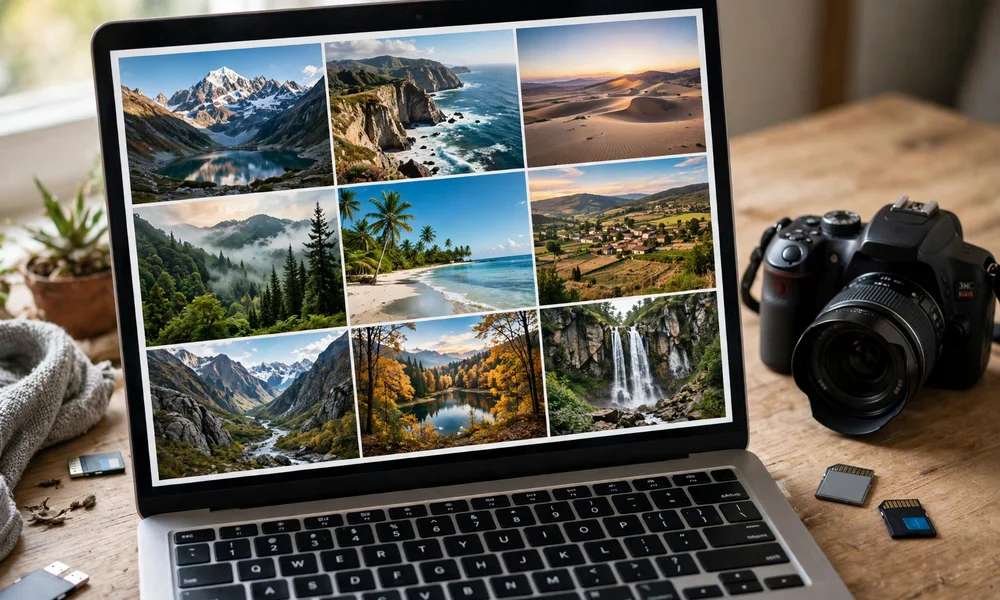
That model rewards volume and patience. One photo earning $0.99 is nothing; one thousand photos earning $0.99 each, several times a year, is an income. The photographers who earn steadily treat their portfolio like a shop: they upload consistently, keyword every image carefully so buyers can find it, and focus on subjects businesses actually search for, such as workplaces, families, food, travel, and technology. Pretty landscapes are the hardest photos to sell, because every stock site already has millions of them.
What Each Major Platform Actually Pays
Adobe Stock is the best starting point for most photographers. It pays a flat 33 percent royalty on photos and 35 percent on video, with no tiers and no annual reset. Its own royalty page works the math out: a plan costing $29.99 a month for 10 photo licences works out to $0.99 per licensed photo. On its biggest subscription plans a floor of $0.33 to $0.38 applies. Payouts start at $25, with a 45-day wait before the first payout.
Shutterstock pays 15 to 40 percent across six earnings levels based on licences sold in a calendar year, but its help centre is blunt about the floor: $0.10 is the minimum payout per download, regardless of level, and all contributors receive some $0.10 earnings. Every contributor resets to level 1 on January 1, so the higher rates must be re-earned each year. The payout minimum is $25. iStock, part of Getty Images, pays non-exclusive photographers a flat 15 percent under its rate card effective 1 July 2026, with exclusive photographers earning 25 to 45 percent. Its payout minimum is $100, and applying takes six sample files, with an answer in about a week.
Alamy restructured its contributor tiers in September 2026, with a revenue year running from 1 September to 31 August: Bronze under $250, Silver from $250 to $3,000, Gold above $3,000, and Platinum from $25,000 for content exclusive to Alamy. Reported shares are 20 percent for Silver, 40 percent for Gold, and 50 percent for Platinum, and its payout threshold is $75. Stocksy, a photographer co-operative, pays 50 to 75 percent depending on the licence sold, but applications are reviewed and the collection is curated. Foap pays contributors 50 percent of each sale and runs missions where a brand sets a brief and pays for the winning pictures.
| Platform | Contributor Share | Payout Minimum | Exclusivity |
|---|---|---|---|
| Adobe Stock | 33% photos, 35% video | $25 | Not required |
| Shutterstock | 15 to 40%, six levels | $25 | Not required |
| iStock | 15% non-exclusive; 25 to 45% exclusive | $100 | Both |
| Alamy | 20 to 50% by tier (reported) | $75 | Not required |
| Stocksy | 50 to 75% by licence | Varies | Curated |
| Foap | 50% per sale | Varies | Not required |
How to Get Accepted and What Sells
Every major marketplace reviews your work before you can sell. iStock asks for six sample files in JPEG format, at least 3 megapixels and at most 50 MB, and aims to answer within about a week. Adobe Stock and Shutterstock review your first uploads for technical quality: sharp focus, correct exposure, no noise, and no logos, trademarks, or recognizable people without a signed model release. Rejections are normal at first, and the fastest way to improve is to study which of your accepted images actually sell.
What sells is rarely what photographers most enjoy shooting. Buyers search for images that illustrate a story: a small business owner working late, a family cooking together, a nurse checking a patient, a traveller with a suitcase at an airport. Authentic, diverse, everyday scenes with copy space for text outsell dramatic landscapes. Seasonal and topical images also sell well when uploaded early: Christmas scenes in September, tax season images in January, graduation photos in spring. Keyword every image with the words a buyer would type, including the concept, the place, the activity, and the mood.
Beyond Stock: Prints, Your Own Shop, and Missions
Stock marketplaces bring the buyers, and you pay for that with cents per download. Selling directly keeps far more of each sale. A print-on-demand service turns your photos into wall art, canvas prints, and calendars, with you setting the markup. A shop of your own on Etsy or a personal website keeps the most per sale, but you must bring your own buyers through social media, search, or an existing audience. The two routes work best together: stock income is steady and passive, while direct sales pay more per image but need marketing.
Foap missions and similar brand briefs are a third route. A brand posts a brief, such as a morning coffee routine or a city weekend, and pays the photographers whose pictures it picks. The pay per win is far higher than a stock download, and the briefs tell you exactly what to shoot. Building an online business around photography takes the same skills as any small business, and our guide to the Best Online Business Ideas 2026 covers how to structure it, from pricing to finding your first customers.
How Much Can You Actually Earn?
Set expectations with the benchmark, not with the ads. At $1 to $2 per image per year, a 100-image portfolio earns roughly $8 to $17 a month, a 1,000-image portfolio earns about $83 to $167 a month, and a 5,000-image portfolio can earn $400 to $800 a month. A 2026 community survey of 312 photographers found a median of $18 a month, with most contributors earning under $100 a month, and the first 6 months typically paying $0 to $3 a month while a portfolio is still small. Those numbers are the reality for most contributors, and they explain why consistency matters more than talent alone.
Video changes the math. Stock video pays 10 to 80 times more per download than photos: Adobe pays $3.50 to $28 per video download on subscription plans and $22.40 to $70 on demand. A short clip of a city street, a cooking process, or a drone shot can earn in one download what a photo earns in a year. If your camera shoots video, uploading clips alongside your photos is the single highest-value habit in this business. Track your earnings the way you would any side income, and the Best Money Apps 2026 guide covers tools that help you watch small income streams add up.
Common Mistakes That Cost Beginners Money
The most expensive mistake is uploading once and stopping. Stock income is a volume game, and a portfolio that never grows earns less every year as new images bury it in search results. The second mistake is keywording badly: vague tags such as beautiful or nice mean your photo never appears in a buyer search, while precise tags such as woman working laptop home office morning bring it up. The third mistake is chasing the wrong subjects: sunsets and flowers are beautiful and nearly unsellable, because every marketplace already holds millions of them.
The fourth mistake is ignoring the rules. Uploading photos with visible logos, trademarked products, or recognizable people without a model release gets images rejected or, worse, your account flagged. iStock does not accept generative AI images at all, and other platforms have strict disclosure rules for AI-assisted work. The fifth mistake is going exclusive too early: an exclusive contract can pay more per sale, but it stops you selling the same image on every other platform, and for a beginner the non-exclusive route across several marketplaces almost always earns more.
Frequently Asked Questions
How much money can you make selling photos online?
At the industry benchmark of $1 to $2 per image per year, a 1,000-image portfolio earns roughly $83 to $167 a month. A 2026 community survey of 312 photographers found a median of $18 a month, with most contributors earning under $100 a month.
Which stock photo site pays the most in 2026?
Adobe Stock pays a flat 33 percent, about $0.99 per licensed photo on its own worked example. Shutterstock pays 15 to 40 percent but guarantees only $0.10 per download. Curated Stocksy pays 50 to 75 percent, and Foap pays 50 percent per sale.
Do I need a professional camera to sell photos online?
No. Modern phone cameras can produce images that pass stock review, provided they are sharp, well exposed, and free of noise. What matters more is the subject, the composition, and accurate keywords that help buyers find the image.
Can I sell the same photo on multiple stock sites?
Yes, on a non-exclusive basis, and most contributors do. Adobe Stock, Shutterstock, Alamy, and Foap all accept non-exclusive images. An exclusive contract pays more per sale but stops you selling that image anywhere else.
How long does it take to earn money from stock photography?
The first 6 months typically pay $0 to $3 a month while a portfolio is small. Earnings grow as the portfolio grows: consistent uploading for a year or more is usually needed before the income becomes meaningful.
The Bottom Line
Selling photos online in 2026 pays real money, but it pays for a portfolio, not for a single great shot. Adobe Stock’s flat 33 percent is the steadiest starting rate, Shutterstock rewards volume, and curated platforms like Stocksy pay far more per sale to photographers who can pass review.
Start with one marketplace, upload consistently, keyword precisely, and shoot what buyers search for. Add video clips, and consider direct sales once you have an audience. That is how a camera roll becomes a monthly income.

Keep what speaks to you.
Leave room for your own perspective.


