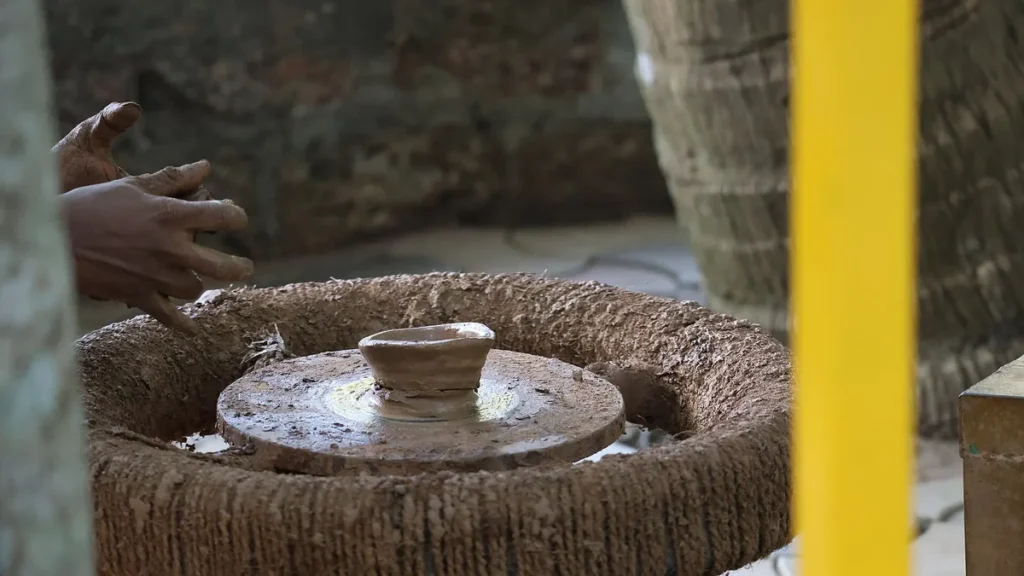
A pottery teacher gets paid to play with clay all day, and the students pay for the joy of making something with their own hands. The work is messy, warm, and honest — you show a beginner how to centre the clay, you watch a wobbly pot turn straight, and you fire the pieces that people take home and keep. The pay starts with a few evening classes and grows as your name spreads, and the teacher who fills a class every week earns a steady living from the wheel. The way to make money as a painter follows the same idea: you turn a craft you love into lessons that people pay for, and the class that is full is the class that pays. Here is how to make money as a pottery teacher.

Step 1: Learn the wheel properly first
Learn the wheel properly first, because no one pays a teacher who cannot throw a straight pot. You need at least a year of steady practice before you teach, and the practice that counts is the practice on your own wheel — centring, pulling, trimming, and glazing until your hands know the clay. Take classes from a good teacher, watch how they explain each move, and keep the pots that fail so you can see how far you have come. The teacher who rushes this step is the teacher whose students leave, and the student who leaves is the student who never comes back.
Step 2: Set up a small studio
Set up a small studio, because a pottery teacher needs a wheel, a kiln, and a table that can get dirty. A second-hand wheel costs $300 to $600, a small kiln costs $800 to $1,500, and the clay and glazes for a first class cost less than $100. A garage, a spare room, or a corner of a workshop all work, as long as the floor can take water and the kiln has safe ventilation. The studio that is small is the studio that is cheap, and the start that is cheap is the start that lets you earn from the first class.

Step 3: Teach your first evening class
Teach your first evening class, because the first class teaches you the job. Offer a two-hour beginner night for six people at $40 each, and the class that is small is the class that is safe — six wheels, six beginners, and one teacher who can reach every student. Show them how to centre the clay, let them make a mess, and fire their best piece so they take something home. The way to make money as a hairdresser works the same way: the first clients are the ones who teach you the trade, and the client who is happy is the client who books again. Ask every student to leave a review before they go home.
Step 4: Sell the pots you make
Sell the pots you make, because teaching pays the rent and selling pays the extras. The bowls, mugs, and vases you throw between classes sell at markets for $15 to $40 each, and the pot that is handmade is the pot that buyers love. Take a table at a weekend market, put your best pieces at the front, and tell buyers the story of each glaze. The pot that is sold is the pot that pays twice — once for the clay and once for the skill — and the market that is busy is the market that earns.
Step 5: Grow into courses and workshops
Grow into courses and workshops, because a single evening class has a ceiling and a course does not. Offer a four-week beginner course for $180, a weekend throwing workshop for $120, and a private lesson for $60 an hour — and the course that is full is the course that pays. The student who finishes the beginner course signs up for the next one, and the workshop that is fun is the workshop that fills. The teacher who grows is the teacher who earns, and the name that is known is the name that books.
How the money works
How the money works: a pottery teacher with a full evening class earns around $240 a night from six students at $40 each, and two classes a week brings in about $1,900 a month before costs. A four-week course with eight students at $180 each brings in $1,440, and the pots you sell at markets add $200 to $500 a month. The way to make money as a DJ shows the same maths: the night that is booked is the night that pays, and the teacher who fills the room is the teacher who earns. The costs are clay, glaze, and kiln power — about $200 a month — so most of the class fee is yours to keep.
The bottom line
Making money as a pottery teacher takes practice, a small studio, and the patience to teach beginners who will make a mess. Learn the wheel, set up cheap, teach your first class, sell your pots, and grow into courses that fill — and the clay that you love becomes the clay that pays you. The pot that is made well is the pot that is kept, and the teacher who teaches well is the teacher who earns.
Frequently asked questions
How long does it take to become a pottery teacher?
About a year of steady practice before you teach, if you throw clay every week. You need to centre, pull, trim, and glaze without thinking — and the teacher who rushes is the teacher whose students leave.
How much does it cost to start teaching pottery?
Around $1,200 to $2,200 for a second-hand wheel, a small kiln, and your first clay and glazes. The studio that is small is the studio that is cheap, and the start that is cheap is the start that earns first.
How much can a pottery teacher earn?
About $1,900 a month from two evening classes a week, plus $200 to $500 a month from selling pots at markets. The class that is full is the class that pays, and the course that is full pays more.
Do I need a kiln to teach pottery?
Yes, unless you pay a local studio to fire your students’ work — but owning a small kiln is cheaper after a few months. The kiln that is yours is the kiln that fires on your time.
Where do pottery teachers find students?
Evening classes, weekend workshops, and local markets — and the student who loved the class tells two friends. The review that is left is the review that books the next class.

Keep what speaks to you.
Leave room for your own perspective.


