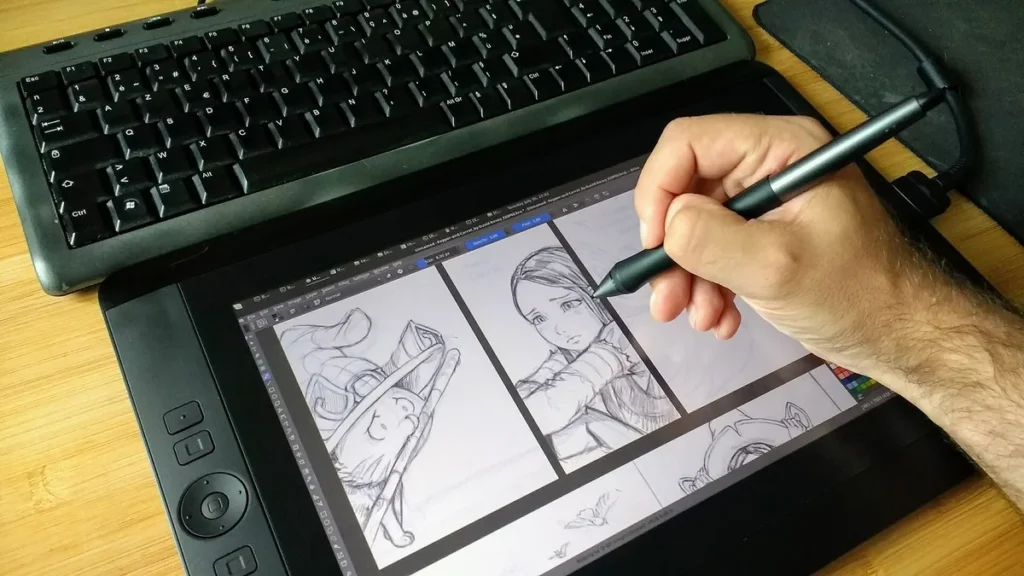
Drawing well is only half the job. The other half is turning that skill into work people pay for, again and again. This guide walks through the steps that take you from drawing for fun to earning steady money as a freelance illustrator.
Step 1: Build a portfolio that sells illustration
Clients hire illustrators from their portfolio, so yours is your shop window. Pick your ten or twelve best finished pieces and arrange them so a visitor understands within seconds what you draw and who it is for. Show the kind of work you want more of: if you want book covers, show book covers; if you want editorial illustration, show magazine-style pieces.
Create a few self-started pieces in the style of the work you want, even before anyone pays you for it. Art directors hire illustrators they can already picture doing the job.
Step 2: Start with commissions
Commissions are the simplest way to earn as an illustrator: someone asks for a drawing, you draw it, they pay you. Portrait commissions, pet portraits, wedding illustrations, and custom gifts are the easiest places to start, because the buyers already know what they want and find you through social media and word of mouth.
Make ordering easy. List exactly what you offer, what it costs, and how long it takes. A clear price list turns browsers into buyers. Take a deposit before you start, usually half the fee, and agree in writing how many changes are included.
Step 3: Win editorial illustration work
Editorial illustration means drawing for magazines, newspapers, websites, and journals. An editor needs a picture that explains or brightens an article, and a good illustrator can do in one image what a thousand words cannot. This work pays per piece and it repeats,.
Study the publications you want to draw for and note their style. Then send a short email to the art director with three or four of your most relevant pieces and one sentence about why they fit. Keep it short: art directors look at hundreds of portfolios a week.
Step 4: Illustrate children’s books and book covers
Books are one of the best-paying areas of illustration. Children’s picture books need an illustrator for every page, and publishers are always looking for new drawing styles. A picture book usually pays an advance plus a share of sales, while a book cover pays a flat fee, often a generous one for a well-known author or series.
To get book work, show that you can draw the same characters again and again. Publishers want to see a character sheet: the same child, animal, or hero drawn from different angles and with different expressions. Put together a dummy picture book of your own, even a short one, to prove you can carry a story across twelve or sixteen pages.
Step 5: Earn from stock illustration
Stock illustration means drawing once and selling the same image many times. Stock sites let buyers license your drawings for websites, presentations, packaging, and social media. Each sale pays a small amount, but a large collection earns while you sleep.
Draw what buyers actually search for. Simple, flexible illustrations sell best: people working, families cooking, plants, animals, seasonal scenes, and everyday objects in a consistent style. A set of related illustrations sells better than one-off images, because a buyer who needs one picture from a set often buys three or four.
Step 6: Sell prints and illustrated products
Your drawings can also earn as products. Art prints, greeting cards, stickers, calendars, and illustrated notebooks all sell to people who love your style but would never commission a drawing. Selling prints turns artwork you already made into income without any new drawing.
Start with your most popular pieces, the ones people already comment on and share. Sell them through an online shop or a marketplace for handmade goods, and offer a small range of sizes so buyers can pick what fits their wall and their budget. A limited print run, numbered and signed, can sell for far more than an open edition.
Step 7: Price your illustration work properly
Most freelance illustrators undercharge at the start, and it is the fastest way to burn out. Price by the value of the work and the rights the client gets, not just by the hours you spend drawing. A book cover that will be seen by thousands of readers is worth more than a one-off birthday card, even if both take a day to draw.
Ask how the illustration will be used before you quote. A drawing for a local newsletter and the same drawing for a national campaign are different jobs with different prices, because the client is buying the right to use your work. Charge more when the use is wider, the run is larger, or the rights last longer.
Step 8: Find clients without chasing them
Clients come from three places: people who find your work online, people you contact directly, and people who were sent to you by someone else. All three need the same thing, which is work they can see. Post finished illustrations regularly on the platforms where your buyers spend time, and always say whether you are open for commissions.
Freelance platforms can bring your first paying clients while your name is still unknown. They take a cut, but they also handle the introductions, and a few good reviews there make the next client easier to win. Our list of the best freelance platforms compares the places where illustrators find paid work.
Turn one-off jobs into steady income
Steady illustration income comes from repeat clients, not from constantly finding new ones. A magazine that hires you every month, a publisher who gives you the next book in a series, or a shop that orders new card designs every season is worth far more than a single big commission. Stay in touch with happy clients, show them new work, and ask what they need next.
Mix fast money with slow money. Commissions and editorial pieces pay this month, while books and stock illustration pay over the coming year. An illustrator with all four streams rarely has an empty month. If you are still setting up the freelance side of things, our guide on how to become a freelance designer covers the basics of finding clients, setting rates, and running the work like a professional.
Illustration is a narrower craft than general design, and that focus is your advantage: you are not competing with every designer who can make a logo, only with illustrators who draw like you do. For a wider look at how designers earn, see the best ways to make money as a graphic designer and notice how much of that work is branding and layout, not drawing.
Frequently asked questions
How much can a freelance illustrator earn? It varies widely. Beginners often earn a modest side income from commissions and prints, while established illustrators with book and editorial clients can earn a full-time living.
Do I need a degree to become a freelance illustrator? No. Clients hire from your portfolio, not your qualifications. A strong set of finished illustrations matters far more than a certificate.
Should I draw for free to get exposure? Almost never. A little free work for a charity or a friend is fine, but regular unpaid work trains clients to expect it.
Start where you are. Pick one income stream from this guide, finish three pieces for it this week, and put them where buyers can see them. Freelance illustration is built one drawing, one client, and one repeat order at a time.

Keep what speaks to you.
Leave room for your own perspective.