
Dishwashing is one of the easiest jobs to get and one of the most underestimated ways to earn steady money. Restaurants, hotels, hospitals, schools, and event halls all need someone to keep the dishes moving, and they need that person every single day.
The pay will not make you rich on its own, but that is not the whole story. The hours are flexible and the work is always available. This guide shows you, step by step, how to get hired, how to earn more than the starting wage, and how to turn a dishwashing job into something bigger.
How Dishwasher Pay Actually Works
A dishwasher is usually paid by the hour. Starting pay is often close to the local minimum wage, but it rises in busy cities, in hotels, and in large kitchens that run around the clock. Tips are rare in this role, since dishwashers work behind the scenes, but some restaurants share a small part of the tip pool with the whole kitchen team, and that can add up over a month.
The real money in dishwashing comes from hours and extras. Evening shifts, weekend shifts, and holiday shifts often pay more, and overtime is common in busy kitchens. A reliable, fast dishwasher can pick up extra shifts almost any week of the year, because kitchens are almost always short of hands.
Step 1: Pick the Right Kind of Dishwashing Job
Not all dishwashing jobs pay the same, so choose the setting with care. A small cafe may offer calm shifts and friendly regulars, but the hours can be short and the pay stays near the bottom. A large hotel, a hospital kitchen, or a busy chain restaurant usually pays more and offers longer shifts.
Event work is another option worth knowing about. Weddings, conferences, and festivals hire dishwashers for single nights, and the pay for those nights is often higher than a normal shift. If you want to compare other entry-level restaurant roles before you decide, read our guide to the best ways to make money as a bartender.
Step 2: Get Hired Fast, With No Experience
Most dishwashing jobs do not ask for experience, and many do not even ask for a formal interview. Walk in during a quiet time, usually mid-afternoon between lunch and dinner, and ask the manager if they are hiring.
Apply to several places in the same week. Restaurants turn staff over quickly, so a place that says no on Monday may need someone by Friday. If you can work nights and weekends, say so, because those are the shifts managers struggle most to fill. Once you are hired, show up early for your first week. In a kitchen, the first impression is everything, and a dishwasher who arrives on time and works hard is remembered.
Step 3: Become the Fastest Washer on the Shift
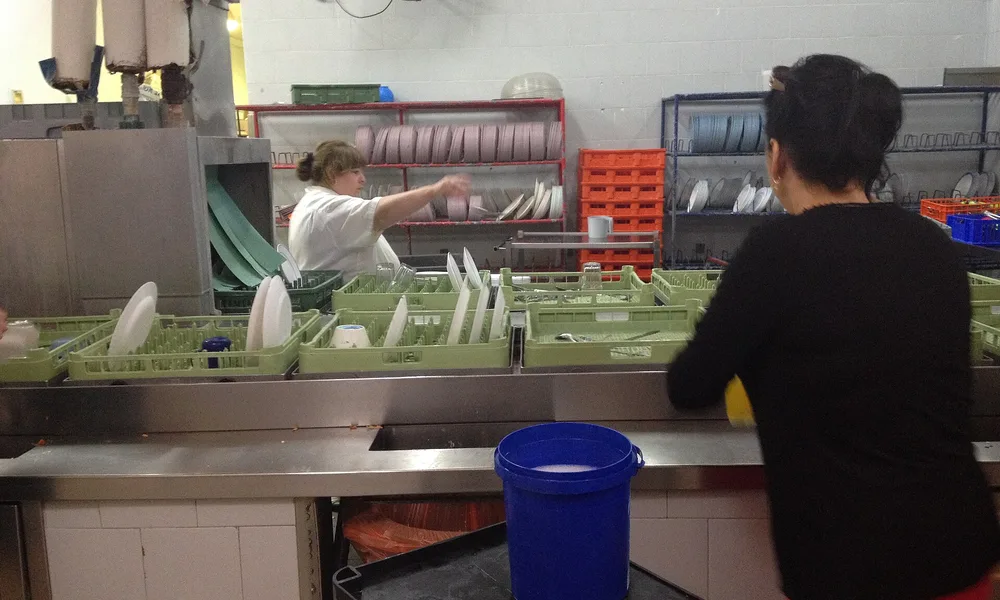
Speed is the skill that matters most in the dish pit, and it is also the skill that gets you noticed. Learn the flow of the station: scrape, rinse, load, run the machine, unload, and stack.
Work clean as well as fast. A dishwasher who breaks plates or leaves food on glasses costs the kitchen money, no matter how quick they are. Learn how to handle the machine properly, how much soap to use, and what to do when a rack comes out still dirty.
Step 4: Earn More With Nights, Weekends, and Events
The simplest way to earn more as a dishwasher is to work the shifts other people avoid. Friday and Saturday nights are the busiest times in most restaurants, and they are also the times when managers pay extra or offer longer hours. Holiday periods, such as Christmas, New Year, and local festival weekends, bring the same opportunity.
Take the extra shifts on purpose. Watch your limits, though. Dishwashing is physical work in a hot, wet room, and an exhausted washer is a slow washer.
Step 5: Move Up to Lead, Prep, or Line Cook
Dishwashing is the classic first step into a kitchen career, because you learn the whole operation from the back. Kitchens promote from within more than almost any other workplace, and the dishwasher who is reliable is usually first in line.
After a few months, ask your manager what the next step looks like. It might be lead dishwasher, which means training new starters and running the station. From there, many dishwashers move into food preparation, then to the line, and then to a full cook role. Each step comes with a pay rise.
Step 6: Add a Second Kitchen or Event Gigs
If your main job gives you part-time hours, a second kitchen can fill the gaps. Many dishwashers work one regular job and pick up weekend shifts somewhere else, often through a catering company or a temp agency that supplies kitchen staff.
Keep it simple and honest. Tell both managers about your other hours so nobody books you twice. If you want ideas for earning outside the kitchen too, see our list of side hustles that actually pay.
Step 7: Ask for a Raise the Right Way
Many dishwashers never ask for a raise, and that is one reason the pay stays low. After three to six months of reliable work, you have earned the right to ask. Pick a quiet moment, not the middle of a dinner rush, and keep it short and factual.
Ask for a specific amount, even a small one. A rise of one dollar an hour is worth real money across a full year of full-time work. If the manager says no, ask what would need to change for you to earn one, and ask about other benefits, such as free meals, more hours, or a move to a better-paid role. For a fuller approach to the conversation, read our guide on how to negotiate a higher salary.
Step 8: Turn Dishwashing Into a Career or a Launchpad
Dishwashing can stay a simple job, and there is nothing wrong with that. But it can also be the start of something much bigger. Some dishwashers become cooks, then chefs, then kitchen managers.
Whatever your plan, treat the money with respect. Build your budget on your regular hours only, and send overtime and event pay straight to savings or to paying down debt. Watch how the kitchen is run while you work, because that knowledge is worth as much as the wage, and it stays with you long after you leave the dish pit.
Common Mistakes That Keep Dishwasher Pay Low
First, staying in a slow cafe with short hours when a busy hotel would pay more. Second, never asking for a raise or for extra shifts. Third, calling in sick at short notice or arriving late, because reliability is the one thing every kitchen manager values most. Fourth, treating the job as dead-end work and learning nothing from it.
The Bottom Line
Making money as a dishwasher is not about one clever trick. It is about picking a busy kitchen, getting hired fast, working quickly and cleanly, taking the shifts others avoid, and using the job as a step toward something better. The work is honest, the demand never goes away, and the path upward is open to anyone willing to show up and learn.

Keep what speaks to you.
Leave room for your own perspective.


