Good cooking alone does not make a caterer rich. The money comes from choosing the right events, pricing each job honestly, and running the day so well that the same clients book you again.
This guide is about the earning side of the work: which events pay, how to shape a menu that sells, how to price a job, how tastings win bookings, and how to staff an event without giving your profit away.
How Caterers Actually Get Paid
Most catering work is paid per event, and most prices are built per person. A client gives you a guest count, you quote a price per head, and the total is that price multiplied by the guests, plus extras such as rentals or delivery.
That simple shape hides big differences. A drop-off office lunch is a short job: cook, pack, deliver, and leave. A full-service wedding is a long day of setting up, serving, and clearing. The wedding pays far more per event, but it takes far more hours and staff. The lunch pays less per event, but you can do several in a week, and the same client may order every week.
Choose the Events That Pay Best for Your Cooking
Before you say yes to a job, ask three questions: how many guests, how long will the day run, and how much extra work sits around the cooking?
List the events you cook best and enjoy most. If your strength is generous, home-style food in large trays, office lunches and family parties will suit you. If your strength is plated food and careful service, weddings and formal dinners will pay more for that skill. Be honest about the jobs that cost you money: a long drive, a small guest count, or a menu you have never cooked can swallow the fee. Saying no to those jobs protects the hours you can sell to better-paying clients. For a wider view of earning from a strength, see earning money with a skill you already have.
Build a Menu That Sells and Earns
A catering menu should be short. Six to eight dishes, done brilliantly, will earn you more than twenty dishes done unevenly. Every extra dish adds ingredients, prep time, serving dishes, and waste, and it makes the client slower to decide.
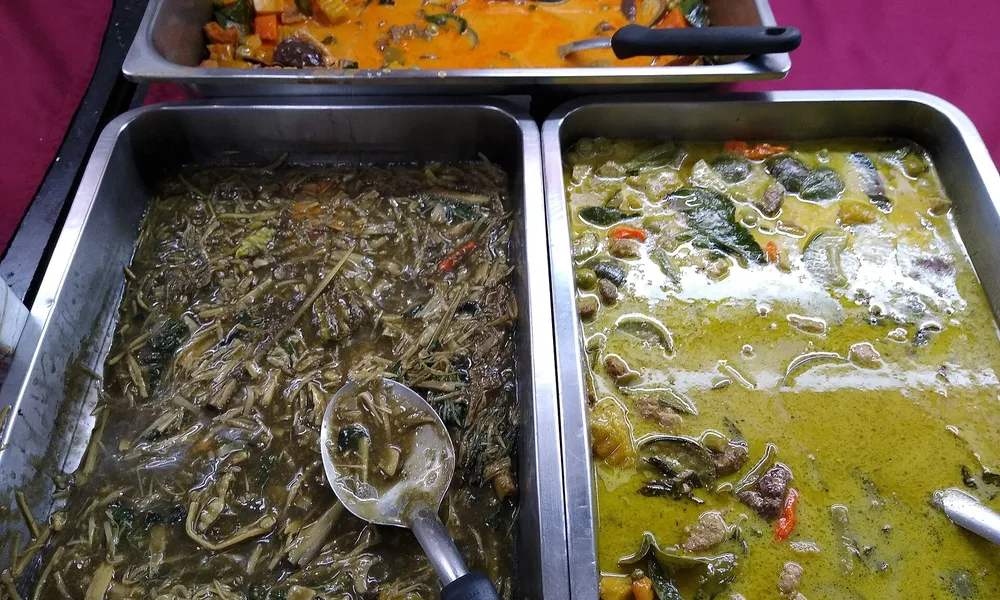
Build the menu around dishes that travel well, hold their heat, and can be cooked in large batches: a stew, a roast, a tray of pasta, or a well-seasoned rice dish will feed fifty people far more calmly than a dish that needs last-minute cooking for each plate. Price the menu from the ingredients up. Weigh the portions, work out what each dish costs per person, and set the selling price so the food cost leaves room for your time, transport, and profit.
Price Each Job So the Event Pays
Every quote should start with the same maths: food cost per person, plus staff cost per event, plus transport and rentals, plus your profit. Work it out on paper for every job, because the jobs that lose money are almost always the ones quoted from memory.
Take a 50-person lunch. If the food costs $6 per person, that is $300. Two helpers for five hours at $18 an hour is $180. Delivery, fuel, and serving equipment add $70, so your real cost is $550. Quoting $15 per person gives you $750, a $200 margin for a half-day. Quoting $12 gives you $600, a $50 margin that vanishes the moment a guest count changes.
Use Tastings to Turn Enquiries Into Bookings
A tasting is the best sales tool a caterer has, because it lets the client eat the answer instead of guessing it. For a wedding or a large event, offer a small tasting for two people, with two or three of your strongest dishes. Keep it simple, serve it well, and let the food do the talking.
Charge for tastings, or charge and take the fee off the final bill when the client books. A free tasting for every enquiry fills your week with people who never book, while a small fee keeps the serious clients and respects your time and ingredients. Use the tasting to learn: ask what guests like, what they cannot eat, and what the day will feel like.
Staff Each Event Without Giving Your Profit Away
Staffing is where catering profit is won or lost. Too few hands and the food is late and the client will not book again. Too many hands and the wages eat the fee before you have finished serving.
A useful starting point is one server for every 15 to 20 guests at a full-service event, and one cook or helper for every 30 to 40 guests in the kitchen, adjusted to the menu. A buffet needs fewer servers than a plated dinner, and a drop-off needs none at all. Hire people you have worked with before, pay them fairly and on time, and brief the team before the event: who serves what, who clears, and who stays until the end.
Add Extras and Turn One Event Into the Next
The food is the main sale, but the extras are where a good event becomes a better-paying one. Desserts, drinks, a cheese board, or a late-night snack are easy to add once the kitchen is already working. Offer them as clear choices with clear prices. Rentals are another honest extra: tables and serving dishes cost you money to hire, so charge for them as a separate line rather than hiding them in the food price.
For work between events, side hustles that actually pay lists realistic options, and the best ways to make money from home in 2026 covers work you can fit around bookings.
Mistakes That Eat a Caterer’s Pay
The most common mistake is quoting too low to win the job. A low quote feels like a win until the day arrives and you realise you are working twelve hours for almost nothing. The second is a menu that is too long: more dishes, more waste, more chances for something to go wrong, and less profit on every plate.
The third is taking a job that does not fit your setup: a far-away venue, a menu you have never cooked, or a guest count far larger than your usual events. The fourth is poor timing: food ready too early goes cold, food ready too late keeps guests waiting, and both hurt the review the client leaves.
Frequently Asked Questions
How much can a caterer earn per event? It varies with the event type, guest count, and service level. A small drop-off lunch may earn a modest margin for a few hours of work, while a full-service wedding for a hundred guests can earn several times more, with far more hours and staff behind it.
Which catering events pay best? Full-service weddings and formal dinners usually pay the most per event, while regular corporate lunches pay the most steadily across the year. The best mix is steady weekday work plus larger weekend events.
Do I need a long menu to win catering work? No. A short menu of six to eight dishes, cooked brilliantly, wins more work than a long menu cooked unevenly. Clients choose faster, you waste less, and the food arrives looking and tasting its best.
The Bottom Line
Making money as a caterer is not about cooking more; it is about cooking for the right events, at the right price, with the right team. Choose the events that suit your cooking, keep the menu short and profitable, price every job from real costs, and use tastings to win the bookings that matter.

Keep what speaks to you.
Leave room for your own perspective.