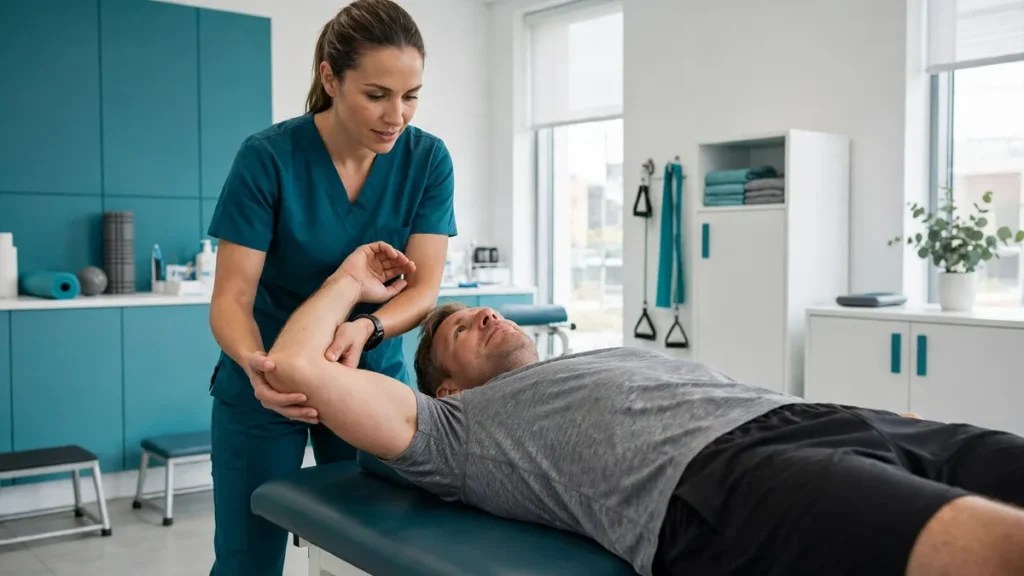
Physical therapists help people move again. After surgery, after an injury, after a stroke, or when chronic pain makes everyday life hard, a physical therapist is often the person who builds the plan that gets someone back on their feet. It is hands-on, deeply personal work, and one of the most secure careers in American healthcare.
The US Bureau of Labor Statistics counted about 267,200 physical therapists in 2024, with a median wage of 101,020 dollars a year. Employment is projected to grow 11 percent from 2024 to 2034, much faster than average, with about 13,200 openings a year. This guide lays out every step, from your first college class to your first job.
What Does a Physical Therapist Do?
A physical therapist examines patients, diagnoses movement problems, and designs treatment plans that restore strength, flexibility and mobility. A typical day might include helping a patient walk again after a knee replacement, teaching exercises to someone with back pain, or working with an athlete returning after an ACL tear.
Physical therapists work in many settings. Outpatient clinics are the most common. Hospitals employ therapists in acute care and rehabilitation units. Others work in home health, in schools, or with sports teams. The setting you choose shapes your day, your patients and your pay.
How Long Does It Take to Become a Physical Therapist?
The standard route takes seven years: four years for a bachelor’s degree, including the science prerequisites, followed by about three years in a Doctor of Physical Therapy programme. Some universities offer faster 3+3 programmes, where the final year of undergraduate study counts towards the doctorate.
Step 1: Earn a Bachelor’s Degree and Complete the Prerequisites
Every Doctor of Physical Therapy programme requires a bachelor’s degree first, and very few require a specific major. Exercise science, kinesiology and biology are the most common choices, but students with other degrees get accepted every year, as long as they complete the required science courses.
The prerequisites usually include anatomy and physiology, general biology, general chemistry, physics, statistics, and social and behavioural sciences such as psychology. The Physical Therapist Centralized Application Service, known as PTCAS, lists the requirements for each programme, so check your target schools early and plan your courses around them.
Two other things matter at this stage. Most programmes expect observation hours, time spent watching licensed physical therapists at work, which proves you understand the job. Your grade point average also matters: DPT programmes are competitive, and a strong GPA in your science courses is one of the biggest factors in admission.
Step 2: Choose a CAPTE-Accredited DPT Programme
This is the one step you cannot shortcut. To become licensed, you must earn your doctorate from a programme accredited by the Commission on Accreditation in Physical Therapy Education, known as CAPTE. An unaccredited programme can cost you the whole route, because the exam body checks where you trained. There are 277 accredited DPT programmes in the United States.
When comparing programmes, check the first-time pass rate on the licensing exam, the quality of clinical placements, and the total cost, including living expenses. Some programmes are much more expensive than others, and the debt you take on will shape your early career.
Applications go through PTCAS, the centralised system that lets you apply to multiple programmes with one application. Most deadlines fall in the autumn, a full year before you would start, so apply in the summer or early autumn of your final undergraduate year.
Step 3: Complete the DPT Programme
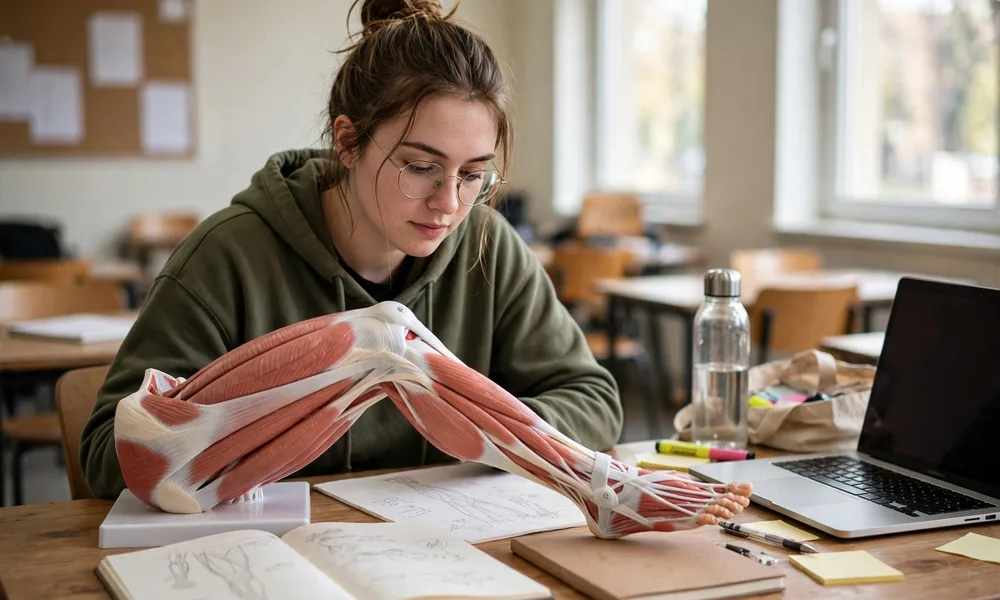
A Doctor of Physical Therapy programme usually lasts about three years. The average professional phase is about 122 weeks: roughly 88 weeks of classroom and laboratory work, plus about 35 weeks of full-time clinical education, covering anatomy, biomechanics, neuroscience, exercise physiology and pharmacology.
The clinical rotations are the heart of the degree. You will spend months at a time in real clinics, hospitals and rehabilitation centres, treating patients under supervision. Most programmes include rotations in several settings, so you can discover what you prefer. These rotations are also where many students find their first job, because clinics often hire the students who impressed them.
DPT programmes are intense: heavy workloads, frequent exams and long clinical days. Study groups and good time management will carry you through.
Step 4: Pass the NPTE Licensing Exam
After completing your DPT programme, the next step is the National Physical Therapy Examination, known as the NPTE. It is run by the Federation of State Boards of Physical Therapy, the FSBPT, and it is the single licensing exam for the profession nationwide, offered four times a year, in January, April, July and October.
The NPTE is a computer-based test with 250 questions across five sections, taking five hours to complete. Scores range from 200 to 800, and you need at least 600 to pass. The questions cover examination and diagnosis, interventions, equipment and safety, across all body systems. Most graduates take it shortly after finishing, while the material is fresh.
Preparation matters. Start studying in your final semester and use practice exams to find your weak areas. Registration costs 485 dollars plus a small processing fee, and you must be approved by your state board before you can sit.
Step 5: Get Licensed in Your State
Physical therapists are licensed in all 50 states, and each state sets its own requirements on top of the national exam. Most states require a jurisprudence exam on the state’s practice act, covering supervision rules and documentation standards, plus a criminal background check and fingerprinting.
Apply to the state board where you want to work, submit your degree and exam results, and pay the fee. Processing times vary, so apply early, especially if you have a job offer waiting. Once licensed, you can join the PT Compact, which lets therapists in member states practise in other member states without a separate licence.
Keep your licence current. Every state has its own renewal cycle and continuing education requirements, and many therapists use them to learn new techniques and move towards a specialisation.
Step 6: Land Your First Job
New graduates are in demand. With about 13,200 openings a year, most DPT graduates find work quickly. Start your search during your final clinical rotation. Your clinical supervisors are your best contacts: tell them you are looking, and ask for introductions.
Think carefully about your first setting. Outpatient orthopaedics is the most common first job and builds strong hands-on skills. Hospital work offers variety and a team environment. Home health usually pays more but means driving between patients. Travel therapy, short-term assignments in different cities, pays the most for new graduates and is a popular way to pay down student debt fast.
Negotiate your first offer. Salary, signing bonuses, continuing education allowances and mentorship time are all on the table, and employers expect new graduates to ask. A structured mentorship programme in your first year is worth more than a small pay difference. Beyond the clinic, some therapists build extra income by teaching or creating online material. If that interests you, the best online courses for making money explain how online teaching works, the best freelance jobs cover flexible side work, and the best remote jobs for beginners list roles that fit around a clinical schedule.
Specialisations: Where to Go Next
After a few years of practice, many therapists specialise. The American Board of Physical Therapy Specialties offers board certification in areas including orthopaedics, sports, neurology, paediatrics and geriatrics. Specialisation usually requires several years of practice in the area, plus a specialist exam.
Residency and fellowship programmes offer a faster route: a residency is typically a year of structured, mentored practice in a speciality. Specialists generally earn more and have more interesting caseloads. You do not need to decide on a speciality before you start; most therapists discover theirs in their first few years of practice.
Salary and Job Outlook in 2026
The Bureau of Labor Statistics reports a median annual wage of 101,020 dollars as of May 2024, or about 48.57 dollars an hour. The lowest-paid tenth of therapists earn under 74,420 dollars a year, while the highest-paid tenth earn more than 132,500 dollars. Pay tends to run higher in home health and skilled nursing facilities than in physicians’ offices or schools, and it varies by state.
| Measure | Figure |
|---|---|
| Median annual wage | 101,020 dollars |
| Lowest 10 percent | Under 74,420 dollars |
| Highest 10 percent | Over 132,500 dollars |
| Jobs in 2024 | About 267,200 |
| Projected growth, 2024-2034 | 11 percent |
| Openings per year | About 13,200 |
The growth is driven by an ageing population, by people staying active later in life, and by direct-access laws that let patients see a physical therapist without a doctor’s referral first. For anyone weighing the cost of a doctorate against the payoff, a six-figure median wage and double-digit growth is a strong answer.
Is Becoming a Physical Therapist Worth It?
The cost is real: three years of graduate tuition on top of a bachelor’s degree can mean significant student debt, and the starting salary, while solid, is not in the same league as a doctor’s or a dentist’s. If your only goal is maximum income, other paths pay more.
But few careers offer this combination: a doctoral-level profession, direct work with patients, visible results, flexible settings, and demand projected to keep growing for a decade. If you enjoy science and like people, physical therapy is one of the best-value healthcare careers available.
Common Mistakes to Avoid
The most common mistake is applying to an unaccredited programme. Always confirm CAPTE accreditation before you apply, and before you accept an offer. The second mistake is ignoring the cost: compare total programme costs, including living expenses, and think about what your loan payments will look like on a new graduate’s salary.
The third mistake is skipping observation hours: they are how you find out whether you actually enjoy the work. The fourth is neglecting the NPTE; students who start preparing early pass at much higher rates than those who cram. And the fifth is taking the first job offer without negotiating. Even a small difference in starting pay compounds over a career.
5 Key Takeaways
- Becoming a physical therapist takes about seven years: a four-year bachelor’s degree, then a three-year Doctor of Physical Therapy programme.
- Your DPT programme must be accredited by CAPTE: there are 277 accredited programmes, and an unaccredited degree will not lead to a licence.
- After graduation you must pass the NPTE, a five-hour exam with 250 questions, scoring at least 600, then meet your state’s requirements.
- The median wage is 101,020 dollars a year, with employment projected to grow 11 percent from 2024 to 2034 and about 13,200 openings a year.
- Specialisation, residency and travel therapy are the fastest ways to raise your pay once you are licensed.
Frequently Asked Questions
How long does it take to become a physical therapist?
About seven years: four years for a bachelor’s degree, including the science prerequisites, then about three years in a Doctor of Physical Therapy programme. Some universities offer faster 3+3 tracks.
Do you need a doctorate to be a physical therapist?
Yes. Entry-level physical therapy education in the United States is now at the doctoral level. You need a Doctor of Physical Therapy degree from a CAPTE-accredited programme to sit the licensing exam.
How hard is the NPTE?
The NPTE is a challenging five-hour exam with 250 questions, and you need a scaled score of at least 600 to pass. Most graduates who prepare with practice exams pass on their first attempt.
How much do physical therapists make?
The median annual wage is 101,020 dollars, according to the Bureau of Labor Statistics for May 2024. The lowest-paid tenth earn under 74,420 dollars, and the highest-paid tenth earn more than 132,500 dollars.
Is physical therapy a good career in 2026?
Yes. Employment is projected to grow 11 percent from 2024 to 2034, with about 13,200 openings a year, a six-figure median wage and strong job security.
Can physical therapists specialise?
Yes. After a few years of practice, therapists can earn board certification in areas such as orthopaedics, sports and neurology, usually through a residency and a specialist exam.
The Bottom Line
Becoming a physical therapist in 2026 is a clear path: a bachelor’s degree with the right science courses, a CAPTE-accredited DPT programme, the NPTE exam, a state licence, and your first job. It takes about seven years and real effort, but it leads into a profession with a six-figure median wage, 11 percent projected growth, and work that genuinely changes people’s lives. Start by checking the prerequisites for the programmes that interest you and booking your observation hours.

Keep what speaks to you.
Leave room for your own perspective.


