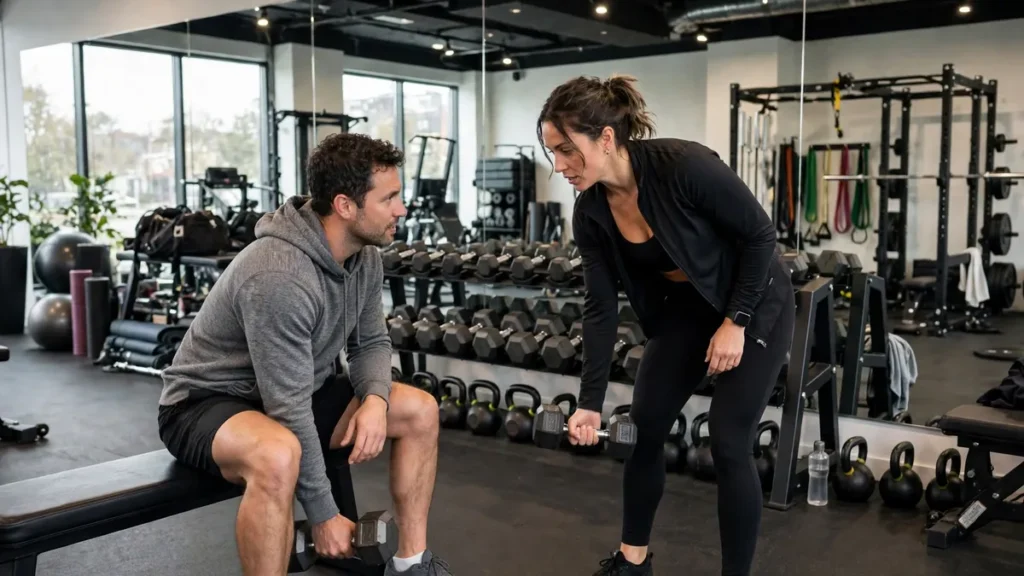
A personal trainer helps people get fitter, stronger, and healthier, one session at a time. Trainers design workout plans, teach correct exercise form, keep clients motivated, and adjust programmes as clients progress. It is hands-on work that mixes exercise science, coaching, and people skills, and it is one of the most accessible careers in the fitness industry: you do not need a university degree, and most people can be certified and working within three to six months. This guide explains how to become a personal trainer in 2026, from choosing a certification to finding your first clients.
Personal training is also a career with real variety. Some trainers work on the gym floor, some run their own studio, some coach clients online, and some specialise in areas such as strength training, weight loss, or training older adults. The work is physical and social, the hours are often early mornings and evenings, and the reward is visible: clients who get stronger and feel more confident.
Key Takeaways
- To become a personal trainer, you need one accredited certification, a current CPR/AED certificate, and to be at least 18 with a high school diploma or equivalent.
- The most recognised certifications are NASM, ACE, NSCA, ACSM, and ISSA, and employers and insurers treat NCCA accreditation as the baseline credential.
- Most people study for three to six months and spend roughly $500 to $2,000 all in, depending on the certification and study package they choose.
- The Bureau of Labor Statistics reports a median wage of $47,160 a year for fitness trainers and instructors in May 2025, with employment projected to grow 7 percent from 2025 to 2035.
- Certification is the entry ticket, not the skill. The trainers who succeed are the ones who keep learning, coach real people, and build a reputation for results.
What Does a Personal Trainer Do?
A personal trainer works with individual clients or small groups, designing exercise programmes that match each client’s goals, fitness level, and health history. A first session usually starts with an assessment: the trainer asks about the client’s goals, injuries, and medical history, watches how they move, and measures a baseline such as strength or endurance. From that assessment, the trainer builds a plan, then coaches the client through each workout, correcting form, adjusting weights, and tracking progress over weeks and months.
The work goes beyond counting repetitions. Trainers teach clients how to move safely, which matters most for beginners and for people returning to exercise after an injury or a long break. They help clients set realistic goals, such as losing weight or building strength, and they keep clients accountable between sessions. Many trainers also give general guidance on sleep and recovery, although detailed diet plans are the work of a registered dietitian rather than a trainer.
How to Become a Personal Trainer in 2026
The route into personal training has seven steps, and they work best in this order. Skipping ahead usually costs time or money later, so take them one at a time.
Step 1: Check the Prerequisites
The baseline requirements are the same across the major certification bodies, and they are lower than most people expect. You must be at least 18 years old, hold a high school diploma or equivalent such as a GED, and hold a current CPR/AED certificate. No previous coaching experience is required, although hands-on time with clients before the exam helps a great deal. You do not need a degree in exercise science, and you do not need to have competed in sport. If you meet those three requirements, you can enrol in a certification programme.
Step 2: Choose One Accredited Certification
Pick one certification accredited by the National Commission for Certifying Agencies, known as the NCCA. Employers and insurers treat that accreditation as the baseline credential, and it is what separates a recognised qualification from a weekend certificate. The five most widely recognised options are NASM, ACE, NSCA, ACSM, and ISSA. One accredited certification is enough to start. Collecting three before your first client is a common and expensive mistake.
Each certification has a different flavour. NASM, the National Academy of Sports Medicine, is built around its Optimum Performance Training model and corrective exercise, and it is one of the most recognised names with gym employers. ACE, the American Council on Exercise, is the most coaching-focused, built around behaviour change and general populations. NSCA and ACSM are the academic bodies, with heavier reading and lower exam-only costs. ISSA is popular with online and self-paced learners, because its core exam is open-book and remote.
Step 3: Study and Pass the Exam
Most candidates study for three to six months. ACE reports that most of its candidates finish within three to six months, and NASM gives you 180 days from enrolment to sit for the exam, with many candidates completing the course in around ten to fifteen weeks. The study material covers anatomy, exercise physiology, programme design, nutrition basics, and client assessment, and most programmes include video lessons, practice exams, and a textbook.
The exams themselves are serious. The NASM exam is 120 questions in two hours, and the ACE exam is 150 questions in three hours. Both are proctored, and both require a pass mark. The best way to prepare is to study a little every day, take the practice exams under timed conditions, and get hands-on experience in a gym while you study. Reading about a squat is not the same as coaching one, and the exam questions often test practical judgement rather than memorised facts. The best online courses for making money in 2026 show how structured online study works, and the same habits, a fixed schedule and regular practice tests, carry over directly to certification study.
Step 4: Get CPR/AED Certified and Insured
Before you take the exam or start work, you need a current CPR/AED certificate, and most certification bodies require a live, hands-on skills check, so a fully online CPR course is usually not accepted. Book an in-person course early, because it is a common reason for delays. Once you are certified, arrange professional liability insurance. Many gyms require it before you can train clients on their floor, and it protects you if a client is injured. Insurance for trainers is usually affordable, and some certification bodies offer it as part of a package or through a partner.
If you plan to work for yourself, sort out the legal basics too: keep records of income and expenses, and remember that the moment a client pays you for a session, you are running a small business. The best remote jobs for beginners in 2026 teach the same self-management habits that self-employed trainers rely on every week.
Step 5: Get Your First Job or Your First Clients
Most new trainers start in a gym. A big-box gym, a boutique studio, or a community leisure centre will often hire newly certified trainers, and the job gives you a steady flow of potential clients, experienced colleagues to learn from, and a floor to practise on. The pay structure varies: some gyms pay an hourly wage, some pay per session, and some charge rent for floor space while you keep the session fees. Ask how the pay works before you accept, and ask how new trainers get clients, because the answer tells you a lot about whether the gym will help you build a book or leave you to figure it out alone.
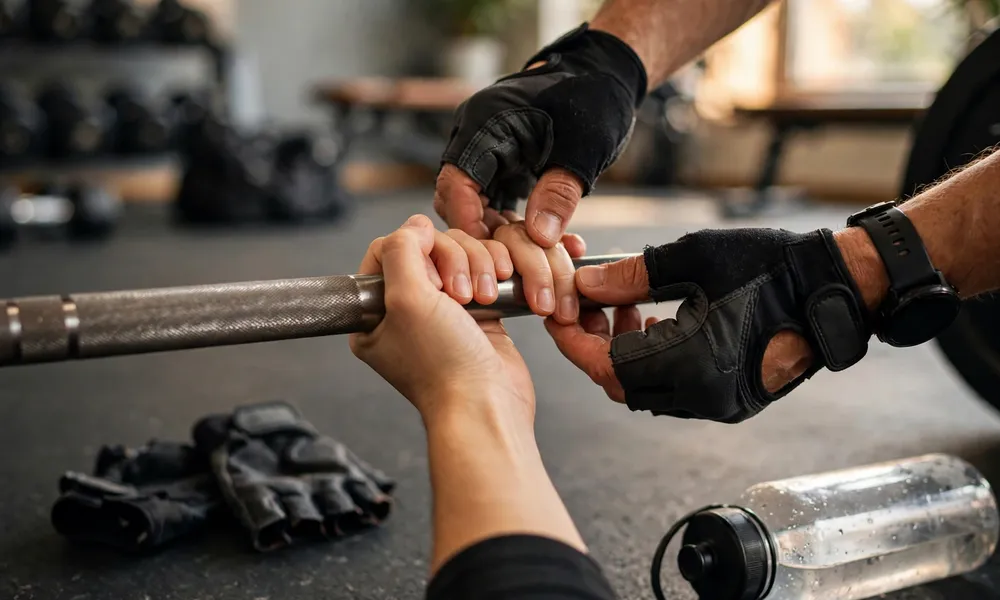
Step 6: Specialise and Keep Learning
Once you have coaching hours behind you, specialise. The trainers who earn the most and keep clients the longest are rarely generalists. Popular specialisms include strength training, weight loss, training older adults, pre- and post-natal training, and corrective exercise. Each specialism has its own short courses, and each one lets you charge more and attract clients who want exactly what you offer.
Step 7: Consider Going Online
Once you have coaching hours and a specialism, online coaching becomes a real option. Online trainers write programmes, check in with clients by video call, and review training videos remotely. But it works best after you have coached people in person, because the judgement you need to coach remotely comes from watching hundreds of sessions in person first. The best freelance jobs in 2026 describe the same pattern: build the skill face to face, then take it online.
How Much Does It Cost and How Long Does It Take?
Most people spend roughly $500 to $2,000 all in, and the certification is the biggest line. NASM lists its packages from $999 to $3,450 depending on the study package, and ACE lists its study programmes from $989 to $1,750, while the exam-only bodies, NSCA and ACSM, charge around $300 to $435 for the exam. Providers run frequent sales, so confirm the live price before you enrol, and budget for the extras: the CPR/AED course, insurance, and the recertification fee.
What Do Personal Trainers Earn?
This guide focuses on the career path rather than pay, and the salary picture is covered in detail in the companion salary article on this site. The short version is that the Bureau of Labor Statistics does not track personal trainers on their own. It counts them in one occupation, exercise trainers and group fitness instructors, whose median wage was $47,160 a year, or $22.67 an hour, in May 2025. The middle half of that group earned between $35,280 and $61,730 a year, and the top 10 percent earned more than $83,100. Those figures cover employees only and leave out self-employed trainers, whose income varies far more with how many clients they keep and what they charge. Employment in the occupation is projected to grow 7 percent from 2025 to 2035, much faster than the average for all occupations, with about 68,000 openings a year.
Common Mistakes to Avoid
The first mistake is collecting certifications before coaching anyone. One accredited certification is the baseline, and the rest can wait until you know what you want to specialise in. The second mistake is treating the exam as the finish line. The qualification is the entry ticket, not the skill, and the trainers who struggle are often the ones who stop learning the day they pass. The third mistake is undercharging at the start and never raising your rates. Low prices attract clients who leave quickly, and they make it hard to earn a living from the hours you work. Charge a fair rate, deliver real results, and raise your rates as your skill and demand grow.
Frequently Asked Questions
Do you need a degree to become a personal trainer?
No. You need to be at least 18, hold a high school diploma or equivalent, and hold a current CPR/AED certificate. A degree in exercise science can help, especially for work with athletes or in clinical settings, but it is not required for the standard certification route or for most gym jobs.
Which personal trainer certification is best?
There is no single best certification, only the best fit for you. NASM and ACE are the most recognised with gym employers, NSCA and ACSM are the most academic, and ISSA is the most flexible for self-paced and online learners. Whichever you choose, make sure it is accredited by the NCCA, because that is the credential employers and insurers look for.
How long does it take to become a personal trainer?
Most people take three to six months to study and pass the exam, and a further year to become confident as a coach. A focused full-time effort can get you exam-ready in four to six weeks, but coaching skill only comes from working with real clients, so plan for the full journey rather than just the exam date.
Is personal training a good career in 2026?
It is a good career for people who enjoy exercise, like working with others, and are comfortable with variable hours and income. Employment is projected to grow 7 percent from 2025 to 2035, much faster than average, with about 68,000 openings a year. Trainers who specialise, keep learning, and build a reputation for results can build a lasting career.
The Bottom Line
Becoming a personal trainer in 2026 is a straightforward path with a clear order. Meet the prerequisites, pick one NCCA-accredited certification, study for three to six months and pass the exam, get your CPR/AED certificate and insurance, and then get your first job or your first clients. From there, specialise, keep learning, and consider online coaching once you have the hours behind you. The certificate gets you in the door. The career is built by coaching real people, one session at a time.

Keep what speaks to you.
Leave room for your own perspective.


