
Every successful business starts with an idea, but an idea alone is not enough. Entrepreneurs have to turn that idea into something useful, understand who needs it, test whether people will pay for it, and build a business capable of operating over time.
This is one of the stories Face Zem explores through its coverage of entrepreneurs, business journeys, success, and the people behind growing businesses.
Start With a Problem Worth Solving
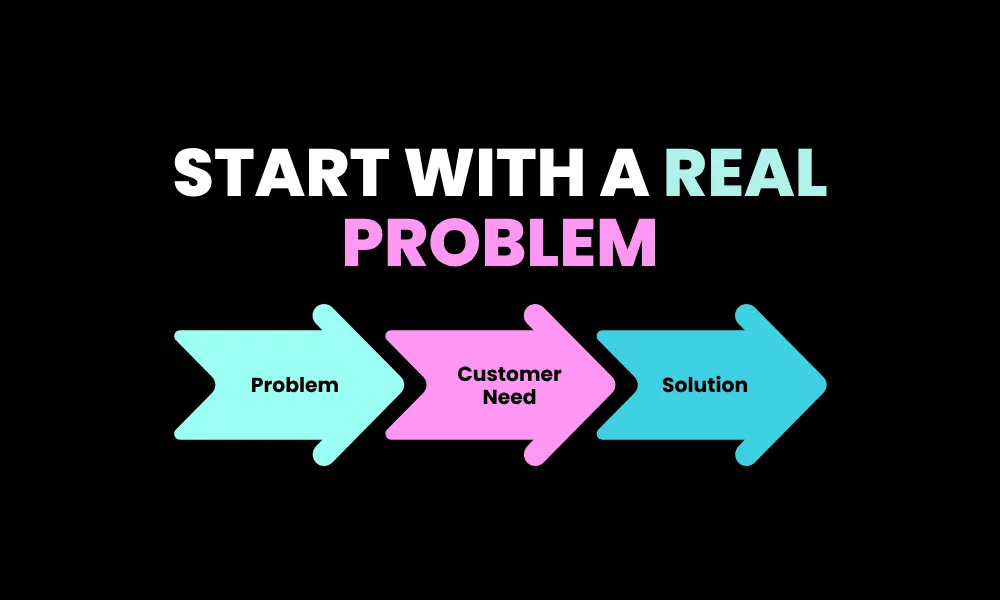
Many businesses begin when someone notices a problem that customers are struggling to solve.
The opportunity may come from an inefficient process, an expensive service, an inconvenient product, or an unmet need.
Before investing heavily in an idea, entrepreneurs can ask:
- What problem does this idea solve?
- Who experiences the problem?
- How are people solving it now?
- How frequently does the problem occur?
- Are customers willing to pay for a better solution?
A clear problem gives an entrepreneur something concrete to investigate.
Understand the People You Want to Serve
A business needs customers, and understanding those customers is one of the earliest steps in developing an idea.
Entrepreneurs can research potential customers through interviews, surveys, online communities, reviews, search behavior, and small experiments.
The goal is to learn what people actually need rather than building a product around assumptions.
This people-first approach also fits naturally with the kind of entrepreneurial stories Face Zem covers: understanding the person behind the business and the decisions that shaped the journey.
Test the Idea Before Making a Large Investment
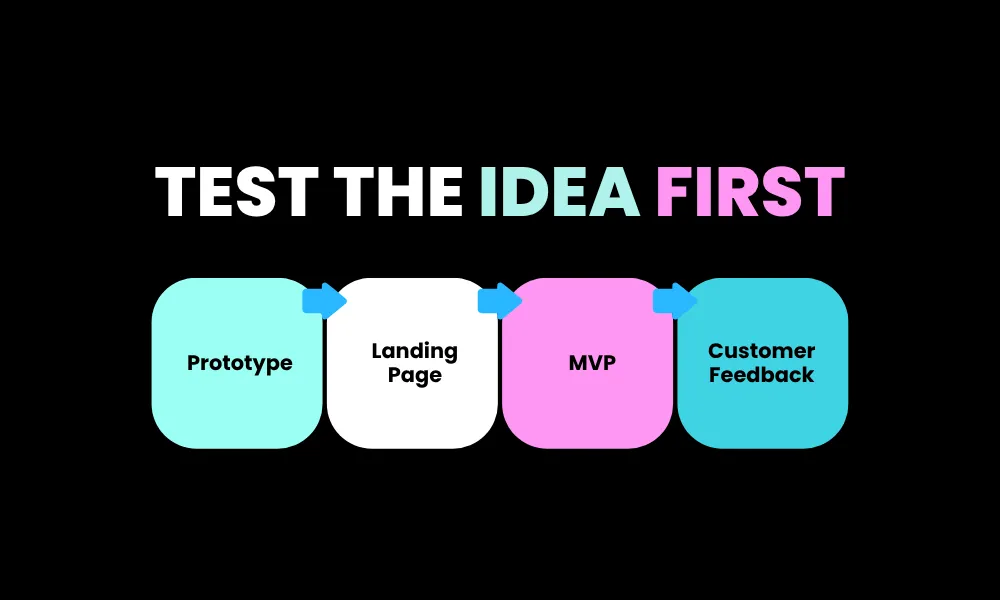
One of the biggest mistakes a new entrepreneur can make is spending too much money before establishing whether an idea has demand.
A simple first version can provide valuable evidence.
Depending on the business, this could be:
- A prototype
- A basic website
- A landing page
- A small service
- A limited product release
- A minimum viable product
- A pre-order campaign
Early testing can reveal whether customers understand the offer and whether they consider it valuable.
Study the Existing Market
Competition does not necessarily mean an idea is bad.
In many cases, an active market demonstrates that people already spend money solving the problem.
Entrepreneurs can study competing businesses to understand:
- Pricing
- Products
- Services
- Customer reviews
- Marketing
- Distribution
- Strengths
- Weaknesses
The objective is to identify where a new business can provide something different or more useful.
Create a Business Model
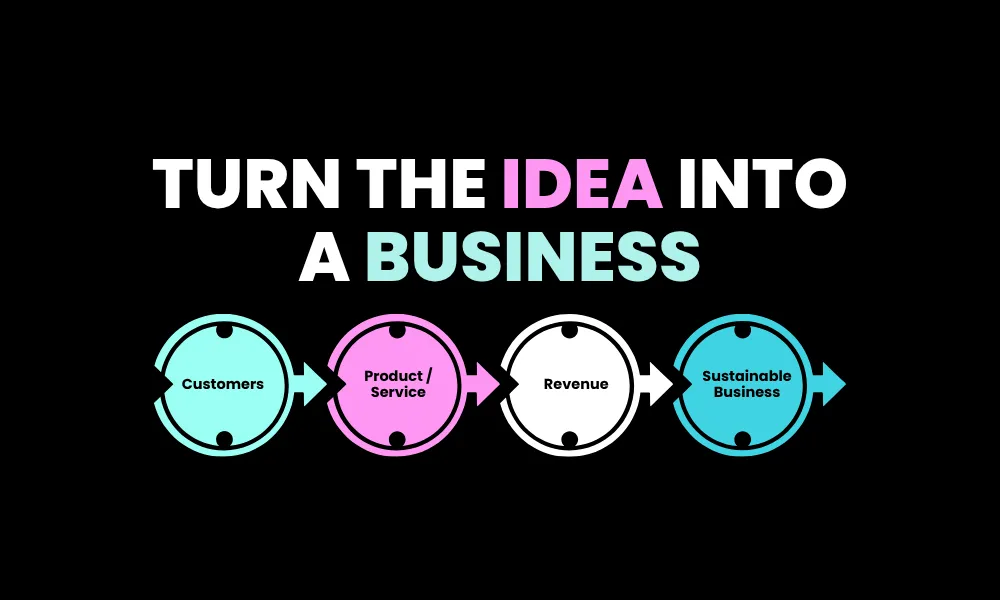
An idea needs a practical way to generate revenue.
Entrepreneurs need to understand how customers will pay and whether the resulting revenue can support the costs of running the business.
Common models include:
- Product sales
- Subscriptions
- Services
- Consulting
- Advertising
- Licensing
- Digital products
- Commissions
The appropriate model depends on the market and the type of business being developed.
Build the Simplest Useful Version
A first product does not need to contain everything an entrepreneur eventually wants to offer.
Starting with the core solution can make testing easier and reduce unnecessary costs.
For example, a software company might begin with a few essential functions rather than dozens of features.
A service business might initially offer one specialized service.
An online retailer might test one product category before expanding.
The objective is to create something useful enough for customers to evaluate.
Find the Right Customers
Building a product is only one part of the process.
Entrepreneurs also need a way to reach people who may want it.
Depending on the business, customer acquisition can involve:
- Search engines
- Social media
- Content marketing
- Referrals
- Partnerships
- Communities
- Advertising
- Direct sales
The right channel depends on the audience and the buying process.
Listen to Early Customers
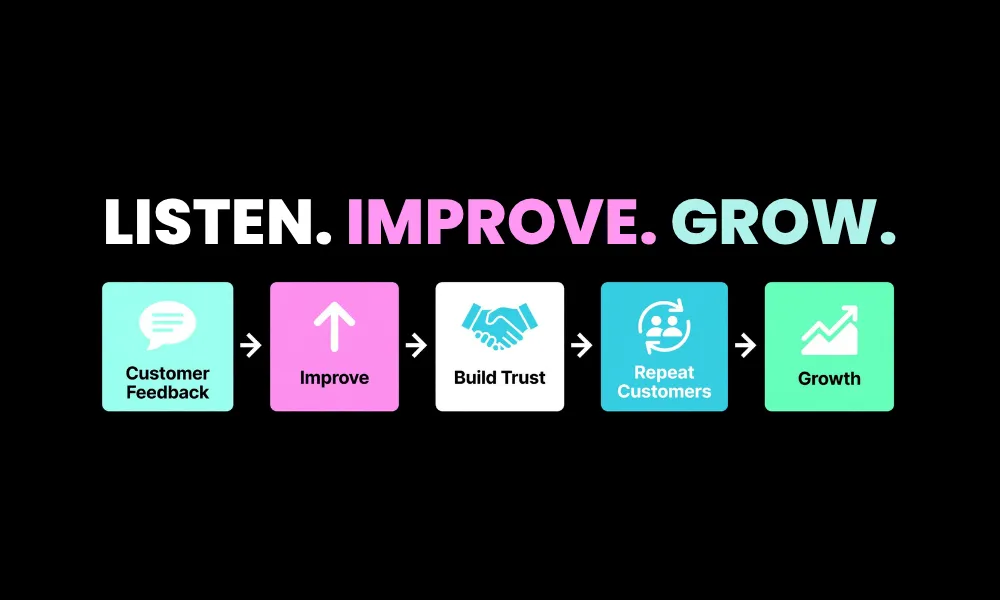
Early customers can provide information that entrepreneurs cannot obtain from assumptions alone.
Their feedback can reveal:
- What works
- What is confusing
- What features matter
- Why people purchase
- Why potential customers hesitate
- What needs improvement
Successful businesses often develop through repeated cycles of testing, feedback, and improvement.
This is also what makes individual entrepreneurial journeys interesting to readers. Behind a finished business there are usually many decisions and adjustments that are invisible from the outside.
Develop a Sustainable Pricing Strategy
Pricing should reflect both customer value and business economics.
Entrepreneurs need to consider production or delivery costs, competitor pricing, customer expectations, and the margin required to operate the business.
Testing different offers can help reveal how customers respond.
The cheapest option is not automatically the strongest option. Customers may be willing to pay more when a product provides clear value or solves an important problem.
Build Trust Around the Business
Customers need a reason to believe that a new company will deliver what it promises.
Trust can be built through:
- Accurate information
- Reliable service
- Clear pricing
- Good customer support
- Consistent quality
- Transparent policies
- Genuine customer feedback
Over time, positive experiences can contribute to repeat business and recommendations.
Manage Cash Flow
Revenue and profit are not the same thing.
A business can generate sales while still experiencing financial pressure if expenses are high or payments arrive later than expected.
Entrepreneurs should understand basic financial measures such as:
- Revenue
- Expenses
- Gross margin
- Operating costs
- Cash flow
- Customer acquisition costs
- Available cash
Understanding these numbers becomes increasingly important as the business grows.
Know When to Change Direction
An entrepreneur may begin with one idea and discover that customers want something slightly different.
That does not necessarily mean the original effort was wasted.
Market feedback can reveal a better customer segment, product, pricing model, or distribution strategy.
The ability to adapt can therefore become an important part of building a business.
Many entrepreneurial journeys are not straight lines. They are collections of experiments, decisions, setbacks, improvements, and opportunities.
Build Systems Before Scaling
Growth can expose weaknesses that are not obvious when a business is small.
As customer numbers increase, entrepreneurs may need systems for:
- Sales
- Customer support
- Accounting
- Marketing
- Hiring
- Operations
- Inventory
- Product development
Documented processes can make it easier for a company to maintain consistency as it expands.
When Is an Idea Ready to Become a Bigger Business?
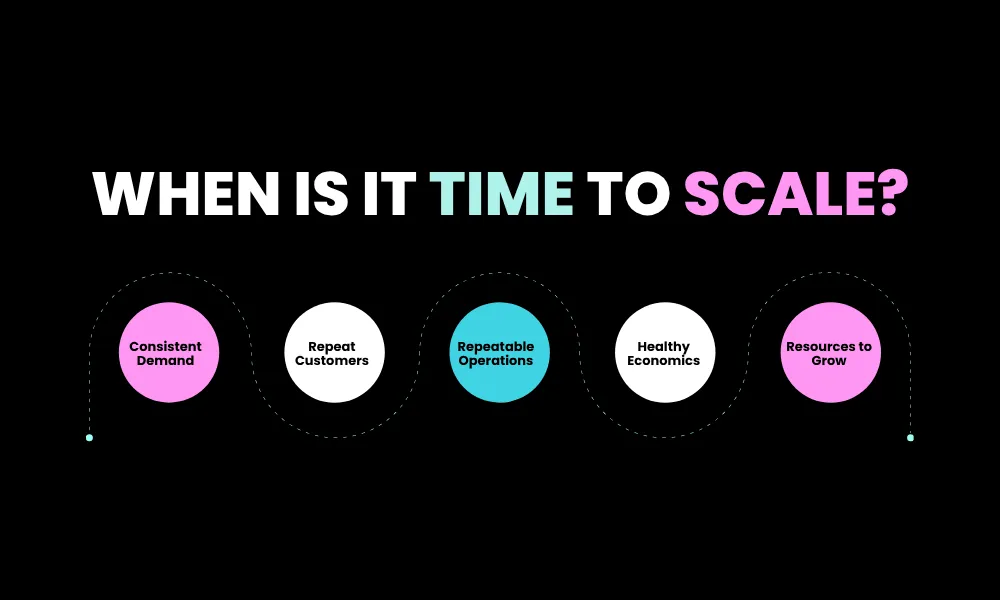
There is no universal point at which an entrepreneur should scale.
However, several signals can help inform the decision:
- Customers are consistently buying
- Demand is measurable
- The product solves a clear problem
- Operations are becoming repeatable
- Customers are returning
- The economics of the business are understood
- The company has sufficient resources to support growth
Expansion without a reliable foundation can introduce unnecessary costs and complexity.
What Entrepreneurs Can Learn From Other Business Journeys
One reason business stories remain interesting is that entrepreneurs rarely follow identical paths.
Some start with a small service.
Others develop technology.
Some build physical products.
Others create digital businesses.
Their industries may differ, but many face similar questions about customers, money, competition, growth, and decision-making.
This is where Face Zem connects business information with people-focused storytelling. Understanding how a business develops also means understanding the people making the decisions behind it.
From an Idea to a Business
Turning an idea into a successful business is usually a gradual process.
It starts with understanding a problem and the people experiencing it. From there, an entrepreneur can test the idea, develop a practical solution, study the market, establish a business model, find customers, gather feedback, and improve the operation.
There is no guaranteed formula.
What works is often discovered through research, experimentation, customer feedback, and careful decision-making.
Frequently Asked Questions
How do entrepreneurs turn an idea into a business?
Entrepreneurs generally start by identifying a problem, researching customers, validating demand, developing a solution, choosing a business model, and testing the idea in the market.
How can an entrepreneur validate a business idea?
An entrepreneur can use customer interviews, surveys, prototypes, landing pages, pre-orders, small product launches, or minimum viable products to test demand.
Why is customer research important?
Customer research helps entrepreneurs understand real problems, existing solutions, purchasing behavior, and expectations before making significant investments.
Should entrepreneurs study competitors?
Yes. Competitor research can reveal market expectations, pricing, existing solutions, customer complaints, and opportunities for differentiation.
Does a business idea have to be completely new?
No. Entrepreneurs can improve an existing product, serve a specific audience, create a better customer experience, or solve an existing problem differently.
What does Face Zem cover about entrepreneurship?
Face Zem covers people and stories connected to entrepreneurship, business, success, wealth, and professional journeys, alongside broader informational content.
Final Thoughts
A promising idea becomes a business through execution.
Entrepreneurs have to understand their customers, test their assumptions, manage resources, develop useful solutions, and adapt when the evidence points in a different direction.
The businesses people see today are often the result of many smaller decisions made along the way.
Those decisions and the people behind them are what make entrepreneurial journeys worth exploring.