
George Lucas is one of the most successful filmmakers in history, and his fortune reflects the scale of the worlds he created. In 2026, his net worth is estimated at about $5.2 billion, making him one of the richest people in Hollywood and one of the wealthiest filmmakers the film industry has ever produced. Unlike many stars whose wealth comes from acting fees or endorsements, Lucas built his fortune by owning the stories, characters and technology he created, and by keeping control of them for decades.
The heart of that fortune is Star Wars. What began in 1977 as a risky space adventure that many in Hollywood doubted became one of the most valuable franchises in entertainment history. The films earned billions at the box office, but the real wealth came from everything around them: toys, books, video games, theme park attractions, television series and merchandise that kept selling year after year.
This article looks at George Lucas’s net worth in 2026, how he built it, what the Disney sale meant for his fortune, and what his career can teach anyone about ownership, patience and long-term thinking. Face Zem brings you the story behind the numbers, from a small-town California boy who loved cars and comic books to the creator of a galaxy far, far away.
Key takeaways
- George Lucas’s net worth in 2026 is estimated at about $5.2 billion, making him one of Hollywood’s richest filmmakers.
- Star Wars is the foundation of his wealth, built on films, merchandise, licensing and decades of fan loyalty.
- He sold Lucasfilm to Disney in 2012 for about $4 billion in cash and stock, a deal that secured his fortune.
- Lucas also created Indiana Jones and founded Industrial Light & Magic, which changed how movies are made.
- His wealth came from ownership and patience, not from a single payday, and he has given much of it to education.
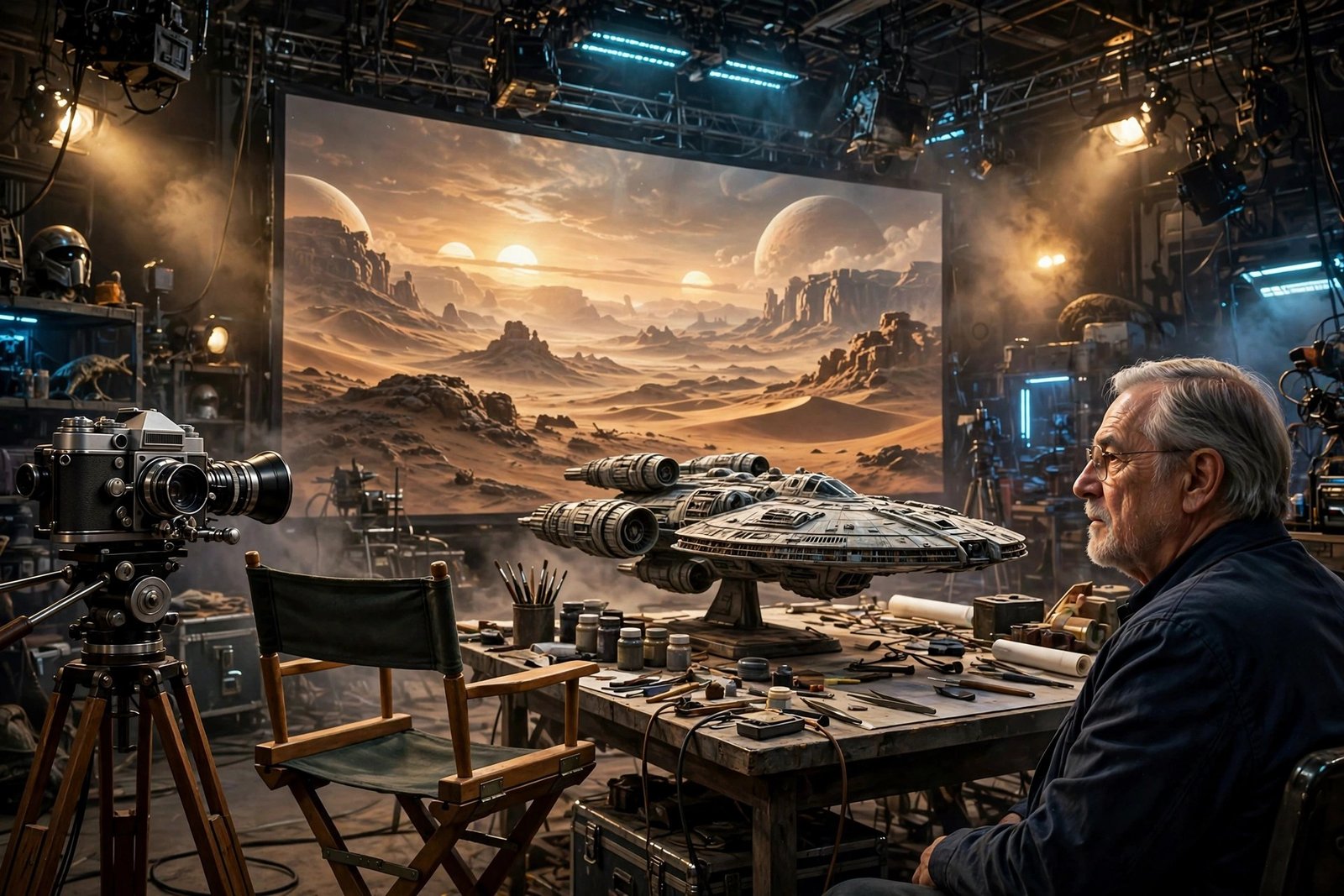
Who is George Lucas?
George Walton Lucas Jr. was born on 14 May 1944 in Modesto, California, a small farming town in the Central Valley. As a teenager he loved cars, comic books, science fiction and photography, and he dreamed of becoming a racing driver until a serious car crash just before his high school graduation changed his plans and pushed him towards film.
Lucas studied film at the University of Southern California, where he met Steven Spielberg. His first feature, THX 1138, was an ambitious science fiction film, and his next, American Graffiti, was a warm look at teenage life in early 1960s California that became a surprise hit and gave him the freedom to make Star Wars.
George Lucas net worth in 2026
In 2026, George Lucas’s net worth is estimated at about $5.2 billion. That figure places him near the very top of the list of the richest people in entertainment, alongside fellow filmmakers and media owners who built lasting businesses rather than relying on a single hit. Net worth figures for private individuals are estimates, based on the value of their companies, investments, property and known deals, and they can move up and down with markets and valuations.
Most of Lucas’s wealth is tied to the value created by Lucasfilm and the Star Wars franchise, and to the proceeds of the Disney sale. When Disney bought Lucasfilm in 2012 for about $4 billion, Lucas received a mix of cash and Disney shares. The stock portion meant that his fortune continued to grow with Disney’s success, while the cash gave him freedom to invest, fund new projects and support the causes he cares about.
How Star Wars built a fortune
When Star Wars was released in 1977, few people expected it to become a phenomenon. The studio had limited faith in the project, and Lucas had to fight for many of the ideas that now seem obvious, from the sound design to the look of the characters. But audiences responded immediately. The film broke box office records, played in cinemas for months, and created a fan base that has now spanned three generations.
Lucas made one of the smartest business decisions in film history for Star Wars. Rather than taking a higher directing fee, he kept the merchandising rights and the rights to sequels. Within a few years, Star Wars toys, books and costumes were everywhere, and the revenue from those products dwarfed the money from ticket sales. The sequels deepened the story, the prequels brought it to a new generation, and the films and series under Disney have kept the galaxy expanding.
The Indiana Jones adventure
Star Wars was not Lucas’s only blockbuster creation. With Steven Spielberg, he created Indiana Jones, the archaeologist adventurer who first appeared in Raiders of the Lost Ark in 1981. The character combined the serial adventures Lucas loved as a boy with a witty, relatable hero, and the films became another hugely successful franchise, earning large sums at the box office and selling merchandise and home video copies around the world.
Indiana Jones showed that Lucas could build more than one lasting world, and it strengthened his reputation as a storyteller who understood what audiences wanted: adventure, humour, heart and a hero worth following. Together, Star Wars and Indiana Jones gave Lucas two of the most valuable franchises in film history, and the financial independence to run his company on his own terms and take creative risks without needing permission from a studio.
Lucasfilm, Industrial Light & Magic and Skywalker Sound
In 1971, Lucas founded Lucasfilm, the production company that would become the home of Star Wars and Indiana Jones. Rather than building it in Hollywood, he based it in Northern California, at Skywalker Ranch in Marin County, where he could work away from studio pressure. Lucasfilm became more than a film company. It was a place for experimentation, where new technology could be developed alongside new stories.
One of the most important parts of Lucasfilm was Industrial Light & Magic, known as ILM, founded in 1975 to create the visual effects for Star Wars. No existing effects company could do what Lucas imagined, so he built his own. ILM went on to create groundbreaking effects for hundreds of films, and it remains one of the most respected effects companies in the world. Lucas also invested in sound: Skywalker Sound became famous for film audio, and the THX system he helped develop raised the standard for cinema sound.
The $4 billion Disney sale
The defining financial moment of Lucas’s career came in October 2012, when Disney announced that it would buy Lucasfilm for about $4 billion. The deal was paid in a mix of cash and Disney shares, and it gave Disney ownership of Star Wars, Indiana Jones and the Lucasfilm technology businesses. For Lucas, it was the moment his decades of work were converted into a secure, diversified fortune.
Lucas had thought carefully about the future of Star Wars. He was in his late sixties, and he wanted the franchise to continue with new storytellers while he stepped back from running a studio. Selling to Disney gave Star Wars the resources of the world’s largest entertainment company, with theme parks, streaming and global distribution already in place. He could have sold years earlier for far less, but by building the brand over 35 years, he created something worth billions.
Where the money comes from
Lucas’s wealth comes from several sources, and understanding them explains why it has been so durable. The first is the Disney sale itself, which provided a large cash payment and a significant holding of Disney stock. The second is the long life of Star Wars and Indiana Jones, which continue to generate revenue through licensing, streaming, merchandise and theme park attractions.
The third source is investment. After the sale, Lucas put much of his wealth into a diversified portfolio, including stocks, bonds and property, managed with professional advisers. The fourth source is property and other assets, including Skywalker Ranch, a large and private estate in Marin County that serves as both a home and a working film campus. Taken together, these sources explain why his net worth has remained in the billions for more than a decade after the sale.
| Milestone | Year | What it meant |
|---|---|---|
| American Graffiti | 1973 | Surprise hit that gave Lucas the freedom to make Star Wars |
| Star Wars released | 1977 | Created a global phenomenon and a merchandising empire |
| Industrial Light & Magic founded | 1975 | Built the effects company that changed cinema |
| Raiders of the Lost Ark | 1981 | Launched the Indiana Jones franchise with Spielberg |
| Star Wars prequels | 1999-2005 | Brought the saga to a new generation of fans |
| Lucasfilm sold to Disney | 2012 | About $4 billion in cash and Disney stock |
| Net worth in 2026 | 2026 | Estimated at about $5.2 billion |
Philanthropy and giving back
George Lucas is known as a generous philanthropist, particularly in education. He has said that he sees his wealth as a tool to help others, not just as a reward for his own success. In 2010, he joined The Giving Pledge, promising to give away at least half of his fortune during his lifetime, and he has since directed much of his giving towards education.
His main vehicle is the George Lucas Educational Foundation, founded in 1991. It supports innovative teaching and the use of technology in schools, and it runs the Edutopia platform for teachers. Lucas has also given large gifts to the University of Southern California, where he studied film, and supported the Lucas Museum of Narrative Art in Los Angeles.
Lessons from George Lucas’s success
Lucas’s career offers lessons that go far beyond film. The first is the power of ownership. By keeping the rights to Star Wars, he turned a single film into a lifetime of income. Many creators sell their work for a quick payment and watch others profit from it. Lucas held on, and that patience was worth billions.
The second lesson is to think in decades, not months. Lucas built ILM and Skywalker Sound instead of waiting for someone else to invent what he needed, and those companies became valuable in their own right. Star Wars grew through sequels, new technology and new audiences, from cinema to television to streaming. The biggest rewards often come to those willing to wait.
How George Lucas compares with other billionaires
Lucas’s fortune is often compared with other famous billionaires in entertainment. Steven Spielberg’s net worth in 2026 is estimated at about $7.1 billion, putting his fellow filmmaker and close friend slightly ahead of Lucas, while Michael Jordan’s net worth in 2026 is estimated at about $4.3 billion, built on sport, endorsements and team ownership rather than film.
What sets Lucas apart is how little of his wealth depends on his own public profile. He is not a performer, and he rarely appears in public to promote himself. His fortune is built on stories and companies that work without him being in front of a camera, which is why Lucas appears in any serious list of the richest person in the world and the richest people in entertainment.
Checklist: lessons from George Lucas
- Own your work: keep the rights that matter instead of selling them for a quick fee.
- Build your own tools: invest in the technology and skills your work needs.
- Think long term: let a good idea grow over years, not weeks.
- Protect your creative freedom: financial independence lets you choose your projects.
- Give back: use wealth to support education and opportunity for others.
- Stay patient: a single film can become a franchise, but only if you keep building it.
Frequently asked questions
What is George Lucas’s net worth in 2026?
George Lucas’s net worth in 2026 is estimated at about $5.2 billion, based on the value of his investments and the proceeds of the Lucasfilm sale to Disney.
How did George Lucas make his money?
He made most of his money by creating Star Wars and Indiana Jones, keeping the rights to them, and selling Lucasfilm to Disney in 2012 for about $4 billion in cash and stock.
How much did Disney pay for Lucasfilm?
Disney paid about $4 billion for Lucasfilm in 2012, in a mix of cash and Disney shares.
Is George Lucas richer than Steven Spielberg?
No. In 2026, Steven Spielberg is estimated to be worth about $7.1 billion, slightly more than Lucas at about $5.2 billion, though both are among the richest filmmakers in history.
What companies did George Lucas found?
He founded Lucasfilm in 1971, along with Industrial Light & Magic for visual effects and Skywalker Sound for film audio, all of which became leaders in their fields.
Does George Lucas still own Star Wars?
No. Disney has owned Star Wars since it bought Lucasfilm in 2012, although Lucas remains its creator and is closely associated with the franchise.
Bottom line
George Lucas’s net worth of about $5.2 billion in 2026 is the result of a lifetime of creating, owning and protecting great stories. Star Wars made him famous, Indiana Jones made him versatile, and Lucasfilm, ILM and Skywalker Sound made him a builder of companies as well as films. The Disney sale turned decades of work into a secure fortune, and his philanthropy has turned that fortune into opportunity for others.
His story is a reminder that the most lasting wealth is often built slowly, by people who own what they create and who are willing to invest in the future. Lucas did not chase a quick payday. He built a galaxy, kept it, and let it grow, and that patience is still paying off today.
Note: Net worth figures are estimates based on publicly reported deals and valuations, and they can change over time. This article is for general information and entertainment, not financial advice.

Keep what speaks to you.
Leave room for your own perspective.


