

Cultural preservation is not merely the act of preserving traditions and artifacts. It is also an excellent wealth-building tool, and several successful philanthropists have demonstrated its power.
Cultural heritage philanthropy has not only created social value; it has also been shown to be financially beneficial through investments in museums and galleries, among other areas, as well as in arts education. Looking at some of the wealthiest people in the world, we see that most have made smart investments in culture and heritage as they amass wealth, ensuring that, upon their deaths, they leave behind a legacy.
This article discusses cultural heritage philanthropy examples, how arts funding or cultural endowments contribute to financial prosperity, and practical lessons for current entrepreneurs. Let us explore how cultural preservation can be used as a stepping stone towards self-improvement and business prosperity.
Profiles of Influential Patrons
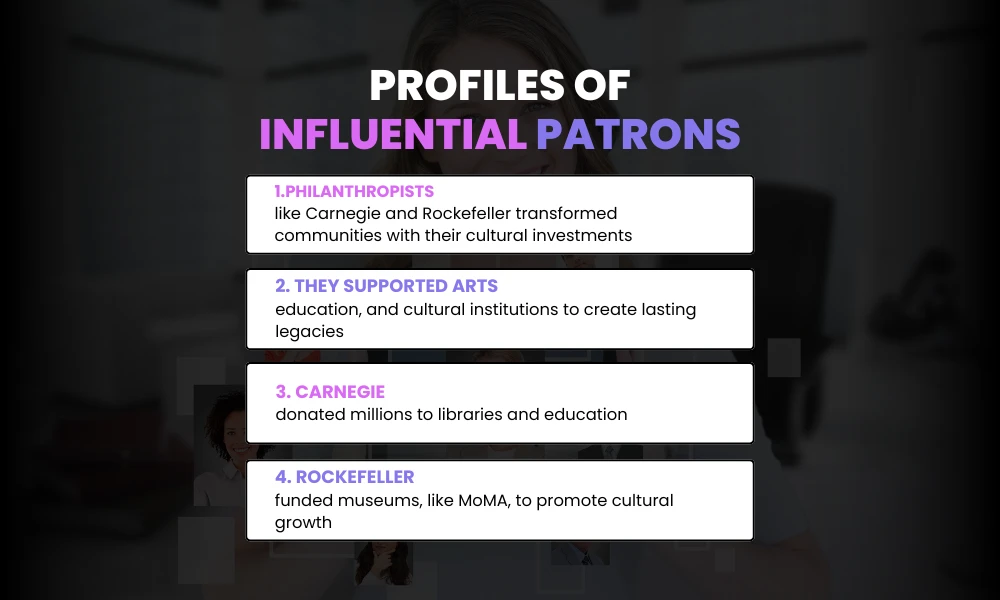
When we consider the list of philanthropists who have made a great contribution to culture, we would instantly think of a few names. These people did not simply spend money on the poor; they spent their fortunes to change communities and industries and, in the process, create their own legacies.
Historical and Modern Examples
Over time, societies and economies have been transformed by numerous cultural patrons who have advocated for the arts, education, and cultural preservation.
For example, Andrew Carnegie, the steel magnate, notoriously donated millions of dollars to libraries and educational institutions. His gifts were not simply charitable, but rather about establishing permanent institutions that contributed to society’s intellectual and cultural prosperity.
This trend of cultural development has been continued by David Rockefeller, whose family has been one of the largest donors to museums and other cultural institutions, such as the Museum of Modern Art (MoMA), in more contemporary times.
Impact on Arts and Heritage
Cultural patrons contribute more than just money, since, in most cases, their impact on the art world can be permanent. Indicatively, the Guggenheim Foundation, endowed by Solomon R. Guggenheim, revolutionised the art world by establishing galleries that exhibit some of the most renowned contemporary art collections. These types of charitable activities add long-term cultural value while also benefiting local economies through tourism and education.
Philanthropy and Wealth Growth
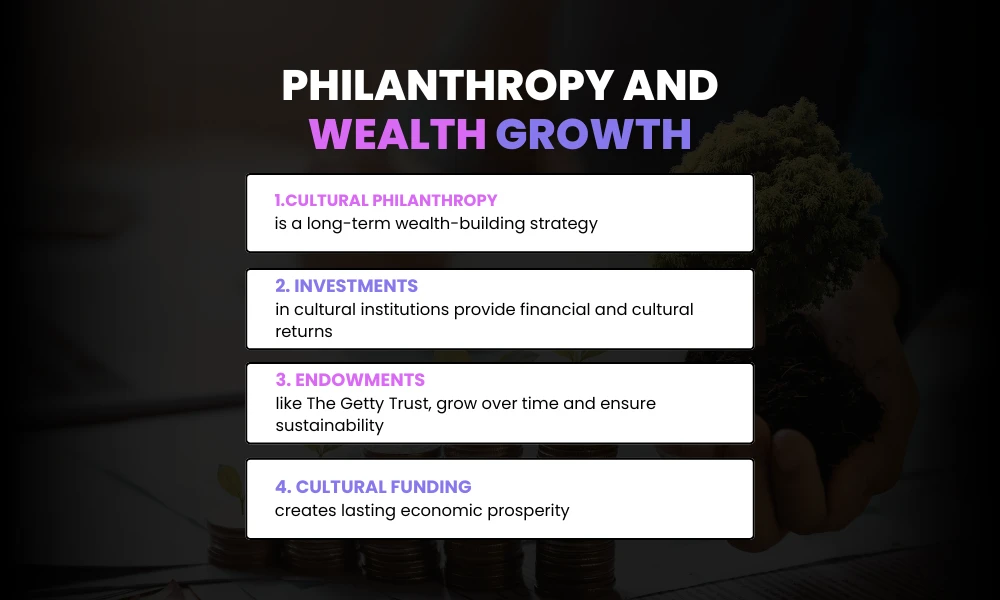
Cultural philanthropy is not only a feel-good project, it is a wise investment and wealth-creating process. Many of the most prosperous people in modern society recognize the value of long-term cultural support, and their investments demonstrate the effectiveness of cultural endowments.
Investments in Culture and Education
Philanthropists contribute to the development of a renewal process through the arts, education, and cultural institutions. An example is investing in learning institutions focused on the arts and humanities, which can develop talent that will help drive future innovation. They also open cultural experiences to the masses, potentially leading to further learning and wealth creation.
Investment in Cultural Institutions by Philanthropists
| Philanthropist | Contribution Area | Total Donation ($ millions) | Purpose of Donation |
| Andrew Carnegie | Libraries and Education | $350M | Establishing libraries and educational programs |
| David Rockefeller | Museums and Galleries | $500M | Funding the Museum of Modern Art (MoMA) |
| George Lucas | Museums and Cultural Education | $1B | Creation of the Lucas Museum of Narrative Art |
This table demonstrates that philanthropists have made major cultural investments over the years; as a result, cultural institutions have remained vibrant.
Long-term Returns of Cultural Endowments
The fact that cultural endowments can yield long-term returns is one of their strongest attributes. These endowments are designed to increase over time so they can sustain their respective institutions for the long term. These investments are especially worthwhile because of the returns that are not only financial but also cultural and educational.
The Getty Trust, founded by oil tycoon J. Paul Getty, has built an endowment of more than $ 7 billion and is considered one of the largest cultural endowments in the world. The trust supports the conservation of art, exhibitions, and education, ensuring that art is preserved and accessible to future generations.
Lessons for Modern Entrepreneurs
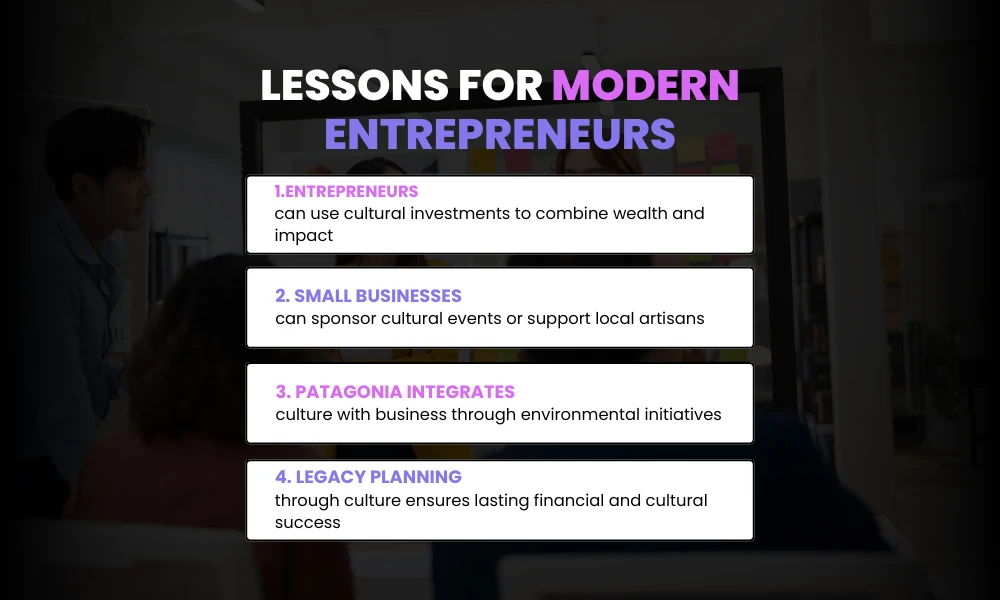
In the example of these philanthropists’ work, one can easily draw conclusions about how to merge financial wealth with cultural influence. These lessons can be employed by modern entrepreneurs to inform their own business strategies.
Combining Business Success with Cultural Impact
A billionaire does not need to be a major player in cultural investments. Small and medium-sized companies can create real value by aligning their brands with cultural preservation. To illustrate, when companies support local craftsmen or sponsor cultural events, they establish a very close bond with their consumers and benefit the community.
One example of a successful brand that has approached business and culture together is Patagonia, which has helped fund environmental and cultural conservation efforts. Their 1 percent for the Planet program donates 1 percent of sales to environmental causes, appealing to customers concerned with sustainability.
Legacy Planning Through Cultural Investments
The idea of legacy planning through cultural investments is an effective tool for modern entrepreneurs. Much like the legacies of philanthropists such as Rockefeller and Guggenheim, which are still flourishing today, businessmen and women can leave a business whose legacy can not only prosper financially but also enrich the cultural aspects of the world that will continue to be felt.
Business leaders can also make a difference in their communities by sponsoring educational programs, local crafts, or heritage preservation, which will last long after the business disappears.
Strategies to Apply These Lessons
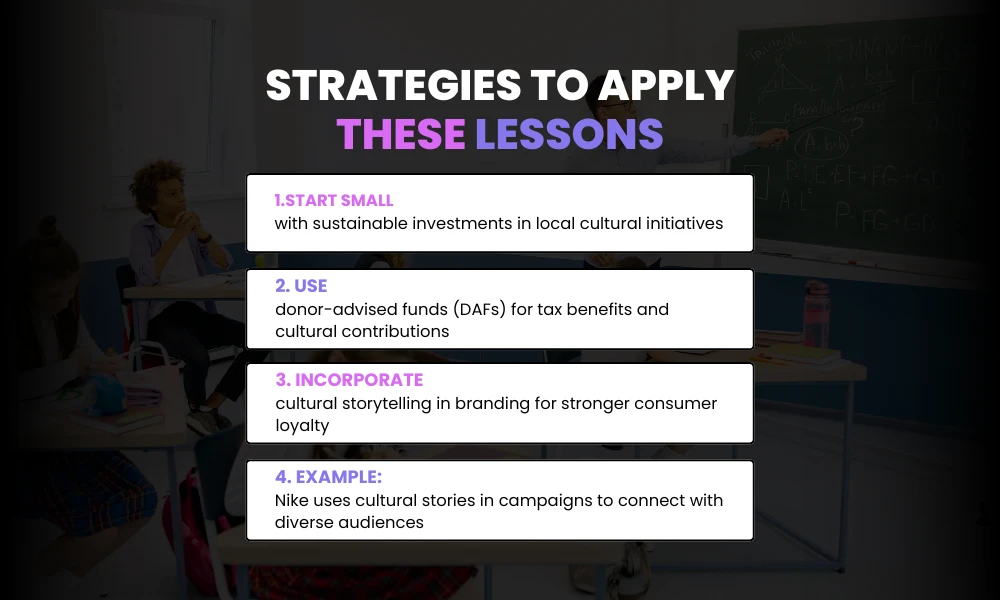
It is evident that cultural heritage philanthropy is not all about charity; it is a strategic tool for generating wealth and power that lasts. However, how do contemporary people and companies integrate these lessons into their personal lives?
Let us consider some practical measures.
Philanthropy-focused Net Worth Building
For those who want to build more net worth through philanthropic initiatives, it is important to start with small, sustainable investments. Then, even if you don’t have billions to give, you can still contribute by supporting local cultural efforts, such as sponsoring educational programs, cultural arts grants, and cultural events.
Hint: You can also consider donor-advised funds (DAFs), with which you can donate to a charity and get tax benefits. It is an excellent choice for people who want to make philanthropic contributions while increasing their wealth.
Cultural Storytelling for Brand Value
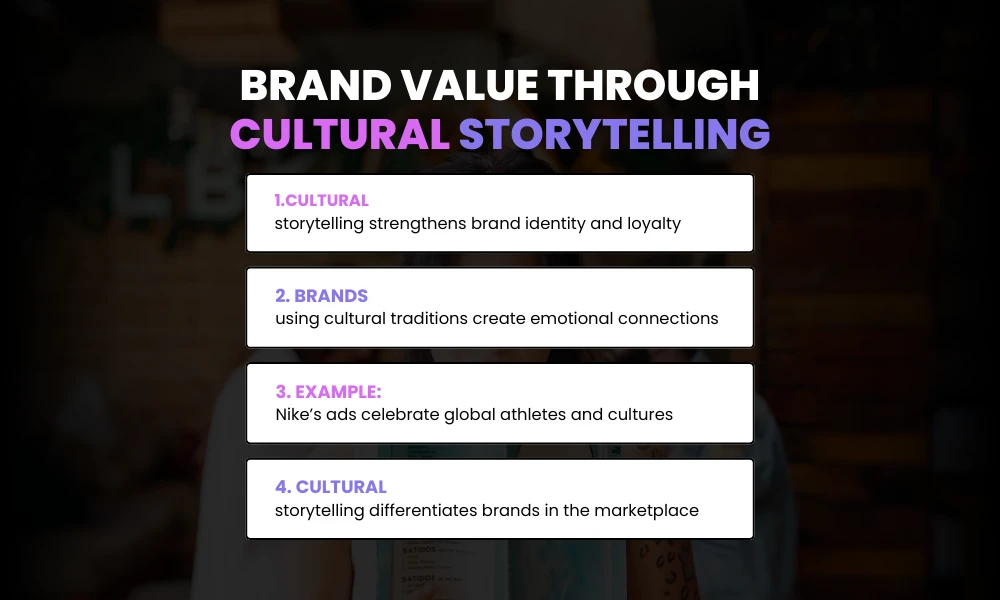
Cultural storytelling is one of the best means to incorporate culture in your business. Bringing your products or brand into the spotlight of your upcoming business, particularly when it ties into a set of cultural traditions, can help your business stand out and build a loyal client base.
To explain, Nike has had a huge impact by incorporating cultural stories into its advertising campaigns, showing how cultures around the world have contributed to the sporting world.
Conclusion
Cultural heritage is not really about the past, but rather a vibrant, growing force capable of driving wealth creation for the present generation. Through arts funding, cultural endowments, and heritage-based entrepreneurship, philanthropists have demonstrated that investing in culture is not only good for society but also a smart way to create enduring wealth.
Since we have shown with examples of major cultural patrons, contemporary entrepreneurs can put these lessons into practice by incorporating culture into their business frameworks, sponsoring cultural projects, and investing in long-term preservation. It does not simply preserve history; it also creates economic opportunities that benefit all people.
That is why, regardless of whether you are an aspiring businessperson or a philanthropist who aims to make a legacy, consider the ways you can make use of cultural preservation and not only give back to society, but also become a wealthier person in the process.