
A blacksmith earns by turning hot steel into things people want in their homes, gardens and workshops. The forge is only half the job. The other half is choosing which kind of work to sell, because a gate, a knife and a class are three very different businesses sharing one anvil. Some routes pay a lot per job and come in slowly; others pay a little per piece and sell all year. This list covers the routes themselves, ten ways the work turns into income. For the wider picture, including skills, customers and pricing, read our guide on how to make money as a blacksmith.
1. Custom Gates, Railings and Architectural Ironwork
This is the highest-paying route for most smiths. Homeowners, builders and architects commission gates, railings, balustrades, stair rails and balcony panels made to fit one exact opening. A single job can pay several times what a month of small sales brings in, since the customer pays for measuring, fitting and finishing as well as forging. It needs patience and accuracy: a gate that does not fit is a gate you remake. Photograph every fitted job and show the photos to local builders and joiners. One builder who trusts your measuring can send work your way for years.
2. Hand-Forged Knives and Blades
Knives are the most popular forged product online. Kitchen knives, chef knives, hunting knives and small everyday blades all have buyers who will pay for a handmade edge, a comfortable handle and a blade with a story behind it. The work suits a small workshop, since a knife needs far less space than a gate, and the steel cost per piece stays low. Sell through your own online shop, at knife shows and through craft markets, and keep a waiting list for custom orders. A buyer who trusts the first blade often comes back for a second.
3. Fireplace Sets, Tools and Home Ironwork
Fireplace tools, andirons, fire screens, log baskets and candle holders are steady sellers. Homeowners buy them when they move house, renovate a living room or replace a worn set, and they make strong gifts because they are useful, heavy and clearly handmade. This route sits in the middle on price: more than a hook, far less than a gate. Keep a small range ready to sell, and photograph each set beside a real fireplace so buyers can judge the size. A clean blackened finish and a tidy weld matter more here than fancy decoration.
4. Garden Ironwork and Outdoor Pieces
Gardens give a blacksmith a whole second market. Plant supports, arches, trellises, obelisks, garden gates, boot scrapers and bird feeders all sell to people who want their garden to look cared for. Demand rises in spring and summer, when garden centres and plant fairs are busy, so this route pairs well with indoor work in the colder months. Make pieces that survive outside, with solid welds, a rust-proof finish and feet that sit level. Selling at a garden fair lets buyers see the size and weight of a piece, which a photo never quite shows.
5. Small Forged Goods Sold Online and at Markets
Bottle openers, hooks, key rings, coat pegs, ornaments and candle holders are the volume route. Each piece uses little steel and takes minutes once you have the rhythm, so you can make a batch in one session and sell it over weeks. Craft fairs, farmers markets and online shops are the natural places to sell them, and a tidy stall with clear prices beats a big display. It is also the best route for testing ideas: a shape that sells out at two markets deserves a bigger batch. Our guide on how to make money selling handmade crafts covers the selling side in detail.
6. Restoration and Repair Work
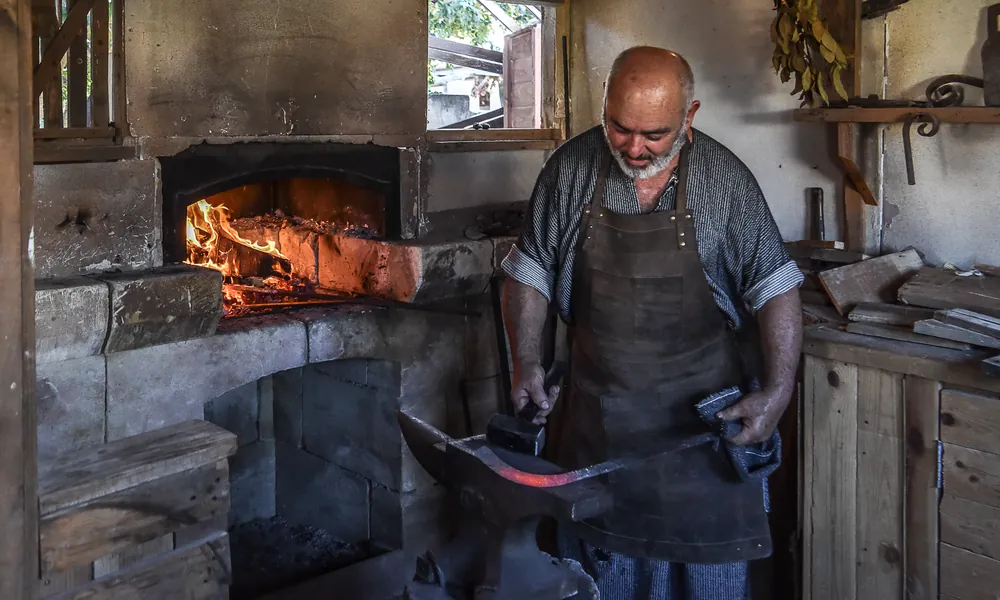
Old ironwork breaks, rusts and goes missing, and owners of period homes, farms and historic buildings need someone who can fix it properly. Repairing a gate hinge, remaking a missing railing section, restoring a set of old tools or matching a Victorian bracket is skilled work with little competition, because few smiths advertise it. The jobs come through word of mouth, local builders and heritage groups, and they often lead to larger commissions once the customer trusts your eye for the original style. Keep notes and photos of every repair: matching old work is a skill buyers pay a premium for.
7. Sculptural and Artistic Metalwork
Some smiths earn from art rather than function: garden sculptures, decorative panels, wall pieces, animal figures and public commissions. Galleries, private collectors, hotels and businesses buy statement pieces, and a single sculpture can pay more than weeks of small goods. The income is less regular than repair or gate work, and you need photos, a portfolio and a way for buyers to find you. Start with smaller pieces at a price people can say yes to, and let larger commissions follow once your work is seen. This route rewards a smith with a clear personal style.
8. Teaching Beginner Classes and Workshops
Teaching is one of the steadiest incomes in blacksmithing. A half-day beginner class, where each student forges a hook or a bottle opener and takes it home, can earn more in a morning than a week of small sales. Keep classes small and charge enough to cover time, materials and insurance. Check local rules on teaching and insurance before you advertise, since safety is the whole offer here. Students who enjoy a taster session often book a longer course, buy a piece for their home or recommend the class to friends, so teaching feeds your other routes too.
9. Live Demonstrations and Event Forging
County shows, heritage days, festivals, school visits and even weddings pay smiths to work in front of a crowd. The sight and sound of hot metal draws people to a stall like nothing else, and many visitors who stop to watch leave with a hook, a bottle opener or a commission. Event organisers usually pay an appearance fee, and you keep the sales on top of it. The setup is simple: a portable forge, a small anvil and a clear price list. This route doubles as marketing, since every demonstration puts your name in front of people who may order a gate later.
10. Wholesale to Shops, Galleries and Builders
Wholesale means selling a range of pieces to a shop, gallery or garden centre at a trade price and letting them sell it on. The margin per piece is lower than selling direct, but the orders are larger and repeat, which makes it the most predictable income on this list. Start with a short range of your best pieces, agree a price that leaves a profit after materials and time, and deliver on the date promised. Builders can be wholesale customers too, ordering brackets, hinges and fittings in batches. Reliable delivery matters more than variety: a shop that can count on your stock will keep ordering.
Pick Two Routes and Start There
Nobody runs all ten routes at once. The smiths who make a living from the forge usually pair one high-value route, such as gates or knives, with one steady-volume route, such as small goods, classes or wholesale. That mix covers slow months and busy ones. Pick the two that fit your workshop, your skills and the customers near you, make a small range you are proud of and photograph everything. Other hands-on trades work the same way, and the best ways to make money as a carpenter shows how another craft turns skill into steady orders. Start with the work you can do well today, and let each finished piece pay for the next one.

Keep what speaks to you.
Leave room for your own perspective.


