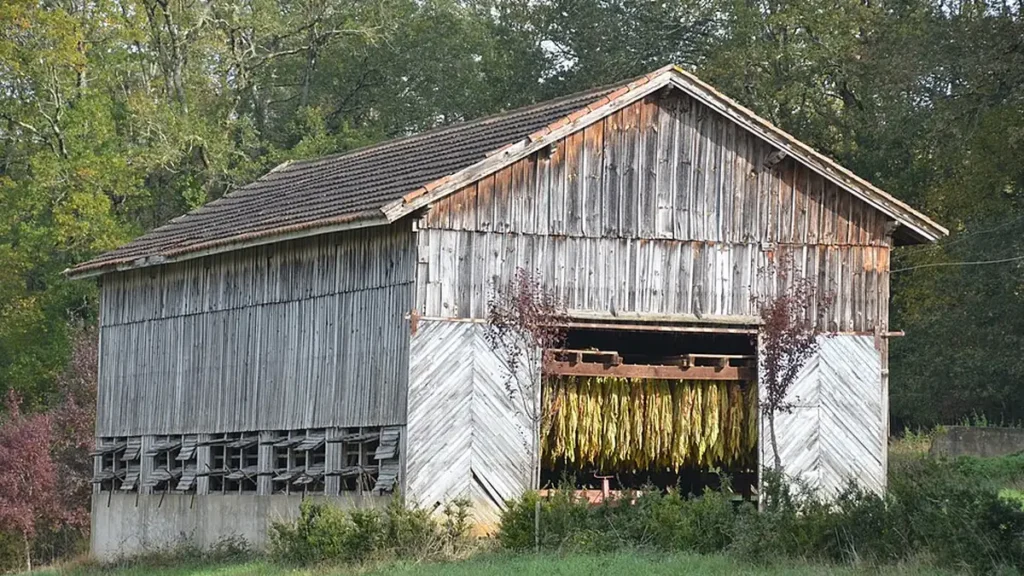
A tobacco barn is not a storage shed with a different name. It is a curing machine made of timber, air and time. Green leaf goes in hanging from tier rails, and over several weeks of slow, controlled drying it comes out cured, coloured and ready to handle. The walls have to breathe, the roof has to let warm air escape, and the inside has to stay damp enough to cure the leaf without letting mould take hold. Get the airflow wrong and a whole crop can spoil in the barn. Get it right and the building does most of the work by itself.
That is why a tobacco barn installation startup needs a different toolkit from most barn builders. A general barn crew worries about posts, trusses and keeping rain out. A tobacco barn crew worries about all of that, plus louvre walls that open and close, tier rails spaced for hanging leaf, ridge vents that pull damp air upward, and a curing climate that changes day by day. The tools that matter most are the ones that measure temperature and humidity inside the barn, model how air moves through the walls, and keep the build on schedule while the curing season waits for no one. The closest comparison is a pole barn installation startup, which shares the post-frame structure, but even there the curing work is entirely new.
This guide compares the nine best AI tools for tobacco barn installation startups in 2026, chosen for the curing job itself rather than for generic construction. Four of them watch the climate inside the barn and warn you before the leaf is at risk. Two of them simulate airflow so the vents, louvres and ridge are sized before a single board is cut. One designs the louvre walls and tier rails, and two run the business side, from quotes and crew schedules to invoicing and bookkeeping. Together they form a small, affordable stack a new startup can buy in stages, starting with the climate sensors and adding the rest as the order book grows.
Key takeaways
- A tobacco barn is a curing barn: ventilated walls, tier rails and a ridge vent matter more than the frame, so climate and airflow tools come first.
- Start with curing sensors. HOBOlink, Monnit ALTA, Testo Saveris 2 and DicksonOne all log temperature and humidity and send alerts before leaf is damaged.
- Model the air before you build. SimScale and CONTAM show where damp air stalls, so louvre and ridge vent sizes are decided on evidence, not guesswork.
- Design the louvre walls and tier rails in FreeCAD, then run the job in Contractor Foreman and keep the books in Xero.
- Buy in stages: sensors and design first, airflow simulation on the first paid job, and the full business stack once two or three barns are booked.
The nine tools at a glance
| Tool | Best for | What it does for a tobacco barn startup |
|---|---|---|
| HOBOlink | Curing climate logging | Logs temperature and humidity from wireless loggers and shows curing trends online |
| Monnit ALTA | Wireless barn sensors | Long-range sensors on every tier that alert the crew when conditions drift |
| Testo Saveris 2 | Climate monitoring and alerts | Wi-Fi loggers with cloud dashboards and automatic alarms for curing rooms |
| DicksonOne | Cloud temperature monitoring | Simple cloud charts and alerts that a grower can read without training |
| SimScale | Airflow simulation | Cloud simulation of air moving through louvres, tiers and the ridge vent |
| CONTAM | Ventilation modelling | Models airflow and moisture movement through the whole barn shell |
| FreeCAD | Louvre wall and tier design | Free open-source CAD for louvre panels, tier rails and cut lists |
| Contractor Foreman | Job management | Quotes, schedules, crew tasks and client updates in one place |
| Xero | Bookkeeping and invoicing | Invoices, expenses and cash flow for a small installation business |
What makes a tobacco barn different
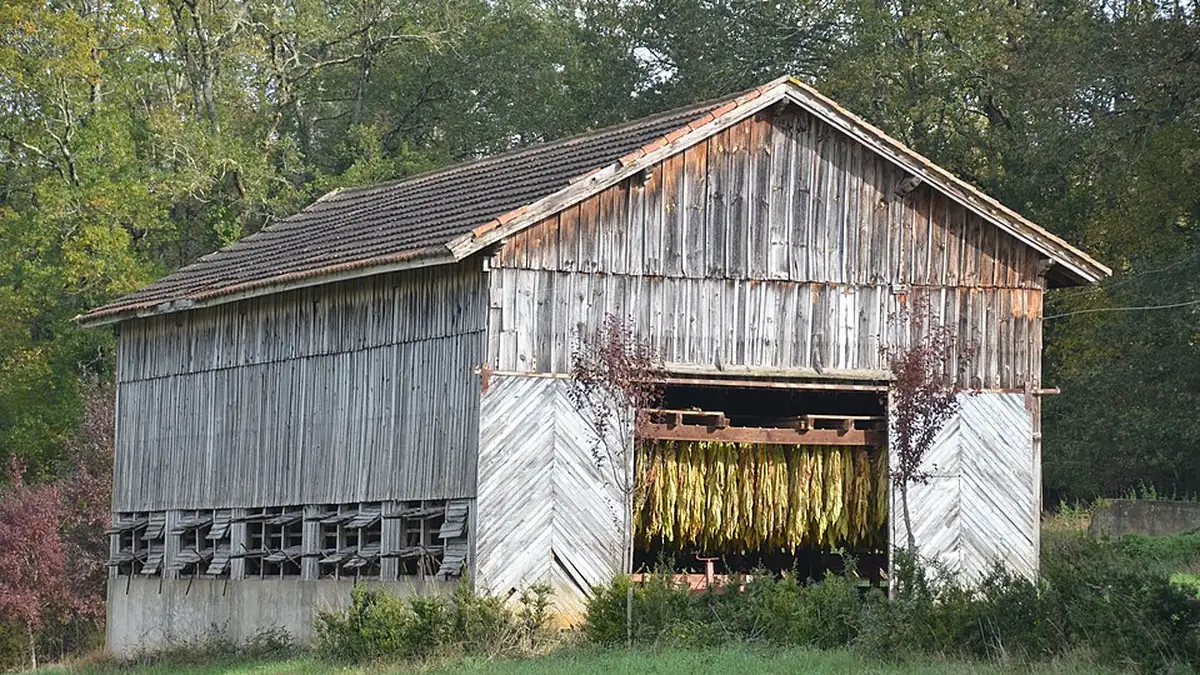
A tobacco barn earns its keep during the curing weeks, not on the day the last board goes on. Fresh leaf is heavy with water, and the barn has to remove that water slowly. Dry it too fast and the leaf turns brittle and loses colour. Dry it too slowly and mould spreads from leaf to leaf along a tier. The building controls that balance through its walls. Most tobacco barns have louvre panels or hinged boards along the sides that open a little on dry days and close down when rain or damp wind arrives. The ridge vent at the top lets warm, damp air rise out of the building. The floor is often earth or concrete, and the tiers run in rows so air can pass between hanging leaves instead of pooling in still corners.
The structure still matters, of course. The frame has to carry the weight of full tiers, which is far heavier than an empty barn, and the tier rails have to be level so poles sit safely. The roof has to shed rain while the ridge vent stays open, and the doors have to be wide enough to bring leaf in on sticks and frames. But none of that is unique to tobacco. The closest relatives are other specialist barns, and a Dutch barn installation startup faces a similar problem, in that the shape of the building changes the tools, even though the curing problem is tobacco’s alone. What follows is built around that difference: measure the cure, model the air, design the vents, and only then worry about the paperwork.
The nine best AI tools for tobacco barn installation startups
The tools below are ordered the way a startup actually uses them: climate first, airflow second, design third, and business last. Each one is judged on the tobacco barn job, not on its general reputation. Prices change, so treat any figure here as a starting point to check before you buy, and use the free trial or the smallest plan first.
1. HOBOlink: The Best Tool for Curing Climate Logging
HOBOlink is the cloud platform behind Onset HOBO data loggers, and it is the most practical way for a small startup to prove a barn cures properly. Small wireless loggers sit on different tiers inside the barn, recording temperature and relative humidity every few minutes, and HOBOlink turns those readings into charts a grower can understand at a glance. The yellowing stage wants warm, humid air. The drying stage wants that humidity to fall steadily. The stem-drying stage wants warmer, drier air still. When the chart shows the barn holding each stage, the installer has evidence the vents and louvres are doing their job, and the grower has a record to keep for the next season.
For a startup, the useful part is how little setup it takes. Loggers can be hung on a tier rail in minutes, and the dashboard works from a phone on site, so a crew member can check the barn between jobs without driving out to it. Alerts can be set so the phone buzzes when humidity climbs toward mould risk or falls fast enough to make leaf brittle. That turns a routine visit into a timed visit: the crew goes when the barn needs them, not on a fixed day that may be too late or too early. It also gives the startup a service to sell after handover, checking the curing data through the season and adjusting the louvres with the grower.
2. Monnit ALTA: The Best Tool for Wireless Barn Sensors
Monnit ALTA is a wireless sensor system built for large buildings, and a tobacco barn is exactly the kind of large, awkward building it suits. ALTA sensors use a long-range radio signal that reaches through timber walls and across a farmyard, so a sensor on the far tier can talk to a gateway in the barn office or the farmhouse without running cables through a curing space. Temperature and humidity sensors are the core of the kit for tobacco, but the same gateway can carry door sensors on the louvre panels and water sensors near the floor, so the crew can see whether a vent was left open in rain or water is pooling where leaf is stored.
The strength of Monnit for a startup is the alerting. Thresholds are set per sensor, so the top tier can have a different humidity limit from the bottom tier, and alerts go out by text or email the moment a reading crosses a line. A curing barn can turn in a few hours on a hot, still afternoon, and a text in time lets the grower open the louvres before the leaf is stressed. The dashboard keeps a history for every sensor, so if a batch cures badly, the startup and the grower can look back together and see whether the barn or the weather was at fault. That honest record protects the installer’s reputation as much as it helps the grower.
3. Testo Saveris 2: The Best Tool for Climate Monitoring and Alerts
Testo Saveris 2 is a Wi-Fi climate logging system that suits tobacco barns with a reliable wireless signal on the farm. Small loggers measure temperature and humidity on each tier and send their readings straight to the Testo cloud, where the dashboard shows live values, trends and alarms without any gateway hardware to install. For a startup working on farms that already have Wi-Fi in the yard, that simplicity is a real advantage: the loggers come out of the box, join the network, and start recording, and the grower can watch the curing from the farmhouse kitchen.
The alarm features are where Saveris 2 earns its place. Upper and lower limits can be set for every logger, and the system sends an email or text when a limit is crossed, with a clear record of how long the barn spent outside the safe range. During the yellowing stage, a humidity alarm that fires early can save a tier from mould. During stem drying, a temperature alarm can warn that the barn is cooling too fast overnight and the louvres need closing. The system also records calibration and logger status, so the startup can show a grower that the readings were trustworthy, not a faulty sensor telling a happy story.
4. DicksonOne: The Best Tool for Cloud Temperature Monitoring
DicksonOne is Dickson’s cloud monitoring platform, and its virtue for a tobacco barn startup is that it is simple enough for the grower to use every day. Loggers record temperature and humidity inside the barn, the data flows to a cloud dashboard, and the grower sees a clear chart with coloured zones for safe and risky conditions. There is no software to install and no gateway to configure on most setups, which matters when the person checking the barn is a farmer, not a technician. If the grower can read it without a phone call to the installer, the system will actually be used through the whole cure.
For the startup, DicksonOne works as a handover tool. The barn is installed, the loggers are placed on the tiers, the grower is shown the dashboard once, and from then on both sides can see the same numbers. If the grower rings to say the leaf looks wrong, the installer can open the same chart and talk about what the barn did overnight, rather than guessing from a description. Alerts can be sent to both the grower and the installer, so a problem is shared the moment it appears instead of being discovered at the next visit. That shared visibility builds trust, and trust brings the next barn order.

5. SimScale: The Best Tool for Airflow Simulation
SimScale is a cloud simulation platform that lets a startup test a tobacco barn’s ventilation on a computer before building it. The barn is modelled with its louvre walls, ridge vent, tier rails and hanging leaf, and SimScale runs a fluid simulation that shows how air moves through the building in different weather: a still hot afternoon, a breezy evening, louvres half open, louvres fully open. The result is a picture of the airflow, with slow corners and fast channels visible at a glance, and numbers for air speed and air changes per hour that can be compared between designs.
That matters because ventilation is the hardest part of a tobacco barn to judge by eye. Two barns can look identical from the outside and cure very differently, because one has a dead corner behind a tier where damp air sits, or a ridge vent too small to pull air upward on a still day. SimScale finds those problems while they are still cheap to fix, by widening a louvre, adding a vent, or moving a tier. A startup that can show a grower a simulation of their barn, with the air moving through the leaf, is selling a designed building rather than a timber box, and can charge for the design work as well as the build.
6. CONTAM: The Best Tool for Ventilation Modelling
CONTAM is a ventilation and airflow modelling tool developed by the National Institute of Standards and Technology, and it is the most thorough way to model how air and moisture move through a tobacco barn. Unlike a general fluid simulation, CONTAM is built around zones, airflow paths and pressure differences, which is exactly how a curing barn behaves: outside air enters through louvre openings, moves between zones around the tiers, picks up moisture from the leaf, and leaves through the ridge vent. The model can be run across a whole curing season, using weather data to show how the barn behaves on damp mornings and dry afternoons, not just in one snapshot.
For a startup, CONTAM answers the questions a grower actually asks. How big should the louvre opening be for this barn size. Whether the ridge vent can keep up when all the tiers are full of fresh leaf. Whether closing the windward louvres on a wet day still leaves enough airflow to prevent mould. The answers come as airflow rates and moisture movement, which can be written into the design and checked later against the sensor readings from HOBOlink or Monnit. When the model and the sensors agree, the startup knows the design method works, and the next barn can be designed faster and with more confidence.
7. FreeCAD: The Best Tool for Louvre Wall and Tier Design
FreeCAD is a free, open-source CAD program, and it is the right design tool for a tobacco barn startup that needs proper drawings without a large software bill. The louvre wall is the heart of the barn, and FreeCAD can model each louvre panel, its hinge, its opening angle and its frame, then show how the wall looks open, half open and closed. Tier rails can be modelled at their true spacing, with poles and hanging leaf shown in place, so the crew can see whether a worker can reach every tier safely and whether the poles clear the louvre frames when they are loaded.
The practical payoff is in the cut list and the permit drawing. FreeCAD can produce measured drawings of the wall panels, the rails and the roof frame, and a parts list that tells the timber merchant exactly what to cut. That reduces waste and stops the expensive mistake of cutting louvre boards to the wrong length on site. The drawings also help with permits and with the grower: a customer who can see the louvre wall in a drawing, with the opening sizes marked, understands what they are paying for far better than from a verbal description. Revisions are cheap in CAD and expensive in timber, so the more decisions made in FreeCAD, the fewer are made with a saw.
8. Contractor Foreman: The Best Tool for Job Management
Contractor Foreman is a construction management platform that fits a small barn installation crew well. It handles estimates, schedules, daily logs, crew tasks, client messages and invoices in one place, which is exactly the spread of paperwork a tobacco barn startup generates on every job. A barn build runs over several weeks, with timber delivery, frame raising, louvre fitting, tier installation and handover, and the curing season adds a hard deadline: the barn has to be ready before the leaf is cut. Contractor Foreman keeps that sequence visible, so a delayed timber delivery shows up as a risk to the handover date instead of a surprise in the final week.
For the founder, the most useful features are the estimate and the daily log. An estimate built from the FreeCAD cut list can be turned into a quote with labour, timber, fixings and sensor costs shown separately, so the grower sees what the curing setup costs and the startup keeps its margin visible to itself. The daily log records what the crew did, what the weather was, and which louvre panels were fitted, with photos attached, so there is a record if a question comes up months later during curing. Client updates can be sent from the same system, with a photo of the finished louvre wall and a note that the sensors are live, which keeps the grower informed without extra phone calls.
9. Xero: The Best Tool for Bookkeeping and Invoicing
Xero is cloud accounting software, and it is the right bookkeeping choice for a tobacco barn installation startup that wants clean finances from the first job. Invoices can be raised from a quote in Contractor Foreman, sent to the grower by email, and tracked until they are paid, with reminders for overdue accounts. Expenses for timber, fixings, fuel and sensor hardware can be recorded from a phone photo of the receipt, so the true cost of each barn is visible while the job is still running, not discovered at the end of the year. Bank feeds bring transactions in automatically, which removes the weekend of manual entry that sinks many small builders.
The reason Xero belongs in this guide, rather than any generic spreadsheet, is job costing. A tobacco barn job has distinct costs: the frame, the louvre walls, the tier rails, the sensors and the airflow design time. Xero can track costs against each job, so the founder learns which barns make money and which ones only look busy. A barn with a long drive to a remote farm, for example, may cost more in fuel and crew time than the quote allowed, and the numbers will show it before the same mistake is repeated. Cash flow forecasting shows whether the business can afford the next timber order before the next deposit arrives, which is the difference between steady growth and a stalled job.
How to build your stack in stages
A new startup should not buy all nine tools on day one. The right order follows the risk in the job. Climate risk comes first, because a barn that cures badly damages the startup’s name in its first season. Buy the sensors first: two or three HOBOlink loggers or a small Monnit ALTA kit for the first barn, and offer monitoring as part of the handover. The grower gets a dashboard, the startup gets curing data, and both sides learn what the barn actually does. Add Testo Saveris 2 or DicksonOne on later barns where the farm already has Wi-Fi or where the grower wants the simplest possible dashboard.
Business tools come third, once there is business to manage. Contractor Foreman becomes worth its cost when two barns overlap or when a crew grows beyond the founder and a helper. Xero becomes worth its cost on the first invoice, and many founders start with it from day one because clean books are cheaper than fixing messy ones later. The full stack, bought in this order, stays affordable at every stage, and each tool earns its place by solving a problem the startup has already met, rather than a problem it might meet one day.
What a tobacco barn startup should budget
Costs vary by country, barn size and supplier, so use these figures as a planning guide and check current prices before quoting a customer. Climate sensors are the smallest cost: a starter set of loggers and a dashboard subscription typically runs to a few hundred dollars or pounds for the first barn, with sensors lasting several seasons. A Monnit gateway with a handful of sensors costs more up front but covers a larger barn and more tiers. Airflow simulation is priced per project or per month on SimScale, while CONTAM itself is free and costs only the founder’s time to learn. FreeCAD costs nothing at all, which makes it the best value in this guide.
Business software is a modest monthly cost. Contractor Foreman and Xero each charge a monthly subscription sized for a small business, and together they usually cost less than a day of crew labour each month. Set against that, a single avoided mistake, a timber order placed correctly from a FreeCAD cut list, or a curing problem caught by a sensor alert, pays for months of subscriptions. The expensive part of a tobacco barn startup is not the software. It is timber, labour, transport and the cost of a barn that has to be fixed after handover. The tools in this guide are cheap insurance against all four, and the most expensive tool here is still a small fraction of one barn’s price. Builders coming from heavier timber work should also look at how a timber frame barn installation startup budgets its tools, since the estimating habits transfer well even though the curing work does not.
Checklist: launching your tobacco barn installation startup
- Walk a working tobacco barn during curing and note the louvre positions, tier spacing and ridge vent before designing your own.
- Build a standard barn model in FreeCAD with louvre walls, tier rails and a ridge vent, and use it for every quote.
- Place climate loggers on at least three heights in your first barn and set mould-risk humidity alerts before the leaf goes in.
- Model the airflow with SimScale or CONTAM on any barn larger than your standard design or on an exposed site.
- Quote the curing sensor setup and the airflow design as separate lines, so the grower can see what they are paying for.
- Hand over the barn with the monitoring dashboard live, a curing-stage guide, and a date for a first-season check-in visit.
Frequently asked questions
What is the best AI tool for a tobacco barn installation startup to buy first?
Buy curing climate sensors first, either HOBOlink loggers or a Monnit ALTA kit. A tobacco barn is judged by how it cures, and sensors are the only tools that show whether the cure is working while there is still time to act. FreeCAD should be set up at the same time, since it costs nothing and produces the drawings and cut lists every job needs. Airflow simulation and the business tools can follow once the first barn is underway.
How much should a tobacco barn installation startup spend on AI tools each month?
A startup can begin with very little: FreeCAD and CONTAM are free, and a starter sensor set with a dashboard subscription is a small monthly cost. Business software for job management and bookkeeping adds a modest monthly subscription once there are jobs to manage. As a rule, keep software spending below the cost of one day of crew labour per month in the first year, and let each new tool be paid for by the job that needs it.
Can AI really design a tobacco barn without a site visit?
No. Airflow simulation and CAD can design the barn, but they need real site information: the slope, the prevailing wind, the distance to trees and other buildings, and the soil under the footings. A startup should visit every site, measure it, and feed those measurements into the model. The tools make a site visit more valuable, because the founder arrives knowing what to measure, but they never replace standing in the field and looking at the wind.
Do tobacco barn installers need different AI tools from other barn installers?
Yes, mainly because of curing. Other barn installers need design, estimating and job management tools, and a tobacco barn startup needs those too. But only a tobacco barn has to control temperature and humidity through three curing stages, and only a tobacco barn needs louvre walls and a ridge vent sized for airflow rather than for light. The climate sensors and the airflow simulation in this guide are the tools other barn builders can skip, and they are the tools a tobacco barn startup cannot.
How do AI tools help a tobacco barn startup get more work?
They give the startup proof to show. Sensor charts from a finished barn show a grower that the cure stayed in range. A SimScale airflow picture shows a new customer how air will move through their barn before it is built. A tidy quote from Contractor Foreman and a clear invoice from Xero show that the business is organised. Growers talk to each other, and a startup with evidence from its last barn is the one that gets recommended for the next one.
Will AI replace tobacco barn installers?
No. AI can model airflow, log climate data and draft a quote, but it cannot raise a frame, fit a louvre wall, hang tier rails level, or judge by hand whether leaf is ready. The tools in this guide make a good installer faster and more reliable, and they let a small startup offer design and monitoring that once needed a large firm. The craft stays with the crew, and the tools make the craft easier to prove.
The bottom line
A tobacco barn installation startup succeeds by treating the barn as a curing building first and a timber building second. The nine tools in this guide follow that order: HOBOlink, Monnit ALTA, Testo Saveris 2 and DicksonOne watch the cure; SimScale and CONTAM model the air that makes the cure work; FreeCAD designs the louvre walls and tier rails; and Contractor Foreman and Xero run the business that builds them. Buy the sensors first, design every barn in FreeCAD, model the airflow whenever the barn or the site is unusual, and hand over each barn with its monitoring live. Do that, and the first barn becomes the evidence that wins the second.

Keep what speaks to you.
Leave room for your own perspective.