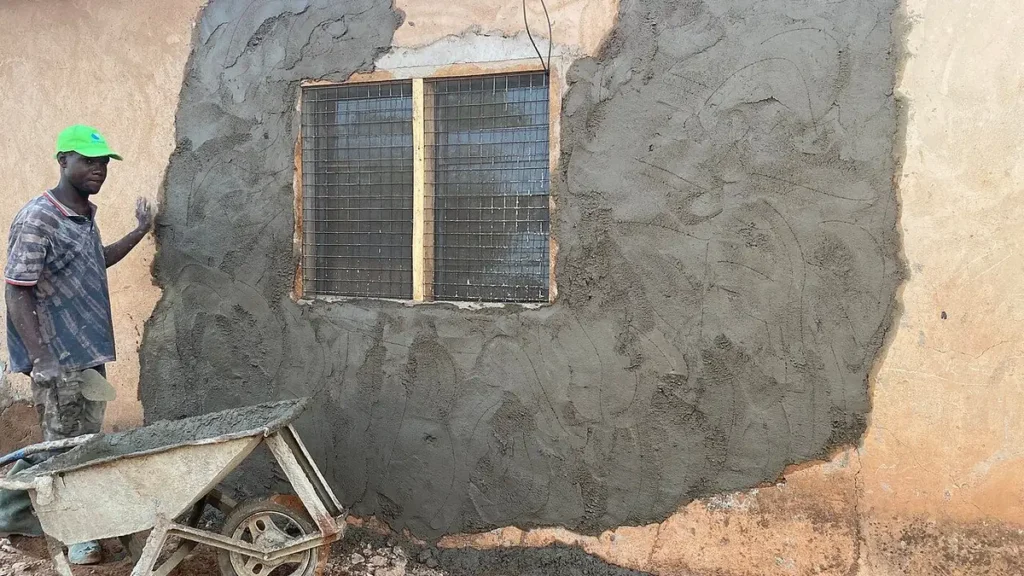
A plastering startup lives or dies on the finish. Clients run a hand across a freshly skimmed wall and decide in seconds whether the crew was worth the money, and there is nowhere to hide a trowel mark, a hollow patch, or a join that dried at the wrong speed. The trade itself is old — plaster, water, a hawk and a trowel — but the business around it has changed completely. Quotes, surveys, moisture readings, drying schedules, crew rosters and invoices now run through software, and the firms that win work are the ones whose office runs as smoothly as their floats.
That is where AI tools earn their keep for a plastering startup. A laser measure that talks to an estimating app turns a site visit into a priced quote before the van leaves the kerb. A moisture meter that logs readings to the job file stops the old argument about whether a wall was dry enough to skim. A scheduling tool that knows how long a two-coat skim actually takes keeps three gangs from arriving at the same house on the same morning. None of these tools holds a trowel, but every one of them protects the margin that pays for the trowel work.
This guide compares the nine best AI tools for plastering startups in 2026, chosen for the jobs a real plastering firm does every week: measuring and pricing rooms, checking walls before a coat goes on, planning drying time, scheduling crews, and getting paid without chasing invoices for a month. Each tool is judged on what it does on a plastering job, not on a generic feature list, and every pick is fresh against the closest neighbouring trades — drywall installation startups, painting firms and wallpaper installers — so the list is built for plasterers, not borrowed from another trade.
Key takeaways
- Measure first, quote fast: LiDAR room scans and laser measures that feed estimating software cut quoting time from hours to minutes.
- Moisture readings decide the job: logged damp and humidity data stops skimming over wet walls and the callbacks that follow.
- Drying is a schedule, not a guess: drying and dehumidifier tracking keeps the second coat, the mist coat and the decorator on time.
- Spray plastering needs its own kit: machine-applied plaster rewards tools that track output, mix ratios and machine servicing.
- One system for the office: quoting, scheduling, invoicing and reminders in a single trade platform beats five disconnected apps.

What a plastering startup actually sells
A plastering startup sells flat walls, and flat walls are harder than they look. A skim coat is two or three millimetres of material spread over square metres of board or old plaster, and the eye catches every ripple. The work breaks into a few clear job types, and each one stresses the business differently. New-build skimming is volume work: whole houses, tight programmes, and a price per square metre that leaves no room for a wasted morning. Re-skimming lived-in rooms is fiddly work: furniture to move, dust to control, and clients watching every pass. Patching and repair is small work with high expectations, because a repaired ceiling is judged against the untouched ceiling next to it. External rendering and machine-applied plaster are heavy work: machines, hoses, mix ratios and weather windows.
Every one of those job types shares the same failure modes. The wall was not dry, so the skim blew. The room was measured by eye, so the quote was short and the job lost money. The drying time was guessed, so the decorator arrived two days early and the paint flashed. The crew was double-booked, so a client waited a week for a two-day job. The invoice went out late, so the cash arrived after the materials bill. AI tools fix the office side of each failure, and the best of them do it without asking a plasterer to become a software expert.
The nine tools below are grouped the way a plastering firm actually uses them. Three handle measuring and pricing, two handle moisture and drying, two handle scheduling and the office, and two handle the specialist ends of the trade: spray-machine plastering and drying equipment. Together they cover a job from the first site visit to the final invoice, and each one earns its place by solving a plastering problem rather than a generic business problem.
The 9 best AI tools for plastering startups
The table at the end of this section summarises all nine tools at a glance, but the detail matters here: a plastering startup should pick tools for the jobs it actually does, not for the longest feature list. A firm that skims new builds needs measuring and scheduling first. A firm that repairs damp walls needs moisture logging first. A firm that sprays needs machine and output tracking first.
1. Canvas by Occipital
Canvas turns an iPhone or iPad into a room scanner. Walk a room, let the LiDAR sensor capture the walls, and Canvas returns a measured floor plan with wall areas, ceiling heights and openings marked. For a plastering startup, that is the quoting step compressed into a single visit: the wall area is the price, and the price is the quote. A two-bedroom re-skim that used to take an evening of tape-measure arithmetic becomes a scan, a check and a sent quote before the plasterer reaches the van.
The accuracy is what makes it a plastering tool rather than a novelty. Skim pricing lives or dies on square metres, and a five percent measuring error on a whole house is the difference between profit and a loss. Canvas reports areas to a tolerance a plasterer can price against, and the scan catches the awkward bits — chimney breasts, alcoves, sloping ceilings — that tape measures routinely undercount. The exported plan also settles arguments: when a client asks why the quote covers twelve square metres of hallway, the plan shows the hallway.
Canvas earns its place first in the workflow, at the survey. It pairs naturally with an estimating app, because the scanned areas drop straight into a materials and labour calculation instead of being retyped. For a startup, that matters twice over: it makes quotes faster, and it makes them consistent, so two estimators pricing the same house produce the same number. In a trade where the cheapest quote often wins the job and the most accurate quote keeps the business alive, that consistency is worth more than any single feature.
2. Moasure
Moasure is a pocket-sized motion-based measure that records distances, areas and angles as the user walks a room. No tape, no laser target, no second pair of hands holding the other end. For a plasterer measuring a stairwell, a room full of furniture, or a ceiling with a slope, that freedom is the point: the device measures where a tape cannot reach and where a laser has nothing to bounce off.
The plastering use is straightforward. Walk the walls, capture the areas, and export the measurements to the quote. Moasure handles irregular shapes well, which is exactly where plastering quotes go wrong — bay windows, arched openings, and walls that are not quite square. It also measures angles, so a plasterer pricing a room with a sloping ceiling can record the slope instead of guessing it and paying for the guess in extra material.
Compared with a laser measure, Moasure trades a little absolute precision for a lot of practicality on awkward sites. Compared with a phone scan, it works in rooms where the light is poor and the phone camera struggles. For a startup that prices a lot of lived-in re-skims, where rooms are furnished and access is awkward, that practicality is the reason it sits in the van next to the trowels rather than in a drawer.
3. Cupix
Cupix builds a digital twin of a job from a 360-degree camera walkthrough: a navigable 3D record of every room, with measurements and annotations pinned to the walls. For a plastering startup, the twin is the before-and-after evidence that ends disputes. Photograph the cracks, the blown patches and the damp stains before work starts, and the finished skim is judged against a record instead of a memory.
The measurement side is what pays for it. Cupix captures wall areas and room dimensions from the walkthrough, so a quote can be built from the twin without a second site visit. That matters when a client phones for a price and the plasterer is on another job: open the twin, measure the walls, and quote from the office. It also matters for multi-room jobs, where walking every room twice — once to quote, once to work — is a day lost.
Cupix is the most capable of the measuring tools here, and the most demanding: it wants a 360 camera and a little discipline about walking every room. A startup doing whole-house skims and new-build work will get the value back quickly, because the twin doubles as the job record, the snag list and the portfolio. A one-van repair firm may find a phone scan enough, and should weigh the camera cost against the jobs it actually prices.
4. Fergus
Fergus is job management software built for trades, and it fits a plastering startup because it follows the job from first call to final payment. A quote is built from the measured areas, sent to the client, and accepted in the app. The accepted quote becomes the job, the job becomes the schedule, and the schedule becomes the invoice. Nothing is retyped, and nothing falls between apps.
The scheduling side is where Fergus earns its money for a plasterer. Skim coats need drying time, and drying time is not negotiable: a second coat over a wet first coat is a blown job. Fergus lets the firm block out the drying window as part of the job, so the diary shows the truth — the room is occupied for three days even though the trowel work took one. Crews stop being double-booked into rooms that are still drying, and clients stop being promised a finish date the plaster cannot meet.
Fergus also handles the unglamorous half of the business: reminders, payment chasing and the paper trail. A plastering startup lives on cash flow, because materials are bought before the invoice is paid. Automated reminders and card payments inside the job record shorten the gap between finishing a wall and being paid for it. For a firm moving from a notebook and a spreadsheet, Fergus is the single biggest step toward running like a business rather than a gang with a van.
5. Tradify
Tradify is the other trade job platform a plastering startup should compare against Fergus, and the choice between them comes down to how the firm likes to work. Tradify is lighter and faster to set up: quotes, scheduling, time tracking and invoicing in one place, with a mobile app the crew actually opens on site. A plasterer can clock onto a job, record the hours, photograph the finish, and have the invoice ready before leaving the house.
The quoting workflow suits plastering well. Build a quote from standard items — skim per square metre, patch per room, render per elevation — and the price is consistent every time. That consistency protects a startup twice: it stops the optimistic quote that loses money, and it stops the padded quote that loses the job. Tradify also tracks the job’s costs against its price as the work progresses, so a job going over on materials shows up while there is still time to do something about it.
Where Tradify edges ahead for small plastering firms is the crew app. Time tracking, job notes and photos live against the job, not in a group chat that scrolls away. When a client queries a finish six weeks later, the job record shows who was there, what was done and what the wall looked like when the crew left. That record is worth more than any single feature when a dispute lands, and it is the reason a startup should run its jobs through one system instead of three.
6. Protimeter Surveymaster
The Protimeter Surveymaster is a dual-function moisture meter: pin probes for depth readings and a pinless sensor for scanning a wall without marking it. For a plastering startup, it answers the question that decides whether a job can start at all: is this wall dry enough to skim? Plaster over a damp wall does not bond properly, and the failure shows up weeks later as a hollow patch or a blown coat that the plasterer is expected to fix for free.
The pinless mode is the daily tool. Sweep a wall and the meter shows where moisture sits, so the plasterer can find the damp patch behind the wardrobe instead of discovering it after the skim has failed. The pin mode gives a number to put in the job file: a reading taken at the survey, a reading taken on the day of work, and a record that the wall was dry when the plaster went on. That record is the difference between a warranty claim the firm absorbs and one it can answer with evidence.
Modern Surveymasters log readings and pair with reporting apps, which is what makes the meter an AI-adjacent tool rather than a dumb instrument. A startup that records readings against every job builds a damp history for its clients’ houses, and that history becomes a service: the firm that can show a wall drying over three visits is the firm that gets called back for the next room. In a trade where callbacks eat margin, a meter that prevents one blown skim pays for itself in a single job.

7. Testo 605i
The Testo 605i is a compact thermo-hygrometer that measures air temperature and relative humidity and sends the readings to a phone app. For a plastering startup, it measures the room rather than the wall, and the room decides how plaster dries. A cold, damp room dries slowly and unevenly; a warm, dry room can dry a skim too fast and crack it. The 605i turns that judgement from a guess into a number.
The practical use is drying management. Take a reading when the first coat goes on, take another the next morning, and the app shows whether the room is drying on schedule. If the humidity is stuck high, the plasterer knows to bring a dehumidifier or open ventilation before the second coat, instead of finding out when the second coat fails to take. Logged readings also let the firm give the client a real drying time — three days, not “a few days” — and a real date for the decorator.
The 605i is cheap, pocket-sized and easy to overlook, which is exactly why it belongs on this list. A plastering startup that measures its rooms will schedule better, dry better and argue less. Pair it with a moisture meter and the firm has both halves of the drying picture: the wall’s moisture and the room’s air, logged together against the job. That pair of readings is the cheapest insurance a plastering firm can buy against the most common failure in the trade.
8. Putzmeister MP 25
The Putzmeister MP 25 is a mixing pump for machine-applied plaster: it mixes dry material with water and pumps it through a hose to the spray gun. For a plastering startup that wants to move from hand application to spray, the MP 25 is the machine that makes the jump possible. Spray plastering covers a wall in a fraction of the time a trowel takes, and on new-build volume work that speed is the whole business case.
The machine changes what the startup must manage. Mix ratios, water flow, hose length and pump pressure all affect the finish, and the MP 25’s controls let the operator set them repeatably instead of by feel. That repeatability is what a startup needs when it puts a second operator on the machine: the settings are written down, the output is consistent, and the finish does not depend on which gang is holding the gun. Servicing matters too — a pump that is cleaned and maintained on schedule does not break down on a Friday with three rooms left to spray.
The MP 25 is not a tool for every plastering startup. It suits firms doing volume: new builds, whole houses, large commercial skims. A repair firm working single rooms will never earn the machine back. But for a startup that wants to compete on speed for big jobs, the machine plus the software that tracks its output, its servicing and its material use is a genuine step change — the difference between pricing by the day and pricing by the square metre with confidence.
9. Dri-Eaz LGR 7000XLi
The Dri-Eaz LGR 7000XLi is a low-grain-refrigerant dehumidifier built for drying buildings, and for a plastering startup it is the machine that controls the drying schedule. Fresh plaster releases a large amount of water into the room as it dries, and in a sealed modern house that water has nowhere to go. Without extraction, drying stalls, the second coat waits, and the programme slips by days.
The LGR 7000XLi earns its place because it dries down to low humidity levels that ordinary dehumidifiers cannot reach, and it does it while logging its own performance. A plastering firm can place the unit, record the room’s humidity, and show the client the drying curve: the numbers fall day by day, and the decorator’s date is set by the data rather than by hope. That evidence also protects the firm when a client wants the second coat early — the meter says the wall is not ready, and the reading is in the job file.
For a startup, a drying unit is also a revenue line. Hiring the dehumidifier to the client for the drying period, or including controlled drying as part of the service, turns a scheduling problem into a charged service. Paired with a hygrometer and a moisture meter, the LGR 7000XLi completes the drying toolkit: measure the wall, measure the air, extract the water, and log all three. A firm that dries properly finishes on time, and finishing on time is what gets a plastering startup its next job.
Plastering AI tools compared
| Tool | What it does | Best for | Plastering strength |
|---|---|---|---|
| Canvas by Occipital | LiDAR room scanning and measured plans | Quoting whole houses | Wall areas straight into the quote |
| Moasure | Motion-based measuring of rooms and angles | Awkward lived-in rooms | Measures where tapes cannot reach |
| Cupix | 360-degree digital twins with measurements | Multi-room and new-build jobs | Before-and-after evidence per room |
| Fergus | Quoting, scheduling and invoicing | Running the whole office | Drying windows built into the diary |
| Tradify | Job management with crew mobile app | Small firms and repair work | Job records that settle disputes |
| Protimeter Surveymaster | Pin and pinless moisture readings | Pre-skim wall checks | Logged proof the wall was dry |
| Testo 605i | Air temperature and humidity logging | Drying management | Room conditions as numbers |
| Putzmeister MP 25 | Mixing pump for spray plaster | Volume and new-build work | Repeatable mix and output |
| Dri-Eaz LGR 7000XLi | Low-grain dehumidifier | Controlled drying | Drying curve as client evidence |
How to choose the right tools for your plastering startup
Start with the job you do most. A firm that skims new builds should buy measuring and scheduling first: Canvas or Moasure for the quote, and Fergus or Tradify for the diary. A firm that repairs damp and damaged walls should buy moisture first: a Surveymaster and a 605i, because one prevented callback is worth more than any scheduling feature. A firm that sprays should buy the machine discipline first: the MP 25 and the drying kit that keeps its output on programme.
Buy one system for the office, not three. The most expensive mistake a plastering startup makes with software is running quotes in one app, the diary in another and invoices in a third, then losing jobs in the gaps between them. Fergus and Tradify both cover the full journey from quote to payment; pick one, learn it properly, and let the specialist tools — the scanners, the meters, the drying kit — feed into it. The measuring tools should export numbers the office system can use, and the moisture tools should log readings against the job record.
Finally, judge every tool by whether it prevents a failure or only records one. A moisture meter that stops a skim over a wet wall prevents a failure. A drying log that proves the wall was ready prevents an argument. A scan that prices a room correctly prevents a loss. Tools that only produce prettier paperwork are a luxury a startup cannot afford yet; tools that stop the four classic plastering failures — wet walls, wrong measures, guessed drying and double-booked crews — pay for themselves in the first month.
Plastering startup checklist
- Measure every room with a scanner or motion measure, and price from the measured areas, never from an eye estimate.
- Take a moisture reading before every skim and log it against the job, with a second reading on the day of work.
- Record the room’s temperature and humidity at each coat so drying time is a number, not a guess.
- Block drying time into the diary as part of the job, so no crew is booked into a room that is still wet.
- Photograph every wall before work starts and after it finishes, pinned to the job record.
- Send the invoice the day the job finishes, with the readings and photos attached to the job file.
Frequently asked questions
Do plastering startups really need AI tools?
They need the measuring, moisture and scheduling help these tools provide, because the four most expensive plastering failures — skimming a wet wall, mis-measuring a room, guessing drying time and double-booking a crew — are all office failures, not trowel failures. The tools in this guide fix the office side, and they pay for themselves by preventing one failed skim or one lost day.
What is the first tool a new plastering startup should buy?
A measuring tool and a moisture meter, in that order. Measuring gets quotes right, which keeps the firm solvent; moisture readings stop the firm skimming wet walls, which keeps its reputation. A phone LiDAR scan and a pinless moisture meter together cost less than fixing one blown ceiling.
How is plastering different from drywall work?
Plastering applies a wet coat — skim, float or render — over a surface and finishes it by hand, while drywall work fixes boards and tapes joints. The tools overlap on measuring and scheduling, but plastering needs moisture and drying tools that drywall does not. The shared office tools cover both trades, while the moisture and drying picks here are specific to wet plaster.
Can spray plastering replace hand skimming?
On volume work, yes: a mixing pump covers walls far faster than a trowel, and the finish is consistent once the mix and pressure are set. On small rooms, repairs and detailed work, hand skimming still wins, because setting up a machine for one wall costs more time than it saves. Most growing firms run both: spray for new builds and large areas, hand work for repairs and lived-in rooms.
How long should plaster dry before decorating?
There is no single answer, because drying depends on the coat thickness, the wall, the room temperature and the humidity. As a rule, a skim coat needs several days, and the only reliable check is a moisture reading plus a humidity log showing the room drying steadily. Firms that log both can give clients a date they can trust instead of a guess that slips.
What comes after plastering in a room finish?
Once the skim is dry, the wall is usually mist-coated and then painted or papered. That is why plastering startups work closely with the next trades: the decorator needs a dry, flat wall, and the plasterer needs to know the decorating date before promising one. The firms that coordinate that handover — including painting startups and wallpaper installation startups — are the ones whose clients recommend them for the next room.
Bottom line
A plastering startup wins on the finish, and the finish is protected by the office as much as by the trowel. Measure with a scanner, check the wall with a meter, log the drying, schedule the drying time, and invoice on the day. The nine tools in this guide cover that whole journey, from the first scan to the final payment. Pick the measuring and moisture tools first, add one office system, and add the spray and drying kit when the volume justifies it — and let the walls speak for the business.

Keep what speaks to you.
Leave room for your own perspective.


