A linen room is a small room with a big job. It holds the household linen a family reaches for every day: bed sheets, pillowcases, duvet covers, bath towels, hand towels, tablecloths and napkins. When the room works, every stack is easy to see, easy to reach and easy to put back. When it does not work, clean linen ends up in bags on the floor, shelves sag under uneven piles, and nobody can find the spare set for the guest bed.
A linen room installation startup builds that room from an empty shell or a tired cupboard into a finished storage room. The work is joinery, shelving, lighting and airflow, not washing and not drying. The fitter measures the walls, designs shelf runs that match the size of folded linen, builds a folding counter at a comfortable height, fits doors that open fully in a tight space, and makes sure air moves through the room so stored linen stays fresh.
Artificial intelligence tools now help a small startup do that work faster and with fewer mistakes. A phone scan can measure the room in minutes. A layout tool can test shelf heights against real folded stack sizes before a single board is cut. A quoting tool can turn the measured drawing into a fixed price while the fitter is still standing in the hallway. This guide compares the nine best AI tools for linen room installation startups in 2026, chosen for the linen room build itself: linen storage, shelving, folding and airing.
Key takeaways
- A linen room stores household linen such as bed sheets and towels. It is a storage room, not a laundry room, a clothes closet or a food pantry.
- Measure first with a phone scan, then design shelf runs around real folded stack sizes before ordering any boards.
- Folded linen needs shallow shelves, a folding counter at waist height and air moving through the room to stay fresh.
- Fixed-price quotes win linen room jobs because the rooms are small and customers compare prices quickly.
- Start with a layout tool, a measuring tool and a quoting tool, then add job tracking and bookkeeping as the order book grows.
What a linen room installation startup actually builds
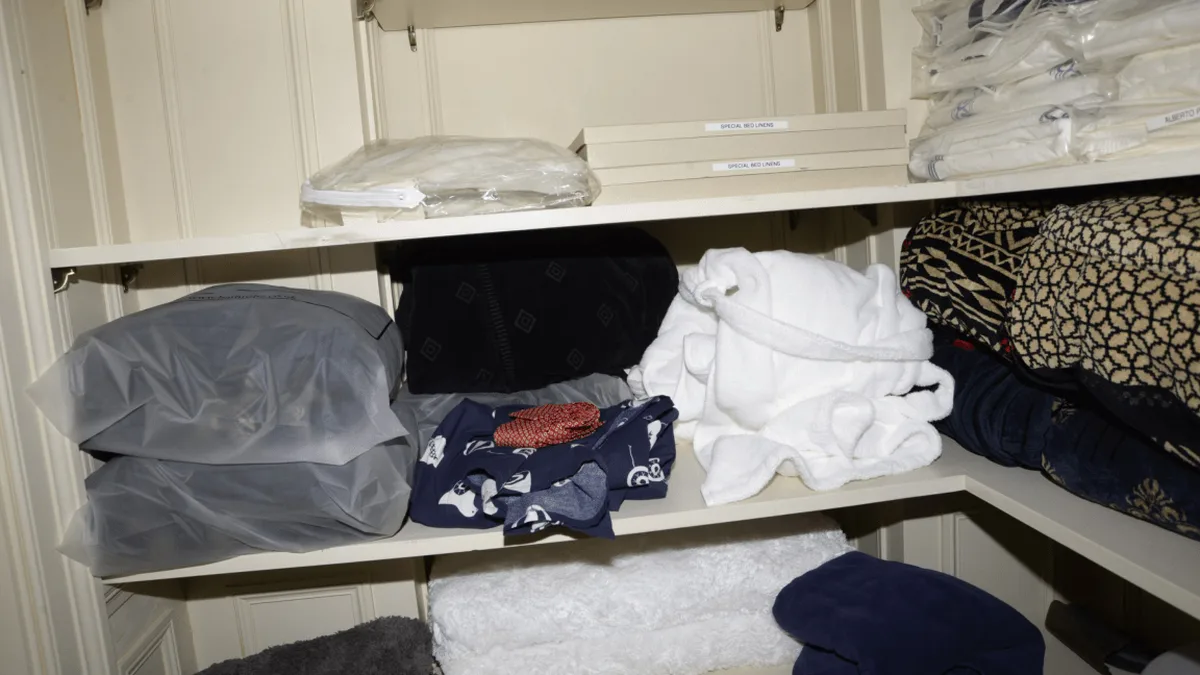
A linen room is a dedicated storage room for household linen. The shelves hold folded bed sheets, duvet covers, pillowcases, bath towels, hand towels, face cloths, tablecloths and cloth napkins, grouped by size and by room so the right set is always on top. A folding counter gives the household somewhere to fold fresh linen at waist height instead of on a bed or a dining table. A small airing rail or vent keeps air moving so linen stored for weeks still smells fresh when it comes out. Labels, baskets and shallow dividers stop tall stacks from toppling when one set is pulled out.
The room is usually small, often no bigger than a wide cupboard or a short hallway wall, and that is exactly why it needs a proper design. A shelf that is too deep hides the back row. A shelf that is too tall invites wobbly stacks that fall over. A door that swings the wrong way blocks the folding counter. A room with no airflow grows musty in winter. A good linen room startup solves these problems before the build starts, with a measured drawing, a shelf plan matched to folded stack sizes, and a ventilation check on every job.
The linen room is easy to confuse with three other rooms, and the difference matters for the whole business. A clothes closet stores clothes on rails and hangers, with shoe walls and drawers for garments, while a linen room stores folded household linen on shelves. A food pantry stores tins, jars and dry food, with pull-out hardware built for kitchen supplies, while a linen room stores fabric that needs air and light, not sealed containers. A laundry room installation centres on a washer, a dryer, water supply and drainage, while a linen room has no washing machines at all and exists to store linen after it is clean and dry.
There is also a business that sounds similar but builds something different. Linen rental startups hire out tablecloths, napkins and chair covers for events and run a cycle of washing, pressing, folding and delivery from a warehouse. A linen room startup does the opposite job in a different place: it fits out a permanent storage room inside a home, and the household linen stays in the house. Knowing which business you are in keeps the quote honest, the design right and the marketing clear.
Most linen room jobs fall into three shapes. The first is a new linen room in a spare corner or under-stair space, built from scratch with a stud wall, a door and a full set of shelves. The second is a refit of an old airing cupboard, where the startup strips out sagging shelves, adds a folding counter and improves the lighting. The third is a linen wall inside a bedroom or landing, where open shelving turns a blank wall into household storage. The tools in this guide cover all three, because the measuring, design and quoting steps are the same even when the room is different.
How to choose AI tools for a linen room fit-out
Start with the job, not the software. A linen room job has five steps: measure the space, design the shelves, price the job, build it, and hand it over with photos and a care note. A tool earns its place if it makes one of those steps faster or more accurate.
Measuring matters most on small jobs. A linen room is often less than two metres wide, so a measuring error of three centimetres can mean a shelf that will not fit or a door that will not open. Look for a scanning tool that produces a measured plan you can trust, with wall lengths, ceiling height, door swings and the position of sockets and vents marked on it.
Design matters next. The layout tool should let you set shelf depths and heights from real folded linen sizes, not from guesswork. A folded double duvet cover stack needs a different shelf height from a stack of hand towels, and a good tool keeps those numbers visible while you move shelves around. It should also show the customer the finished room before you cut anything, because a customer who has seen the shelves is far less likely to ask for changes halfway through the build.
Pricing matters as much as design. Linen rooms are small jobs with quick decisions, so a quote that takes three days to arrive usually loses to a quote that arrives the same evening. Look for a quoting tool that reads the measured drawing and the material list and produces a fixed price with the shelf boards, doors, lighting and labour shown as separate lines.
Finally, check the running cost and the learning curve. A new startup should be able to run its first three tools for a modest monthly total and learn each one in an afternoon. Free trials are worth using properly: run one real job through the tool, from the first scan to the final invoice, and keep the tool only if that job felt easier than the last one done without it.
The 9 best AI tools for linen room installation startups at a glance
| Tool | Best for | Main job |
|---|---|---|
| LinenPlan AI | Whole-room layout | Shelf runs, folding counter and door swings |
| LinenScan AI | Measuring from a phone | Measured plans, heights and door positions |
| ShelfFold AI | Shelf spacing and folding | Stack sizes, shelf heights and folding workflow |
| AirLinen AI | Airing and humidity | Airflow, vent placement and moisture checks |
| FoldCount AI | Linen inventory counts | Stack counts, set lists and shelf labels |
| LinenLight AI | Lighting shelf rows | Light levels, strip placement and glare control |
| LinenQuote AI | Fixed-price quotes | Quotes, material lists and customer approval |
| LinenTrack AI | Job tracking | Checklists, photos and handover records |
| LinenLedger AI | Job costing | Invoices, deposits and profit per job |
The table shows the shape of a sensible stack. The first four tools design and check the room itself. The next two count the linen and light the shelves. The last three run the business side: the quote, the job and the money.
The 9 best AI tools for linen room installation startups
Each tool below is judged on the linen room build: linen storage, shelving, folding and airing. Every one of the nine covers a different step, so the list works as a complete stack as well as a menu to pick from. Prices and features change often, so treat the notes on cost as a guide and check the current plan before you subscribe.
1. LinenPlan AI: The Best Tool for Whole-Room Linen Layouts
LinenPlan AI is the design tool a linen room startup opens first. It builds a measured plan of the room, then lets the fitter place shelf runs, a folding counter and doors on that plan, with each shelf labelled by the linen it will hold. The tool keeps shelf depths shallow enough that the back row stays visible, and it flags a shelf that is too tall for the stack it is meant to hold.
The strongest feature is the way it treats folded linen as a real size, not a guess. The fitter enters the household’s linen list, such as four double sheet sets, six bath towels and two tablecloths, and the tool suggests shelf heights and depths for each stack. The customer can then see a clear drawing of their own linen on their own shelves, which makes approval fast. For a startup that wants one design tool for every linen room shape, from a new corner room to a refit of an old airing cupboard, LinenPlan AI is the safest first buy.
2. LinenScan AI: The Best Tool for Measuring a Linen Room From a Phone
LinenScan AI turns a phone walkthrough into a measured plan. The fitter walks the room slowly, the phone records the walls, ceiling height, door opening and the position of sockets and vents, and the tool returns a floor plan with dimensions on it. The whole survey takes a few minutes, which matters on small jobs where the survey itself can cost more than the margin allows. The plan is accurate enough to order shelf boards from, and it records the awkward details a tape measure often misses, such as a sloping ceiling or a pipe boxing in the corner.
The tool earns its keep on refits, where the room already has shelves that need replacing and the fitter must know exactly what fits in the space left behind. It also helps when the customer is not at home, because the scan can be sent to the office and the design started the same day. Used well, LinenScan AI replaces the second visit most startups used to make, and that saved visit is often worth more than the subscription.
3. ShelfFold AI: The Best Tool for Shelf Spacing and Folding Workflow
ShelfFold AI focuses on the two things that decide whether a linen room stays tidy: shelf spacing and folding. The tool takes the household’s linen list and works out the shelf height each stack needs, so bath towels get a lower shelf than folded duvet covers and hand towels get a shallow bay of their own. It also plans the folding workflow, placing the folding counter at waist height, with the fresh linen landing zone on one side and the finished stacks on the other, so folding becomes a short, easy routine instead of a chore spread across the bed.
A room designed with ShelfFold AI keeps its stacks upright because no shelf is taller than the stack it holds. The tool also produces a simple shelf label plan, so each bay is marked for sheets, towels or table linen and the room stays organised when someone else puts the linen away. For a startup that wants its rooms to still look tidy six months after the build, ShelfFold AI is the detail tool that makes the difference.
4. AirLinen AI: The Best Tool for Airing, Airflow and Humidity
AirLinen AI checks the air in the room, which is the part of a linen room most often forgotten and most often blamed later. Stored linen goes musty when air stands still, especially in a small room with a closed door and no vent. The tool reads the room size, the shelf layout and the position of doors and vents, then shows where air moves and where it stalls. It suggests vent positions, a small gap under the door, or a quiet extractor that runs on a humidistat, and it estimates the humidity the linen will sit in through winter.
The tool is most useful on refits of old airing cupboards, where the old room often has no airflow at all and the customer complains that fresh linen smells stale within a week. AirLinen AI gives the fitter a clear answer to show the customer, with a before and after reading for the room, so the vent or fan is sold as a measured fix rather than a guess. For a startup that wants no call-backs about musty sheets, AirLinen AI is cheap insurance.
5. FoldCount AI: The Best Tool for Linen Inventory Counts and Shelf Labels
FoldCount AI counts the linen and matches it to the shelves. The fitter photographs the household’s folded stacks or enters the counts by hand, and the tool builds a set list: how many sheet sets, towel sets and tablecloths the household owns, which shelf each set lives on, and how many spare sets the room can still hold. The result is a shelf label plan the startup prints and fits on handover day, so every bay is marked and the room starts its life organised.
The tool also helps with the sales conversation, because it shows the customer the gap between the linen they own and the storage they have. A household with twelve bath towels and room for six will either buy fewer towels or order a bigger shelf run, and either answer is better than a room that overflows in the first month. The tool is simple and fast, and it suits a startup that wants a tidy handover without adding paperwork. As a handover tool, FoldCount AI turns a good build into a room the household can actually keep tidy.
6. LinenLight AI: The Best Tool for Lighting Linen Shelves
LinenLight AI plans the light inside the room, shelf by shelf. A linen room is often windowless or lit by a single ceiling bulb, which leaves the lower shelves in shadow and makes it hard to tell a white sheet set from a cream one. The tool works out how much light each shelf row needs, where to place slim LED strips under the shelves, and how to avoid glare on the folding counter. It also checks that the light does not heat the linen, which matters when strips sit close to folded fabric.
The tool’s drawings are easy to show the customer, because they show the room as it will look with the door open and the strips on, rather than as a dark cupboard. For a startup that wants its rooms to look finished rather than fitted, LinenLight AI is the tool that makes the shelves readable and the room inviting.
7. LinenQuote AI: The Best Tool for Fixed-Price Linen Room Quotes
LinenQuote AI turns a measured design into a fixed price the customer can approve on the spot. The tool reads the shelf list, the door, the lighting and the labour hours from the design, then builds a quote with each part shown as a separate line. The customer sees the cost of the boards, the doors, the strips and the fitting, and the startup sees its margin before ordering anything. A deposit request and a start date can go out with the same message, so a job agreed on Tuesday can be booked for the following week.
The tool matters because linen rooms are small, quick decisions. A customer comparing three fitters will usually choose the one whose price arrives first and reads clearly, and a same-evening quote wins more work than a cheaper quote that arrives three days later. LinenQuote AI also keeps the startup honest: when a change is requested, such as a wider folding counter, the tool reprices the job in seconds instead of the fitter guessing the extra cost on site. For a startup that wants to win small jobs fast, LinenQuote AI is the tool that pays for itself first.
8. LinenTrack AI: The Best Tool for Job Tracking and Handover Photos
LinenTrack AI runs the job from the day the deposit lands to the day the customer signs the handover. It holds a checklist for each linen room: shelves cut, shelves fitted, counter level, lights working, vents clear, labels fitted, room cleaned. The fitter ticks each step off on site, photographs the finished shelves, and the tool builds a handover record the customer receives the same day, with photos of every shelf row and a short care note about keeping linen aired.
The handover record is the part customers remember. A room handed over with photos and a checklist feels finished, and it gives the household a reference for how the shelves should look when they put the linen away. The tool also protects the startup, because the photos prove the condition of the room on handover day if a shelf is later overloaded or a door is knocked. For a startup moving from two jobs a month to two jobs a week, LinenTrack AI is the tool that keeps quality steady as the pace rises.
9. LinenLedger AI: The Best Tool for Job Costing and Invoicing
LinenLedger AI keeps the money straight. It records the deposit, the material costs, the labour hours and the final invoice for each linen room, then shows the profit on that job and the average profit across the month. A startup that knows its true margin per room can price the next one with confidence, and it can see quickly whether a cheaper board supplier or a faster fitting routine is worth changing.
The tool is deliberately simple, which suits a small fitting business better than a full accounting system. It does not try to run payroll or manage stock; it answers one question, which is whether each linen room made money. The fitter enters the numbers on the day the job finishes, while the receipts are still in the van, and the monthly summary takes minutes to read. For a founder who wants to know, without guessing, whether the linen room business is working, LinenLedger AI is the tool that gives the answer.
A linen room fit-out, step by step
A tidy linen room follows the same five steps on every job, whether the room is a new corner build or a refit of an old cupboard. The first step is the survey. The fitter walks the room with a scanning tool, records the walls, the ceiling height, the door swing and the position of sockets and vents, and photographs the space as it stands. The household’s linen list is counted at the same visit, so the design is based on real stacks rather than guesses.
The second step is the design. The layout tool places the shelf runs, the folding counter and the doors on the measured plan, with each shelf matched to the stack it will hold. The customer sees the finished room on screen and approves the shelf heights before anything is ordered.
The third step is the quote. The quoting tool turns the approved design into a fixed price, with boards, doors, lighting, ventilation and labour shown as separate lines. The customer pays a deposit, the boards are ordered to the cutting list, and a start date is fixed. A clear quote at this stage is what separates a professional startup from a fitter who prices jobs in their head.
The fourth step is the build. The crew strips out old shelves, fits the new shelf runs level and square, builds the folding counter at waist height, wires the shelf lighting, fits the vent or fan, and hangs doors that open fully without hitting the counter.
The fifth step is the handover. The shelves are cleaned, the linen is stacked by the label plan, the lights and vents are tested, and the customer walks the room with the fitter. The handover record, with photos of every shelf row, goes to the customer the same day. A room handed over this way stays tidy, because the household starts with a clear picture of where everything belongs.

Linen room installation checklist
- Measure the room with a phone scan before designing anything, and record the ceiling height, door swing and vent positions.
- Count the household linen first, then set shelf heights from the real folded stack sizes.
- Keep shelves shallow so the back row stays visible, and never build a shelf taller than the stack it holds.
- Fit a folding counter at waist height with a clear landing zone for fresh linen on one side.
- Check airflow on every job, with a vent, a door gap or a quiet fan, so stored linen stays fresh through winter.
- Hand over with a shelf label plan and photos of every shelf row, so the household starts organised and stays organised.
Frequently asked questions
What is the best AI tool for a linen room installation startup in 2026?
There is no single best tool, because a linen room job has five steps and no one tool covers them all. Most startups begin with three: a scanning tool to measure the room, a layout tool to design the shelves, and a quoting tool to price the job. LinenPlan AI is the strongest layout tool in this guide, LinenScan AI is the fastest way to measure, and LinenQuote AI turns the design into a fixed price the same evening.
How much does a linen room installation cost?
A small linen room refit, with new shelves, a folding counter and lighting in an existing cupboard, usually costs less than a full room build, because the walls and door already exist. A new linen room built from scratch costs more, because it needs a stud wall, a door, electrics and ventilation as well as the joinery. The fixed price depends on the room size, the shelf material and the lighting chosen, which is why a measured quote matters more than a ballpark figure.
How is a linen room different from a closet?
A closet stores clothes on rails and hangers, with drawers and shoe storage for garments. A linen room stores folded household linen on shelves, with a folding counter and airflow to keep fabric fresh. The joinery looks similar from the hallway, but the design rules are different: closet shelves suit hanging clothes and shoes, while linen room shelves suit shallow folded stacks that must stay visible. The two rooms need different tools, different shelf plans and different handover notes.
Do I need planning permission to fit out a linen room inside my house?
Most linen room fit-outs inside an existing home need no planning permission, because they are internal joinery rather than an extension or a change of use. A new linen room built inside a spare corner or an existing cupboard is usually straightforward, and even a stud wall inside a bedroom rarely needs approval. The exceptions are listed buildings, where internal changes can need consent, and homes where the work touches a shared wall or a fire escape route.
What shelf depth works best for folded linen?
Shallow shelves work best, usually deep enough for one folded stack and no more. A shelf that holds two stacks front to back hides the rear stack, and the household stops using it. A shelf that is too deep also tempts people to pile linen higher, which makes stacks topple when one set is pulled out. The right depth depends on the linen itself: bath towels fold wider than hand towels, and a folded double duvet cover needs more depth than a pillowcase stack.
Should a linen room installation startup offer maintenance plans?
A light maintenance offer works well for linen rooms, because the room is used every day and the shelves take wear. A yearly visit to check shelf fixings, adjust doors, clean vents and reprint shelf labels is a small job that keeps the customer in touch and often leads to referrals. The startup should not oversell it: a linen room has no boiler, no water and no moving parts beyond a fan, so a heavy service contract would look like a sales trick. A simple annual check, priced clearly and booked at handover, is the honest version, and it turns a one-off fit-out into a customer who calls first when a neighbour asks for a linen room of their own. A pantry installation startup faces the same choice, since storage rooms earn repeat work through small, useful visits rather than large contracts.
Bottom line
A linen room installation startup succeeds on measurement, shelf design and honest pricing, not on washing machines or fancy renders. The room stores household linen, so the shelves must match real folded stacks, the air must move, and the light must reach the lowest row. The nine tools in this guide cover that build from the first phone scan to the final invoice: measure with LinenScan AI, design with LinenPlan AI and ShelfFold AI, check the air with AirLinen AI, count the linen with FoldCount AI, light the shelves with LinenLight AI, price the job with LinenQuote AI, track the build with LinenTrack AI, and keep the money straight with LinenLedger AI. Start with the first three, add the rest as the order book grows, and hand over every room with labelled shelves and photos.

Keep what speaks to you.
Leave room for your own perspective.