The best AI tools for heat pump installation startups in 2026 solve a problem that has nothing to do with how well a founder can braze a copper joint. A heat pump install is won or lost long before the vacuum pump starts running. It is won in the sizing calculation that decides whether a house stays warm on the coldest night of the year, in the quote that reaches the homeowner while three competitors are still measuring rooms, and in the refrigerant charge and airflow check that prove the system works exactly as designed. A startup that gets those steps right can charge a fair price, finish jobs without callbacks, and earn the reviews that fill the next month with work.
Heat pump work is a narrower trade than general heating and cooling, and that narrowness is exactly why it rewards the right software. An air-source heat pump, a ductless mini-split, or a cold-climate system lives or dies on numbers: the heating load at the design temperature, the length and lift of the line set, the refrigerant charge, the static pressure of the ductwork, and the electrical capacity of the panel. Guess at any of those and the result is a system that short-cycles, freezes up, costs a fortune to run, or leaves a bedroom cold in January. The tools in this guide exist to take the guessing out of those numbers, and to carry the paperwork, scheduling, and follow-up that a one-van company cannot afford to hire for yet.
This guide covers nine tools chosen specifically for heat pump installation, not for furnace repair, not for general air conditioning service, and not for whole-house energy auditing. Every tool here earns its place by helping with something a heat pump installer actually does: sizing a cold-climate system, designing a multi-zone mini-split layout, verifying a refrigerant charge, documenting a line set run, tracking a permit, or turning a finished install into a paid invoice and a five-star review. If you are starting a company that installs heat pumps and nothing else, this is the stack to build first.
Key takeaways
- Heat pump installs are won on numbers, so sizing and refrigerant verification tools pay for themselves before any other software.
- Start with five tools: a Manual J sizing tool, a mini-split design tool, a refrigerant verification app, a field service platform, and a photo documentation app.
- Cold-climate sizing is the skill that separates heat pump specialists from general HVAC companies, and it needs proper load calculation software, not rules of thumb.
- Document every line set, vacuum reading, and charge measurement with photos, because that record is what prevents warranty disputes and callbacks.
- Speed matters as much as accuracy: the installer who sends a correct, itemised quote the same evening usually wins the job.
Best AI Tools for Heat Pump Installation Startups at a Glance
The table below compares all nine tools at a glance. Each one covers a different part of the installation workflow, from the first load calculation to the final invoice, so a startup can buy them in the order that matches its biggest bottleneck rather than buying everything at once.
| Tool | What it does for heat pump installs | Best for | Pricing tier |
|---|---|---|---|
| Wrightsoft Right-Suite Universal | Manual J, S, and D load calculations and duct design | Cold-climate sizing and ducted installs | Premium |
| Mitsubishi Diamond System Builder | Ductless mini-split system design and equipment selection | Multi-zone mini-split layouts | Free for contractors |
| MeasureQuick | Refrigerant charge and airflow verification from live readings | Commissioning every install properly | Mid-range |
| Fieldpiece Job Link | Wireless gauges, vacuum, and refrigerant measurements | Crews that want live job data on site | Mid-range |
| XOi Technologies | Guided install workflows with photo and video verification | Quality control across a growing crew | Premium |
| ServiceTitan | Booking, dispatch, install scheduling, and invoicing | Startups planning to scale past two vans | Premium |
| Housecall Pro | Quotes, scheduling, payments, and customer messaging | Solo installers and two-person crews | Budget to mid-range |
| CompanyCam | Photo documentation organised by job and address | Line set, pad, and electrical photo records | Budget |
| JobProgress | Install project tracking from sale to final inspection | Multi-day installs and permit tracking | Mid-range |
What Makes a Heat Pump Installation Startup Different
The technical core of the work is the heat pump itself. An air-source heat pump moves heat rather than making it, which makes it efficient, but also makes it sensitive to design errors. Oversize the unit and it short-cycles, never dehumidifies properly in summer, and wears out early. Undersize it and the house goes cold on the design day, the backup heat runs constantly, and the homeowner’s electricity bill destroys every savings promise in the sales conversation. Cold-climate systems add another layer, because their capacity falls as the outdoor temperature drops, so the sizing calculation has to use the right design temperature and the right capacity tables, not a generic rule of thumb. This is the work that separates a heat pump specialist from a company that also happens to install heat pumps, and it is the reason load calculation software sits at the top of this guide rather than at the bottom.
Ductless mini-splits bring their own discipline. A multi-zone install is really several small systems sharing one outdoor unit, and the design has to balance indoor unit placement, line set length and lift, condensate drainage, and electrical supply for each zone. A wall-mounted head in the wrong place leaves a room with a cold corner. A line set run that is too long without the right charge adjustment leaves a zone underperforming. These are design decisions, not installation accidents, and they are made on a laptop before the first hole is drilled. The best AI tools for HVAC startups cover the broader business of running a heating and cooling company, but a heat pump specialist needs tools that go deeper on sizing, refrigerant, and commissioning, because those are the places where a heat pump job is won or lost.
The 9 Best AI Tools for Heat Pump Installation Startups
Each tool below is judged on the same question: does it make a heat pump install more accurate, faster, or better documented? Tools that only help with general office work did not make the list. What follows is the working order most new installers should follow, starting with the sizing and design tools that decide whether the system works, then the commissioning tools that prove it works, and finally the business tools that turn good installs into a growing company.
1. Wrightsoft Right-Suite Universal
Wrightsoft Right-Suite Universal is the load calculation and system design platform that most serious heat pump installers eventually standardise on, and it earns the top spot because sizing is the single most consequential decision in a heat pump job. It performs ACCA Manual J load calculations, Manual S equipment selection, and Manual D duct design in one workflow, which means the number that comes out of the load calculation flows directly into the equipment choice and the duct layout without being retyped, reinterpreted, or rounded away. For a cold-climate install, that chain matters enormously: the heating load at the local design temperature decides the capacity the heat pump must deliver on the coldest night, and the Manual S step checks that capacity against the manufacturer’s expanded performance data at that exact temperature rather than against a nominal rating measured in mild weather.
In practice, a startup uses Right-Suite Universal on every ducted heat pump quote. The installer measures the house, enters the construction details, and gets a room-by-room load that justifies the system size in writing. That written calculation is worth almost as much as the number itself, because it answers the homeowner’s hardest question, which is why this size and not a bigger one, and it protects the installer if the system is ever questioned. The software also handles duct design, which matters for heat pumps more than for furnaces, because a heat pump delivers air at lower temperatures and needs higher airflow to move the same amount of heat. Undersized ducts on a heat pump job show up as noise, poor comfort, and high bills, and the Manual D step is what prevents them.
2. Mitsubishi Diamond System Builder
Mitsubishi Diamond System Builder is the design tool for ductless mini-split work, and for a startup that installs a lot of multi-zone systems it is close to indispensable. It lets the designer lay out indoor units room by room, match them to an outdoor unit, check line set lengths and elevation differences, and confirm that the selected combination will actually deliver the capacity each zone needs. That sounds like basic arithmetic, but multi-zone design is full of traps: connect too much indoor capacity to one outdoor unit and the system cannot serve every zone at once; run a line set too far without checking the charge adjustment and one room underperforms; place an indoor unit badly and the homeowner lives with a draught for the next fifteen years.
What makes the tool valuable for a startup is that it produces a professional design document the homeowner can see and the crew can install from. The layout shows each indoor unit, each line set route, and the outdoor unit location, which removes the guesswork that causes most mini-split callbacks. It also connects directly to the equipment the company actually buys, so the quote is built from real model numbers with real prices rather than from a generic allowance that has to be corrected later. For a new company, that accuracy is a competitive advantage, because it means the quoted price is the installed price, and the customer is never asked for more money halfway through the job.
3. MeasureQuick
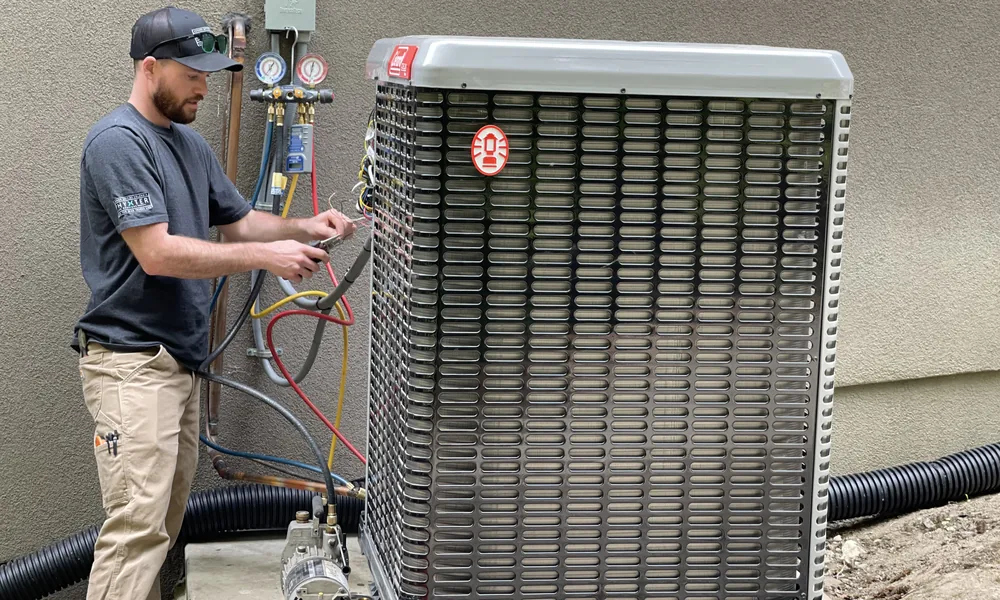
MeasureQuick is the commissioning app that proves a heat pump install actually works, and it belongs on every job, not just the difficult ones. It connects to wireless probes and gauges, takes live refrigerant and airflow readings, and compares them against the manufacturer’s targets to show whether the system is charged correctly and moving enough air. The difference between this and a traditional gauge reading is that MeasureQuick does the thinking: it calculates superheat, subcooling, target airflow, and system capacity from the live numbers, and it flags the reading that is out of range instead of leaving the technician to spot it in a table.
For a heat pump startup, the value is in the commissioning report. A finished install that leaves with a printed or emailed report showing the charge, airflow, and capacity measurements is a different product from one that leaves with a verbal promise that everything looks fine. The report settles arguments before they start. If a homeowner calls in January to say the house feels cold, the company can look at the commissioning report and know whether the system was installed correctly, which turns a stressful callback into a short diagnostic conversation. It also protects the warranty, because manufacturers increasingly expect documented commissioning readings when a warranty claim is filed.
4. Fieldpiece Job Link
Fieldpiece Job Link is the wireless measurement system that feeds live data from gauges, vacuum pumps, and probes straight to a phone or tablet on the job site. A technician can watch the vacuum level fall, the refrigerant pressures settle, and the temperatures stabilise without standing over the gauges, and the readings are logged automatically instead of being scribbled on a notepad that gets lost in the van. For heat pump work, where the vacuum and the charge are the two measurements that decide whether the system lasts fifteen years or fails in three, that automatic record is worth having on every install.
The practical advantage on a heat pump job is the vacuum process. A proper evacuation takes time, and the only way to know it is complete is to watch the micron gauge hold steady. Job Link lets the technician monitor that reading from inside the house while finishing the indoor work, and it records the full vacuum curve as evidence that the evacuation was done properly. The same applies to the charge: wireless probes on the suction and liquid lines feed live superheat and subcooling numbers, so the technician adjusts the charge once, correctly, instead of guessing, checking, and rechecking with a traditional manifold.
5. XOi Technologies
XOi Technologies is the guided workflow platform that turns a heat pump install into a repeatable process with photo and video verification at every step. The office builds a workflow for each type of install, covering the pad and placement, the line set run, the electrical connection, the vacuum, the charge, and the final checks, and the technician follows it on a phone or tablet, capturing a photo or short video at each stage. The result is a complete visual record of the job, created as the work happens, rather than a handful of photos taken at the end when the interesting parts are already covered up.
6. ServiceTitan
ServiceTitan is the field service platform that runs the business side of a heat pump installation company, from the first phone call to the final payment. It handles booking, dispatch, install scheduling, quoting, invoicing, and customer records in one system, which matters because a heat pump install is not a single visit. It is a sequence: the survey, the quote, the permit, the install day, the inspection, and the follow-up. ServiceTitan keeps that sequence visible, so nothing falls between the cracks when the company is juggling five installs at different stages.
7. Housecall Pro
Housecall Pro is the field service app that fits a heat pump startup in its first year, when the company is one installer, or an installer and a helper, and the priority is looking professional without paying for an enterprise platform. It covers the essentials: online booking, estimates, scheduling, invoicing, card payments, and customer messaging, and it does them in an app that a technician can run from a phone on a roof. A solo installer can send a quote from the driveway, take a deposit before leaving the house, and have the invoice paid before the van is packed away.
8. CompanyCam
CompanyCam is the photo documentation app that organises every picture from a heat pump install by job, address, and date, automatically. The technician takes photos as the work progresses, and the app stamps them with the time, the location, and the job, so the record builds itself without anyone having to sort files at the end of the day. For heat pump work, where the important evidence is hidden by the time the job is finished, that automatic record is the difference between being able to prove the work and having to argue about it.
9. JobProgress
JobProgress is the project tracking platform that manages a heat pump install from the signed quote to the final inspection, and it earns its place because heat pump jobs are projects, not appointments. A typical install passes through a dozen stages: survey, quote, deposit, equipment order, permit application, electrical work, install day, inspection, rebate paperwork, and final payment. Each stage has its own documents, its own photos, and its own deadlines, and a company running five installs at once cannot keep all of that in its head or in a single scheduling app.
JobProgress keeps the whole pipeline visible on one board, so the founder can see at a glance which jobs are waiting for a permit, which are waiting for equipment, and which are ready to schedule. That visibility prevents the most common failure in a growing install business, which is the job that stalls silently because nobody noticed the permit was never submitted or the equipment was never ordered. The platform also handles the documents that heat pump work generates: permits, inspection reports, rebate forms, equipment serial numbers, and warranty registrations. Keeping those attached to the job, rather than scattered across email and paper files, saves hours every week and prevents the lost rebate form that costs the customer money and the company its reputation.
JobProgress is mid-priced, and it overlaps with the heavier field service platforms, so a startup should not buy both at once. The choice is really between a scheduling-first platform and a project-first platform. If the company’s pain is missed calls and messy invoicing, start with a scheduling platform. If the pain is stalled permits, lost paperwork, and multi-day installs that drift, start with JobProgress. Either way, the lesson is the same: a heat pump install is a project with a beginning, a middle, and an end, and it needs software that treats it that way. The best AI tools for energy audit startups show the same lesson from the diagnostic side of the trade, where a clear report and a tracked follow-up turn a one-off test into a retrofit project, and heat pump installers can learn from that discipline.
How to Choose AI Tools for a Heat Pump Installation Startup
Choosing tools for a heat pump startup is a sequencing problem, not a shopping problem. The right question is not which tools are best in general, but which bottleneck is costing the company the most money right now. A startup that loses jobs because quotes go out late should buy quoting and scheduling software first. A startup that wins jobs but suffers callbacks should buy sizing and commissioning tools first. A startup that is drowning in permits and rebate paperwork should buy project tracking first. Buying in the wrong order is the most common waste of money in this trade, because a tool that solves a problem the company does not have yet is just a monthly bill.
Judge every additional tool by the same test: does it save a measurable amount of time, prevent a measurable number of callbacks, or win a measurable number of jobs? A workflow platform that prevents one callback a month has paid for itself. A dispatch platform that lets one crew finish one extra install a week has paid for itself many times over. A tool that nobody opens after the first week has failed the test, and it should be cancelled rather than kept out of habit. The best AI tools for HVAC technicians make the same point from the technician’s side of the trade, because the tools that help the person on the tools are the ones that actually get used, while the tools that only help the office tend to sit idle.
A Heat Pump Install Workflow That Uses the Stack
The quote is built the same evening. The sizing tool produces the load calculation, the mini-split design tool produces the layout, and the field service app turns those into an itemised quote with equipment, line sets, electrical work, permits, and rebate paperwork shown separately. The quote goes out with the design document attached, so the homeowner can see exactly what they are buying. Speed matters here more than polish: a correct quote sent the same evening beats a perfect quote sent three days later, because the homeowner is deciding while the conversation is fresh.
On install day, the workflow platform guides the crew through the job: pad and placement, line set run, electrical connection, vacuum, charge, and final checks, with a photo at each stage. The wireless gauges log the vacuum and the charge, the verification app confirms the readings against the manufacturer’s targets, and the commissioning report is generated before the crew leaves. The customer sees the photos and the readings, pays the balance through the field service app, and is asked for a review while the satisfaction is fresh. The permit and rebate paperwork, tracked in the project platform, is filed the same week, not the same quarter.
Heat Pump Installation Startup Checklist
Use this checklist before the first paid install, and revisit it every quarter. It covers the decisions that matter most in the first year, in the order a new founder should make them.
- Run a written Manual J load calculation on every ducted heat pump quote, and keep the calculation in the job file.
- Design every multi-zone mini-split in the manufacturer’s design tool before quoting, with line set lengths and indoor unit placement confirmed.
- Commission every install with live refrigerant and airflow readings, and give the homeowner a written commissioning report.
- Photograph the pad, line set, electrical connections, and commissioning readings on every job, organised by address.
- Send itemised quotes the same evening as the survey, with equipment, electrical work, permits, and rebates shown separately.
- Track every permit, inspection, and rebate application in one place until the job is fully closed and paid.
Frequently Asked Questions
How much do AI tools for heat pump installation startups cost?
A sensible first-year stack costs a few hundred dollars a month: a sizing tool at the premium end, a refrigerant verification app and probes in the middle, and a field service app and photo documentation app at the budget end, with the mini-split design tool free. The premium platforms for dispatch and guided workflows add more, and they are worth buying when install volume makes scheduling or quality control a weekly problem. The cheapest way to think about the cost is to compare it with one callback, which usually costs more in labour, parts, and reputation than a month of the whole stack.
Can AI really size a heat pump correctly?
AI tools do not size a heat pump by themselves; they do the arithmetic that makes correct sizing practical. A load calculation tool takes the measurements and construction details of a house and applies the Manual J method consistently, without the rounding errors and shortcuts that creep into hand calculations. The installer still has to measure accurately and enter honest data, and the equipment selection still needs a human to check the capacity tables at the design temperature. What the software removes is the arithmetic burden, which is what makes it possible to produce a proper calculation on every quote instead of only on the difficult ones.
Do heat pump installation startups need a blower door test on every job?
No, a blower door test is an energy audit tool, not an install requirement, but the airtightness of a house does affect the heating load, so a very leaky house can make a heat pump look undersized when the real problem is draughts. A heat pump installer should ask about draughts, insulation, and previous energy advice at the survey, and should recommend an energy audit when the house has obvious air leakage or insulation problems. Fixing the building fabric before installing the heat pump is often cheaper than installing a bigger system, and it is the kind of honest advice that earns referrals.
What is the first AI tool a new heat pump installer should buy?
The first tool should be the sizing tool, because every other decision depends on the size of the system. A correct load calculation determines the equipment, the price, the running costs, and the comfort of the house, and no amount of scheduling or marketing software can fix a system that was sized wrong. The second tool should be the refrigerant verification app, because it proves the install was commissioned properly. After those two, the field service app for quotes and payments is the next priority, since it turns good technical work into cash flow.
How do heat pump installers get repeat customers?
Heat pump installers get repeat work through maintenance plans, referrals, and the second property. A homeowner who is happy with a heat pump install will usually sign up for an annual service visit, will recommend the installer to neighbours, and will call the same company when they move house or buy a rental property. The tools that support this are the field service app, which handles maintenance reminders and repeat bookings, and the photo documentation record, which makes the next visit faster because the installer can see exactly what was installed. The install itself is the marketing: a quiet, efficient system and a clean commissioning report are what generate the next job.
Will AI replace heat pump installers?
No. AI can calculate a heating load, check a refrigerant charge, and remind a customer about a service visit, but it cannot drill through a wall, braze a copper joint, pull a vacuum, or look a homeowner in the eye and explain why a particular system is right for their house. What AI does is remove the paperwork and arithmetic that used to eat the installer’s evenings, which leaves more time for the skilled work that only a person can do. The installers who thrive will be the ones who use these tools to do better work faster, not the ones who ignore them and hope the trade stays the same.
The Bottom Line
The best AI tools for heat pump installation startups are the ones that make the numbers right, the install verifiable, and the business easy to run. Start with sizing and refrigerant verification, because those decide whether the system works. Add a design tool for mini-splits, a field service app for quotes and payments, and a photo app for documentation, because those turn good installs into a professional business. Add the premium platforms when volume demands them, not before. A heat pump startup that follows that order will install systems that work from the first winter, keep customers who recommend it to their neighbours, and grow on the strength of work that can be measured, photographed, and proven.

Keep what speaks to you.
Leave room for your own perspective.