
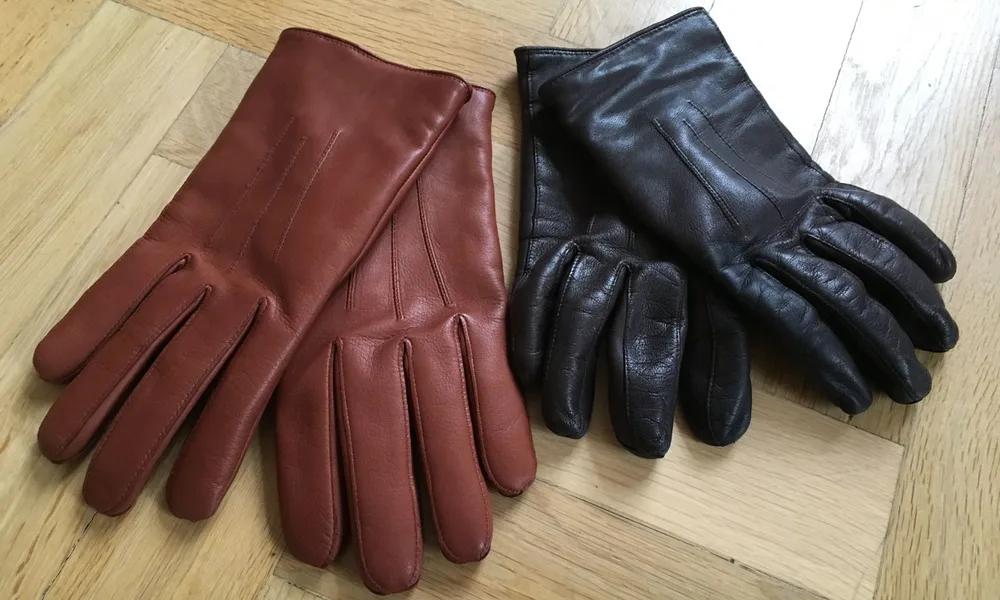
A glove making workshop installation startup builds the place where cut leather becomes finished gloves. The workshop takes bought-in hides, cuts them into palms, backs, fingers and thumbs, sews the pieces together, lines them, finishes the cuffs and sends out pairs that are ready to wear. Every pair has to fit a real hand, flex without splitting at the seams and survive daily wear, so the work is precise in a way that forgives almost nothing. A glove that is a fraction too tight pinches, a glove that is a fraction too loose slips, and a glove with a weak seam comes back.
That precision is what makes the workshop a production business rather than a classroom. A leather working studio teaches evening classes, sells bench memberships and keeps a retail shelf, and its day is organised around students. A glove making workshop is organised around orders. Its benches hold cutting tables and sewing machines rather than class places, its calendar holds delivery dates rather than course dates, and its success is measured in pairs shipped, pairs returned and pairs reordered. The tools below are chosen for that production rhythm, not for running a timetable of lessons.
The nine AI tools in this article cover the whole chain, from the first pattern to the final invoice. They draft glove patterns, measure hands, plan the finger gussets that let a glove bend, thin the leather, nest the cut pieces on each hide, plan the seams, fit the linings, finish the cuffs and price the finished pair. A new startup does not need all nine on day one, and the table further down shows which three to buy first. What it does need is a clear picture of the chain, because a glove workshop fails at its weakest step, and the weakest step is usually the one nobody planned for.
Key takeaways
- A glove making workshop is a production workshop that makes gloves for sale, not a teaching studio that runs classes.
- Fit is the whole business: patterns, hand sizing and finger gussets decide whether a pair sells or comes back.
- Leather is the biggest cost, so cutting and thinning the hide well matters more than any other single step.
- Buy the pattern, cutting and seam tools first, then add lining, cuff and pricing tools as orders grow.
- Price every pair from real hide, labour and return costs, and keep a record of every job from the first order.
The nine AI tools at a glance
The table below gives the short version. Each tool is covered in full further down, with what it does, where it fits in the chain and what to watch for before buying it. The three tools marked as first buys are the ones a new workshop should have before it takes its first paid order, because they decide fit, leather use and seam strength, and those three things decide whether the first batch earns repeat orders or returns.
| Tool | What it does | Buy first? |
|---|---|---|
| GlovePattern Draft AI | Drafts glove patterns in sizes and styles | Yes |
| HandSize Scan AI | Measures hands and matches sizes | Yes |
| GussetFit AI | Plans finger gussets and fourchettes | No |
| SkiveThin AI | Plans skiving and leather thinning | No |
| GloveCut Nest AI | Nests cut pieces on each hide | Yes |
| GloveSeam AI | Plans seams, thread and stitch length | No |
| LiningFit AI | Matches linings to glove styles | No |
| CuffFinish AI | Plans cuff styles and edge finishing | No |
| GloveQuote AI | Prices pairs and keeps job records | No |
How a glove making workshop works
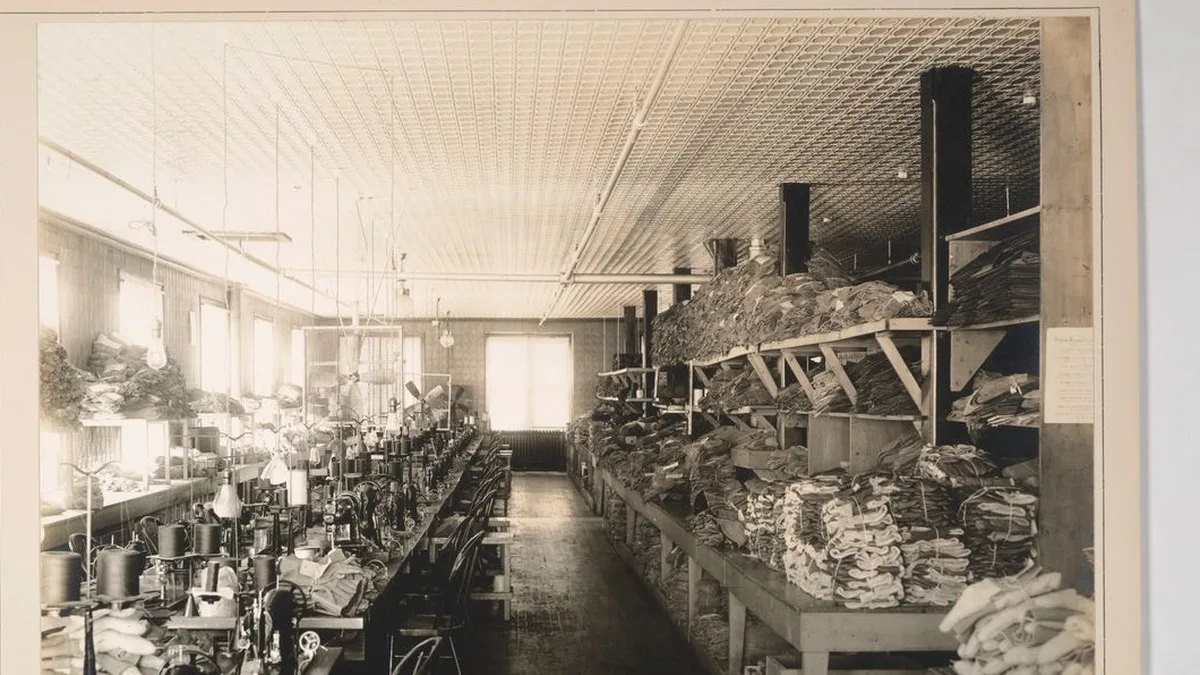
A glove making workshop runs on a short chain with no room for slack. Hides arrive from the tannery, are checked and graded, and are stored flat in a cool, dry place away from direct light. The pattern is laid out, the pieces are cut, and each piece is thinned where it needs to flex. The fingers are sewn with gussets between them, the thumb is set in, the lining is fitted, and the cuff is finished. Each pair is turned, checked, paired with its mate and packed. A workshop that skips a step, or rushes one, finds out at the checking table, when the pair will not turn cleanly or the fingers will not sit straight.
The building itself is smaller than most people expect, and that is part of the point. A cutting table, a skiving bench, two or three sewing machines, a turning and checking bench and racking for hides and finished pairs will fill a modest unit. What the space needs most is good light at the cutting table, steady air so the leather neither dries nor dampens, and a clean floor, because a hide dropped on a dirty floor picks up marks that no amount of finishing will hide. The startup that spends its money on light, benches and dust control before it spends on decoration has its priorities right.
Planning the glove before a single hide is cut
The first three tools decide the shape of the glove, and the shape is the product. A glove pattern is not a flat outline of a hand. It is a set of pieces that must fold into a three-dimensional shape, stretch where the knuckles bend and sit flat where the palm rests. Get the pattern wrong and no amount of careful sewing will save the pair. Get it right and the rest of the chain becomes straightforward, because every later step works from pieces that already want to become a glove.
1. GlovePattern Draft AI: The Best Tool for Drafting Glove Patterns in Every Size and Style
GlovePattern Draft AI turns a style brief into a full set of glove pattern pieces. The founder enters the glove style, the size range, the leather type and the lining, and the tool drafts the palm, the back, the four finger pieces, the thumb piece and the gussets as a matched set. It scales the pattern across sizes without redrawing each one by hand, so a range from small to extra large stays consistent, and a change to one size flows through to the rest. That consistency matters, because a customer who buys a medium pair and then orders a large expects the same glove, only bigger.
The tool also keeps a library of styles, which is where a new workshop saves its most time. A classic dress glove, a driving glove with knuckle holes, a gauntlet with a wide cuff and a work glove with a reinforced palm all start from different pattern sets, and drafting each from scratch would take days. With the library, the founder picks the nearest style, adjusts the cuff depth or the finger length, and has a working pattern the same afternoon. The first test pair should still be made and worn before any order is cut, but the drafting itself stops being the bottleneck.
2. HandSize Scan AI: The Best Tool for Measuring Hands and Matching Glove Sizes
HandSize Scan AI measures a customer’s hand from a photograph or a scan and matches it to the workshop’s size range. The customer holds a hand flat beside a reference card, and the tool reads the palm width, the finger lengths and the thumb position, then recommends a size and flags hands that fall between sizes. For a workshop selling made-to-order gloves, that removes the most common source of returns, which is a customer guessing their size from a chart and guessing wrong.
The tool earns its keep on repeat orders and gift orders as well. A customer’s measurements stay on file, so a second pair can be cut without a new fitting, and a buyer ordering gloves as a gift can send a traced hand outline or a photograph instead of guessing. The workshop should still ask for a fresh measurement when a customer reports a fit problem, because hands change and photographs can mislead, but for most orders the scan is faster and more accurate than a paper chart.
3. GussetFit AI: The Best Tool for Planning Finger Gussets and Fourchettes
GussetFit AI plans the small strips of leather between the fingers, called gussets or fourchettes, which are the hardest part of a glove to get right. These strips let the fingers spread and bend, and they are also the first place a cheap glove splits. The tool sizes each gusset to the finger pieces it joins, sets the seam allowances and flags gussets that are too narrow to sew cleanly or too wide to sit flat. A founder who has never sewn a glove will not know how narrow is too narrow, and this tool answers that question before the leather is cut.
The tool also matters because gussets are where leather is wasted when the planning is careless. Gussets are small, so they can be cut from the offcuts left after the palms and backs are nested, and the tool maps which offcuts fit which gussets. A workshop that plans its gussets with the main cutting plan saves a noticeable share of each hide, and over a year of orders that saving pays for the tool several times over.
From hide to cut pieces
Once the pattern is settled, the workshop’s money is on the cutting table. Leather is bought by the hide, and every square centimetre that ends up as waste is money thrown away. The two tools in this section deal with the hide itself: thinning it where it must flex, and laying the pattern pieces on it so that as little as possible is left over. A founder who treats cutting as a chore will lose money on every pair, while a founder who treats it as the core skill of the business will find the workshop profitable at prices competitors cannot match.
The hides themselves come from a tannery, where raw skins are turned into finished leather, and the relationship with that supplier shapes the workshop more than most founders expect. A tannery grades its sides, and the workshop needs to know which grade it is buying, because a glove cut from a side with a weak spot in the middle will fail at that spot. The tools below assume the hide has been graded honestly at the tannery, and the workshop should still check every hide on arrival, looking for thin patches, scars and holes before anything is laid out on it.
4. SkiveThin AI: The Best Tool for Planning Skiving and Thinning Leather
SkiveThin AI plans the thinning, called skiving, that lets a glove flex. A glove palm needs leather at full thickness for wear, but the finger pieces, the gussets and the cuff edge need to be thinner, or the finished glove feels stiff and the seams sit proud. The tool maps each pattern piece to a target thickness, sets the skiving machine for each piece and warns when a piece is being thinned so far that it will weaken. That warning is the difference between a glove that flexes and a glove that tears at the first hard grip.
The tool also keeps a record of what worked for each leather type, which builds into the workshop’s most useful private knowledge. Kid leather skives differently from lambskin, and lambskin differently from deerskin, and a founder who relies on memory will repeat the same mistakes. With the record, the workshop opens the last successful setting for that leather, checks it against the new hide’s thickness, and starts close to right instead of starting from scratch.
5. GloveCut Nest AI: The Best Tool for Nesting Cut Pieces on Each Hide
GloveCut Nest AI lays out the pattern pieces on each hide so that the least leather is wasted. Hides are not rectangles, they have an irregular shape, thin edges and the occasional scar or brand mark, and a good nesting plan works around all of that. The tool takes the hide’s outline, marks the flaws to avoid, and fits the palms, backs, fingers, thumbs and gussets into the good leather like a puzzle. A workshop that nests by hand will use a hide well enough, but the tool finds fits a human eye misses, and the difference over a month of cutting is measured in whole hides saved.
The tool also plans cutting in batches, which is how a small workshop stays efficient. Instead of cutting one pair at a time, the founder loads a week’s orders, and the tool nests pieces for several pairs across several hides at once, keeping each pair’s pieces together and labelled. That batch plan means the cutter sets up once, cuts steadily, and the sewer receives complete pairs in order, rather than a pile of mixed pieces that must be sorted before sewing can begin.
Sewing, lining and finishing
Sewing is where the glove becomes a glove, and it is also where a rushed workshop shows. The seams must be even, the fingers must sit straight, and the thumb must be set so that the hand opens and closes without the palm pulling. The three tools in this section cover the seam itself, the lining inside and the cuff at the wrist. None of them sews the glove, and a founder who expects software to replace the sewer will be disappointed. What they do is take the decisions that slow a sewer down, so the hands at the machine can work steadily instead of stopping to measure, guess or unpick.
The comparison that helps most founders is with the saddle trade, which works the same leather in a larger form. A saddle making workshop cuts heavy leather, shapes it over a tree and stitches panels that must hold a rider’s weight, while a glove workshop cuts light leather and stitches fingers that must flex a thousand times a day. The supply chain is shared, the leather is shared and the stitching skill is shared, but the product is different in every way that matters: one is furniture for a horse, the other is a second skin for a hand. The tools below are glove tools, not saddle tools scaled down, and that distinction is why they work.
6. GloveSeam AI: The Best Tool for Planning Seams, Thread and Stitch Length
GloveSeam AI plans every seam in the glove before the sewer sits down. It sets the stitch length for each seam, chooses the thread weight, marks the start and finish points, and flags the seams that need a shorter stitch because they take the most strain. The finger seams and the thumb seam take the most strain, and a stitch that is right for a palm seam will pull out of a finger seam within weeks. The tool keeps those differences explicit, so the sewer does not have to remember them under time pressure.
The tool also records the seam plan with the pattern, which means a second sewer can pick up the same job and produce the same glove. That matters as soon as the workshop grows beyond one maker, because two sewers with different habits will produce two different gloves from the same pattern. With a shared seam plan, the workshop’s gloves stay consistent whoever sews them, and a customer who reorders gets the glove they remember rather than a near copy.
7. LiningFit AI: The Best Tool for Matching Linings to Glove Styles
LiningFit AI matches the lining to the glove style and the leather. A winter glove needs a warm lining that does not bunch at the fingertips, a driving glove needs a thin lining that keeps the grip, and an unlined summer glove needs no lining at all, which is itself a decision the tool records. The tool suggests lining materials, cuts the lining pattern slightly smaller than the leather so it sits inside without wrinkling, and warns when a lining is too thick for the leather it is paired with. A lining that is too thick turns a good glove into a stiff one, and the customer blames the leather when the lining is at fault.
The tool also plans the lining seam, which is easy to get wrong because the lining is sewn before the leather is turned. The lining fingers must match the leather fingers exactly, or the finished glove will have a fingertip that folds inside itself. The tool checks the lining pattern against the leather pattern piece by piece, and flags any finger where the two disagree. That check takes seconds on screen and saves the unpicking of a finished glove, which is the most wasteful job in the workshop.
8. CuffFinish AI: The Best Tool for Planning Cuff Styles and Edge Finishing
CuffFinish AI plans the cuff, which is the part of the glove the customer sees first and the part that wears out first. The tool offers cuff styles, a plain straight cuff, a gauntlet cuff, an elasticated cuff and a buttoned strap cuff, and shows how each one changes the pattern, the leather needed and the finishing time. A gauntlet looks generous and uses more leather, an elasticated cuff fits more hands but hides the leather edge, and the tool puts those trade-offs in numbers before the founder promises a style to a customer.
The tool also plans the edge finishing, which is the detail that separates a workshop glove from a factory glove. The cuff edge must be thinned, folded, stitched and burnished so that it lies flat against the wrist and does not fray. The tool sets the fold width and the stitch line for each leather type, and flags edges that need an extra pass. A founder who finishes edges carefully will find customers notice, because the cuff is the part of the glove that sits against the skin all day.
Pricing the pair and running the books
9. GloveQuote AI: The Best Tool for Pricing Pairs and Keeping Job Records
GloveQuote AI prices each order from the workshop’s real costs. The founder enters the leather used, the lining, the labour time and the finishing, and the tool builds a quote that covers materials, time, machine wear and a margin, then records the quote against the job. It also tracks how the quoted cost compared with the actual cost once the pair is finished, so the workshop learns which styles earn money and which only look profitable. A glove style that sells well but loses money on every pair is worse than a style that sells slowly and earns, and the tool makes that visible.
The tool also keeps the job record that a growing workshop depends on: the customer, the measurements, the pattern version, the leather batch, the price agreed and the delivery date. When a customer reorders, the record brings back the exact glove, and when a customer reports a fault, the record shows which leather batch and which pattern version were used. That traceability is what turns a one-person workshop into a business that can be trusted with larger orders, because a buyer placing a hundred-pair order wants to know the workshop can repeat its work.
Launch checklist: six steps before the first paid order
The tools above help at every step, but a startup still needs a clear order of work. The six steps below are the order that works: settle the pattern, prove the fit, cost the leather, sew a test batch, price honestly and only then take money. A founder who takes a paid order before the test batch is borrowing trouble, because the first customer becomes the test, and a test customer who paid full price rarely becomes a second customer.
- Draft the first pattern set and sew one test pair in each size, then wear the test pairs before cutting any order.
- Measure five real hands with the sizing tool and check the size recommendations against the test pairs.
- Cut a full batch from one hide with the nesting tool and record the leather used per pair.
- Sew a batch of ten pairs, turn and check every pair, and record every fault found at the checking table.
- Price the pair from the recorded leather, labour and return costs, not from a competitor’s price list.
- Take the first paid order only after the test batch has been worn, checked and repriced.
Frequently asked questions
What is a glove making workshop installation startup?
It is a startup that builds the workshop where leather gloves are made for sale. It sets up the cutting table, the skiving bench, the sewing machines and the checking bench, buys in hides, and turns them into finished pairs. The installation part is the setup of the workshop itself, and the startup part is that the workshop is a new business selling gloves, not a hobby bench or a classroom. The tools in this article help plan that setup and run the work once it opens.
How is a glove making workshop different from a leather working studio?
A leather working studio teaches. Its day is organised around evening classes, bench memberships and a retail shelf, and its income comes from students. A glove making workshop produces. Its day is organised around orders, delivery dates and pairs shipped, and its income comes from gloves sold. The two share leather and some tools, but they are different businesses with different customers, different calendars and different measures of success. A founder who confuses them will build a classroom when they meant to build a factory, or a factory when they meant to build a classroom.
How is a glove making workshop different from a saddle making workshop?
Both workshops work leather, buy hides from the same supply chain and stitch by machine, but they make different things for different users. A saddle making workshop makes saddles, shaping heavy leather over a tree for a horse, while a glove making workshop makes gloves, stitching light leather into fingers for a hand. The skills overlap, the patterns do not, and the tools in this article are glove tools: patterns for fingers and thumbs, gussets between fingers, skiving for flex and cuffs for wrists, none of which a saddle needs.
How much leather does a small glove workshop need to start?
A small workshop can start with a modest stock of hides, because gloves use small pieces and offcuts can become gussets and linings. Ten to fifteen sides of a mid-weight glove leather will cover the first test pairs and the first small orders, provided the cutting is nested carefully. The founder should buy two leather types at most to start, learn them well, and add a third only when orders ask for it. Buying a wide range of leathers before the first order is the fastest way to tie up money in stock that sits on a shelf.
Can one person run a glove making workshop alone?
Yes, one person can run a small glove workshop, and most start that way. One maker can cut, sew, line, finish and check a small number of pairs each week, and the tools in this article are built for that scale. The limit is volume rather than skill: a single maker can produce a steady flow of made-to-order pairs, but a large wholesale order needs a second pair of hands. The sensible path is to take made-to-order work first, build a reputation, and hire help only when orders regularly wait longer than customers will accept.
Which AI tool should a new glove making startup buy first?
Buy the pattern tool first, then the cutting tool, then the sizing tool. The pattern decides the glove, the cutting decides the leather cost, and the sizing decides the returns, and those three decide whether the workshop survives its first season. The seam, lining and cuff tools can wait until orders are steady, because a careful maker can plan those by hand for a small batch. The pricing tool should follow as soon as the first orders are quoted, because a workshop that prices from memory will undercharge its best work.
Bottom line
A glove making workshop is a production business built on fit. The pattern, the hand measurement and the gussets decide whether a pair sells or returns, the cutting and thinning decide whether the leather pays, and the seams, lining and cuff decide whether the customer comes back. The nine tools in this article cover that chain from end to end, and the three to buy first are the pattern tool, the cutting tool and the sizing tool. Start with a small leather range, sew a test batch, price from real costs, and take the first paid order only when the test pairs have been worn and checked. A workshop that does that will make gloves that fit, last and earn their price, and that is the whole business.

Keep what speaks to you.
Leave room for your own perspective.


