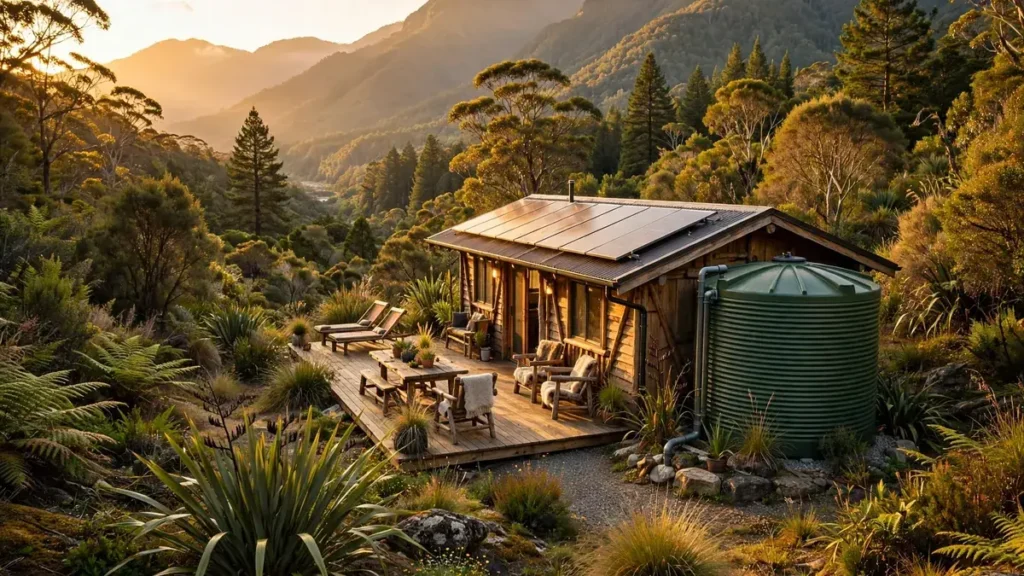
The best AI tools for eco lodge startups in 2026 turn a small off-grid property into a business that protects the forest it sits in, keeps the solar batteries charged, and still fills its rooms without the founder spending every evening on admin. An eco lodge is not a lodge with a few recycling bins. It is a property built around low-impact stays: solar or micro-hydro power, rainwater harvesting, composting or low-water sanitation, locally sourced food, and a promise to guests that their stay leaves the place better than they found it. Guests choose it precisely because of that promise, and they will notice quickly if the reality behind the marketing does not match.
That promise creates problems that ordinary hotel software never had to solve. Energy is a finite daily budget rather than a bill that arrives at the end of the month, so a lodge that runs on solar needs to know exactly how much power each cabin draws and when to shift laundry, water heating, and charging into the sunniest hours. Water is often harvested and stored on site, which means every shower, every laundry load, and every garden watering has a real cost in litres. Food waste matters twice over, because it is both a cost and a composting load, and the kitchen is usually small enough that one badly planned menu can fill the bins for a week. On top of all that, an eco lodge still has to do everything a normal lodge does: take bookings, answer guest questions, set prices, clean rooms, and keep reviews strong.
This guide compares the strongest options for 2026 across the jobs that matter most to a new eco lodge: sustainability tracking and eco-certification, energy and water management for off-grid sites, food waste reduction in a small kitchen, reservations and channel management, guest messaging for remote stays, smart access and quiet-hours monitoring, and marketing that tells an honest sustainability story. Every tool is judged on the same measures: how well it fits a small off-grid property rather than a city hotel, how much it reduces resource use rather than just reporting it, how much time it saves a tiny team, and what it costs before the business is earning. If your property is a conventional lodge without the sustainability angle, the AI tools for lodge startups are a closer match, but an eco lodge needs the same intelligence aimed at watts, litres, waste, and wildlife as well as rooms.
Key takeaways
- Start with one sustainability tracking platform, one energy management tool, and one small-property booking system. Those three carry most of the impact and most of the revenue for a new eco lodge.
- Choose tools that measure real resource use, because a lodge that cannot prove its solar, water, and waste numbers cannot earn eco-certification or defend its prices.
- Price every night on its value and its cost, not on a fixed seasonal rate, because an off-grid lodge that sits empty on a Friday in July loses revenue it can never recover.
- Let AI draft prices, replies, and guest guides, while people approve anything sensitive, from refunds to safety decisions on a forest trail.
- Measure success in occupancy, direct bookings, energy and water use per guest night, waste diverted from landfill, and review scores, not in how many features a tool lists.
The Best AI Tools for Eco Lodge Startups at a Glance
| Tool | Best for | Standout strength | Starting point |
|---|---|---|---|
| BeCause | Sustainability data and certification | One hub for carbon, water, and waste data | Custom pricing |
| Weeva | Sustainability management for small teams | Turns sustainability goals into daily staff tasks | Monthly plans |
| SensorFlow | AI energy management | Smart HVAC control that cuts energy waste | Custom pricing |
| Winnow | Food waste in the lodge kitchen | AI vision that measures what the kitchen throws away | Monthly plans |
| Greenview | Sustainability benchmarking and reporting | Benchmarks the lodge against similar properties | Custom pricing |
| Operto | Smart stays and keyless access | Automated check-in with energy-saving controls | Monthly plans |
| Canary Technologies | AI guest messaging | Automated replies in the lodge voice | Monthly plans |
| Little Hotelier | Small-property reservations | Booking engine and channel manager in one | Monthly plans |
| NoiseAware | Quiet hours and wildlife protection | Privacy-safe noise monitoring with alerts | Monthly plans |
What Makes an AI Tool Right for an Eco Lodge Startup
An eco lodge startup has a shape that most hospitality software ignores. There are only a few rooms, each one different, the power comes from the roof rather than the grid, the water comes from the sky rather than the mains, and the owner is the receptionist, the gardener, the maintenance crew, and the marketer in a single day. A tool that assumes a front desk team, unlimited utilities, and a hundred identical rooms will fight the business every day. The best tools for a new eco lodge respect the small scale and make one person’s day shorter, not longer.
The first test is whether the tool measures real resource use. A lodge that claims to be sustainable needs numbers, not adjectives. Guests, booking platforms, and certification bodies all ask for the same evidence: kilowatt-hours per guest night, litres of water per guest night, kilograms of waste per guest night, and the share of energy that comes from renewables. A sustainability platform should pull those numbers from meters, bookings, and kitchen records automatically, because a founder who has to type them into a spreadsheet every Sunday will stop doing it by the second month. Check that the tool connects to the lodge’s booking system so the per-guest-night maths is done for you, and that it can produce the reports a certification body actually asks for.
The second test is whether the tool works off-grid. Power, water, and internet are all less reliable in a forest valley than in a city, and software that needs a constant connection will fail at exactly the wrong moment. Energy tools should keep working when the connection drops, and booking and messaging tools should sync cleanly once it returns. Smart devices should fail safe, so a door lock still opens and a thermostat still heats when the Wi-Fi is down. Ask every vendor what happens during an outage before you sign anything, because the answer matters more here than in any city hotel.
The 9 Best AI Tools for Eco Lodge Startups
Each tool below was chosen because it fits a real job inside an eco lodge, not because it has the longest feature list. A new lodge should pick the tools that cover its busiest jobs first and add the rest only when a clear gap appears.
1. BeCause: The Sustainability Data Hub for Eco Lodges
BeCause is the strongest starting point for an eco lodge that needs to prove its sustainability claims, because it gathers carbon, water, waste, and energy data into one hub that the whole team can actually use. A new lodge collects sustainability numbers from everywhere: the solar inverter, the water meter, the waste contractor, the laundry supplier, and the booking system. Without one place to hold them, the numbers live in five spreadsheets and a drawer of invoices, and nobody can answer a simple question such as how much water the lodge used per guest last month. BeCause connects those sources and turns them into a single dashboard, so the founder can see the lodge’s footprint at a glance and spot the week when consumption jumped.
The platform is built for the certification world that eco lodges live in. It maps the lodge’s data to the frameworks that booking platforms and certification bodies ask for, including recognised eco-labels and travel sustainability programmes, so the lodge does not have to re-enter the same numbers in a different format for every application. That matters because certification is often the difference between an eco lodge and a lodge that merely calls itself green. A verified label appears on booking sites, justifies a higher nightly rate, and protects the lodge when a guest asks for evidence. BeCause also shares verified sustainability data with travel partners automatically, which means the lodge’s green credentials travel with its listings instead of sitting in a PDF nobody reads.
2. Weeva: Sustainability Management That Becomes Daily Tasks
Weeva is the best tool for turning a lodge’s sustainability ambitions into work that actually gets done, because it converts goals into daily tasks for the people on site. Most eco lodges start with a long list of good intentions: compost the kitchen waste, switch to refillable toiletries, plant native species along the trail, cut laundry by offering towel reuse. The list is easy to write and hard to keep alive when the lodge is full and the team is tired. Weeva breaks each goal into small actions, assigns them to staff, and tracks progress on a shared dashboard, so the founder can see at a glance whether the composting rota happened this week or quietly stopped.
The platform is designed for hospitality teams rather than sustainability consultants, which shows in how it works day to day. Tasks arrive as simple checklists on a phone, staff tick them off as they go, and the system records the evidence: a photo of the compost bins, a note on the water meter reading, a record of the local supplier delivery. That evidence matters because it builds the audit trail a certification body will ask for later, without anyone having to reconstruct it from memory. Weeva also covers the social side of sustainability, such as staff wellbeing and community engagement, which many lodges forget until a certification asks about it.
3. SensorFlow: AI Energy Management for Off-Grid Lodges
SensorFlow is the most valuable energy tool an off-grid eco lodge can buy, because it uses AI to control heating and cooling in each room based on whether the room is occupied, what the weather is doing, and how much power the solar array is producing. In a lodge that runs on solar and batteries, energy is a daily budget. A guest who leaves the heating on full blast in an empty cabin can drain the battery bank before nightfall, and a lodge that simply turns everything off risks cold rooms and bad reviews. SensorFlow sits between those two failures: wireless sensors watch occupancy and temperature, and the system adjusts each room automatically, warming it before check-in and easing it back when the guest leaves for a hike.
The savings are real because heating and cooling are usually the largest energy load in a lodge. Properties that install smart energy control typically cut heating and cooling energy by a large share, which for an off-grid lodge means fewer generator hours, longer battery life, and more headroom for the evening peak when every guest showers at once. The system also gives the founder a live view of energy use per room, so a faulty heater or a window left open in an empty cabin shows up as a spike on the dashboard rather than as a surprise on the monthly report. For a lodge that is planning to add rooms, that data is also the evidence needed to size the next solar array correctly.
4. Winnow: Cutting Food Waste in the Lodge Kitchen
Winnow is the best tool for the eco lodge kitchen, because it uses AI vision to measure exactly what the kitchen throws away and turns that measurement into money saved. Food waste is one of the largest hidden costs in any lodge with a dining room. The kitchen orders generously to avoid running out, plates more than guests eat, and throws the surplus into the compost or the bin without ever recording it. In a small eco lodge the problem is worse, because the composting system has a limited capacity and the nearest supplier may be an hour away, so over-ordering wastes both money and fuel. Winnow places a smart scale and camera above the waste bin, identifies each item as it is thrown away, and records its weight and cost automatically.
The value comes from the reports, not the bin itself. After two weeks the kitchen can see that the breakfast buffet throws away the same pastries every morning, that the salad garnish costs more in waste than it adds to the plate, and that portion sizes on the main course are consistently too large. Chefs adjust the menu, the ordering, and the portions based on evidence rather than guesswork, and kitchens that use the system typically cut food waste by a large share within a few months. For an eco lodge, the benefit is doubled: less waste means lower food bills and a lighter composting load, and the lodge can publish a real waste-reduction figure instead of a vague promise.
5. Greenview: Benchmarking the Lodge Against Similar Properties
Greenview is the best tool for an eco lodge that wants to know whether its sustainability numbers are actually good, because it benchmarks the property against similar hotels and lodges around the world. A founder can measure water use per guest night perfectly and still have no idea whether the result is excellent or embarrassing. Greenview’s portal collects sustainability data from thousands of properties and shows the lodge where it sits: above average on energy, below average on waste, typical on water. That comparison turns raw numbers into priorities, because the lodge can see which area is furthest behind and fix that first instead of polishing the metric that is already strong.
The platform also handles the reporting that grows with the business. As the lodge adds rooms, joins booking platforms, or works with tour operators, each partner asks for sustainability data in a slightly different format. Greenview stores the lodge’s data once and produces the reports each partner needs, including the formats used by major travel and corporate booking programmes. For a small lodge, that saves hours of admin every quarter and prevents the embarrassing mistake of sending different numbers to different partners. The system also tracks progress over time, so the founder can show a genuine downward trend in energy or water use rather than a single good month.
6. Operto: Smart Stays, Keyless Access, and Energy Savings
Operto is the best tool for the eco lodge guest stay itself, because it combines keyless access, automated check-in, and smart energy control in one system built for properties without a front desk. Guests at a remote eco lodge often arrive late, after a long drive on a forest road, and there may be nobody at reception to hand them a key. Operto sends each guest a unique door code before arrival, so they can walk straight into their cabin, and the code stops working at check-out, which removes the whole problem of lost keys and late-night arrivals. The same system controls the thermostat and lights, so an empty cabin is not heated or lit all day, and the room is already comfortable when the guest walks in.
The energy saving is the part that matters most for an off-grid lodge. A cabin that sits empty between check-out and the next check-in does not need heating, cooling, or lighting, yet in a lodge without smart controls it often gets all three, because the cleaner leaves the lights on and the heating running for the next guest who arrives hours later. Operto automates that gap: the room idles while empty and prepares itself shortly before the guest’s expected arrival. Over a season, those idle hours add up to a large share of the lodge’s energy use, and the solar batteries last longer into the evening as a result.
7. Canary Technologies: AI Guest Messaging in the Lodge Voice
Canary Technologies is the best guest messaging tool for an eco lodge, because its AI answers the questions every guest asks before they arrive, in the lodge’s own voice, at any hour. Eco lodge guests ask more questions than hotel guests. They want to know how to get there on an unsealed road, whether the solar showers run hot in the evening, what to do with recycling, whether the trail to the waterfall is safe after rain, and what time dinner is served. Those questions arrive by email, text, and chat at all hours, and a founder who answers them all personally will spend the evening at a laptop instead of with the guests. Canary’s AI drafts and sends accurate replies from the lodge’s own information, and hands the conversation to a person whenever the question is sensitive, such as a refund, a medical need, or a safety concern.
The system also handles the digital guest journey, which is where an eco lodge explains itself. Check-in forms, house rules, and the guest guidebook can all be delivered on the guest’s phone before arrival, so the rules about water, waste, and quiet hours are read at home rather than discovered on a laminated card in the cabin. That matters because guests follow rules they understand and ignore rules they never see. The lodge can also use the same channel to offer extras, such as a guided dawn walk, a locally sourced picnic, or a massage, which adds revenue without adding a sales conversation at the front desk.
8. Little Hotelier: Reservations Built for Small Properties
Little Hotelier is the best booking system for a small eco lodge, because it is built for properties with a handful of rooms rather than hotels with hundreds. A lodge with eight or twelve cabins does not need the complexity of a large hotel system, but it does need the essentials done well: a booking engine on its own website, a channel manager that keeps rates and availability in sync across booking sites, and a simple front desk view that shows who arrives today, who leaves tomorrow, and which cabins need cleaning. Little Hotelier provides all three in one product at a price a startup can afford, and it is designed so that one person can run it without a training course.
The direct booking engine is the part that pays for the subscription. Every booking that comes through the lodge’s own website avoids the commission charged by the big booking platforms, and for a small lodge those commissions add up to a large share of annual revenue. Little Hotelier’s booking page is simple and fast, which matters because eco lodge guests often book from a phone on a slow connection, and a heavy booking page will lose them before they reach the payment step. The channel manager keeps the lodge’s rooms listed on the major platforms at the same time, so the lodge gets the reach of the big sites without the double-booking risk that comes from managing each channel by hand. If the property also offers canvas stays alongside its cabins, the AI tools for glamping startups cover the tent and dome side of the business in more depth.
9. NoiseAware: Protecting Quiet Hours and Wildlife
NoiseAware is the most unusual tool on this list, and for an eco lodge it may be the most important, because it monitors noise in and around the cabins without recording conversations or invading guest privacy. An eco lodge sells quiet: birdsong in the morning, silence at night, and a forest that is not disturbed by parties. One loud group can ruin the stay for every other guest and frighten the wildlife the lodge exists to protect, yet the owner cannot patrol the site all night and should not be knocking on doors based on a guess. NoiseAware places small sensors in each cabin and in shared outdoor areas, measures decibel levels only, and sends an alert to the owner’s phone when noise crosses a threshold for a set period.
The privacy design is what makes it acceptable to guests. The sensors measure volume, not words, so no conversation is ever recorded or heard, and the lodge can explain that honestly in its house rules. Guests who know the lodge monitors noise fairly are more likely to respect quiet hours, and the lodge can show a guest the objective reading if a complaint arises, which ends arguments before they start. The system also logs noise over time, so the founder can see patterns: which cabins are loudest, which nights are worst, and whether the problem is guests, generators, or something else entirely. That data helps with practical decisions, such as moving the fire pit further from the sleeping cabins or adding a note to the guidebook about the dawn chorus.
How to Build Your Eco Lodge Tool Stack
A new eco lodge should not buy all nine tools on day one. The right order is to buy the tools that protect revenue and resources first, then add the rest as the business earns. Start with Little Hotelier for bookings, BeCause or Weeva for sustainability tracking, and SensorFlow for energy, because those three decide whether the lodge fills its rooms, proves its green claims, and keeps the lights on. Add Canary Technologies when guest messages start eating the evenings, Winnow when the kitchen is serving dinner most nights, and Operto when key handovers become a daily chore. Add Greenview when the lodge has a year of clean data to benchmark, and NoiseAware as soon as the first noise complaint arrives, or sooner if the lodge markets itself on silence. For a property built around standalone cabins in the woods, the AI tools for cabin rental startups offer a useful comparison for the rental and turnover side of the operation.
Eco Lodge Startup Checklist
- Install meters for electricity, water, and waste before the first guest arrives, so every sustainability claim starts with real data.
- Choose one booking system, one sustainability tracker, and one energy tool, and get those three working before buying anything else.
- Write the guest guidebook first, covering water, waste, quiet hours, trails, and safety, then train the messaging AI on that guidebook.
- Set temperature limits and quiet-hour thresholds with guest comfort in mind, and test them yourself for a week before the first paying guest.
- Connect bookings to sustainability reporting so energy and water use per guest night are calculated automatically.
- Review the whole tool stack every quarter against revenue, resource use, and review scores, and cancel any tool that is not earning its place.
Frequently Asked Questions
What is the best AI tool for an eco lodge startup?
There is no single best tool, because an eco lodge needs several jobs covered at once. Start with a sustainability data hub such as BeCause, an energy manager such as SensorFlow, and a small-property booking system such as Little Hotelier. Those three cover the lodge’s green claims, its power budget, and its revenue, and the rest of the stack can be added as the business grows.
How much do AI tools for eco lodge startups cost?
A lean starting stack usually costs a few hundred dollars a month in total: a booking system and a messaging tool on monthly plans, a sustainability tracker on a monthly or custom plan, and energy hardware as a one-off purchase. The whole stack should cost less than the revenue from two nights a month. If it costs more, the lodge is buying tools before it has the bookings to justify them.
Can AI tools really help an off-grid lodge with solar power?
Yes, and this is where they earn their keep. Energy management tools watch occupancy, weather, and battery levels, then heat and cool each cabin at the right time instead of all day. That cuts the largest energy load in the lodge, extends battery life into the evening, and reduces the hours the backup generator has to run.
Do eco lodges need eco-certification?
Certification is not legally required, but it is the most credible way to prove the lodge’s green claims. Booking platforms, tour operators, and corporate guests increasingly ask for verified sustainability data, and a recognised label justifies higher rates. A sustainability data platform makes certification far easier by keeping the evidence organised from the first season.
How do AI tools help with food waste in a small lodge kitchen?
Tools such as Winnow weigh and identify everything the kitchen throws away, then report which dishes, portions, and ingredients create the most waste. The chef adjusts menus, ordering, and portion sizes based on that evidence, which cuts food bills, lightens the composting load, and gives the lodge a genuine waste-reduction figure to share with guests.
Should an eco lodge automate guest messaging?
Yes, for the routine questions, and no for the sensitive ones. AI messaging answers directions, check-in details, house rules, and activity questions instantly at any hour, which saves the founder an hour every evening. Anything involving refunds, medical needs, safety, or an unhappy guest should always go to a person, because a wrong automated answer in those cases costs far more than the time it saves.
The Bottom Line
The best AI tools for eco lodge startups in 2026 are the ones that manage resources as carefully as they manage rooms. A sustainability hub proves the lodge’s green claims, an energy manager keeps the solar budget in balance, a food-waste tool trims the kitchen bill, and a small booking system fills the cabins without a front desk. Around that core, smart access, AI messaging, and noise monitoring protect the guest experience and the forest itself. Buy the core three first, add the rest as the business earns, and judge every tool by the same test: does it save power, water, waste, or time while making the stay better for the guest. A lodge that passes that test will have the numbers to prove it is green, the reviews to prove guests love it, and the margins to keep the forest standing.

Keep what speaks to you.
Leave room for your own perspective.


