
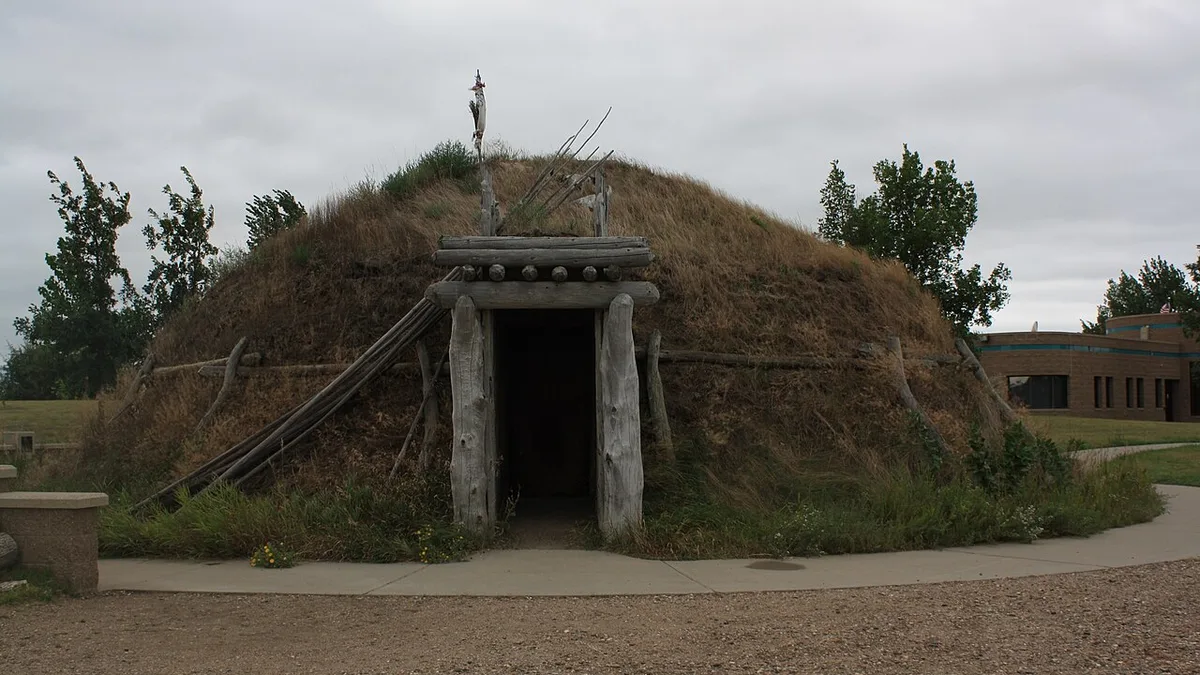
An earth lodge is a fixed, timber-and-earth domed dwelling. Its frame is a ring of timber posts and beams, its roof is a dome of poles and rafters, and the whole shell is covered in layers of earth and sod until the building reads as a low, grassy mound with a door and a smoke hole. Nothing about it moves, nothing about it is a tent, and nothing about it is built from snow. That fixed, heavy, domed character is what decides which tools an installation startup needs, because every job turns on the same three questions: will the timber frame carry the dome, will the earth shell stay dry, and will the inside stay warm without trapping damp.
That is a different build from every near neighbour on this site. An earthbag house stacks bags of earth into walls; an earth lodge raises a timber frame first and packs earth over a domed roof. A cob house shapes thick monolithic cob walls by hand; an earth lodge hangs its earth on timber. An earthship packs old tyres and leans on solar power and water systems; an earth lodge leans on posts, poles, and sod. A wigwam bends poles into a dome and covers them with bark and mats, a tipi stands straight poles in a cone and wraps them in canvas, and an igloo house cuts blocks of snow into a dome that melts in spring. A caravan, meanwhile, is a towable dwelling on a chassis, and an earth lodge never leaves its plot. The tools below are chosen for the timber-and-earth dome alone, and none of them is a towbar, a chassis, a snow saw, or a canvas pattern.
This guide covers nine tools that fit that build, in the order a real job runs: three for designing the timber dome, three for building the earth shell, and three for keeping the finished lodge dry, warm, and profitable. Each one is judged on the same test — does it understand a heavy earth roof on a timber frame, or is it a generic builder’s tool wearing a new label?
Key takeaways
- An earth lodge is a fixed timber-and-earth domed dwelling — timber posts and poles first, earth and sod over the top — not a tent, a snow dome, or a towable home.
- Design tools must model a heavy earth roof on a timber frame, including dome thrust and the ring beam that holds it together.
- Earth-shell tools must handle mix, moisture, and compaction, because a lodge fails through damp far more often than through structure.
- Ventilation and heat matter as much as the build: a sealed earth dome traps humidity and condensation if the air is not planned.
- Start with one design tool and one quoting tool, prove them on a single small lodge, and only then buy the rest of the stack.
Designing the timber-and-earth dome
Design is where an earth lodge job is won or lost. The roof carries tonnes of damp earth, the poles push outwards as they load up, and the ring beam at the base of the dome is the one member that stops the whole roof from spreading. The three tools in this section model the frame, the dome geometry, and the timber sizes together, so the drawing a client approves is the structure the crew can actually build.
1. LodgeFrame AI: best for the timber post-and-beam frame
LodgeFrame AI starts where every earth lodge starts: the ring of posts. The installer enters the lodge diameter, the number of posts, and the height of the central posts, and the tool lays out the frame in plan and elevation, spacing the posts evenly and flagging any bay that is too wide for the beams it has to carry. It is built for post-and-beam work rather than stud walls, so it thinks in posts, beams, and joints instead of panels, and that matters because an earth lodge has no load-bearing walls at all — the timber frame is the building, and the earth is a heavy coat hung on it.
Where LodgeFrame AI earns its place is in the joint schedule. Each post-to-beam joint is drawn with its housing, peg, and brace, and the tool produces a cutting list that a small crew can follow without a second interpretation. That cuts the most common early mistake in earth lodge work: cutting the frame on site from a sketch and discovering that two posts are out of plumb once the dome poles are already going on.
The honest limit is that LodgeFrame AI does not design the earth shell; it tells you the frame is sound and leaves the roof covering to EarthDome AI below. Use it first on every job, before any earth is ordered, and treat its cutting list as the job’s first contract with the timber yard.
2. EarthDome AI: best for dome geometry and thrust
EarthDome AI models the dome itself: the curve of the poles from the ring beam to the smoke hole, the thrust each pole pushes outwards under the weight of wet earth, and the size of the ring beam needed to hold that thrust in. The installer sets the dome height, the pole count, and the earth depth, and the tool shows where the curve is too flat — flat domes push outwards hardest — and where a steeper pitch would let the same earth sit more safely. That single check separates an earth lodge from a wigwam, whose bent-pole dome carries bark and mats, and from a tipi, whose straight poles carry canvas: the earth lodge dome carries soil, and soil is heavier than bark, mats, or canvas by a wide margin.
The tool also plans the smoke hole and the door opening, the two places a dome is weakest. It sizes the compression ring around the smoke hole and the lintel over the door, and warns when an opening sits too close to a main pole. Installers who skip this step usually find out the hard way, when a door lintel sags under the earth above it in the first wet autumn.
EarthDome AI is not a general dome tool, and that is its strength. It assumes a timber pole dome under earth, not a steel geodesic frame or a snow-block dome, so its defaults — pole spacing, earth depth, thrust factors — are the earth lodge defaults, not borrowed ones. Run it on every job, even a small garden lodge, because the dome is the part of the building a client sees and the part that fails most visibly. A dome that holds its curve after two winters is the best advert a startup will ever have.
3. TimberSpan AI: best for timber sizing and joint checks
TimberSpan AI answers the question every earth lodge installer asks before ordering wood: is this beam big enough, and is this joint strong enough? The installer enters the span, the load from the earth roof above, and the timber species, and the tool returns the smallest section that passes, plus the deflection the client will feel as a sag if the beam is undersized. It covers posts, beams, rafters, and purlins, and it treats green timber and seasoned timber differently, which matters because many lodges are built with locally cut timber that is still drying.
The joint checks are the part installers mention most. TimberSpan AI tests pegged mortise-and-tenon joints, housed joints, and braced joints under the loads the dome puts on them, and it flags the joint that will work loose first. That is worth more than a generic span table, because an earth lodge frame is held together by its joints far more than by its fixings, and a joint that creeps open a few millimetres a year will show up as a crack in the clay plaster long before the frame itself looks wrong. The tool also stores the species and moisture readings for each member, so a startup builds a record of what its local timber actually does over time.
TimberSpan AI does not replace an engineer on a large public lodge, and a startup should say so to clients plainly. What it does is stop a small crew from guessing on the everyday jobs that make up most of the work. Size every beam before ordering, and keep its reports with the job file.
Building the earth shell
Once the frame stands, the job becomes an earth job. The shell is built in layers — a base coat keyed to the poles, a body of rammed or packed earth, a clay plaster finish, and a turf roof that has to shed water while staying alive. Each layer has its own moisture window: too wet and it slumps, too dry and it will not bind.
The shell is also where an earth lodge is most often confused with its neighbours, so it is worth stating the difference plainly. Earthbag house builds stack earth into bags and tamp each course flat, which gives a wall but not a dome roof. An earth lodge packs earth over a timber dome, so the earth is a roof covering first and a wall second. That difference changes the mix, the compaction, and the drainage, and the tools below are set up for the roof-first version.
4. RammedEarth AI: best for earth mix, moisture, and compaction
RammedEarth AI starts with the soil on the plot. The installer enters the results of a simple jar test — sand, silt, and clay proportions — and the tool adjusts the mix with added clay or sharp sand until it sits in the band that compacts well and holds together when dry. It then sets the moisture target for the day’s work and the number of passes each layer needs, so the crew is not guessing whether a layer is ready for the next one. That discipline is the whole of earth building: a well-compacted layer at the right moisture is strong and stable, while a layer rammed too wet will shrink and crack as it dries.
The tool tracks each layer as it goes in, recording the mix, the moisture reading, and the compaction passes, and it will not let the crew move on until the layer below has passed its check. That is how a startup avoids the classic earth lodge failure — a soft layer buried under three good ones that shows up a year later as a dip in the roof and a damp patch inside.
The limit to respect is that RammedEarth AI trusts the soil test it is given. A jar test done carelessly will produce a mix that looks right on screen and fails on the wall, so the startup should test every new plot properly and never reuse the last plot’s mix without checking. Used honestly, it turns the most old-fashioned part of the build into the most measured one, and that measurement is what lets a small startup guarantee its shell.
5. ClayCoat AI: best for clay plaster coats and crack control
ClayCoat AI manages the finish that clients actually touch: the clay plaster inside and out. The installer enters the clay content, the thickness of each coat, and the drying conditions, and the tool sets the mix for the scratch coat, the body coat, and the finish coat separately, because each one needs a different fibre content and drying speed.
Crack control is the tool’s real job. It maps the places a lodge cracks first — around the door, around the smoke hole, and along the line where the dome meets the wall — and it suggests fibre, a thinner coat, or a slower dry for each one. It also keeps a photo record of each coat, so the crew can compare a hairline crack against the last job’s and tell whether it is normal drying or a sign that the mix was wrong. That record is worth keeping, because clients worry about cracks more than about anything else in an earth building, and a calm, specific answer beats a shrug every time.
ClayCoat AI does not make plastering easy; it makes it repeatable. Finish every lodge with its drying plan pinned to the job file, and hand the client the simple version — what to expect in the first month, and what is normal — so the first hairline crack is a conversation, not a complaint.
6. TurfLayer AI: best for the sod roof and drainage
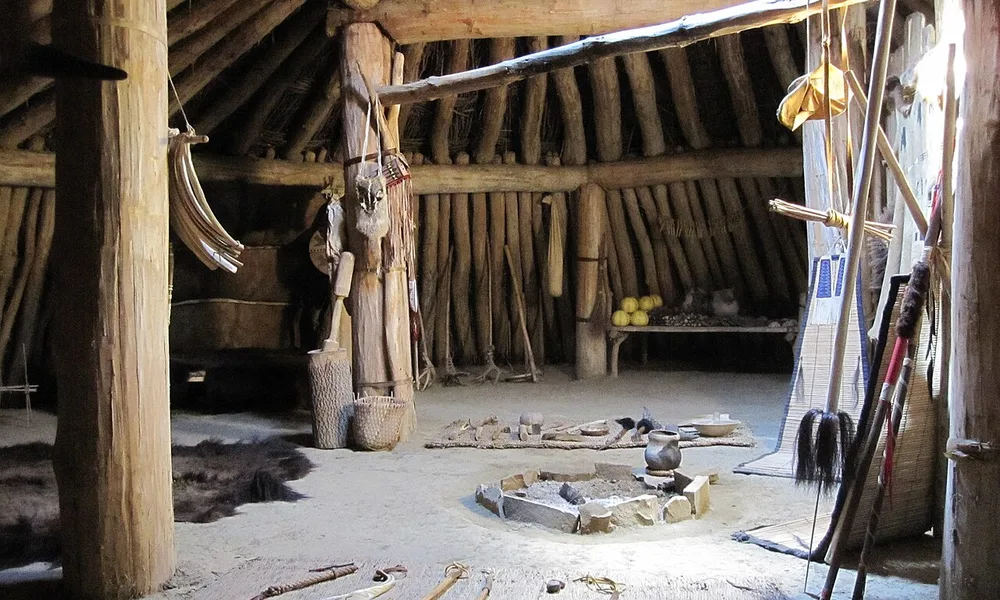
TurfLayer AI plans the living roof that makes an earth lodge look like a grassy mound. The installer enters the roof pitch, the sod thickness, and the local rainfall, and the tool lays out the turf courses from the eaves to the smoke hole, setting the overlap so water runs off each course instead of sitting under it. It also sizes the drainage layer beneath the turf — the gravel or brush layer that carries water away before it can soak the earth shell — and it flags any pitch too shallow to drain in a wet climate.
The tool’s drainage planning is what keeps a turf roof from becoming a damp roof. It models where water will sit after heavy rain, and suggests a thicker drainage layer or a steeper local pitch at exactly those points. It also schedules the turf work around the seasons, because turf laid in a hot, dry spell will not knit, and turf laid in a freeze will not root.
TurfLayer AI assumes the roof is turf over earth, not a membrane roof or a thatch, so its advice fits the lodge and not a generic green roof. Keep its drainage drawing with the job file, and walk the client around the finished roof in the rain at least once — a lodge that sheds water visibly in a downpour sells the next lodge better than any brochure.
Air, warmth, and the business behind the build
A finished lodge has to be lived in, and a startup has to be paid. The last three tools cover both halves: the air and heat inside the dome, and the quoting and bookkeeping that keep the business standing. They are grouped together because they share a habit — they turn a finished job into a record the startup can learn from, instead of a memory that fades by the next job.
The air inside an earth lodge needs planning because the shell is so good at sealing. Thick earth walls hold heat beautifully, but they also hold humidity, and a family cooking over a fire in a sealed dome will fog the walls and feed condensation if the air is not moved. That is a lodge problem, not a caravan problem: a towable dwelling vents through manufactured vents and thin walls, while a lodge needs its smoke hole, its door, and its vents to work as one system. The tool below plans that system.
7. LodgeVent AI: best for ventilation, humidity, and condensation
LodgeVent AI models the air inside the dome: how much fresh air the smoke hole and the door bring in, where stale, humid air collects at the top of the curve, and how much extra venting a lodge needs when it is used every day rather than as a weekend shelter. The installer enters the lodge volume, the number of occupants, and whether there is an open fire, and the tool sets the vent sizes and positions, including a low inlet that brings cool air in without chilling the floor.
Condensation is the failure LodgeVent AI is built to prevent. It predicts where warm, moist air will meet a cold patch of the shell — usually around the smoke hole ring and the north side of the dome — and suggests a fix before the lodge is finished. That is cheaper than fixing it later, because condensation softens the clay plaster, feeds mould in the turf layer, and convinces a client the building is damp when the real problem is air.
The tool also produces a simple handover sheet for the client — how to vent the lodge in winter, when to open the smoke hole, and what to do after a wet week — which is the kind of small document that stops most call-backs. Use it on every lodge, even a small one, because a dry lodge with good air is the difference between a client who recommends the startup and one who quietly does not.
8. EarthLodgeQuote AI: best for quotes that survive the build
EarthLodgeQuote AI builds quotes from the lodge itself rather than from a flat day rate. The installer enters the diameter, the earth depth, the timber list from LodgeFrame AI, and the site access, and the tool prices the timber, the earth, the turf, the plaster, and the labour in separate lines, with a contingency line for the two things that most often go wrong — bad soil that needs more clay, and a wet week that slows the earth work. That structure matters, because an earth lodge quote that hides the earth cost inside a single labour line will always be wrong, and always in the client’s favour.
The tool also keeps the quote honest about time. It sets the build duration from the earth layers, not from optimism, and shows the client which weeks are weather-dependent so a delay in October reads as a planned pause rather than a failure. EarthLodgeQuote AI stores every quote against the finished job cost, so the startup’s pricing gets sharper with every lodge it builds.
The limit is that the tool can only price what the installer measures. A site visit skipped, a soil test guessed, or a timber list copied from the last job will produce a neat-looking quote that is wrong in exactly the places that cost money. Measure every plot, price every lodge from its own numbers, and let the tool’s contingency line do its job instead of trimming it to win the work.
9. LodgeBooks AI: best for bookkeeping for a small earth-lodge startup
LodgeBooks AI is the bookkeeping tool for a startup that spends its money in lumps — a timber delivery, a turf delivery, a week of labour — and gets paid in stages. It tracks each job as its own pot, so the timber for one lodge never quietly pays for the plaster on another, and it matches each stage payment against the costs that stage actually incurred. That per-job view is the difference between a startup that knows which lodges make money and one that only knows the bank balance at the end of the month.
The tool also handles the seasonal shape of the work. Earth lodge building is a fair-weather trade, so income clusters in the dry months and costs keep coming in the wet ones, and LodgeBooks AI forecasts the lean weeks from the booked jobs rather than from hope. It flags the month where the cash runs short before it arrives, when a startup can still do something about it.
LodgeBooks AI will not make a bad job profitable, and it should not be asked to. What it does is show the truth quickly, job by job, so the startup can repeat the lodges that pay and stop repeating the ones that do not. Close every job in it before starting the next one, and the second year of the business will be run on evidence instead of memory.
At a glance: the 9 tools
| Tool | Best for | Use it first on |
|---|---|---|
| LodgeFrame AI | Timber post-and-beam frame layout | Every job, before ordering timber |
| EarthDome AI | Dome geometry, thrust, and the ring beam | Every dome, before the poles go up |
| TimberSpan AI | Timber sizing and joint checks | Every beam, before it is cut |
| RammedEarth AI | Earth mix, moisture, and compaction | Every shell, layer by layer |
| ClayCoat AI | Clay plaster coats and crack control | Every finish coat, inside and out |
| TurfLayer AI | Sod roof courses and drainage | Every turf roof, before the first course |
| LodgeVent AI | Ventilation, humidity, and condensation | Every lived-in lodge, before handover |
| EarthLodgeQuote AI | Quotes priced from the lodge itself | Every quote, before it goes to the client |
| LodgeBooks AI | Per-job bookkeeping and cash flow | Every job, from the first payment |
The table is the short version of the guide, and it is also a buying order. A new startup that can only afford two tools should buy LodgeFrame AI and EarthLodgeQuote AI, because a frame drawn right and a quote priced right will carry the first year. The rest can join one at a time, each proved on a single job before the next one is bought.
Your first earth lodge job checklist
- Walk the plot and test the soil before quoting — the jar test decides the mix, and the mix decides the price.
- Draw the frame in LodgeFrame AI and the dome in EarthDome AI, and do not cut timber until both models agree.
- Size every beam and joint in TimberSpan AI, and keep the reports with the job file.
- Build the shell layer by layer in RammedEarth AI, and never bury a layer that has not passed its compaction check.
- Plan the turf drainage in TurfLayer AI and the air in LodgeVent AI before the plaster goes on, not after.
- Price the job in EarthLodgeQuote AI, close it in LodgeBooks AI, and hand the client the ventilation sheet at handover.
That checklist is short on purpose. An earth lodge job has a hundred small tasks, but these six decide whether the lodge stands dry and the business gets paid. The startups that last in this trade treat the checklist as non-negotiable, even on a small garden lodge for a friendly client.
One more distinction is worth keeping in mind while the job runs. Cob house builds shape their walls by hand from a single wet mix, layer on layer, with no frame to lean on. An earth lodge works the other way round: the timber frame is built first, and the earth is packed over and around it. The crew, the sequence, and the tools are different because the building is different, and a startup that borrows cob methods for a lodge will find its earth has nothing to hang on.
Frequently asked questions
How much does it cost to start an earth lodge installation startup?
Most of the money goes to timber, hand tools, and the first few software subscriptions, not to heavy machinery. A one-crew startup can begin with a modest timber order, basic earth-working tools, and two paid tools — a frame designer and a quoting tool — and add the rest job by job. The expensive mistake is buying all nine tools before the first lodge is sold.
Is an earth lodge the same as an earthbag house?
No. An earthbag house stacks bags of earth into walls and tamps each course flat, while an earth lodge raises a timber frame first and packs earth over a domed pole roof. The two buildings share a material — earth — and almost nothing else: different structure, different sequence, different tools, and a different roof. A startup that tries to build a lodge with earthbag methods will end up with walls and no dome, which is not a lodge at all.
How is an earth lodge different from a wigwam or a tipi?
A wigwam bends poles into a dome and covers them with bark and mats, and a tipi stands straight poles in a cone and wraps them in canvas. Both are light, portable shelters built from poles and a covering. An earth lodge is a fixed dwelling: heavy timber posts, a pole dome, and a thick covering of earth and sod that stays on the plot for decades. The wigwam and the tipi are pole shelters; the earth lodge is a timber-and-earth house that happens to be domed.
How long does an earth lodge installation take?
A small garden lodge can take a few weeks from frame to turf, while a full-size family lodge usually takes several weeks to a few months, depending on the weather and the drying time between earth layers. The earth shell sets the pace, because each layer needs time to firm up before the next one goes on, and wet weather stops the work entirely.
Do I need planning permission for an earth lodge?
Usually, yes — an earth lodge is a fixed dwelling, and fixed dwellings normally need permission, even when they are small and low. The exact rules depend on the plot, the size, and whether anyone will live in it full time, so the startup should check with the local planning office before quoting, and put the answer in writing for the client. Never start digging on the assumption that a low, grassy building will go unnoticed; it will not, and the cost of stopping mid-build is far higher than the cost of asking first.
Which tool should a new earth lodge startup buy first?
Buy LodgeFrame AI first, because the frame is the building and every later step depends on it being right. Buy EarthLodgeQuote AI second, because a startup that cannot price a lodge cannot stay in business long enough to build a second one. Prove both on a single small lodge, then add EarthDome AI and RammedEarth AI for the next job, and keep adding one tool at a time until the full nine are running. That order puts the structure and the money first, which is where they belong.
Bottom line
An earth lodge installation startup lives or dies on three things: a timber frame that carries a heavy earth dome, an earth shell that stays dry, and a business that prices honestly and keeps its books per job. The nine tools in this guide cover those three in order, from LodgeFrame AI’s posts to LodgeBooks AI’s job pots, and none of them belongs to a neighbour’s build — no bent-pole bark dome, no straight-pole canvas cone, no snow-block dome, and nothing with a towbar. Outdoor geodesic dome builds share the dome shape but use a strut frame with a membrane or panel covering, not poles under tonnes of earth. Buy the frame tool and the quoting tool first, prove them on one small lodge, and let the lodge itself — dry, warm, and still standing after its second winter — do the selling.

Keep what speaks to you.
Leave room for your own perspective.


