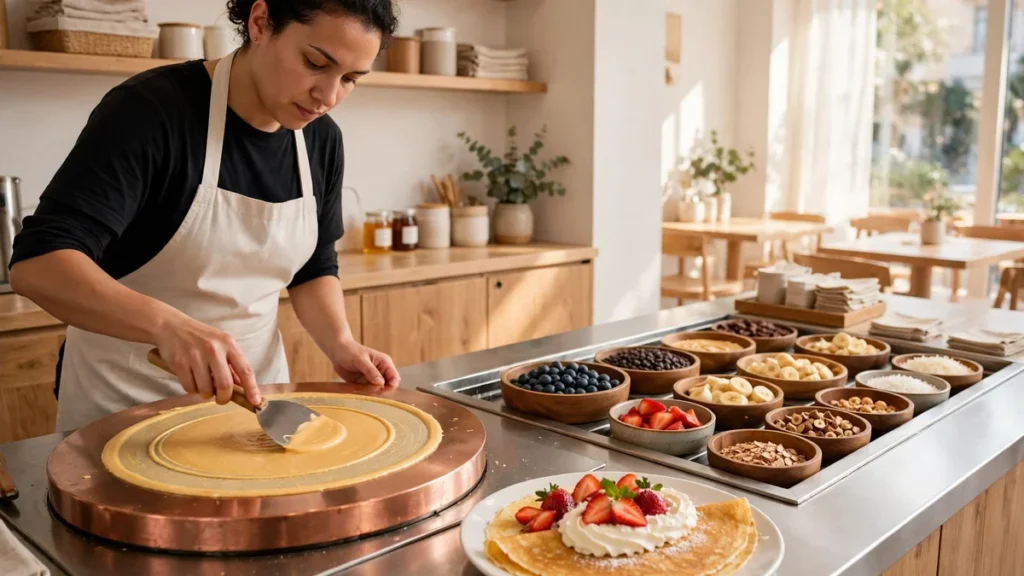
The best AI tools for crepe shop startups in 2026 help a small team run a fast, precise food business without losing the theatre that makes people queue for a crepe. A two-person crew can now plan a sweet and savoury menu, cost every gram of batter, take orders at a busy griddle station, answer customers, arrange a catering delivery and run a launch campaign with the same polish as a national dessert chain. The difference is not the size of the team or the size of the budget. It is the choice of tools, and how well those tools fit the daily reality of a crepe shop where a batter is spread thin in seconds, a topping is chosen in a glance, and a customer decides in one bite whether to come back for another.
Crepe shop startups face a specific set of pressures that other young food businesses do not. A griddle that sits empty for ten minutes is lost income, while a queue that moves too slowly sends hungry customers to the cafe next door, and a savoury crepe ordered for lunch needs a completely different workflow from a sweet crepe ordered as dessert. The best AI tools for crepe shop startups address these pressures directly: they keep the menu and the batter costs under control, they speed up the counter so the griddle never waits, and they turn scattered sales data into clear decisions about which fillings deserve a permanent place on the board.
This guide compares the strongest AI tools for a crepe shop startup in 2026, organised by the jobs that decide whether a new shop grows or stalls: menu planning and batter costing, ordering and point of sale, online ordering and delivery, photography and social media, loyalty and email, reviews and reputation, money and bookkeeping, and staff rotas. Every tool here was chosen because it fits a small team with a small budget and a griddle to keep hot, not because it suits a large restaurant chain. Prices are given as a starting point and can change, so check the current plan before you commit, and start with two or three tools rather than the whole list at once.
Key takeaways
- A crepe shop is not a pancake house or a waffle shop: thin batter spread on a hot griddle, sweet and savoury menus side by side, and toppings chosen to order mean your tools must fit fast custom assembly, not batch cooking.
- Start with menu costing and the counter till first, because a crepe that costs more to make than it earns will quietly drain the business no matter how good the marketing looks.
- Batter prep and griddle speed decide the working day, so choose tools that turn orders into a clear production list and keep the queue moving at lunchtime.
- Takeaway and catering matter more for crepes than for most dessert shops, because a crepe travels well in a box and offices order them by the dozen for meetings and events.
- Pick two or three tools, run them for ninety days, and only add more when a real gap appears in the working week.
Best AI Tools for Crepe Shop Startups at a Glance
| Job | Tool | What it does for a crepe shop | Best for | Starting price |
|---|---|---|---|---|
| Menu planning and batter costing | Notion AI | Recipe library, batter costing and allergen matrix for sweet and savoury menus | Founders planning menus and supplier lists | From around $10 per user per month |
| Counter sales and till | Lightspeed POS | Fast counter sales with topping modifiers and griddle station tickets | Busy counters with a sharp lunchtime peak | From around $89 per month |
| Online ordering and catering | UpMenu | Online ordering, takeaway pre-orders and catering menus | Shops selling crepe boxes and catering trays | From around $49 per month |
| Catering and event bookings | Tripleseat | Catering bookings, event orders and delivery planning | Shops taking catering orders for offices and events | From around $199 per month |
| Photos, menu boards and social media | Adobe Express | Menu boards, crepe photography edits and social posts | Small teams with no designer | Free plan, paid plans from around $10 per month |
| Email and regulars | Constant Contact | Crepe club emails, catering lists and seasonal launch campaigns | Shops building a list of regulars | From around $12 per month |
| Reviews and reputation | NiceJob | Review requests, photo reviews and local listings | New shops building local trust fast | From around $75 per month |
| Bookkeeping and food cost | QuickBooks Online | Invoicing, expenses, supplier bills and cash flow reports | Founders who need clean books from day one | From around $20 per month |
| Staff rotas | Deputy | Griddle station rotas and part-time shift planning | Teams with part-time crepe makers and servers | Free plan, paid plans from around $19 per month |
What Makes a Crepe Shop Different from a Pancake House or a Waffle Shop
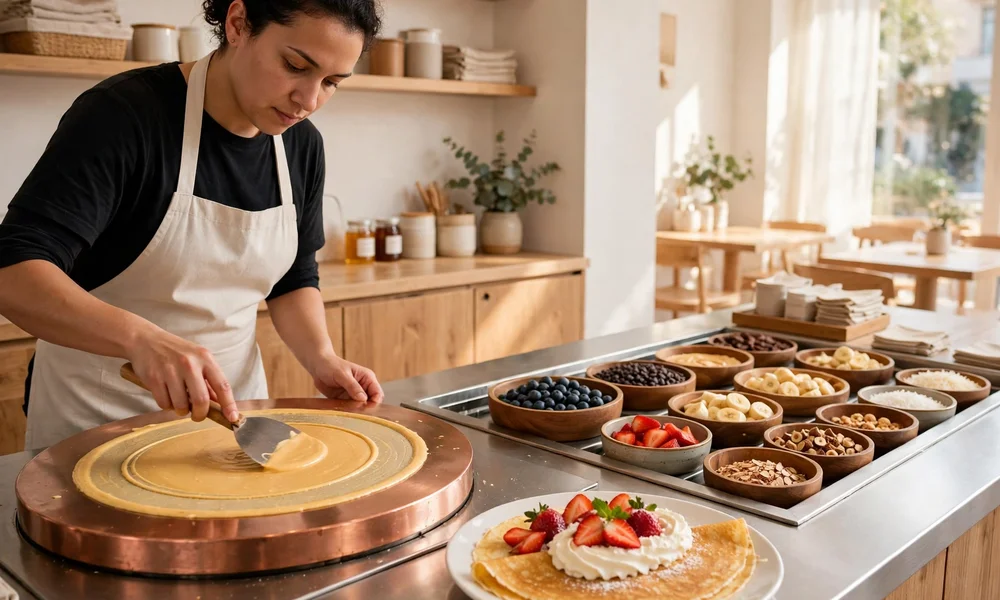
A crepe is not a pancake and it is not a waffle, and the difference shapes every tool a startup should buy. Pancakes are poured thick and cooked in batches on a flat top, while waffles are poured into a mould and left to cook while the operator does something else. A crepe is spread paper-thin on a hot round griddle, cooked in under two minutes, and filled to order while the customer watches. That means the work happens in real time at the griddle, the queue is always visible, and the counter has to keep pace with the person spreading the batter rather than the other way around.
The menu is different too. A crepe shop sells two menus from one station: sweet crepes with fruit, chocolate, cream and nuts, and savoury crepes with ham, cheese, egg, mushrooms and smoked salmon. The same griddle, the same batter base and the same counter serve a breakfast customer, a lunch customer and a dessert customer, often within the same hour. A tool that only understands one kind of sale, or one kind of menu, will force the team to work around it at the busiest moment of the day. The right tools handle both menus, both sets of allergens and both speeds of service without a second system.
Catering is the third difference. Crepes travel well, which makes them a natural choice for office breakfasts, school events, market stalls and private parties, and a crepe shop that ignores catering leaves its most profitable work on the table. A catering order is not a bigger counter order: it needs a quote, a deposit, a delivery time, a box count and a topping plan agreed in advance. The tools in this guide were judged on whether they handle that kind of order as well as the walk-in queue, because a shop that can serve both will grow faster than one that can only serve one. The closest comparison is a frozen dessert shop, where seasonal menus and a display case drive the day, and the best AI tools for gelato shop startups show how a small artisan team can plan flavours and keep regulars coming back.
How We Chose the Tools in This Guide
Every tool in this guide was judged against the same three questions, and a tool that failed any of them did not make the list. First, does it fit a founding team of two to six people with no dedicated operations manager, so that the founder can set it up in an afternoon and the team can use it without training days. Second, does it pay for itself quickly, either by cutting waste, speeding up the counter or bringing in orders that would not have arrived without it. Third, does it understand the shape of a crepe shop day, with a griddle station, a toppings bar, takeaway boxes and catering trays all in the same workflow.
Menu Planning, Batter Costing and the Recipe Library
Notion AI: Recipe Library, Batter Costing and Allergen Matrix for Sweet and Savoury Menus
Notion AI is the planning desk of the crepe shop, the place where the menu lives before it reaches the board. A founder can keep every batter recipe, filling combination and topping price in one searchable workspace, with AI helping to draft menu descriptions, summarise supplier quotes and turn a scattered set of notes into a clean seasonal menu. The recipe pages hold the exact grams of flour, milk, eggs and butter for each batter, the cost per crepe at current supplier prices, and the allergen flags for every filling, so that a new team member can answer a customer question about gluten, dairy or nuts without guessing.
The costing side is where Notion AI earns its keep in the first month. A sweet crepe with strawberries, chocolate and cream looks profitable until the topping costs are added up, and a savoury crepe with smoked salmon can quietly lose money on every sale if the portion is not measured. Notion AI can turn a recipe table into a cost per portion, flag the fillings with the thinnest margin, and suggest where a small price change or a portion adjustment would fix the problem. That matters more in a crepe shop than in most food businesses, because the toppings are chosen by the customer and the margin changes with every order.
The allergen matrix is the other reason to start here. A crepe shop handles flour, milk, eggs, nuts, chocolate and cheese within a few square metres, and a customer with an allergy needs a clear, correct answer in seconds. A shared page that lists every filling, its allergens and its safe substitutes keeps the counter confident and the griddle station safe, and it can be updated in one place when a supplier changes a product. Notion AI starts from around $10 per user per month, and the free plan is enough to test the system before paying. It is the first tool to buy when the menu is still being written and the costs are still being learned.
The Counter, the Till and the Griddle Station
Lightspeed POS: A Fast Counter Till with Topping Modifiers and Griddle Tickets
Lightspeed POS is the till that keeps the griddle moving. The counter screen shows the menu as a set of buttons, with each crepe opening a modifier list for fillings, toppings, extras and dietary swaps, so that an order is taken in seconds and sent to the griddle station as a clear ticket. The ticket shows the crepe, the filling, the topping and the name, which means the person at the griddle never has to ask the counter to repeat an order, and the customer never has to wait while a handwritten note is deciphered.
Speed is the point. A crepe takes under two minutes to cook, so a till that takes thirty seconds to take an order is not a bottleneck, while a till that takes two minutes is. Lightspeed keeps the queue short with saved favourite orders, quick reorders for regulars, and contactless payments that finish before the crepe is folded. The sales reports show which crepes sell at breakfast, which sell at lunch and which sell as dessert, which is the information a founder needs to plan the batter prep for the next morning and to decide which fillings deserve a permanent place on the board.
Online Ordering, Takeaway and Catering
UpMenu: Online Ordering, Takeaway Pre-Orders and Catering Menus
UpMenu gives a crepe shop its own online ordering page, without handing the customer relationship to a marketplace. Customers can build their crepe online, choosing the base, the filling and the toppings from the same modifier lists the counter uses, and the order arrives at the griddle station as a ticket with a pickup time. That matters for crepes, because a pre-ordered crepe can be cooked to the pickup time instead of sitting in a box going soft, and the morning rush can be spread across the hour rather than piling up at the door.
The catering side is where UpMenu stands out for a crepe startup. A catering page can list the sweet and savoury crepe packages, the minimum order, the box counts and the delivery window, and customers can request a quote or place a booking without a phone call. The founder can set lead times, deposits and cut-off times, so that a Saturday catering order is confirmed, paid and planned by Thursday, and the batter prep for Friday morning is based on real orders rather than a guess. That kind of certainty is worth more than any single feature, because catering is the most profitable work a crepe shop can win.
Tripleseat: Catering Bookings, Event Orders and Delivery Planning
Tripleseat turns catering enquiries into confirmed, paid bookings without a chain of phone calls and emails. A customer planning an office breakfast, a school event or a private party can see the sweet and savoury crepe packages, the minimum order and the delivery window, and the founder can send a quote, take a deposit and lock in the date from one screen. The booking holds the menu, the headcount, the delivery time and the topping plan, so that nothing is agreed by memory and nothing is forgotten on the morning of the event.
The planning side is where Tripleseat earns its keep for a crepe startup. A catering order is not a bigger counter order: it needs batter prepped the night before, boxes counted and a delivery slot agreed. Tripleseat builds the event sheet from the booking, so that the griddle station knows exactly how many crepes to cook, which fillings to prep and when to leave. Tripleseat starts from around $199 per month, and it pays for itself when the first catering order lands, because a single office breakfast for twenty people covers the subscription several times over.
Photos, Menu Boards and Social Media
Adobe Express: Menu Boards, Crepe Photography and Social Posts
Adobe Express is the design desk of the crepe shop, and it matters because crepes are a visual product. A customer chooses with their eyes, and a photo of a golden crepe folded over strawberries and cream sells more than any description. Adobe Express can turn a phone photo into a clean menu board image, remove a cluttered background, resize the same image for the shop window, the website and the social feed, and generate a week of posts from a single photoshoot. The founder does not need a designer, and does not need to learn design software, to have a shop that looks professional from the first week.
The menu board is the most important thing Adobe Express makes. A crepe menu changes with the seasons, and a board that can be updated in minutes means the shop can launch a new filling on a Friday and have it on the wall by Saturday. The tool can draft the layout, suggest the wording and keep the fonts and colours consistent across the board, the takeaway menu and the catering flyer, so that the shop looks like one business rather than three. The AI writing help can draft the descriptions too, turning a list of fillings into a menu that reads well and sells the crepe. The best AI tools for cupcake shop startups show the same visual-menu thinking for a bakery built on display.
Regulars, Email and the Crepe Club
Constant Contact: Crepe Club Emails, Catering Lists and Seasonal Launch Campaigns
Constant Contact turns a one-time customer into a regular, and regulars are the steadiest income a crepe shop can build. The tool collects email addresses at the counter, on the ordering page and at catering events, then sends a short weekly email with the new filling, the weekend special and the catering offer. The AI writing help can draft the email, suggest a subject line and pick the best time to send, so that a founder with no marketing background can still send a campaign that looks and reads well.
The crepe club is the simplest version of this, and it works. A customer joins the list, gets a small welcome offer, and then hears about the new seasonal crepe before anyone else. The list can be split into regulars, catering customers and new subscribers, so that an office manager gets the catering menu while a weekend regular gets the new sweet filling. That split is what makes email worth sending: a message that fits the reader gets opened, while a message that fits nobody gets deleted.
Reviews and Local Reputation
NiceJob: Review Requests, Photo Reviews and Local Listings
NiceJob asks happy customers for a review at the right moment, which is usually just after they have finished a crepe they enjoyed. The tool sends a short message with a link to the review page, and it can ask for a photo of the crepe too, which is the kind of review that convinces a stranger to walk in. The founder can see every new review in one place, reply to it, and share the best ones on the website and the social feed, so that the shop builds a public record of happy customers from the first month.
Local reputation matters more for a crepe shop than for most food businesses, because most customers find the shop by searching for somewhere nearby, not by planning a trip. A shop with fifty recent reviews and a clear photo of its crepes will win that search over a shop with five old reviews, even if the crepes are equally good. NiceJob also keeps the local listings consistent, so that the opening hours, the address and the menu link are the same everywhere a customer looks, which removes the small errors that cost a visit. The best AI tools for ice cream shops show how reviews and social posts keep a dessert shop busy.
Money, Books and Food Cost
QuickBooks Online: Invoicing, Expenses, Supplier Bills and Cash Flow Reports
QuickBooks Online keeps the books clean from day one, which is the habit that separates a shop that survives from a shop that runs out of cash. The tool records every sale, every supplier bill and every expense, reconciles the bank account automatically, and shows the cash flow for the week ahead, so that the founder knows whether the next flour delivery can be paid before ordering it. The AI features can read a supplier invoice, match it to the order and flag anything that looks wrong, which saves the evening of paperwork that a founder would otherwise spend after closing.
Food cost is the report that matters most. QuickBooks Online can show the cost of flour, milk, eggs, butter and fillings as a share of sales, and the founder can see in one glance whether the margin is holding or slipping. A crepe shop buys many small items from several suppliers, and a price rise on one filling can pass unnoticed for weeks if the books are kept in a notebook. A clean set of books also makes the tax return, the loan application and the catering quote easier, because the numbers are already there and already correct.
Staff Rotas and the Working Week
Deputy: Griddle Station Rotas and Part-Time Shift Planning
Deputy plans the working week around the griddle, which is the skill a crepe shop needs most from a rota tool. The founder can set the shifts for the griddle station, the counter and the toppings bar, match the staffing to the lunchtime peak and the quiet afternoon, and let part-time staff swap shifts through the app instead of through a group chat. The AI features can suggest a rota based on last week, flag a shift that is overstaffed, and warn when a team member is approaching their hours limit.
The griddle station is the reason this matters. Spreading a crepe is a skill, and a shift with two beginners and no experienced crepe maker will slow the queue and waste batter. A rota that puts the experienced maker on the griddle at lunchtime and the beginner on the counter keeps the shop fast and the training safe. The tool also tracks the labour cost against the sales for the week, so that the founder can see whether an extra pair of hands on a Saturday is earning its keep or just adding cost.
Building Your Crepe Shop Toolkit in Ninety Days
The first thirty days are for the menu and the counter. Cost every batter and filling in Notion AI, set up Lightspeed POS with the topping modifiers, and run the shop for a month on those two tools alone. The goal is to learn the real numbers: which crepes sell, which fillings cost too much, and where the queue slows down. Do not buy anything else in the first month, because a tool bought before the problem is understood is usually a tool that gets cancelled.
The next thirty days are for orders and customers. Add UpMenu for online ordering and catering, add Adobe Express for the menu board and the social posts, and start the Constant Contact list with a simple welcome offer. The goal is to turn the walk-in trade into a customer list, and to win the first catering orders while the shop is still new enough for people to talk about it. The catering page should be live by day sixty, because the offices and schools that order crepes plan their events weeks ahead.
The final thirty days are for reputation and the books. Add NiceJob to collect reviews, QuickBooks Online to keep the books clean, and Tripleseat for the catering bookings. Add Deputy when the team grows past three people. At the end of ninety days, review every tool against the same question: did it cut waste, speed up the counter, or bring in orders that would not have arrived without it. Keep the tools that pass, cancel the tools that do not, and add a new tool only when a real gap appears in the working week.
Your Crepe Shop Startup Checklist
- Cost every batter, filling and topping in Notion AI, and set the menu prices from the real cost per portion, not from a guess.
- Set up Lightspeed POS with topping modifiers and griddle station tickets, and test the counter at full speed before the first busy lunch.
- Put the catering menu on UpMenu with lead times, deposits and cut-off times, so that a Saturday order is confirmed and paid by Thursday.
- Photograph the five best-selling crepes, build the menu board in Adobe Express, and schedule a week of social posts from one photoshoot.
- Start the Constant Contact list at the counter, ask every happy customer for a NiceJob review, and reply to every review within a day.
- Open QuickBooks Online before the first supplier bill arrives, plan the griddle rotas in Deputy, and review every tool after ninety days against waste, speed and orders.
Frequently Asked Questions
What is the first AI tool a crepe shop startup should buy?
Start with menu costing and the counter till, because they decide whether the shop makes money on every crepe. Cost the batter and fillings in Notion AI, then set up Lightspeed POS with topping modifiers so that orders reach the griddle station clearly. A shop that knows its costs and runs a fast counter can survive a quiet month, while a shop that guesses its costs cannot.
Can AI really help with new crepe flavours?
Yes, and the help is practical rather than magical. AI can suggest filling combinations that match the season, draft the menu description, and analyse the sales data to show which flavours sell and which ones sit unsold. The founder still decides what goes on the menu, and still tastes every new crepe before it is sold, but the software does the sorting and the drafting that would otherwise take an evening.
How is a crepe shop different from a pancake house for software?
A pancake house cooks in batches and serves a set plate, while a crepe shop spreads each crepe to order and lets the customer choose the filling and the toppings. That means the till needs modifier lists, the griddle station needs clear tickets, and the menu needs to handle sweet and savoury orders from the same station. A tool built for batch cooking will slow a crepe shop down at the busiest moment of the day.
Should a new crepe shop offer catering from day one?
Catering is worth offering early, because it is the most profitable work a crepe shop can win and it brings in customers who would never walk past the shop. Put a simple catering page on UpMenu with a minimum order and a lead time, and take the first few orders carefully rather than turning them away. A crepe travels well in a box, which makes it a natural choice for office breakfasts and events.
How do I keep crepe toppings fresh without wasting food?
Prep the toppings in small batches, track which fillings sell each day, and use the sales reports from the till to plan the next morning. A topping that sells out by midday is a lost sale, while a topping that sits unsold for a week is wasted food and wasted money. The costing tool and the till together show the real pattern, so that the prep list matches the demand instead of guessing it.
How much should a crepe shop startup spend on AI tools each month?
A lean stack of two or three tools costs around $50 to $100 a month at the start, and a full stack of nine tools costs around $200 to $400 a month once the shop is busy. Start with the menu and the counter, add ordering and marketing in the second month, and add reviews, books and rotas in the third month. Every tool should pay for itself by cutting waste, speeding up the counter, or bringing in orders that would not have arrived without it.
The Bottom Line
The best AI tools for crepe shop startups in 2026 are the ones that fit the griddle, the counter and the customer in that order. Cost the menu first, run a fast till second, and let online ordering, photography, email, reviews, books and rotas follow as the shop grows. A crepe shop does not need the most software, and it does not need the most expensive software. It needs a small set of tools that understand thin batter, fast assembly and a customer who chooses with their eyes, and a founder who reviews them after ninety days and keeps only the ones that earn their keep. Start with two or three, run them well, and add more only when a real gap appears in the working week.

Keep what speaks to you.
Leave room for your own perspective.


