
The best AI tools for Chinese restaurant startups in 2026 do their hardest work where a new Chinese restaurant feels it most: at the front door on a packed Saturday when three banquet parties arrive at once, in the kitchen at dawn when the dim sum steamers are loaded and the wok line is prepped, and in the half hour before opening when the delivery tablets, the catering orders, the staff rota and the banquet bookings all need decisions at the same time. A Chinese restaurant startup cannot hire its way out of every problem, and in the first year every hire is a careful bet. The right artificial intelligence tools take repetitive work off the pass, from answering the phone while the wok chef is mid-service to spotting that a popular Peking duck special is quietly losing money, so founders and their first teams can spend their time on the food and the guests in front of them.
Opening a Chinese restaurant has always been a test of timing, generosity and consistency. Guests expect a table ready when promised, dim sum that arrives hot from the cart, a wok dish that tastes the same on Tuesday as it did on Saturday, and a banquet that runs without a hitch, yet a startup usually runs on a handful of people doing several jobs at once. The best AI tools for Chinese restaurant startups close that gap without making the experience feel robotic. They draft replies in the voice of the restaurant, learn from past bookings, flag a banquet table plan that will run late before it causes a queue at the door, and keep the kitchen moving in the right order. Used well, they protect margins, fill more seats, and give a young restaurant the polish of an established one.
This guide compares the strongest options for 2026 across the jobs that matter most to a Chinese restaurant startup: banquet and event bookings, reservations for round tables and large parties, point of sale and ordering, dim sum and wok-line costing, delivery and takeout, staff scheduling, phone answering and guest messaging, marketing and repeat visits, and the data that ties it all together. Every section explains what to look for, where AI genuinely helps, where a person should still step in, and how to choose tools that fit a small budget and a growing dining room. The goal is not to buy the most software, but to build a lean stack that earns its keep from the first month.
Key takeaways
- Start with banquet bookings, reservations and wok-line costing, because they touch revenue, large parties and food cost every single day.
- Choose tools that connect to your point of sale and reservation book, or the automation will create more manual work than it saves.
- AI should draft, suggest and sort, while people approve anything sensitive, from refunds to replies to an unhappy guest.
- Measure success in covers, banquet revenue, dim sum yield, food cost percentage, response time and repeat visits, not in how many features a tool lists.
- Keep the stack small at first, with three or four tools that work together, and add more only when a clear gap appears.
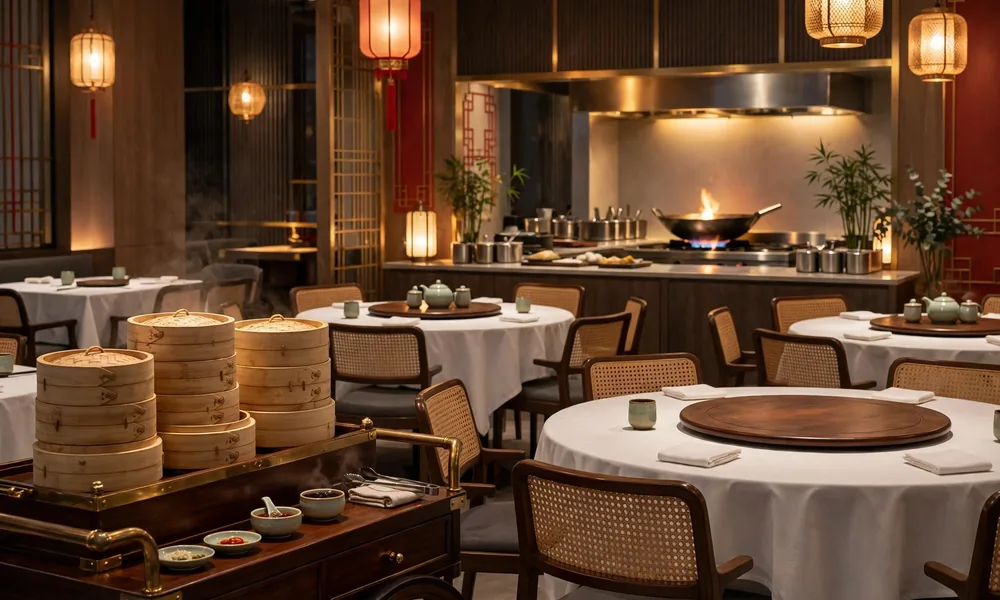
Best AI Tools for Chinese Restaurant Startups at a Glance
The table below gives a quick view of the nine tools in this guide, what each one does best, and where it fits in a Chinese restaurant startup. Read the detail sections that follow before buying anything, because the right choice depends on whether your dining room leans toward banquets, dim sum service, delivery, or a mix of all three.
| Tool | Best for | Main job | Starting point |
|---|---|---|---|
| Tripleseat | Banquet bookings | Events, weddings and large parties | Banquet-led restaurants |
| TableCheck | Reservations | Round tables and large parties | Busy dining rooms |
| Deliverect | Delivery orders | Aggregator orders in one screen | High delivery volume |
| GloriaFood | Online ordering | Commission-free takeout orders | Takeout-led startups |
| WISK.ai | Inventory and food cost | Stock, sauces and waste tracking | Rising food costs |
| Apicbase | Recipe costing | Dim sum and wok dish margins | Menu engineering |
| Homebase | Staff scheduling | Wok-line rotas and labour cost | Small teams |
| SoundHound AI | Phone answering | AI voice agent for calls | Missed calls |
| SOCi | Marketing and reviews | Local search and review replies | Repeat visits |
What Makes an AI Tool Right for a Chinese Restaurant Startup
A Chinese restaurant is not a generic restaurant with a different menu. The dining room runs on round tables, shared dishes, family-style ordering and large parties, while the kitchen runs on a wok line that moves fast and a dim sum station that starts hours before service. A tool that ignores those realities will fight your team every day, however good its demo looks. Judge every option against the three tests below before you look at price.
Banquet-aware design
Banquets are where a Chinese restaurant makes its best money, and they are also where a weak system causes the most damage. A wedding for two hundred guests, a Lunar New Year dinner, a corporate banquet with eight courses and a tea ceremony all need deposits, minimum spends, table plans, dietary notes and a timeline that the whole team can see. A tool earns its place when it handles deposits and contracts without spreadsheets, shows the banquet calendar next to the regular reservation book, and warns you before a private room is double-booked. If a system treats a banquet like an ordinary table for four, it is the wrong system for this kind of restaurant.
Honest handling of wok ingredients
Wok cooking burns through ingredients in ways that simple inventory tools miss. Sauces are made in batches, oils are reused on a schedule, fresh produce arrives daily, and a single busy service can swing food cost by several points. AI helps when it tracks recipes down to the sauce batch, flags a dish whose margin has slipped because chilli oil or dried scallops got more expensive, and counts waste at the wok station instead of guessing at month end. The test is simple: can the tool tell you, tonight, which five dishes made money and which five quietly lost it? If it cannot, your menu decisions are guesses.
Flexibility across income
A new Chinese restaurant rarely has steady income in its first year. Banquet season, festival weeks and holiday weekends bring big nights, while quiet Tuesdays bring almost nothing. A tool stack that charges heavy fixed fees in a slow month will hurt more than it helps. Look for monthly plans you can change, per-order pricing on delivery tools, and free tiers that cover your first hundred covers. The best tools grow with the restaurant: they stay cheap while you are small and only cost more when the extra revenue has already arrived.
How We Chose the Tools in This Guide
We looked for tools with a real track record in restaurants, clear pricing a startup can understand, and features that map directly to Chinese restaurant work: banquets, large parties, dim sum, wok lines, delivery and catering. Each tool had to connect to the systems a startup already uses, especially the point of sale, and had to offer AI that does useful work rather than decoration. We favoured tools with a free trial or a low-cost starting plan, honest limits on what the AI can do, and support that answers in hours rather than days. No tool paid for its place in this guide.
The Nine Tools in Detail
Tripleseat: The Best Banquet Booking System for a Chinese Restaurant Startup
Tripleseat is built for restaurants that sell events, and that makes it a natural fit for a Chinese restaurant where banquets pay the rent. It manages enquiries, contracts, deposits, minimum spends, table plans and event timelines in one place, so a wedding booking stops living in three different notebooks and a phone full of messages. The AI features draft replies to event enquiries, summarise what each party needs, and flag dates where a private room is at risk of being double-booked. For a startup, the practical win is speed: a banquet enquiry that once took two days of back and forth can get a clear quote and a contract the same evening. The tool also tracks where banquet leads come from, which helps a new restaurant see whether wedding planners, corporate bookers or walk-in enquiries are worth the most attention. Pricing is higher than a simple reservation tool, so it earns its keep only if banquets are a real part of the plan. If your dining room runs one wedding a month and a steady stream of birthday banquets, Tripleseat pays for itself quickly. If banquets are an occasional extra, start with a reservation tool and add Tripleseat when the event calendar fills up.
TableCheck: The Best Reservation Tool for Round Tables and Large Parties
TableCheck handles the seating puzzle that defines a Chinese dining room: round tables for eight or ten, large family parties, and a mix of walk-ins and bookings on a busy night. Its floor plan tools let a host see the whole room at a glance, move a party of twelve without breaking the service flow, and hold a table for a late-arriving family without losing the next seating. The AI side predicts demand from past bookings, suggests when to open extra tables, and sends reminders that cut no-shows. Guests can book in several languages, which matters for restaurants that serve both local diners and visitors, and the system handles special requests such as a quiet corner for an elderly guest or a high chair for a toddler. TableCheck connects with common point of sale systems, so the host stand and the kitchen stay in step. The monthly cost sits in the middle of the range, and the value shows up on the busiest nights, when a good seating plan is worth more than an extra pair of hands. For a startup that expects full tables on weekends, this is one of the first tools to buy.
Deliverect: The Best Tool for Taming Delivery Orders
Delivery can quietly wreck a Chinese kitchen. Orders arrive from three or four apps at once, each with its own tablet, its own timing and its own menu, while the wok line is already full with dine-in tickets. Deliverect pulls every delivery order into a single screen and pushes it into the point of sale, so the kitchen sees one queue instead of four. Its AI spots the dishes that slow the line down, flags orders that are likely to be late, and keeps menus in step across every platform, so a sold-out Peking duck disappears everywhere at once instead of being ordered twice. For a startup, the biggest gain is accuracy: fewer wrong orders, fewer refunds, and a kitchen that can plan its evening instead of reacting to a new tablet beep every minute. The tool charges per location and per order volume, which keeps the early cost low. The trade-off is that it adds another system to learn, so it works best when the point of sale connection is set up properly from day one. If delivery is more than a fifth of your revenue, Deliverect is close to essential. If delivery is a small side stream, a simpler setup will do until the volume grows.
GloriaFood: The Best Commission-Free Online Ordering for Takeout
GloriaFood gives a Chinese restaurant its own online ordering page without taking a commission on every order, which matters when takeout margins are already thin. Guests order dumplings, noodles and family sets directly from the restaurant website or a link on social media, and the order lands in the kitchen with a clear pickup time. The AI features suggest popular add-ons at checkout, such as an extra portion of spring rolls with a family set, and learn which dishes sell best on which days. A startup can add a simple branded ordering page in an afternoon, keep the customer details for its own marketing, and stop paying a marketplace fee on its most loyal takeout regulars. The free tier covers the basics, with paid add-ons for table reservations and advanced promotions. The limits are real: the design options are simple, and very high order volumes may need a more powerful system. But for a new restaurant building a takeout habit in its neighbourhood, GloriaFood is the cheapest way to own the customer relationship instead of renting it from an app. Pair it with a delivery tool once the volume justifies it.
WISK.ai: The Best Tool for Inventory and Food Cost
WISK.ai turns the daily stock check from a clipboard chore into a system that actually protects margin. Staff scan deliveries, count the walk-in and the dry store, and the AI tracks usage dish by dish, so a startup can see exactly how much chilli oil, soy sauce, rice and fresh produce went into a night of service. It flags variance, which is the polite word for the gap between what should have been used and what was actually used, and points to the dishes and shifts where the gap appears. For a Chinese kitchen, where sauces are batched and ingredients move fast, that visibility is worth more than a monthly stocktake that arrives too late to change anything. The tool also helps with ordering, suggesting quantities based on real usage rather than habit, which cuts both waste and emergency trips to the supplier. The cost scales with the size of the operation, and the setup takes a few days of careful counting to get the opening stock right. That effort pays off in the first month, because most new restaurants discover at least one dish that is losing money and one ingredient that is being over-ordered. If food cost is the number that keeps you awake, start here.
Apicbase: The Best Tool for Dim Sum and Wok Dish Recipe Costing
Apicbase is a recipe and menu engineering platform, and it fits a Chinese kitchen because so much of the menu depends on recipes that are easy to get wrong. A dim sum basket has a dozen small components, a wok dish has a sauce that changes with the batch, and a banquet set menu has eight courses that must all land on margin together. Apicbase costs every recipe down to the gram, updates the cost when a supplier price changes, and shows which dishes earn their place on the menu and which ones only look popular. Its AI suggests price changes, portion tweaks and menu swaps based on real sales and real costs, rather than gut feeling. The kitchen gets clear recipe cards, so a new cook can make the same dish the same way, and the front of house gets allergen and dietary information it can trust. The monthly fee is modest for a single site, and the setup is the main cost in time, because every recipe needs to be entered once. For a startup that wants a menu built on numbers instead of hope, Apicbase is the tool that turns the chef’s knowledge into a system the whole team can use.
Homebase: The Best Tool for Wok-Line Staffing and Scheduling
Homebase handles the people side of a Chinese restaurant: the rota, the clock-in, the wage cost and the messages that keep a small team in step. A wok line needs the right cooks at the right stations, the dim sum team starts hours before the dining room opens, and a banquet night needs extra hands that a quiet Tuesday does not. Homebase builds the rota around those patterns, lets staff swap shifts from their phones, and shows the wage cost of every shift before it is published. Its AI forecasts busy periods from past sales, so a founder can see on Monday whether Saturday needs six cooks or eight, and it flags overtime before it happens rather than after payday. The free tier covers basic scheduling for a small team, with paid plans adding hiring, payroll and team messaging. The tool is simple enough that a busy manager can learn it in an evening, which matters when nobody has time for training. The one thing it will not do is cook the food, so the rota still needs a human who knows which cook handles the wok best under pressure. For a startup with a team of ten to thirty people, Homebase keeps labour cost visible and the rota fair, and that is half the battle in keeping good staff.
SoundHound AI: The AI Phone Agent That Never Misses a Call
SoundHound AI answers the restaurant phone with a voice agent that can take orders, answer questions about opening hours and allergens, and book a table while the team is busy serving. For a Chinese restaurant, the phone is still a lifeline: guests call to book a banquet, ask whether the kitchen can handle a nut allergy, or order a family set for pickup. Every missed call is a lost booking, and a small team cannot staff the phone during a dinner rush. The AI agent handles the routine calls in a natural voice, takes the details down accurately, and hands the tricky ones to a person, such as a large banquet enquiry or an unhappy guest. It can work in more than one language, which helps restaurants that serve a mixed community, and it logs every call so the manager can see what guests actually ask for. Pricing is usually based on call volume, so a quiet startup pays little and a busy one pays for the calls it would otherwise have missed. The limits matter: the agent should never handle refunds or complaints on its own, and the menu information it gives must be kept up to date. Set those boundaries clearly, and the phone stops being a source of stress. A busy ramen shop faces a similar phone problem at the counter, and the way ramen shop startups handle counter calls shows how much a good voice agent can free up a small team.
SOCi: The Best Tool for Local Marketing and Review Management
SOCi helps a Chinese restaurant be found by people nearby and turn one visit into a repeat visit. It manages listings across search and maps, so the opening hours, the menu link and the phone number are correct everywhere, and it watches reviews across the platforms where diners actually leave them. The AI drafts replies to reviews in the voice of the restaurant, flags a bad review within minutes so the manager can respond the same night, and suggests social posts based on what is selling. For a startup, the practical value is local visibility: most new guests find a Chinese restaurant by searching for one near them, and a listing with wrong hours or unanswered reviews loses those guests to the place down the road. SOCi also runs local promotions, such as a weekday dim sum offer or a banquet tasting event, and tracks which ones bring people through the door. The cost is higher than a single social media tool, because it covers listings, reviews and social posts together. That breadth is the point: a small team gets one dashboard instead of five logins. If marketing currently means whoever has a spare minute posting a photo, SOCi brings order to it.
How to Build Your Stack in Order
Start with the three tools that touch money every day: reservations, food costing and the phone. A reservation tool such as TableCheck fills the dining room, a costing tool such as WISK.ai or Apicbase keeps the menu profitable, and a voice agent such as SoundHound AI stops bookings from slipping away while the team is serving. Add the banquet system next if events are part of the plan, because banquet revenue repays the cost fast. Then add delivery and online ordering once the kitchen can handle the volume without slowing dine-in service. Staff scheduling and marketing come last in the first year, because they make a working restaurant better rather than making a struggling one survive. At each step, check that the new tool connects to the point of sale before you pay for it, and give the team a week to learn it before adding anything else.
What the Stack Costs in the First Year
A lean stack for a Chinese restaurant startup usually costs between three hundred and nine hundred dollars a month once the free tiers run out, depending on how many tools are in use and how busy the restaurant is. Reservations and scheduling sit at the lower end, banquet and delivery tools at the higher end, and recipe costing stays modest throughout. The honest way to judge the spend is against the money each tool protects: one saved banquet booking covers a month of software, one avoided food-cost surprise covers a quarter of it, and one recovered phone order a day covers the voice agent many times over. Budget for setup time as well as fees, because a tool that is half configured will cost more in mistakes than it saves in features. Revisit the stack every quarter, drop anything the team stopped using, and only add a new tool when a clear gap has a price attached to it.
Your Chinese Restaurant Startup Checklist
Use this checklist in the month before opening, and again at the end of the first quarter, to make sure the technology is ready for real service rather than only ready for a demo.
- Set up reservations with a floor plan that matches your round tables and large parties, and test it with a full Saturday of bookings.
- Cost every dish on the menu, including dim sum baskets and banquet set menus, and remove or reprice anything that loses money.
- Connect delivery orders into one screen and run a full delivery service before opening night.
- Build the staff rota for a banquet night and a quiet Tuesday, and confirm the wage cost of both before the first payroll.
- Set up the phone agent with current menus, allergen notes and opening hours, and test it with real calls.
- Claim and correct every local listing, and set up review alerts so a bad review gets a same-night reply.
Frequently Asked Questions
How much should a Chinese restaurant startup spend on AI tools?
Most startups spend between three hundred and nine hundred dollars a month on a lean stack, after free trials end. Start with three or four tools that touch revenue directly, such as reservations, food costing and phone answering, and add more only when the extra revenue or saved time is clear. A tool that costs more than the problem it solves is the wrong tool, however good its features look.
Do I need a separate tool for banquet bookings?
If banquets are a real part of the plan, yes. A wedding or a corporate banquet needs deposits, contracts, table plans and timelines that a normal reservation book does not handle. A dedicated banquet tool such as Tripleseat keeps those details in one place and stops a double-booked private room from ruining a big night. If banquets are rare, a good reservation tool is enough until the event calendar grows.
Can AI help with dim sum costing?
Yes, and this is one of the places where AI earns its keep fastest. A dim sum basket has many small components, and the cost shifts whenever a supplier price moves. Recipe costing tools track each component to the gram, update costs automatically, and show which baskets make money and which ones only look popular. The chef still decides the recipe, but the numbers stop being a guess.
How do I handle allergies at a Chinese restaurant?
Keep allergen information in the recipe system, not in anyone’s memory, and make sure the phone agent, the ordering page and the front of house all read from the same source. Train the team to confirm allergies with the kitchen before promising anything, and let the AI draft the reply while a person approves it. A clear allergen note on the menu and a calm, accurate answer on the phone build more trust than any promotion.
Is Chinese delivery worth offering for a new restaurant?
Delivery is worth offering when the kitchen can handle it without slowing dine-in service, and when the volume justifies the fees. Start with your own ordering page for takeout, where the margin is best, and add marketplace delivery once the orders are steady. A delivery aggregator tool keeps the orders in one queue, which is what stops a busy night from turning into a pile of refunds. A pop-up restaurant faces a similar question about whether to run a full ordering system at all, and the way pop-up restaurant startups weigh delivery against dine-in is a useful check before committing to every platform at once.
Which tool should I buy first?
Buy the reservation tool first, because empty tables are the most expensive problem a new restaurant has. Then add recipe costing, because a full dining room that loses money on every dish is worse than a quiet one. The phone agent comes third, because it recovers the bookings the first two tools cannot reach. Everything else can wait until the restaurant has a month of real service behind it, and the choice will be clearer with real numbers in front of you.
The Bottom Line
The best AI tools for Chinese restaurant startups in 2026 are the ones that respect how a Chinese restaurant actually works: banquets that pay the rent, round tables full of family, a wok line that moves fast, dim sum that starts before dawn, and a phone that never stops ringing. A small stack, chosen in the right order and connected to the point of sale, will fill more seats, protect the margin on every dish, and give a young restaurant the calm of an established one. Start with reservations, costing and the phone, add banquets and delivery when the volume earns them, and let the team spend its time on the food and the guests. The technology should be invisible on the best nights, and that is exactly the point. Sushi restaurants face a similar challenge with scarce seats and fresh ingredients, and the comparison of AI tools for sushi restaurant startups is a useful next read for any founder weighing a reservation-led stack.

Keep what speaks to you.
Leave room for your own perspective.


