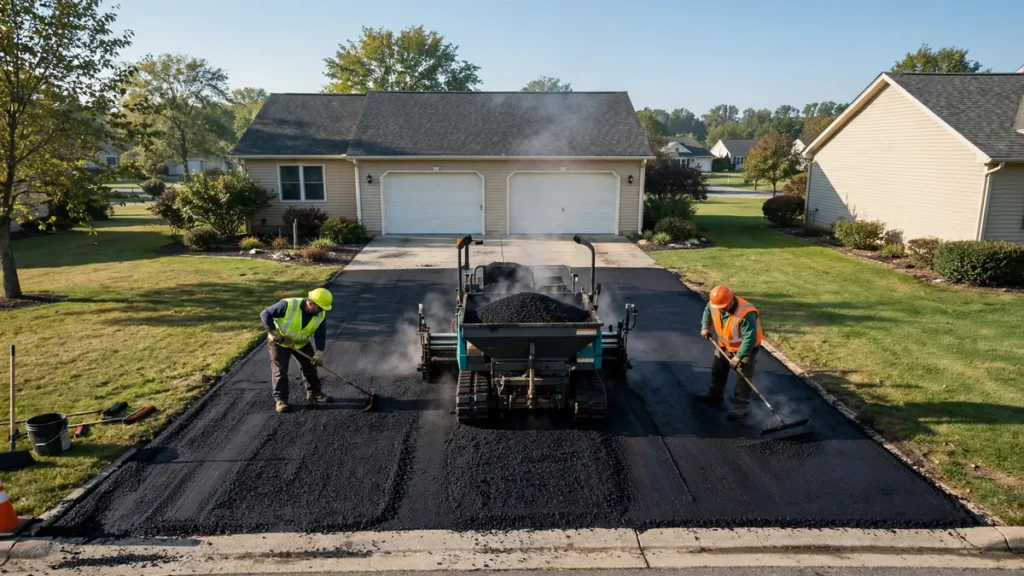
The best AI tools for asphalt paving startups in 2026 turn a small crew with a paver, a roller and a reputation for smooth driveways into a company that can measure a parking lot from the office, price a sealcoating job before lunch, schedule three crews without a single clash, and keep every property manager updated while the asphalt is still cooling. An asphalt paving startup does not win its first jobs by having the biggest fleet or the lowest price per square foot. It wins them by answering first, quoting clearly, showing up exactly when promised, and leaving a surface that neighbours and tenants notice, and that is precisely what the right AI tools make possible for a small team with far more ambition than office staff.
Starting a paving company has always been attractive and hard in equal measure. Demand for driveways, parking lots, sealcoating, crack filling and resurfacing keeps growing, property owners want surfaces that last for years, and the work itself is skilled, visible and rewarding. Yet the business side arrives all at once. Ten enquiries land while you are on a paving job, three estimates need writing in the evening, an asphalt plant delivery is waiting on a confirmation, a roller operator calls in sick at six in the morning, and the invoices from last week are still unpaid. Add weather windows, curing times, tonnage orders, striping schedules and property managers who expect a reply within the hour, and it is easy to see why so many talented pavers struggle in their first year even though their work on the mat is excellent.
This guide compares the AI tools that fit an asphalt paving startup, not a general contractor and not a large established paving company with its own plant. It focuses on what a small, growing team actually needs in its first years: estimating that understands square footage, tonnage and sealcoating coverage, scheduling that respects weather, plant hours and curing time, messaging that keeps homeowners and property managers informed, photo records that prove the quality of every job, and marketing that builds trust street by street. You will find a comparison table, a startup checklist and answers to the questions new owners ask most often, all judged on simple setup, honest pricing, tools that work from a phone on a job site, and software that grows from one crew to several without forcing a painful switch.
Key takeaways
- Start with three tools only: AI estimating and measurement, a job and crew scheduling platform, and AI customer messaging. Those three carry most of the revenue for a new asphalt paving startup.
- Choose estimating tools that measure from plans, photos and satellite views and convert square footage into tonnage, sealcoat gallons and labour hours automatically.
- Automate quotes and follow-ups first. Speed wins paving jobs, and a clear itemised quote sent within the hour beats a perfect quote sent the next day.
- Schedule around weather, plant hours and curing time, not just crew availability. A paving job booked into rain or a surface opened to traffic too early costs far more than a lost day.
- Photograph every stage of every job. Time-stamped photos of preparation, paving, rolling and striping prove quality and settle disputes before they start.

How AI Fits an Asphalt Paving Startup
Asphalt paving is a timing business. The mix leaves the plant hot, the crew has a narrow window to lay and compact it, and the weather can close that window with one afternoon shower. AI tools help a startup manage that timing instead of fighting it. They measure jobs from satellite views while the owner is still on the phone, turn those measurements into tonnage and material costs, slot the job into a schedule that respects plant hours, and send the customer a message the moment the crew is on the way. None of that replaces paving skill, and none of it should. It simply removes the office work that used to eat every evening.
The second way AI fits is through the customer. Homeowners and property managers choose a paving contractor they trust, and trust is built in the first hour after the enquiry. An AI answering tool replies instantly, asks the right questions about the surface, books a site visit and sends a quote before a rival has even returned the call. After the job, the same system asks for a review while the fresh black surface is still the talk of the street. For a startup with no office staff, that speed is the whole marketing plan, and it costs far less than a single missed job.
The third fit is the fleet and the plant. A paving startup runs trucks, a paver, rollers and sealcoating rigs, and every hour a machine sits idle is money lost. AI scheduling and dispatch tools keep the fleet moving in the right order, warn when two jobs need the same roller, and track fuel, maintenance and driver hours in one place. When the business grows from one crew to two, the same tools keep both crews working without the owner having to phone each driver ten times a day.
The 10 Best AI Tools for Asphalt Paving Startups
The tools below were chosen for a paving startup, not for a large contractor. Each one is judged on the same four tests: it must be simple enough to set up in a week, it must work from a phone on a job site, its price must make sense for a business doing a handful of jobs a month, and it must grow with the company instead of forcing a painful switch later. Most startups need only three or four of these to start, and the comparison table further down makes the choice easier.
1. Jobber
Jobber is the all-round job management platform many small paving companies start with, and it earns that place by covering the whole job from first call to final invoice. Its AI quoting tools turn a measurement into a professional estimate, its scheduling board shows every crew and truck at a glance, and its customer messaging keeps homeowners and property managers informed without the owner typing the same update five times a day. For a paving startup, the strongest feature is the way quotes, scheduling and invoicing live in one customer record, so nothing is lost between the site visit and the payment. The mobile app is genuinely usable with dirty hands and bright sunlight, and the price stays reasonable for a one-crew business. Jobber suits owners who want one system to run the office side of the company and are happy to add a specialist measurement tool beside it.
2. Housecall Pro
Housecall Pro is built for field service businesses that live on the phone, and a paving startup fits that shape well. Its AI answering and dispatch features take bookings while the crew is laying asphalt, its estimates can be sent from the driveway before the owner has even driven away, and its automated follow-ups chase unpaid invoices politely and persistently. The dispatch board makes it easy to move a sealcoating job when rain appears on the forecast, and the customer portal lets property managers approve quotes and pay online without a single phone call. Housecall Pro also handles online booking well, which matters for sealcoating and crack filling work that customers often book on a Saturday night. It is a strong choice for owners who want fast quoting and strong customer messaging above all else.
3. CompanyCam
CompanyCam is the photo record system for crews that work outdoors, and for paving it is close to essential. Every photo is stamped with time, location and job, so a picture of a cracked driveway before the work and a smooth black surface after the work becomes proof that settles arguments and wins the next job. The AI features tag photos, organise them by project and surface type, and let the office see progress without phoning the crew. For sealcoating and resurfacing, the before and after record is also the best marketing a paving company owns, because a single pair of photos sells the next driveway better than any advert. CompanyCam is cheap, simple and quick to adopt, and it pairs well with any scheduling platform on this list.
4. JobNimbus
JobNimbus combines customer management with job tracking in a way that suits paving companies handling both residential driveways and commercial parking lots. Its AI features help draft estimates, summarise customer conversations and flag jobs that have gone quiet, which matters when a property manager takes three weeks to approve a parking lot resurface. The board view shows every job from first enquiry to final payment, and the document storage keeps contracts, photos and material tickets in one place. JobNimbus is flexible enough to track a sealcoating route as a series of small jobs and a parking lot rebuild as one large project, which is exactly the mix a growing paving startup faces. It suits owners who want a clear picture of the whole pipeline at a glance.
5. FieldPulse
FieldPulse is a straightforward field service platform that keeps pricing honest and setup simple, which is why it appeals to new paving companies. Its AI-assisted estimating and scheduling cover the basics well: quotes are built from saved price lists for paving, sealcoating, crack filling and striping, jobs are assigned to crews with the right equipment, and customers get automatic reminders before the crew arrives. The time tracking feature is useful for paving because it separates laying, rolling and striping hours, which makes the next estimate more accurate. FieldPulse does not try to do everything, and that is its strength. It suits a startup that wants a clean, affordable system without a month of training.
6. Thryv
Thryv is the marketing and customer platform for a paving startup that needs to be found as well as organised. Its AI tools write and schedule social posts, manage the business listing across search and maps, and turn completed jobs into review requests automatically. For paving, where most work comes from neighbours seeing a fresh driveway and searching for the company name, that local visibility matters more than any national advert. Thryv also handles estimates, invoicing and payments, so a small startup can run its marketing and its office in one place. It suits owners who know their paving is good and want the phone to ring more often without hiring a marketing agency.
7. NiceJob
NiceJob focuses on one thing and does it well: turning happy paving customers into reviews and referrals. Its AI tools time the review request for the moment a customer is happiest, usually the evening after the crew has left a gleaming driveway, and they make leaving a review as easy as tapping a link in a text message. The platform also runs referral campaigns, so a homeowner who recommends the company to a neighbour is thanked and rewarded automatically. For a paving startup, reviews are the cheapest advertising available, because one five-star review with a photo of a fresh surface can bring in three more driveways on the same street. NiceJob is a small, focused addition to any scheduling platform.
8. Podium
Podium is the AI messaging platform for paving companies that get most enquiries by text and phone. Its AI assistant answers common questions, books site visits and collects the details the estimator needs, even at midnight when the owner is asleep. The shared inbox means every message from every customer lives in one place, so a quote request never hides in a personal phone. Podium also handles review requests and payments by text, which suits property managers who prefer a quick message to a formal email. For a startup with no receptionist, Podium is the closest thing to hiring one, and it pays for itself the first time it books a parking lot job while the crew is on another site.
9. Smith.ai
Smith.ai provides a virtual receptionist service backed by AI, and it fits paving startups that lose jobs to missed calls. When the crew is running the paver, nobody can answer the phone, and every unanswered call is a driveway that goes to a rival. Smith.ai answers every call, takes the details, books the site visit and sends the owner a clear summary. The service also handles after-hours calls, which is when many homeowners finally sit down to arrange a driveway quote. It costs more than a pure software tool, but for a one-crew business it is often cheaper than a part-time receptionist and far more reliable. It suits owners who know they are losing work to the phone they cannot answer.
10. QuickBooks Online
QuickBooks Online is the accounting platform most small paving companies end up using, and its AI features have become genuinely useful rather than decorative. It categorises expenses automatically, matches plant tickets and fuel receipts to jobs, chases overdue invoices and produces a clear picture of which jobs actually make money. For paving, where material costs swing with oil prices and a single job can involve tonnage, sealcoat, striping paint and labour, that clarity matters. The platform also connects with most scheduling tools on this list, so job costs flow into the accounts without double entry. QuickBooks suits owners who want clean books from day one instead of a shoebox of receipts at tax time.
Comparison Table: The Best AI Tools for Asphalt Paving Startups
Use this table to narrow the list to the three tools you will start with. Pick one estimating and scheduling platform, one photo or messaging tool, and one review or accounting tool, then add the rest only when the business genuinely needs them.
| Tool | Best for | Standout AI feature | Starting price | Free trial |
|---|---|---|---|---|
| Jobber | All-round job management | AI quoting and scheduling | From around $49 a month | Yes |
| Housecall Pro | Fast quoting and dispatch | AI answering and follow-ups | From around $49 a month | Yes |
| CompanyCam | Photo records and proof | AI photo tagging and sorting | From around $29 a month | Yes |
| JobNimbus | Residential and commercial mix | AI job summaries and alerts | From around $39 a month | Yes |
| FieldPulse | Simple, affordable setup | AI-assisted estimates | From around $59 a month | Yes |
| Thryv | Local marketing and listings | AI social posts and reviews | From around $89 a month | Yes |
| NiceJob | Reviews and referrals | AI-timed review requests | From around $75 a month | Yes |
| Podium | Text messaging and bookings | AI assistant for enquiries | From around $249 a month | Yes |
| Smith.ai | Never missing a call | AI-backed virtual receptionist | From around $285 a month | Yes |
| QuickBooks Online | Accounting and job costing | AI expense matching | From around $35 a month | Yes |
Estimating Asphalt Jobs With AI
Estimating is where a paving startup makes or loses its money. A driveway that is measured short by ten percent can wipe out the profit on the whole job, while a quote that is priced too high loses the work entirely. AI estimating tools measure from satellite views and site photos, then convert square footage into tonnage at the right depth, add sealcoat gallons at the right coverage rate, and include crack filling, edging and striping as separate lines the customer can understand. The result is a quote that is both accurate and easy to approve, which is exactly what a busy property manager wants.
The best estimating habit for a new paving company is to build a standard price list and let the AI apply it. Paving per square foot at two depths, sealcoating per square foot, crack filling per linear foot, patching per square foot and striping per stall are the lines most jobs need. When the price list is fixed, every quote is consistent, every crew member quotes the same way, and the owner can see at a glance whether a job is worth taking. If your crew also takes on flatwork, the approach in our guide to the best AI tools for concrete startups shows how measurement and curing schedules differ from asphalt tonnage, and that contrast helps keep the two price lists honest.
Speed matters as much as accuracy. A homeowner who asked three paving companies for a driveway quote will usually hire the one that replies first with a clear price, provided the price is fair. AI tools let a startup send a professional estimate within the hour, complete with photos of the existing surface, a clear breakdown and a simple approve button. Follow up automatically after two days, and again after a week, because many paving jobs are won on the second message rather than the first. Never send a quote as a single vague number in a text message, because it invites haggling and hides the quality of the work.
Scheduling Crews, Trucks and the Asphalt Plant
Paving schedules are more fragile than most trades because the material itself sets the pace. The plant opens at a fixed hour, the mix must be laid while it is hot, and a rain shower can stop a job halfway through. AI scheduling tools handle this by linking the job to plant hours, travel time, crew size and equipment, then warning the owner before a clash happens rather than after. When a morning job runs long, the afternoon sealcoating can be moved with one tap and every customer gets an updated arrival time automatically.
Weather is the second factor the schedule must respect. A good scheduling tool checks the forecast for each job location and flags days when rain is likely, so the crew is sent to a sealcoating job that can wait rather than a paving job that cannot be undone. It also tracks curing time, so a parking lot is not reopened to traffic before the surface has set. The dispatch ideas in our guide to the best AI tools for home services startups translate well to multi-crew paving days, because the same logic of matching the right crew and the right equipment to the right job applies in both worlds.
Fleet scheduling deserves the same care as crew scheduling. A paving startup needs the paver, the roller, the dump trucks and the sealcoating rig in the right place on the right day, and a tool that tracks equipment alongside jobs prevents the expensive mistake of sending a crew to a site without the roller they need. Keep a simple rule: no job is confirmed until the crew, the truck and the machine are all booked for the same day. That single check saves more money than any discount on materials.
Winning Parking Lot and Sealcoating Work
Residential driveways pay the bills in the first year, but parking lots and sealcoating routes build the business. A single commercial client with three parking lots can provide steady work for years, and sealcoating routes fill the quiet weeks between large paving jobs. AI tools help win this work by keeping track of every property, every surface condition and every renewal date, so the company calls the property manager a month before the sealcoat is due rather than a month after a rival has already done it.
Property managers choose paving contractors on trust and paperwork as much as price. They want a clear proposal, proof of insurance, photos of similar work and a schedule that does not disrupt their tenants. AI tools prepare that package quickly: the proposal is built from the measurement, the photos come from the company record, and the schedule shows exactly which bays will be closed and when. A startup that sends a complete, professional proposal in a day will beat a larger company that takes a week to reply, because the manager wants the car park fixed, not a lesson in patience.
Sealcoating routes are the quiet profit centre of many paving companies. A route of twenty small jobs in one neighbourhood uses less fuel, less travel time and less setup than twenty scattered jobs, and AI routing tools group them into efficient days. Customers judge a surface by how it looks on day one, and the same finish-first thinking behind the best AI tools for flooring startups applies to a fresh sealcoat, because a flawless black finish is what the customer photographs and shows the neighbours. Photograph every finished surface, ask for the review the same evening, and the route will grow by itself.
What AI Tools Cost a Paving Startup
A new asphalt paving startup should expect to spend between one hundred and three hundred dollars a month on its first software stack, and that figure should be judged against the cost of a single lost job. One missed parking lot quote can be worth ten times the monthly software bill, and one afternoon saved on paperwork each week is worth more than the subscription itself. Start with the cheapest plan of each tool, use the trial period properly, and upgrade only when the business has outgrown the limits of the plan it is on.
Asphalt Paving Startup Checklist
Work through this checklist before spending money on software, because the tools only help a business that has its basics in order. Tick each item off in the first month, and revisit the list every quarter as the company grows.
- Measure and price five real jobs by hand first, so you know what a correct tonnage and sealcoat calculation looks like before trusting any software.
- Choose one scheduling platform and one estimating tool, set up your price list, and run them on live jobs for two weeks before adding anything else.
- Set up photo records for every job, with before, during and after photos saved under the customer name and the job address.
- Build a simple follow-up system for quotes, with an automatic message after two days and a personal call after a week.
- Ask every happy customer for a review on the evening the job finishes, and reply to every review within a day.
- Track the true cost of every job, including plant tickets, fuel, labour and equipment, and review the numbers monthly to keep the price list honest.
Frequently Asked Questions
New paving owners ask the same questions again and again. These are the honest answers, based on what works for small crews in their first years rather than what sounds good in a sales pitch.
How much should a new asphalt paving startup spend on AI tools?
Most new paving startups spend between one hundred and three hundred dollars a month on software, starting with one scheduling platform, one estimating tool and one messaging or photo tool. That is enough to answer quickly, quote accurately and keep customers informed. Add review, marketing and receptionist tools only when the business is winning enough work to justify them, and drop any tool the crew has not opened in a fortnight.
Can AI really measure a driveway or parking lot accurately?
AI measurement from satellite views and site photos is accurate enough for a reliable estimate on most driveways and parking lots, usually within a few percent of a tape measurement. It works best on clear, open surfaces and less well on shaded, irregular or heavily cracked areas. The sensible habit is to use AI measurement for the quote, then confirm the final tonnage with a site visit before ordering from the plant, because a short order costs more than the visit.
Do I need separate tools for sealcoating and paving?
No, most paving startups run both kinds of work through the same scheduling and estimating platform, with separate price lines for paving, sealcoating, crack filling and striping. The difference is in the job setup: paving jobs need tonnage, plant timing and curing time, while sealcoating jobs need coverage rates, drying time and weather windows. A good platform handles both, and the checklist above keeps the two kinds of job from being confused.
What is the best first AI tool for a one-crew paving startup?
The best first tool is a job management platform that combines estimating, scheduling and customer messaging, such as Jobber or Housecall Pro. It replaces the notebook, the phone and the evening paperwork in one move, and it is the tool the owner will open every day. Add a photo record tool next, because before and after photos are the proof that wins the second job on the same street.
How do AI tools help with weather delays?
AI scheduling tools check the forecast for each job location and flag days when rain is likely, so the crew can be moved to work that can wait or to indoor preparation instead of a paving job that cannot be undone. They also send automatic messages to customers when a job moves, which keeps trust intact. The tool cannot change the weather, but it can stop a crew from driving to a site they cannot work on.
Will customers trust a paving company that uses AI to reply?
Customers trust fast, clear and honest communication, and they rarely care whether a message was drafted by a person or by software. What matters is that the reply answers their question, gives a clear price and a clear date, and is followed up by a real person at the site visit. Use AI for speed and consistency, and use the owner for the site visit, the handshake and the finished surface, because that is where trust is really built.
The Bottom Line
The best AI tools for asphalt paving startups in 2026 are the ones a small crew will actually use every day: a scheduling and estimating platform that quotes fast and accurately, a photo record that proves the quality of every surface, and a messaging tool that answers customers before a rival does. Start with three tools, master them on real jobs, and add the rest only when the business has genuinely outgrown what it has. A paving startup wins its first years on speed, accuracy and a flawless black finish, and the right AI tools make all three easier without ever laying a single tonne of asphalt themselves.
Choose the stack this week, run it on live jobs for a fortnight, and keep only what the crew opens without being asked. The company that answers first, quotes clearly, paves on time and photographs the result will be the company property managers call first, and in paving, that call is the whole business.

Keep what speaks to you.
Leave room for your own perspective.


