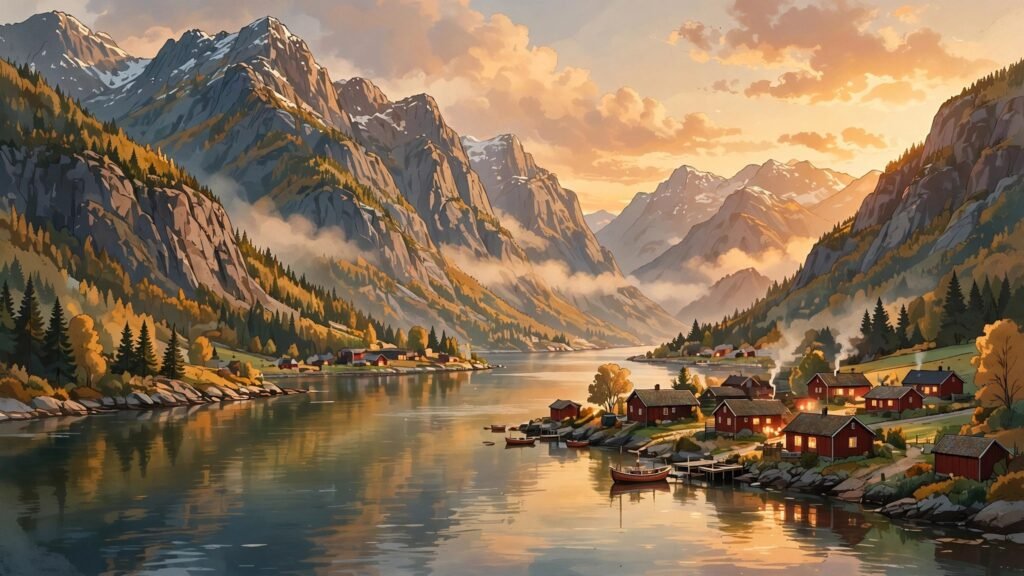
Norway is one of those rare countries that looks like it was designed by a dreamer. Fjords cut deep into the coastline like blue veins, mountains rise straight out of the sea, and wooden villages cling to hillsides that seem too steep to hold them. It is a place where you can watch the northern lights dance above a fishing village one night and hike to a cliff edge hanging 600 metres above a fjord the next morning.
What makes Norway so addictive as a destination is not any single sight. It is the scale of everything. The fjords are longer, the mountains taller, the light stranger and the silence deeper than almost anywhere else in Europe. Even the cities feel calm. Oslo and Bergen move at a human pace, and the moment you step outside them, the landscape takes over completely.
This guide brings together the places that first-time visitors should not miss, from the capital’s museums and waterfront to the far north’s Arctic islands. Each stop earns its place for a different reason — history, scenery, food, adventure or pure wonder — and together they show why Norway stays with travellers long after they have gone home, much like the best stories stay with readers long after the last page.
Key takeaways
- Norway’s fjords are its signature sight — Geirangerfjord and the Sognefjord are the most spectacular, and both are easy to reach by boat or road.
- The northern lights are best seen from Tromso and the Lofoten Islands between late September and early April, when the nights are long and dark.
- Bergen and Oslo are compact, walkable cities that pair world-class museums with harbours, markets and cafe culture.
- The Flam railway is one of the most beautiful train journeys in the world, dropping from the mountains to the fjord in under an hour.
- Summer brings the midnight sun and the best hiking, while winter brings snow, silence and the aurora — choose your season to match the trip you want.
1. Oslo — the calm capital
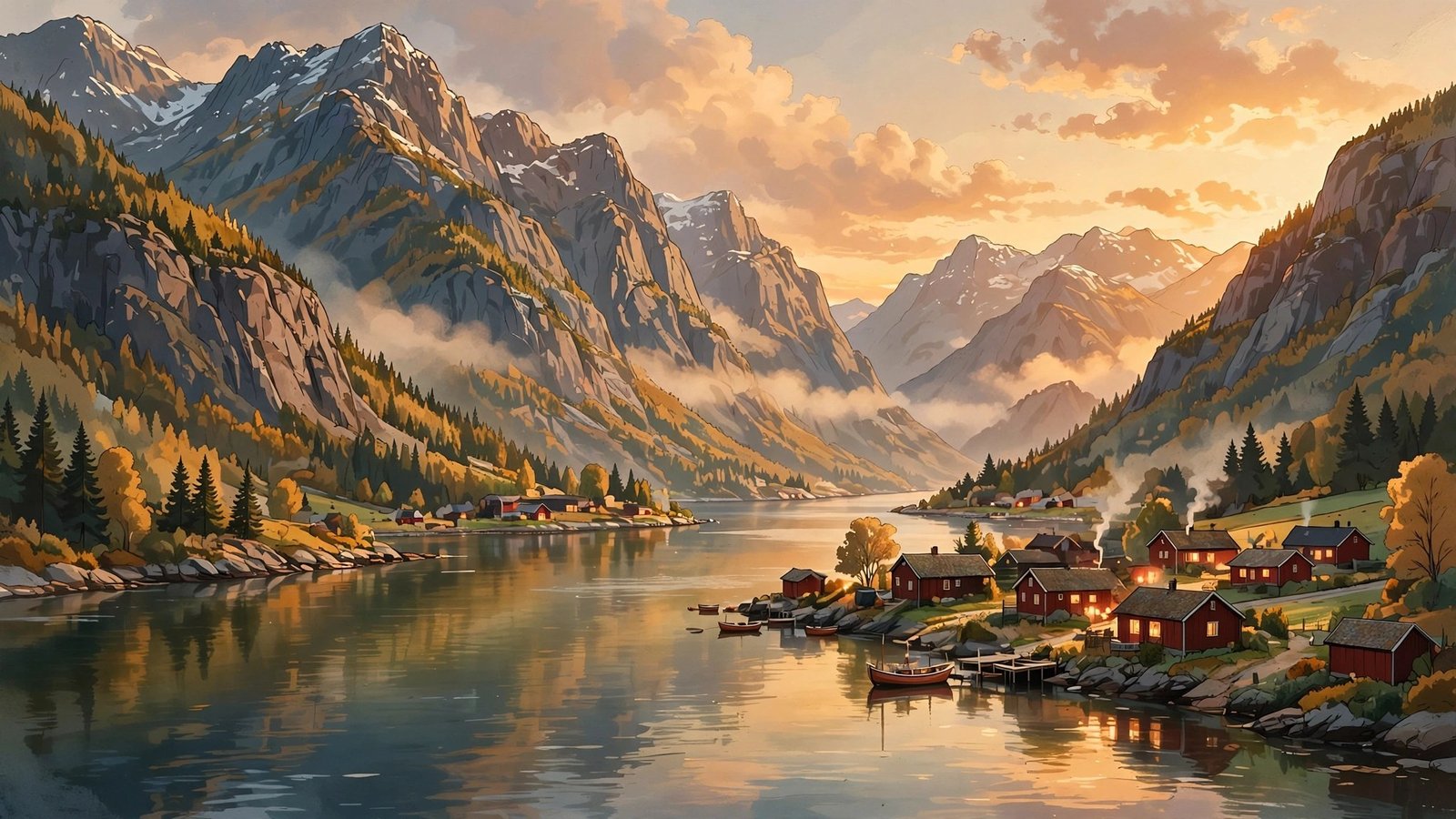
Oslo is the easiest place to start a Norway trip, and it sets the tone for the whole country. It is a capital city that refuses to hurry. The waterfront promenade stretches for kilometres, the museums are world-class, and the forests begin almost where the trams stop. Nothing here feels crowded or rushed.
Begin at the Oslo Opera House, a building of white marble and glass that rises out of the harbour like an iceberg. You can walk up its sloping roof for one of the best free views in the city. From there, stroll along the waterfront to Aker Brygge, the old shipyard turned restaurant quarter, where outdoor tables fill up the moment the sun appears.
The museums are worth a full day. The National Museum holds Munch’s The Scream, the Viking Ship Museum’s treasures tell the story of Norway’s seafaring past, and the Fram Museum lets you walk the decks of the wooden ship that carried explorers to both poles. Oslo rewards slow travel — linger, sit by the water, and let the city introduce itself.
2. Bergen — the gateway to the fjords
Bergen is the city most travellers fall in love with first. It rains here often, but nobody minds, because the rain makes the colours richer: the red, yellow and white wooden houses of Bryggen, the old Hanseatic wharf, look like a painting against the grey-green mountains. Bryggen is a UNESCO World Heritage site and the heart of the city.
Take the Floibanen funicular up Mount Floyen for the classic view over the harbour, the rooftops and the fjord beyond. At the top there are walking trails, a cafe and, on clear days, a panorama that explains why Bergen calls itself the gateway to the fjords. The fish market below is the place to try salmon, shrimp sandwiches and fish soup.
Bergen is also the starting point for the great fjord journeys. Boats leave daily for the Sognefjord and the Hardangerfjord, and the Bergen Railway across the mountains to Oslo is itself one of Europe’s great train rides. Stay at least two nights — Bergen deserves unhurried mornings.
3. Geirangerfjord — the fjord of waterfalls
If you see only one fjord, make it Geirangerfjord. This UNESCO-listed inlet is the postcard image of Norway: sheer green cliffs, farms perched on ledges that look impossible, and waterfalls with names like the Seven Sisters and the Suitor pouring straight into deep blue water. The village of Geiranger at the fjord’s head is tiny, and that is part of its charm.
The best way to see it is from the water. Sightseeing boats run from Geiranger village and from Hellesylt, passing so close to the waterfalls you can feel the spray. Kayaking is another option for the adventurous, and the quiet of a kayak on still fjord water is something you never forget.
Drive the Eagle Road above the fjord for the viewpoint at Ornesvingen, where the whole sweep of water and cliff opens below you. The best time to visit is June to August, when the roads are open, the waterfalls are full, and the days stretch long into the evening.
4. Sognefjord — the king of the fjords
The Sognefjord is the longest and deepest fjord in Norway — 204 kilometres long and more than 1,300 metres deep in places. It is so big that it contains whole worlds inside it: narrow arms like the Naeroyfjord, where cliffs rise a thousand metres straight from the water, and villages like Balestrand and Flam that sit quietly at the water’s edge.
The Naeroyfjord arm is the most dramatic stretch, and it is also a UNESCO site. Small boats thread between the cliffs, and the scale is humbling — you feel very small, in the best possible way. Flam, at the end of the Aurlandsfjord arm, is the base for the famous railway and for fjord cruises.
Stay overnight in one of the fjord villages rather than rushing through. The evenings are the reward: the light turns gold, the water goes still, and the fjord belongs to the few people who stayed.
5. Tromso — the capital of the northern lights
Tromso sits 350 kilometres inside the Arctic Circle, and it is the best base in Norway for seeing the northern lights. From late September to early April the nights are dark enough for the aurora, and Tromso’s location under the auroral oval gives it more clear-sky chances than almost anywhere else. Tour operators run nightly aurora chases, driving inland to wherever the sky is clearest.
But Tromso is far more than an aurora stop. It is a lively university city with a cathedral built of wood, the striking Arctic Cathedral, museums about polar exploration, and a cable car up Mount Storsteinen for views over the island city and the surrounding fjords. In summer the midnight sun keeps the sky bright at 2 a.m., and the hiking is superb.
Book aurora tours with small groups and flexible operators — the lights are a natural phenomenon, and the best guides chase the weather rather than sticking to a fixed spot. Give yourself at least three nights to raise your chances.
6. Lofoten Islands — the Arctic’s wild edge
The Lofoten Islands look like nowhere else on Earth. Jagged peaks rise straight from the sea, red fishing cabins called rorbuer sit on stilts over the water, and white-sand beaches face the Arctic Ocean. It is the Norway of photographers’ dreams, and it is far more accessible than it looks — a short flight from Bodo or a scenic ferry ride gets you there.
Drive the E10 road through the islands, stopping at fishing villages like Reine, Hamnoy and Nusfjord. Hike Reinebringen for the famous view over Reine, surf at Unstad beach — yes, Arctic surfing is a real thing — and eat stockfish, the dried cod that built Lofoten’s wealth for a thousand years.
Lofoten is beautiful in every season. Summer brings midnight sun and warm light that lasts for hours; winter brings the northern lights over snow-covered peaks and a silence that feels sacred. Book accommodation early — the islands are small and the best cabins go fast.
7. The Flam Railway — the world’s most beautiful train ride
The Flam Railway is only 20 kilometres long, but it is one of the most famous train journeys on the planet. In less than an hour it drops nearly 900 metres from the mountain station at Myrdal down to the fjord village of Flam, passing through tunnels, over bridges and past the Kjosfossen waterfall, where the train pauses so passengers can step out and feel the spray.
The engineering is extraordinary — the line was built by hand over twenty years, with tunnels dug through solid rock — but the scenery is the real show. Valleys, farms, rivers and cliffs unfold outside the window in a sequence that feels staged, except that it is all real.
Combine the railway with a fjord cruise for the classic Norway in a Nutshell route: train from Bergen or Oslo, the Flam Railway down to the fjord, a boat through the Naeroyfjord, and a bus over the mountains. It is touristy, and it is worth every minute.
8. Stavanger and Preikestolen — the cliff that stops time
Stavanger is a white-painted old town of wooden houses, a lively harbour and some of Norway’s best restaurants. It is a pleasant city in its own right, but most visitors come for what lies just outside it: Preikestolen, the Pulpit Rock, a flat-topped cliff that juts 604 metres above the Lysefjord.
The hike to Preikestolen is about four hours return, moderately challenging, and one of the most rewarding walks in Europe. The final approach opens suddenly onto the cliff edge, and the view down the fjord is so vertiginous that even confident walkers sit down at the edge rather than standing. Go early in the morning to beat the crowds.
While you are in the area, take a boat into the Lysefjord itself. From the water, Preikestolen looks even more improbable — a square table of rock hanging above the fjord — and the fjord’s narrow, dark walls are among the most dramatic in Norway.
9. Alesund — the art nouveau town
Alesund is the prettiest town in Norway, and it owes its looks to a disaster. A fire in 1904 destroyed the wooden town, and it was rebuilt in stone in the art nouveau style of the day — turrets, towers, ornate facades and carved details on every street. Walking through Alesund feels like walking through a storybook.
Climb the 418 steps to the Aksla viewpoint for the classic panorama: the town, the harbour and the islands spread out below, with the Sunnmore Alps rising behind. The town is also the gateway to the Geirangerfjord and to the islands of the west coast.
Alesund is smaller and quieter than Bergen, which is exactly its appeal. Stay a night, wander the streets without a plan, and eat seafood in one of the harbourside restaurants. It is the Norway that guidebooks describe and travellers rarely expect to find so intact.
10. The Atlantic Road and the coast — Norway’s wild edge
The Atlantic Road is an eight-kilometre stretch of highway that hops across small islands on bridges and causeways, with the open ocean on both sides. On a calm day it is beautiful; on a stormy day it is thrilling, as waves crash over the road and the wind shakes the car. It was voted Norway’s construction of the century, and driving it feels like a small adventure in itself.
The coast around it — the towns of Kristiansund and Molde, the fishing villages, the island of Averoy — shows a different Norway from the fjords: open, windswept and maritime. The fishing culture here is older than the country itself, and the seafood is the freshest you will eat anywhere.
Drive the Atlantic Road as part of a coastal road trip rather than a detour. Pair it with Alesund and the fjords for a west-coast journey that shows Norway’s full range, from sheltered fjord water to the raw Atlantic.
11. Best places at a glance
| Place | Best for | Best time to go | Don’t miss |
|---|---|---|---|
| Oslo | Culture and museums | May to September | Opera House roof, Fram Museum |
| Bergen | Fjords and old town | May to September | Bryggen, Mount Floyen |
| Geirangerfjord | Fjord scenery | June to August | Boat trip past the Seven Sisters |
| Sognefjord | Scale and depth | June to September | Naeroyfjord boat cruise |
| Tromso | Northern lights | October to March | Aurora chase, Arctic Cathedral |
| Lofoten Islands | Arctic beauty | June to August; February to March | Reine, Reinebringen hike |
| Flam Railway | Scenic train ride | May to September | Kjosfossen waterfall stop |
| Preikestolen | Hiking and views | May to October | Sunrise hike to the cliff edge |
| Alesund | Architecture | May to September | Aksla viewpoint at sunset |
| Atlantic Road | Coastal driving | May to September | Storm watching in autumn |
12. How to plan your Norway trip
Norway rewards planning, but it does not demand a rigid itinerary. The country is long — more than 1,700 kilometres from south to north — so choose a region rather than trying to see everything. A first trip usually means the south and west: Oslo, Bergen and the fjords, with the Flam Railway tying them together. A second trip can take you north to Tromso and Lofoten. Planning a big trip is a lot like building wealth in your twenties — start early, set a budget, and let time do the work.
Transport is part of the experience. Trains, fjord boats and coastal ferries are scenic in themselves, and the Hurtigruten coastal voyage from Bergen to Kirkenes is one of the world’s great journeys. Renting a car gives freedom in the fjords and the north, but book ferries and accommodation well ahead in summer. Some travellers now use AI tools to research routes, compare prices and plan their days — a handy way to save time before you go.
Budget honestly: Norway is expensive, especially for food, drink and hotels. Self-catering cabins, supermarket picnics and the excellent tap water keep costs down without spoiling the trip. The scenery, the light and the silence are free — and they are the best part.
Checklist: planning your Norway trip
- Choose your season first: summer for hiking and midnight sun, winter for northern lights and snow.
- Book fjord cruises, the Flam Railway and Lofoten cabins early — the best options sell out months ahead.
- Pack layers and waterproofs, even in summer; Norwegian weather changes fast, especially in the mountains.
- Download offline maps and timetables, since mobile signal fades in the fjords and the far north.
- Budget for food and drink, and plan supermarket stops and self-catering nights to keep costs down.
- Give the northern lights at least three nights in Tromso or Lofoten — one night is rarely enough.
Frequently asked questions
When is the best time to visit Norway?
It depends on what you want. June to August is best for hiking, fjord cruises and the midnight sun, with long days and mild weather. October to March is best for the northern lights, with dark skies in Tromso and Lofoten. May and September are quieter shoulder months with good light and fewer crowds.
How many days do I need in Norway?
Seven days is enough for Oslo, Bergen and the fjords, including the Flam Railway. Ten to fourteen days lets you add Tromso or Lofoten and travel at a relaxed pace. Norway is a big country, so resist the urge to cram too much into one trip.
Is Norway expensive to visit?
Yes, Norway is one of Europe’s most expensive countries, especially for eating out, alcohol and hotels. You can keep costs down with self-catering accommodation, supermarket food, tap water and free outdoor activities like hiking, which cost nothing at all.
Can I see the northern lights in Norway?
Yes. Tromso and the Lofoten Islands, inside the Arctic Circle, are among the best places on Earth to see the aurora borealis, from late September to early April. You need dark skies, clear weather and a bit of luck, so allow at least three nights.
What is the best fjord to visit in Norway?
Geirangerfjord is the most beautiful and the most famous, with its waterfalls and steep cliffs. The Sognefjord is the longest and deepest, and its Naeroyfjord arm is the most dramatic. If you can only visit one, choose Geirangerfjord; if you have time, see both.
Do I need a car to travel around Norway?
Not necessarily. Trains, buses, fjord boats and coastal ferries connect the main sights, and the Norway in a Nutshell route works without a car. A car gives more freedom in the fjords and the Lofoten Islands, but book ferries and accommodation ahead in summer.
Bottom line
Norway is not a country you tick off a list. It is a country you slow down for. The fjords, the northern lights, the Arctic islands and the quiet cities each offer a different kind of wonder, and the best trips leave room for the unexpected — a waterfall you did not plan to see, a sunset that lasts for hours, a village that makes you want to stay. Start with Oslo and Bergen, add the fjords, and if you can, go north. Norway will do the rest.
Note: This article is a general travel guide to Norway, prepared by the Face Zem team. Prices, timetables and opening hours change with the seasons, so check the latest details before you travel.

Keep what speaks to you.
Leave room for your own perspective.