

Have you ever figured out how some of the world’s richest traditions came about?
The key to cultural heritage is the attachment to the past that forms us to this day. And believe me, such a heritage not only shapes our traditions but also drives significant economic success.
The preservation of cultural practices has brought significant economic benefits to communities and countries worldwide through tourism, entrepreneurship, and cultural festivals.
In this article, we are going to explore how cultural heritage continues to influence economies today, and how you can harness these opportunities to create wealth in the modern world.
Then, we shall see how the time-tested traditions can also be a key to future success!
Exploring Cultural Heritage That Built Some of the World’s Richest Traditions
Cultural heritage is a very important factor in shaping a society’s identity and economic success. The heritage of traditions, practices, and physical features has not only beautified the history of humankind but also provided a basis for some of the world’s most thriving economies.
Through the preservation and understanding of these traditions, communities can create wealth through tourism, local entrepreneurship, and cultural projects.
Later in this article, we will explore the contribution of cultural heritage to economic growth, its role in entrepreneurship, and what we can learn about contemporary wealth-building policies.
Cultural heritage is a source of economic potential that has not yet been tapped, and it is as deep as it is satisfying: vibrant cultural festivals and community-driven businesses that keep cultural traditions alive.
Defining Cultural Heritage
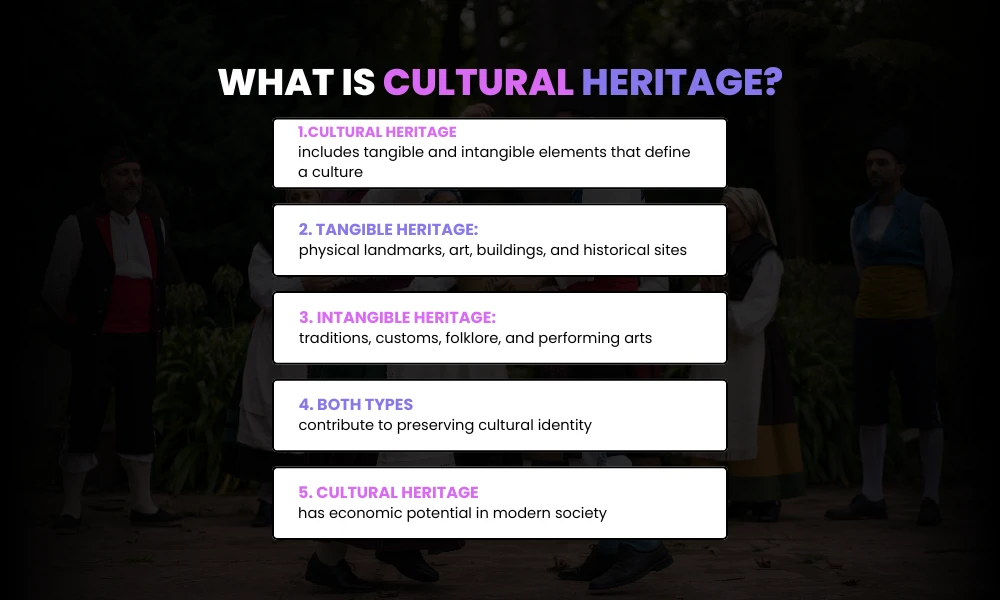
Cultural heritage is not only a repository of ancient artifacts or narratives transmitted between generations. It includes the physical and non-physical features that define a culture, such as physical landmarks, traditional dances, and oral histories. There are two main types of cultural heritage: tangible and intangible.
Tangible vs Intangible Heritage
Tangible heritage is that which is physically visible and palpable. This covers such aspects as monuments, art, buildings, and historical sites. These are the landmarks and objects available for people to explore, admire, and learn from.
Intangible heritage, on the other hand, comprises traditions, customs, and practices that cannot be touched physically but are equally essential to a given culture. These are rituals, folklore, languages, and performing arts.
For example, the Great Wall of China is tangible heritage, whereas the Japanese culture surrounding tea ceremonies is intangible heritage.
Cultural Significance and Preservation
The importance of cultural heritage is immense, not only as a reminder of the past but also as a legacy for future economic growth. By preserving both physical and intangible heritage, societies can maintain their identity and offer opportunities for development. Long-term benefits may be achieved through effective preservation, which includes:
- Higher tourism: Heritage sites attract tourists, boosting the local economy.
- Cultural pride: Preserving traditions enhances national and local pride.
- Educational opportunities: Cultural knowledge is transformed into an asset for the school and university.
When communities and governments focus on preserving cultural heritage, they lay the foundation for sustainable development and a strong economy.
Heritage and Economic Impact
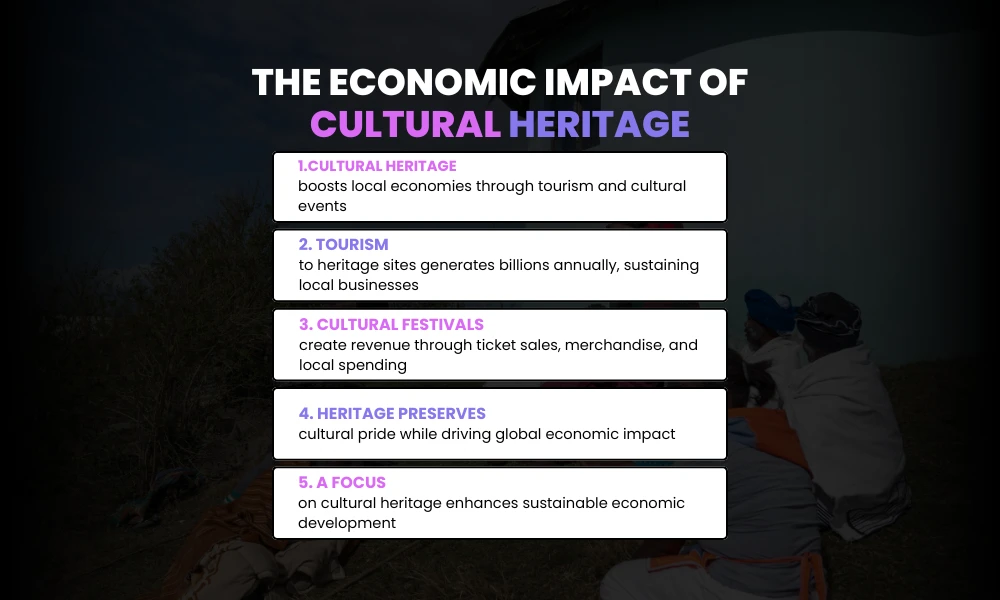
Not only an emotional or a social asset, cultural heritage is an economic driver. There is a direct financial influence of tourism and local cultural events on communities.
It has been argued that heritage has been an important source of economic growth, whether through the promotion of historical sites or the organization of cultural festivals.
Tourism and Local Economies
Tourism is one of the most important economic influences on cultural heritage. Cultural attractions like the Eiffel Tower, Colosseum in Paris, and Kyoto temples have visitors who come with large amounts of money in their pockets.
As a matter of fact, cultural tourism is among the rapidly developing branches of the world tourism industry, with an annual estimated income of billions of dollars.
Global Revenue from Cultural Heritage Tourism (2019)
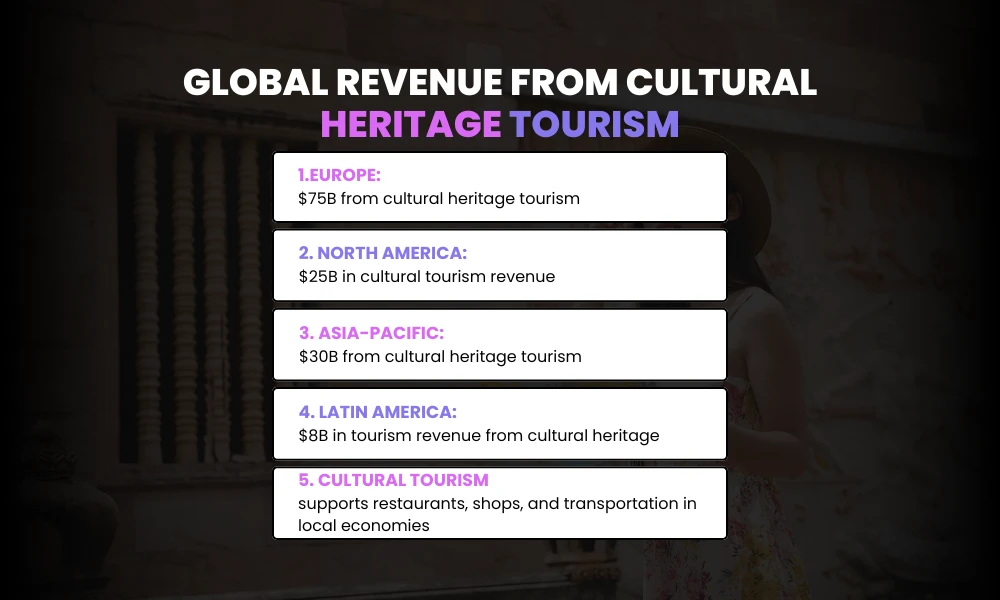
| Region | Revenue from Cultural Heritage Tourism (in billions) |
| Europe | $75B |
| North America | $25B |
| Asia-Pacific | $30B |
| Latin America | $8B |
In this chart, cultural tourism plays an important role in the world economy. Besides the direct financial gains, tourism also benefits local businesses, such as restaurants, shops, and transport facilities.
Cultural Festivals Generating Revenue
The other significant economic effect is the cultural festivals (local and international). Not only do these events showcase traditional arts, music, and customs, but they also attract thousands of people who generate significant income through ticket purchases, merchandise sales, and local spending.
Economic Impact of Major Cultural Festivals
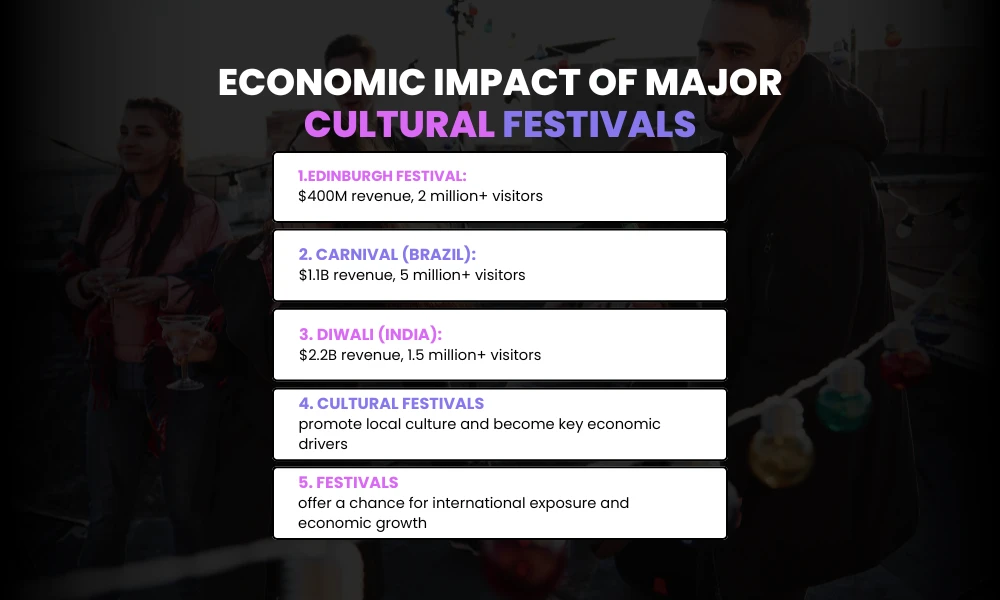
| Festival | Estimated Revenue (in millions) | Number of Visitors |
| Edinburgh Festival | $400M | 2 million+ |
| Carnival (Brazil) | $1.1B | 5 million+ |
| Diwali (India) | $2.2B | 1.5 million+ |
These figures indicate the tremendous potential of cultural festivals to serve as the engine of economic development, a source of employment, and a promoter of local culture on an international scale.
Success Stories from Cultural Patrons
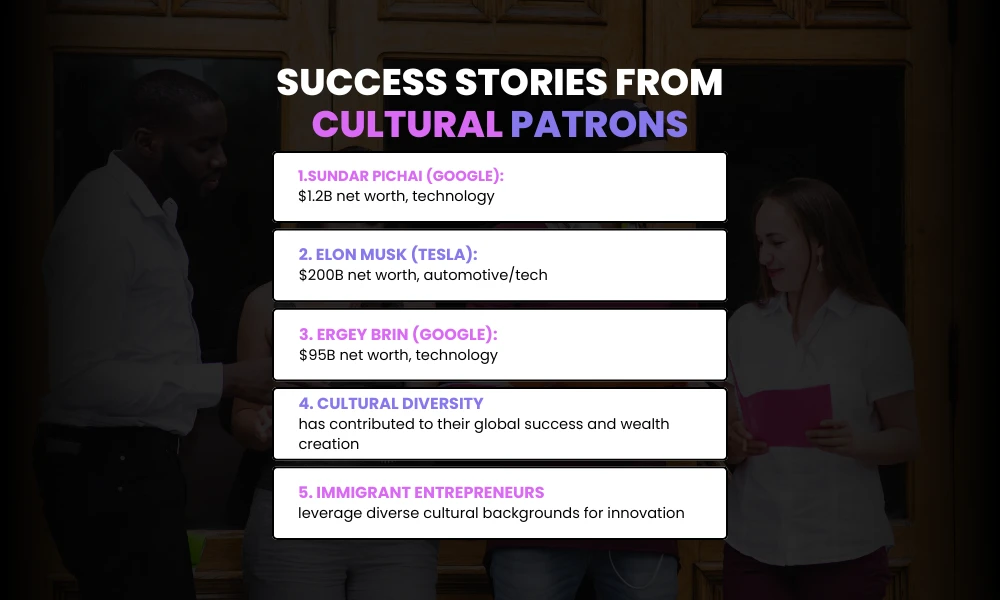
A number of individuals and organizations have transformed their cultural heritage into profitable businesses. They can make people rich by advocating the continuation of traditions and integrating them into modern business models, so that cultural practices do not become obsolete and are valued by people.
Individuals Preserving Culture and Creating Wealth
Consider the case of Sundar Pichai, the CEO of Google. Pichai is an Indian native, and his success story is tied to the diversity of his culture.
His story is an example of how diversity of opinions and cultural knowledge can make the world successful. Likewise, Elon Musk, with his varied background in South Africa and experience with different cultures, has been a part and parcel of his innovativeness, which has driven his successful business approach at Tesla and SpaceX.
Global Wealth Impact of Immigrant Entrepreneurs
| Entrepreneur | Estimated Net Worth (in billions) | Key Industry |
| Sundar Pichai (Google) | $1.2B | Technology |
| Elon Musk (Tesla) | $200B | Automotive/Tech |
| Sergey Brin (Google) | $95B | Technology |
These people demonstrate that cultural diversity is a treasure in the creation of world prosperity and invention.
Community-Based Cultural Entrepreneurship
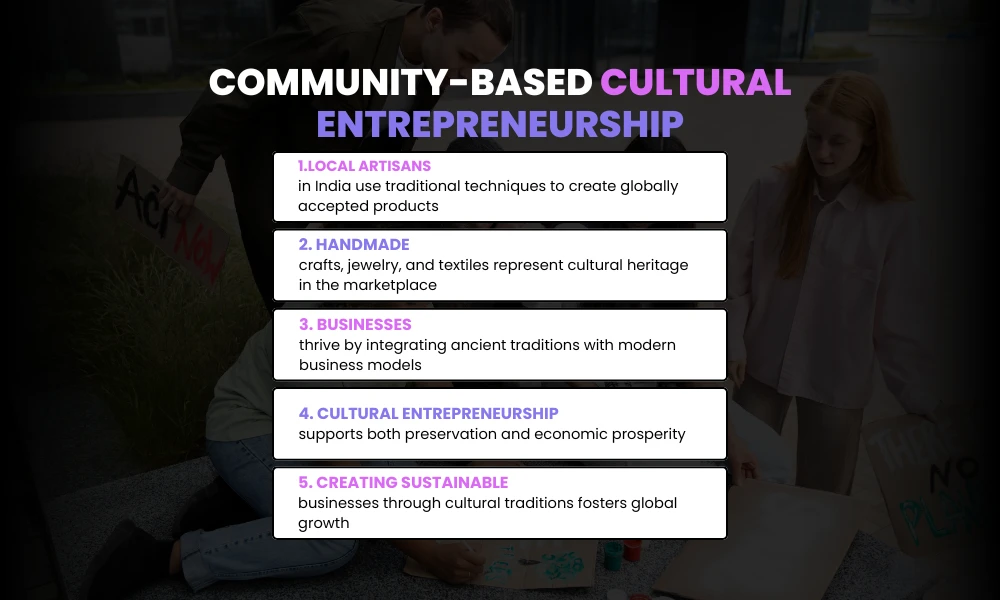
Societies worldwide have also leveraged their cultural heritage to build successful companies. Handmade crafts, jewelry, and textiles are sold in India by local artisans using traditional techniques.
It is based on an ancient tradition that has been centuries old and is receiving worldwide acceptance, as businesses are making money while maintaining their culture.
Lessons for Modern Wealth Building
The lessons learned from cultural heritage are not merely about preserving traditions, but they can have a direct bearing on current business and wealth-creation patterns.
Entrepreneurs can create sustainable, innovative, and profitable businesses by incorporating traditional practices in modern business models.
Applying Traditional Practices to Business
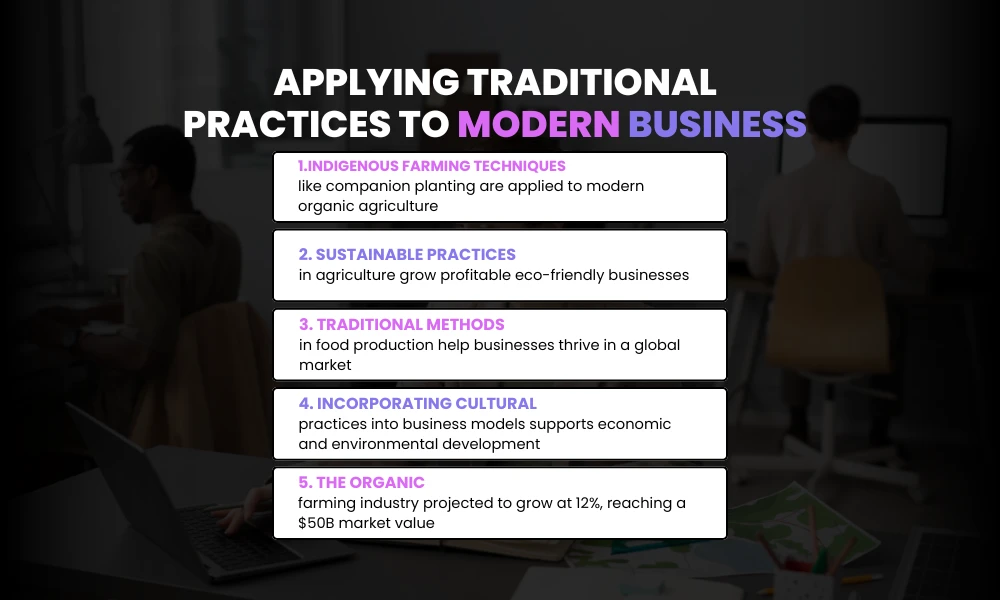
In modern farming, sustainable techniques like companion planting and crop rotation are receiving interest among indigenous farming practices.
The methods and practices that have been flowing through generations are now being integrated into a business that deals with organic agriculture and organic produce. This not only helps preserve cultural knowledge but also supports economic development in the fast-changing global market.
Growth of Sustainable Agriculture (2019–2025)
| Industry | Growth Rate (%) | Projected Market Value (Billions) |
| Organic Farming | 12% | $50B |
| Sustainable Food Brands | 15% | $28B |
The chart demonstrates how applying traditional practices to modern businesses can result in profitable, eco-friendly ventures.
Cultural Authenticity as a Brand Asset

Cultural authenticity is nowadays becoming one of the key assets in the world of consumers. The brands that position themselves with veritable cultural heritage and traditions are perceived as more dependable and familiar to the customers.
For example, food companies that advocate local cuisine and locally produced foods usually appeal more to customers, particularly in areas where consumers who value authenticity are found.
Conclusion
Heritage is so much more than a glimpse into the past; it offers significant potential for contemporary prosperity. Cultural heritage, whether in tourism, entrepreneurship, or festivals, provides a path to economic prosperity. Communities are not only preserving and promoting traditions, but they are also creating greater and richer futures.
Cultural heritage offers valuable insights into how culture can be leveraged in contemporary wealth-building, both by applying traditional knowledge and by embracing cultural authenticity as a major resource. In a changing world, the future of building wealth lies in the diversity of our histories and traditions.