
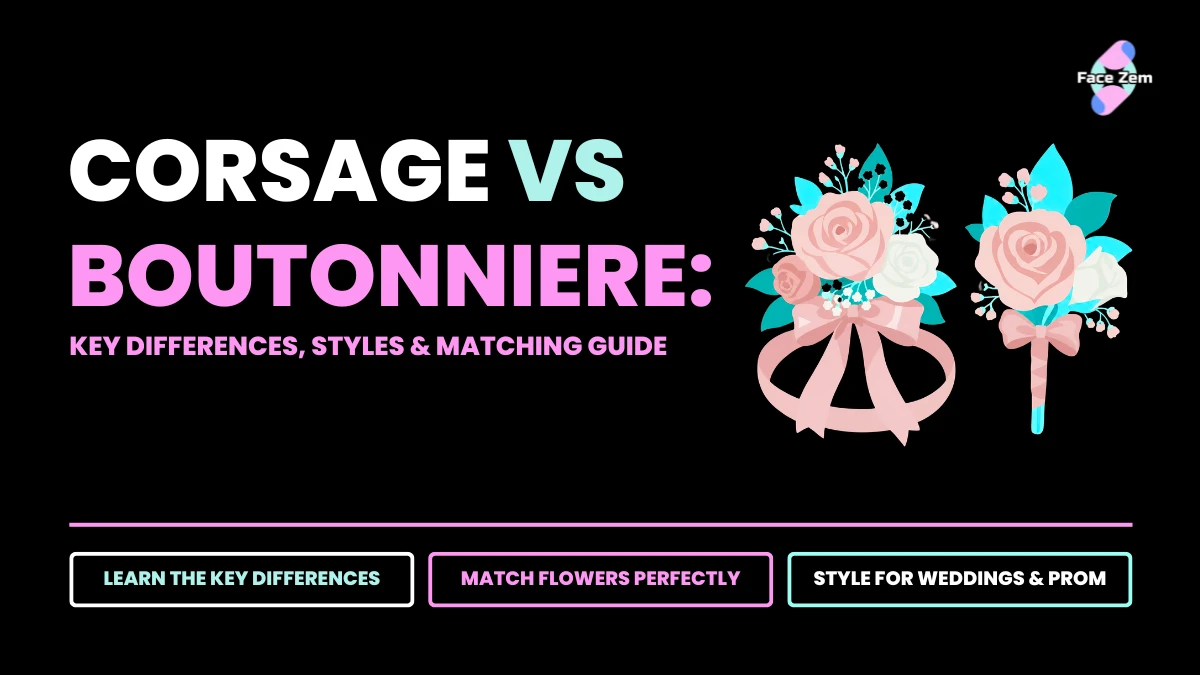
Key Takeaways
-
Distinct wearers: corsages for women, boutonnieres for men.
-
Placement varies: wrist or shoulder versus left lapel.
-
Size contrast: corsages feature multi-bloom clusters; boutonnieres use single stems.
-
Simple coordination: matching flower types and ribbons creates harmony.
Getting ready for a big wedding or high school prom? Planning your formal wear can get overwhelming pretty fast. You might ask yourself: what is the real difference between a corsage and boutonniere?
In short, a wedding corsage is a small arrangement of corsage flowers worn by women on the wrist or lapel. A prom boutonniere is a single stem or small cluster worn by men on their left suit lapel.
Knowing these basic floral rules helps you look polished and coordinated for any special event. At Facezem, we believe picking flowers should feel fun, simple, and totally stress-free. Let’s walk through everything you need to know together.
AI Overview
Understanding a corsage and boutonniere comes down to placement, size, and tradition. Women generally wear corsages on their wrist or dress chest, while men wear a corsage vs boutonniere option pinned strictly to their left lapel. Corsages feature multiple corsage flowers, ribbon, and greenery. Boutonnieres keep it simple with a focal stem. Facezem helps you match both pieces effortlessly for prom or weddings.
What Is a Corsage?

A corsage is a decorative arrangement of fresh or faux flowers worn by women.
You usually see them at formal events like high school proms, weddings, galas, and anniversary parties.
Historically, women pinned flowers to the center of their dress bodice.
Today, wrist bands are much more common because modern dress fabrics can tear under heavy pins.
A traditional wedding corsage brings texture, color, and charm to any formal outfit.
When selecting corsage flowers, florists usually combine smaller blossoms with decorative ribbons, metallic wires, and delicate foliage.
The goal of a corsage is to highlight the wearer’s gown while celebrating their special role in the event.
What Is a Boutonniere?
A boutonniere is a minimalist floral piece designed for men’s formal wear.
The word itself comes from the French term for buttonhole.
It traditionally sits directly over the wearer’s heart on the left lapel of a tuxedo or suit jacket.
A prom boutonniere usually highlights one primary bloom accompanied by a touch of greenery or subtle baby’s breath.
It adds a sharp accent without overpowering the suit.
While a wedding corsage leans toward intricate ribbonwork and multi-flower balance, a boutonniere stays sleek and grounded.
It creates a subtle visual connection between the wearer and their date or the broader wedding party theme.
15+ Key Differences Between a Corsage and Boutonniere
| Difference Aspect | Corsage | Boutonniere |
| Primary Wearer | Women, mothers, grandmothers, bridesmaids | Men, grooms, groomsmen, prom dates |
| Traditional Placement | Wrist, waist, shoulder, or dress bodice | Left lapel over the heart |
| Arrangement Size | Larger, fuller, and multi-layered | Small, compact, and minimalist |
| Flower Count | 3 to 5 small to medium blooms | 1 main focal bloom plus accent |
| Attachment Method | Elastic band, slap bracelet, magnetic clip | Straight pins, safety pins, or lapel magnet |
| Ribbon Usage | Prominent decorative bows and streamers | Minimal stem wrapping with ribbon or twine |
| Weight | Slightly heavier due to extra accessories | Very lightweight |
| Design Complexity | High visual detail with layered foliage | Simple focal structure |
| Visual Focal Point | Color pop matching a formal dress | Subtle accent matching a tie or pocket square |
| Base Material | Padded wrist band, wristlet, or fabric base | Taped stem wire with floral tape |
| Common Event Role | Honored female guests, prom dates | Honored male guests, groom, groomsmen |
| Flexibility | Highly customizable with jewels and lace | Streamlined design to lay flat on lapel |
| Fragility | Higher risk of snagging during dancing | Sturdy when properly pinned to thick suit fabric |
| Cost Range | Generally higher due to labor and extra blooms | Generally budget-friendly |
| Historical Roots | Worn on top of clothing to ward off spirits | Worn in suit buttonholes for good luck |
| Modern Trend | Magnet-backed brooch styles or cuff bands | Dried flowers, pocket square inserts |
Detailed Breakdown of Key Differences

1. Physical Size and Scale
When evaluating a corsage vs boutonniere, physical scale is the first thing you will notice.
A corsage is designed to be a prominent fashion accessory.
It spans several inches across to complement formal dresses.
A boutonniere remains tightly grouped so it does not pull down the lapel fabric.
2. Stem Construction Techniques
Florists build these two floral pieces using completely different wiring foundations.
For a wedding corsage, stems are often cut very short and taped onto a flexible mounting pad.
For a prom boutonniere, the single main stem is reinforced with floral wire and sealed tight with stem tape.
This ensures the boutonniere stays upright throughout the night.
3. Decorative Enhancements and Embellishments

The decorative elements added to each piece vary significantly.
Corsages frequently incorporate sparkling rhinestones, faux pearls, tulle, and satin bows.
Boutonnieres keep accents restrained to natural materials like hypericum berries, twine, or small sprigs of lavender.
This contrast preserves the distinct look of each accessory.
Popular Styles for Corsages and Boutonnieres
Classic Rose Designs
Roses remain the undisputed king of formal floral arrangements based on available data.
A red or white rose wedding corsage offers timeless beauty that matches almost any theme.
Pairing a single white rose for a prom boutonniere keeps the look crisp, clean, and elegant.
Spray roses are particularly popular for wrist designs because their smaller heads pack plenty of color without adding excessive bulk.
Modern Wildflower and BoHo Styles

Bohemian themes rely heavily on greenery like eucalyptus, pampas grass, and dried lavender.
These styles feature textured corsage flowers like ranunculus or spray roses.
They work great for outdoor barn weddings or relaxed spring proms.
Boho designs often swap formal satin ribbons for raw-edge velvet or natural linen strips.
Tropical and Exotic Arrangements
Orchids and calla lilies bring high fashion to formalwear.
An orchid wrist band holds up exceptionally well throughout a long night of dancing.
It stays fresh longer than delicate blooms without drooping under warm lighting.
Pairing a mini calla lily on a lapel creates a sleek, architectural line that works wonders on modern fitted tuxedos.
Matching Corsages and Boutonnieres for Prom
Planning for high school prom involves close attention to color harmony.
Your floral pieces should work together to create cohesive pictures.
Here are simple strategies for matching your prom boutonniere with a date’s dress and wrist arrangement:
-
Identify the Dominant Fabric Color
Start with the gown.
If the dress is navy blue, selecting white or blush corsage flowers with dark navy ribbon provides great contrast.

The boutonniere can then feature a matching blush rose wrapped in navy stem tape.
-
Coordinate with Suit Accessories
Tie the lapel flower directly into the suit accessories.
Aligning the stem wrap with the tie, bow tie, or pocket square creates a clean, intentional outfit.
This small detail pulls the couple’s entire aesthetic together effortlessly.
-
Incorporate Neutral Base Tones
When dress fabrics feature complex patterns or iridescent sequins, stick to neutral blooms.
White ranunculus, cream roses, or pale ivory orchids prevent visual clashing.
Neutral flowers look striking in photos regardless of background lighting.
Wedding Floral Traditions: Who Wears What?

Understanding wedding etiquette helps avoid confusion when ordering personal flowers.
Both families often wear formal florals to highlight their key roles on the big day.
The Wedding Party
The groom, groomsmen, ring bearers, and fathers of the couple typically wear boutonnieres.
The bride carries her main bouquet, while bridesmaids may wear a wedding corsage if they prefer hands-free comfort.
Fathers usually wear a stem style that matches the groom’s focal flower, but in a slightly smaller size.
Honored Guests and Family Members
Mothers, grandmothers, and female officiants generally receive special corsages.
Wrist arrangements are preferred by grandmothers because they are comfortable and easy to wear.
Using distinct corsage flowers for mothers helps them stand out as honored guests throughout the reception.
Essential Matching Tips for Couples

-
Match the suit accent: Pair the stem wrap or accent flower on the prom boutonniere directly to the suit tie or pocket square.
-
Coordinate dress colors: Match the main corsage flowers to the gown color, or pick a neutral shade like cream to avoid clashing.
-
Use unified foliage: Keep leaf types identical across both pieces, if the wrist arrangement uses silver dollar eucalyptus, the lapel piece should too.
-
Pick durable blooms: Select sturdy varieties like spray roses, carnations, or orchids that survive hours without water.
-
Check metal finishes: Align magnetic clips, wristbands, and jewelry wires so gold matches gold and silver matches silver.
How to Wear and Attach Them Correctly
Securing a Wrist Corsage
Slide the elastic band or cuff over your non-dominant hand.
This keeps the blooms safe while you eat, write, or greet people.
Make sure the flower heads face outward toward your elbow for better visible balance.
If your dress features delicate lace sleeves, consider a magnetic pin-on style instead to prevent snagging.
Pinning a Boutonniere

Position the stem on the left suit lapel, just below the collar notch.
Working from behind the lapel, push the straight pin through the fabric, straight through the thickest part of the stem, and back out through the fabric.
The pin head should stay hidden behind the lapel fabric for a clean front view.
If the jacket fabric is thin, using two cross-pinned straight pins keeps the flower completely steady.
Choosing Real vs. Artificial Floral Arrangements
Deciding between fresh blooms and artificial alternatives depends on your budget, timeline, and personal keepsake goals.
At Facezem, we evaluate both options so you can select what fits your event best.
Fresh Flowers: Natural Beauty and Scent
Fresh floral arrangements offer unmatched texture, natural scent, and delicate elegance.
They feel traditional and bring an authentic touch to wedding photos.
However, fresh flowers require strict temperature control and careful handling so they do not wilt before the event ends.
Silk and Real-Touch Faux Options

Modern artificial flowers made from premium silk or latex look virtually identical to real blooms.
They allow you to order months in advance without worrying about refrigeration or wilting.
Faux arrangements also double as long-lasting keepsakes that you can preserve in shadow boxes for years to come.
DIY Guide: Crafting Your Own Corsage and Boutonniere
Creating your own formal florals is a rewarding project that can save money.
With a few basic floral supplies, you can assemble custom pieces at home.
Required Supplies
Gather floral tape, 22-gauge floral wire, ribbon, sharp floral shears, and wristlet bases.
Choose sturdy focal blooms like spray roses or carnations along with accent greenery like Italian ruscus.
Step-by-Step Boutonniere Assembly

-
Trim your main stem to roughly two inches in length.
-
Strip away low leaves and insert floral wire through the base of the flower head.
-
Place a small sprig of greenery behind the main flower.
-
Wrap the stems tightly with floral tape from top to bottom.
-
Finish by covering the taped stem with satin ribbon or twine.
Step-by-Step Corsage Assembly
-
Prepare three to four small bloom heads by wiring their bases.
-
Cluster the blooms together, placing the largest head in the center.
-
Layer accent greenery and small ribbon loops around the flower cluster.
-
Secure the entire grouping with floral tape.
-
Attach the finished bundle securely to a padded wristband using floral adhesive or wire clips.
Seasonal Flower Recommendations
Selecting seasonal blooms ensures maximum freshness and better value for your event budget.
Spring Events

Ranunculus, tulips, sweet peas, and hyacinths thrive in spring weather.
These soft pastels create stunning corsage flowers for April and May proms.
Summer Celebrations
Orchids, calla lilies, freesia, and spray roses handle summer heat effortlessly.
They maintain structural integrity during humid outdoor wedding receptions.
Autumn Gatherings
Dahlias, hypericum berries, mums, and dark red roses reflect rich fall colors.
Pairing deep burgundy blooms with gold ribbon accents delivers classic seasonal warmth.
Winter Formals

White anemones, dark foliage, silver dusty miller, and pinecone accents work wonderfully for winter galas.
They provide crisp contrast against dark formal tuxedos.
Helpful Buying and Preparation Tips
How early should you order your flowers?
In most cases, ordering 2 to 3 weeks before your big event gives your florist plenty of time to source fresh stems.
Pick up fresh florals the morning of the event or the evening before.
Store them inside a sealed plastic box in your home refrigerator, away from fresh fruit like apples, which release gases that cause petals to wilt.
At Facezem, we recommend misting real flowers lightly with cool water right before heading out the door.
If you want zero maintenance, high-quality silk or faux floral options offer a stress-free alternative that doubles as a permanent keepsake.
Budgeting for Event Florals
Planning your formal budget requires knowing typical cost ranges for personal arrangements.
Pricing varies based on flower rarity, florist expertise, and seasonal availability.
-
Standard Boutonnieres: Estimated between $15 and $30 for classic single-stem designs.
-
Premium Boutonnieres: Estimated between $30 and $45 for exotic orchids or custom magnetic mounts.
-
Standard Corsages: Estimated between $35 and $60 for traditional elastic wristlet styles.
-
Custom Keepsake Corsages: Estimated between $60 and $90+ for jeweled cuffs, luxury silk, or rare blooms.
Ordering your wedding corsage and prom boutonniere as a matching set often helps reduce overall floral expenses.
Conclusion
Understanding the differences between a corsage and boutonniere helps you plan your formal look with total confidence.
From choosing durable corsage flowers to matching your wedding corsage with a sharp prom boutonniere, simple coordination makes a big visual impact.
Pick hardy stems, store them safely, and enjoy your special event with style.
Frequently Asked Questions
Which side does a boutonniere go on?
A boutonniere always goes on the wearer’s left lapel, directly over the heart.
Who typically buys the corsage and boutonniere for prom?
Traditionally, dates buy floral pieces for each other, the guy buys the corsage and the girl buys the boutonniere.
Can a woman wear a boutonniere instead of a corsage?
Yes, women wearing suits or tuxedos often wear a boutonniere pinned securely to their left lapel.
How long do fresh corsage flowers last during an event?
Fresh stems generally last 6 to 8 hours when properly hydrated and kept out of extreme warmth.
How do you keep a wrist corsage from flipping over?
Ensure the wristband fits snugly and request a lightweight, wide-base wristlet from your florist.