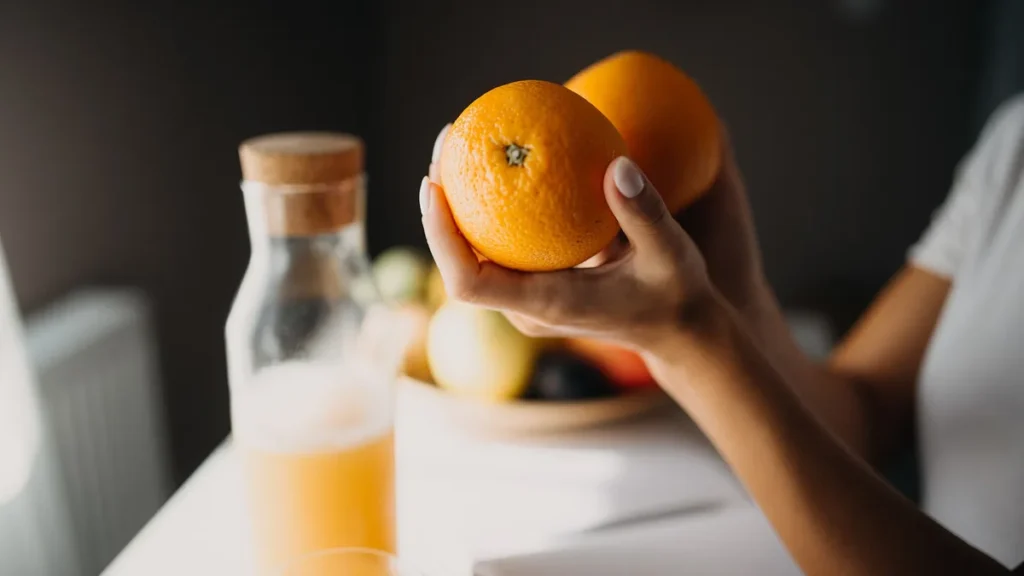
I stopped drinking juice a year ago, and I have not missed it once. Not the orange juice with breakfast, not the apple juice with lunch, and not the smoothie that promised to be healthy and cost $6 a glass. I stopped because the juice was not what I thought it was: a glass of orange juice has the sugar of four oranges and none of the fibre, and the juice I bought every week was costing me $40 a month for sugar water in a carton. I switched to water and real fruit instead — and a year later, I would not go back.
The sugar was hiding in plain sight
The first reason I stopped drinking juice was the sugar. A single glass of orange juice has about 22 grams of sugar — the same as a can of soda — and the juice I drank every morning was the sweetest thing I ate all day. I told myself it was healthy because it came from fruit, but the fruit was gone and the sugar was all that was left. The story of why I stopped using a blender makes the same point about the kitchen: the gadget that promises health is often the one that hides the sugar. I stopped drinking the sugar, and my mornings got better.
The cost was absurd
The second reason I stopped drinking juice was the cost. A carton of good juice costs $4 to $6, and a family that drinks it every day spends $100 to $150 a month on juice alone. That is $1,200 to $1,800 a year — for sugar water in a carton. I bought a water bottle and a bag of oranges instead, and the oranges cost a tenth of the juice. The best ways to save money on transport make the same point about small habits: the money you save on the small things is the money that adds up. I stopped buying the juice, and my grocery bill fell by $40 a month.

The habit was the problem
The third reason I stopped drinking juice was the habit. I drank juice because it was there — because breakfast came with a glass, because lunch came with a bottle, and because the fridge was always full of cartons. I never chose the juice; I just drank it. The story of why I stopped using a toaster is the same kind of habit: the thing you use every day without thinking, until the day you stop and realise you never needed it. I stopped drinking the juice, and the habit broke in a week.
What changed after a year
A year after I stopped drinking juice, three things have changed. The first is my energy: I no longer crash at 10 a.m., because I no longer start the day with a glass of sugar. The second is my money: I save about $40 a month, and the money goes to real fruit instead — the oranges I eat, not the oranges I drink. The third is my taste: real fruit tastes sweeter now, because my mouth is no longer used to the sugar in the carton. The juice I thought I needed was the juice I never needed at all.
The change that surprised me most was the simplest one: water. I drink water now — with lemon, with ice, with nothing at all — and the water does what the juice never did: it quenches my thirst without making me hungry an hour later. The juice made me thirsty and hungry at the same time, and the water just makes me feel fine. A year later, the glass of water is the habit, and the carton of juice is the thing I walk past in the shop without even looking at it.
The hardest part was the first week. The first morning without juice felt wrong — the glass was empty, the breakfast felt unfinished, and the habit kept reaching for the carton. By the second week, the habit was gone. By the third week, I had forgotten the juice existed. A year later, I cannot imagine going back: the sugar, the cost, and the habit are all gone, and the water and the fruit are all that is left. If you drink juice every day, try a week without it — the week will tell you everything the carton never did.
The bottom line
I stopped drinking juice because the sugar was hiding in plain sight, the cost was absurd, and the habit was the problem — and a year later, I have more energy, more money, and a better taste for real fruit. The juice I thought I needed was the juice I never needed at all. If you drink juice every day, try a week of water and real fruit instead. The week will be hard, the second week will be easy, and by the third week you will have forgotten the juice existed. That is what happened to me, and it is the best decision I made in the kitchen all year.
Frequently asked questions
Is juice really as bad as soda?
A glass of orange juice has about the same sugar as a can of soda — around 22 grams — and none of the fibre that makes fruit healthy. The juice is not poison, but it is not the health food the carton promises either. Water and real fruit are better in every way.
What did you drink instead of juice?
Water, mostly — with lemon, with ice, or with nothing at all. I also eat real fruit: an orange, an apple, or a handful of berries, and the fruit fills me up in a way the juice never did. The fruit costs less, and it actually keeps me full.
How much money did you save by stopping juice?
About $40 a month, or $480 a year — the price of a carton a day. The money goes to real fruit now, and the fruit costs a tenth of the juice. The saving is small, but the habit is the thing that matters.
Did you miss juice at all?
For about a week, yes — the habit was the hard part, not the taste. By the second week, the habit was gone, and by the third week I had forgotten the juice existed. A year later, I would not go back.

Keep what speaks to you.
Leave room for your own perspective.