
Starting a business as a teenager is one of the best ways to learn how money works. You have almost no expenses, your parents cover the bills, and every dollar you earn is close to pure profit. A failed idea at sixteen costs almost nothing, while the skills you pick up stay with you for life. This guide covers the best business ideas for teens in 2026, from local services to online shops, plus the age rules and money basics most lists skip.
The best teen business is simple, cheap to start, and fits around school. It uses a skill you already have, serves people nearby or online, and can start earning within a week or two. You need one idea, one or two customers, and a simple price.
Key Takeaways
- The best teen businesses start with almost no money and fit around school hours.
- Most platforms require an adult account holder. Fiverr allows sellers from 13 through a parent’s account, while Upwork, PayPal, Stripe, and Etsy generally require 18.
- Local services earn fastest. Online ideas take longer to grow but can scale further.
- Keep a parent or guardian involved from the start, and check local rules before you begin.
- Track every dollar in and out, and set a price before you take your first order.
Why Starting Young Works
Teenagers have three advantages that adults would pay for. The first is low costs: you do not pay rent or buy groceries, so a small income goes a long way. The second is time: evenings, weekends, and school holidays add up to hundreds of hours a year. The third is a low cost of failure. If a business flops at sixteen, nobody cares, and you still learned more than a term of business classes could teach.
The Age Rules to Know First
Before you pick an idea, sort out the age rules, because they decide which tools you can use. In most places, minors cannot sign binding contracts or form a business entity on their own. A sole proprietorship run informally, or a parent-formed business with the teen involved, is the realistic path for most under-18 entrepreneurs. Talk to a parent before you start, and check your local laws and school rules.
Platform rules vary, so check the current terms before you sign up. Fiverr allows sellers from 13, but only through an account owned and verified by a parent or legal guardian. Upwork requires users to be 18. PayPal, Stripe, Venmo, and Cash App all require account holders to be 18. Etsy requires shop owners to be 18, though teens aged 13 to 17 can sell through a parent’s account. YouTube monetisation and Google AdSense also generally require an adult to handle payments. Never lie about your age.
Money rules matter too. In the United States, casual work such as cutting a neighbour’s lawn or babysitting is generally not covered by federal child labour rules, but states have their own requirements, and income may need to be reported for tax once it passes a threshold. Keep records from the start and ask a parent to help with the tax side.
Local Service Ideas: Fastest to First Sale
Local services are the fastest way to earn because you are selling to people you can reach on foot. No website, no shipping, no waiting for an algorithm. Start with neighbours, family friends, and your school community.
Tutoring Younger Students
If you are good at a subject, you are already qualified to tutor someone one or two years behind you. Maths, science, and exam preparation are the most in demand. Many teen tutors charge roughly 15 to 30 dollars an hour, with higher rates for exam subjects. Prepare a simple plan for each session, and ask for a short review after a few sessions. Happy parents recommend tutors to other parents, and that is how a tutoring business grows.
Pet Sitting and Dog Walking
Pet owners need reliable help every day, and they pay for it. Dog walking and pet sitting fit before and after school, and regular clients mean steady income. Start with neighbours’ pets, learn each animal’s routine, and always ask about allergies, medication, and emergency contacts before the first visit. Many teen dog walkers charge around 10 to 25 dollars per walk.
Lawn Care and Yard Work
Lawn mowing, leaf clearing, and garden tidying are classic teen businesses for a reason: instant pay, repeat customers, and no skill barrier. Go door to door with a clear price, and offer a regular weekly slot. Many teens charge roughly 15 to 30 dollars per lawn. If you do not own a mower, ask to use the customer’s. Reliability matters more than speed.
Babysitting
Babysitting still works in 2026. Parents want someone they trust, and a teenager from the neighbourhood with a first aid certificate is an easy choice. Take a paediatric first aid course if you can, because it lets you charge premium rates. Typical rates run around 10 to 18 dollars an hour. Always meet the family first and agree the hours and pay in advance.
Car Washing and Detailing
A driveway car wash is a simple, visible business. Offer a basic wash for a set price, and a more thorough clean, interior included, for a higher one. Many teens charge around 15 dollars for a basic wash and 40 dollars or more for a full detail. Bring your own bucket, sponges, and cleaning products.
Online Business Ideas
Online ideas take longer to earn than local services, but they can reach far more customers and keep earning while you are in class. Most online teen businesses need weeks of steady effort before the first sale.
Print-on-Demand Merch
Print-on-demand lets you sell t-shirts, hoodies, phone cases, and mugs with your own designs, without holding any stock. You upload a design, a customer orders, and the printer ships it. A parent or guardian will need to hold the account and handle payments. Start with a narrow niche you care about, such as a hobby or a sport, and design for that audience specifically.
Sell Digital Products
Digital products are close to pure profit. Study planners, revision trackers, phone wallpapers, and printable stickers are all things you can make once and sell many times. Tools such as Canva make design accessible, and marketplaces such as Etsy and Gumroad handle the selling. Remember the age rule: an Etsy shop needs an adult account holder. Price low to start, around 5 to 20 dollars.
Resell Thrifted Items
Reselling is a business you can start with your own wardrobe. Find vintage clothes, trainers, books, or games at charity shops and car boot sales, photograph them well, and list them on resale apps. The skill is spotting what other people want and pricing it fairly. Start with things you already own, reinvest the profit into new stock, and keep a record of what you paid and what you sold it for.
Content Creation
A YouTube channel, a TikTok account, or a short-form video series can become a business, but it is a slow one. Pick one narrow niche, such as study tips, a sport, gaming, or finance for teens, and post on a regular schedule. Monetisation usually requires an adult to handle payments, and the income comes later, from advertising or sponsorships. Treat content as a long game.
Freelance Design and Writing
If you can design in Canva or Figma, edit video, or write clearly, local small businesses will pay for it. Offer logo design, social media posts, or simple video edits, and start with businesses you already know. Many teen freelancers charge around 25 to 100 dollars per project to start. Fiverr is usable from 13 through a parent’s account, but Upwork requires 18.
Social Media Management for Local Businesses
Small businesses know they should post on social media, but most owners have no time. A teenager who understands the platforms can run a local shop’s account for a monthly fee: a few posts a week, replying to comments, and keeping the profile tidy. Start with one business, agree on a simple monthly price, and deliver consistently.
Creative and Handmade Ideas
If you like making things, a handmade business fits naturally. Custom stickers, friendship bracelets, candles, baked goods, and art prints all sell well at school markets, local fairs, and online. Keep costs low and prices simple. Work out the cost of materials for each item, add your time, and set a price that leaves a real profit. Sell at a market stall first, where you can talk to customers and learn what they actually want.
How to Launch in Five Steps
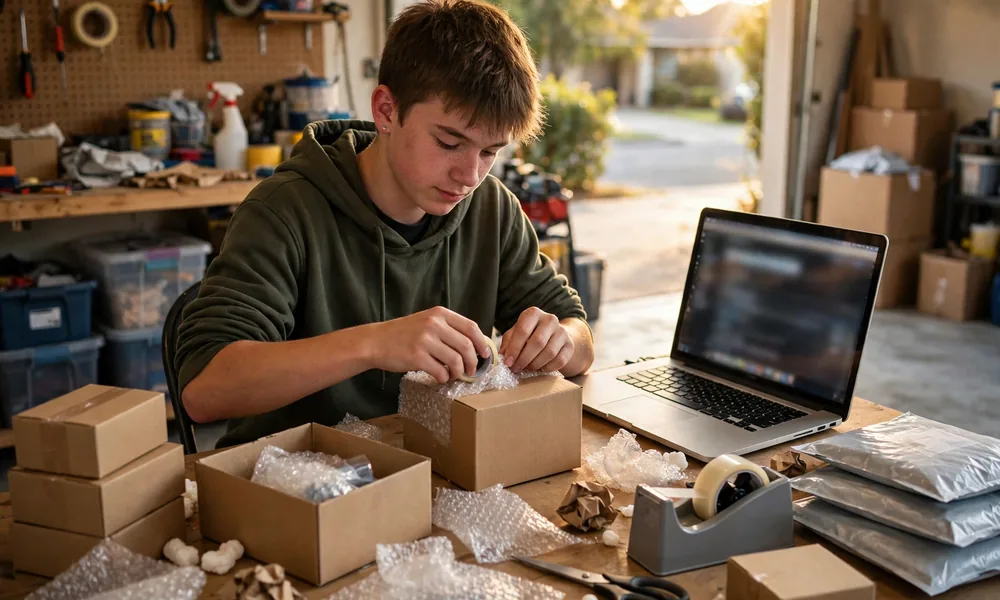
First, pick one idea, not five. It should use a skill you already have, cost less than 100 dollars to start, and fit around school. Second, find your first customer. Tell friends, family, and neighbours what you are offering. Third, set a simple price. Look at what others charge locally, pick a number, and stick to it. Fourth, deliver well: do the job properly and on time. Fifth, ask for a review or a referral. One happy customer who tells two friends is the cheapest marketing there is.
Money Basics for Teen Founders
Money basics are what separate a business from a hobby. Track every dollar in and out in a notebook or a simple spreadsheet. Separate your business money from your spending money. Save a share of everything you earn.
Pricing is the part most teens get wrong. A price that is too low means you work hard for nothing. A price that is too high means no orders. The right price covers your costs, pays you for your time, and still feels fair to the buyer. Work out your costs first, add a reasonable amount for your time, and compare the result with what others charge. The best online courses for making money in 2026 include beginner-friendly guides to pricing and running a small business. The best remote jobs for beginners in 2026 and the best freelance jobs in 2026 show how teen founder skills turn into paid work later.
Mistakes to Avoid
The first mistake is spending money before earning any. Do not buy equipment, stock, or advertising until you have your first paying customer. The second is copying someone else’s idea without understanding why it works. The third is ignoring school. A business that hurts your grades is a bad trade. The fourth is working without a parent in the loop. Adults can help with accounts, contracts, taxes, and safety.
Frequently Asked Questions
What business can I start at 15 years old?
Tutoring, pet sitting, lawn care, babysitting, crafts, reselling, and content creation are all realistic at 15. Platforms that require an adult, such as Upwork and PayPal, will need a parent’s help, and Fiverr is usable through a parent’s account.
How much money do I need to start a business as a teen?
Most of the ideas in this guide cost under 100 dollars to start, and many cost nothing at all. Local services need little more than time and basic supplies.
Can a teenager legally run a business?
Yes, with limits. Minors generally cannot sign binding contracts or form a business entity alone, and most platforms and payment processors require an adult account holder. A parent or guardian should be involved from the start.
How do teens get paid if payment apps require 18?
Cash works for local services. For online sales, a parent or guardian holds the payment account and handles payouts, while the teen runs the creative and customer side. Agree with your parent in advance how the money is split and saved.
How can I make 1,000 dollars a month as a teen?
It usually takes a steady local service, such as 10 to 15 hours a week of tutoring or babysitting at typical rates, or a growing online channel with consistent weekly effort over a few months. The maths is simple: a clear price, regular customers, and steady work.
The Bottom Line
The best business ideas for teens in 2026 are the simple ones: a local service that earns this week, or an online idea that grows over months. Start with a skill you already have, keep costs under 100 dollars, get a parent involved, and set a price before your first order. Do one thing well, ask your customers what they want, and keep going for at least a month. The money matters, but the real prize is the skill.

Keep what speaks to you.
Leave room for your own perspective.