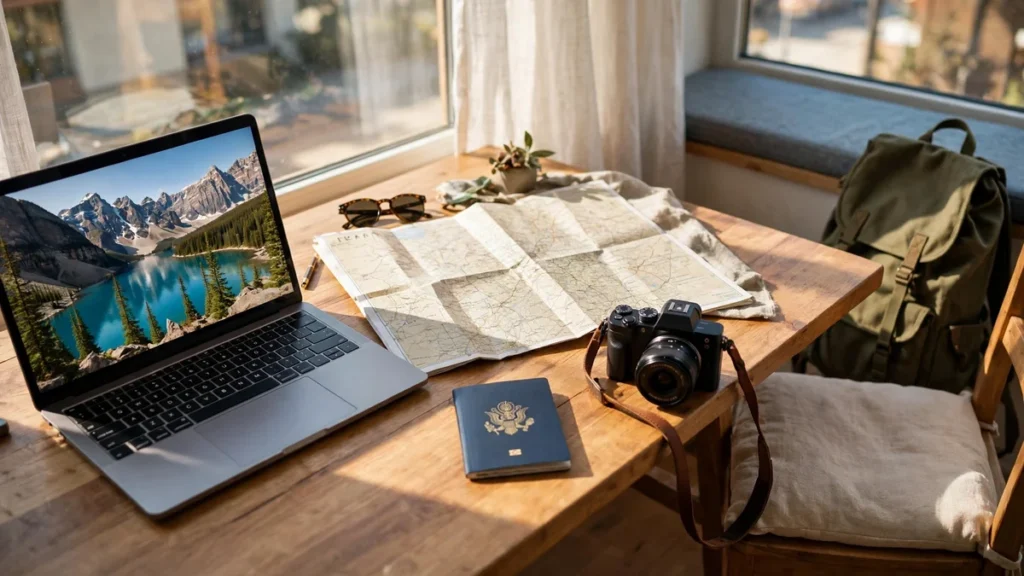
A travel blog is a website where you share what you know about travelling: the places you have been, the trips you have planned, the mistakes you made, and the things you wish someone had told you before you went. It can be a personal diary, a practical guidebook, or a business, and many of the travel blogs you read every day started exactly this way, with one person, one trip, and a decision to write it down.
Starting one in 2026 is easier than it has ever been. The tools are cheap, the setup takes an afternoon, and you do not need to be a professional writer or photographer to begin. What you do need is a clear niche, a site you own, and the patience to publish regularly. This guide walks through every step, from choosing your angle to earning your first money.
Key Takeaways
- A focused niche beats a general travel blog. Pick one type of traveller or one kind of trip.
- Self-hosted WordPress is the standard choice for a serious travel blog, because you own the site, the content, and the income.
- You can start for under $100 a year: roughly $10 to $15 for a domain and $3 to $10 a month for hosting.
- Money usually takes time. Most travel blogs earn their first income after 6 to 12 months of consistent publishing.
- The main income streams are affiliate marketing, display advertising, sponsored content, digital products, and freelance work.
What Is a Travel Blog?
A travel blog is a website built around travel experiences and advice. Some blogs are destination guides for people planning a specific trip. Some are personal journals. Others are practical resources: how to travel on a budget, how to travel with children, how to hike a particular trail, or how to eat well in a particular city.
The blogs that last solve a real problem for a real reader. A person searching for how to spend three days in Lisbon on a budget does not want a diary entry about someone else’s holiday. They want a plan: where to stay, what it costs, what to skip, and what to book in advance. Your job is to answer the questions your reader is already asking, with detail only someone who has been there can give.
Step 1: Pick a Niche
The biggest mistake new travel bloggers make is trying to cover all of travel. That market is crowded, and a general blog competes with huge publishers. What works in 2026 is a focused niche: a specific angle that makes your blog the obvious choice for one type of traveller.
Good niches are specific enough to stand out and broad enough to write about for years. Budget travel, luxury travel, solo travel, family travel, adventure travel, food travel, and van life are all proven angles, and destination niches work too: one country or city covered in real depth. The test is simple. Can you name the reader? If your reader is “anyone who likes travel”, the niche is too broad. If your reader is “parents planning a first trip to Japan with two small children”, you have a blog.
Pick a niche you can sustain. You will write about it every week, so it should be something you genuinely care about. It should also be something people spend money on: hotels, tours, flights, gear, and insurance.
Step 2: Choose a Name and a Domain
Your blog name is your brand, and your domain is its address. Pick a name that is short, easy to spell, easy to say out loud, and broad enough to grow with you. A name tied to one destination can trap you later, so most bloggers choose a name tied to their angle or style of travel rather than a single place.
Check that the domain is available before you fall in love with it, and check the same name on the main social platforms. A domain costs around $10 to $15 a year. Buy it from a registrar and keep it in your own name. Avoid hyphens, numbers, and unusual spellings, because every time someone has to spell your domain out loud, you lose readers.
Step 3: Pick a Platform and Hosting
For a serious travel blog, the standard choice is self-hosted WordPress: WordPress.org software running on hosting you pay for. It is the choice of most professional travel bloggers because you own everything: the domain, the content, the design, and the revenue. You can install any theme, add any plugin, run any advertising network, and move hosts whenever you like. Hosted platforms such as WordPress.com, Squarespace, and Wix are easier to start, but they limit what you can do and how you can earn.
Hosting is the service that stores your site’s files and keeps it online. Basic shared hosting costs roughly $3 to $10 a month for a new blog, and most hosts offer a one-click WordPress install. Choose a host with good uptime, free SSL, and quick support. You can upgrade later, when your traffic grows.
Step 4: Set Up Your Blog
Once WordPress is installed, pick a clean, fast, mobile-first theme. Most readers will visit on a phone, and travel content is photo-heavy, so the theme needs to show images well and load quickly. Simple and fast beats flashy and slow.
Then create the core pages every travel blog needs from day one: an About page, a Contact page, a Start Here page that points new readers to your best posts, and a privacy policy and disclosure page, which you will need once you start earning through affiliate links or sponsored posts. Set up the basic plugins too: one for SEO, one for security, one for backups, and one for image compression, so your photo-heavy pages stay fast.
Step 5: Plan and Write Your First Posts
Before you publish anything, plan your first ten posts: a few practical guides for your niche, a few destination posts, and one or two personal stories that show your voice. Practical guides bring search traffic, personal stories build loyalty.
Write for the reader, not for yourself. Start with the question the reader is asking, answer it early, and then add the detail. Use clear headings, short paragraphs, and real specifics: prices, times, distances, and the things that went wrong. A guide that says “the bus is cheap” is useless; a guide that says “the bus costs $2, leaves every 20 minutes from the station, and takes 45 minutes” is why someone bookmarks your blog. Add your own photos wherever you can.

Step 6: Write Content That Ranks
Search engines are the main source of traffic for most travel blogs, and ranking well comes down to a few habits. First, pick one topic per post and match it to a real search: a place, a question, or a problem. Second, cover the topic properly. A thin post that repeats what ten other blogs say will not rank, while a thorough post with prices, routes, and original photos has a chance.
Third, make the post easy to read: a clear title, descriptive headings, short paragraphs, and lists where they help. Fourth, link your posts together. When you write about a city, link to your guide to its hotels, its food, and its day trips. Finally, be patient: new blogs rarely rank quickly, and the posts you publish this month may take months to find their audience.
Step 7: Grow an Audience
Traffic comes from three places: search, social media, and email. Search is slow but steady. Social media is fast but unpredictable, so pick one or two platforms where your readers actually spend time and post there consistently rather than trying to be everywhere.
Email is the channel you own. Start an email list early, even when it has ten subscribers, and send a short newsletter when you publish something new. Social platforms change their rules constantly; your email list does not belong to anyone else, and it is the most reliable way to bring readers back. You can also grow through guest posts, link exchanges, and collaborations with tourism boards and local businesses.
How Travel Blogs Make Money
Monetisation usually starts after 6 to 12 months of consistent publishing, once traffic is growing. Successful bloggers combine several income streams, because relying on one alone is fragile.
Affiliate marketing is the highest-potential income stream for most travel bloggers. You recommend hotels, tours, travel insurance, and gear you genuinely use, and you earn a commission when a reader books or buys through your link. Display advertising pays per thousand page views, and ad networks set traffic thresholds before they accept a blog, so this stream grows with your audience. Sponsored content and press trips pay you to cover a destination, a hotel, or a brand, and these should always be disclosed clearly.
Digital products are another option: detailed itineraries, travel planning guides, photo presets, and packing lists that readers pay for directly. Your blog can also become a portfolio for freelance work, including travel writing and photography. The best freelance jobs in 2026 include writing and photography work that fits naturally with a travel blog, and the best online courses for making money in 2026 can help you build the skills behind those income streams. Many travel bloggers also fund their travel through remote work, and the best remote jobs for beginners in 2026 include roles you can do from anywhere with a laptop.
How Much Does It Cost to Start a Travel Blog?
You can start for under $100 a year: a domain name costs roughly $10 to $15 a year, and basic hosting roughly $3 to $10 a month. A free WordPress theme is fine to begin with, and you can take your own photos with the phone you already have. That is enough to build a real blog.
Costs grow only if you choose to spend more: a premium theme, paid plugins, a better camera, or a trip taken specifically to create content. None of those are required at the start. The biggest cost of a travel blog is not money but time: writing one good post a week for a year is a serious commitment, and it decides whether the blog succeeds.
Common Mistakes to Avoid
The first mistake is copying other blogs. Readers can tell when a post was written by someone who has never been to the place. Write about what you know, and be honest about what you do not. The second mistake is publishing inconsistently: five posts in one week, then nothing for two months. A steady rhythm of one post a week beats bursts of activity every time.
The third mistake is chasing every platform at once: one social channel done well brings more readers than five done badly. The fourth is monetising too early, filling a new blog with ads and affiliate links before it has any readers to earn from. Build the audience first. The money follows the traffic, not the other way round.
Frequently Asked Questions
Do travel blogs still make money in 2026?
Yes, but not quickly and not without effort. Travel blogs earn through affiliate marketing, advertising, sponsored content, digital products, and freelance work. The ones that earn have a clear niche, a steady publishing habit, and an audience that trusts them.
How much does it cost to start a travel blog?
Under $100 a year is enough: roughly $10 to $15 for a domain name and $3 to $10 a month for basic hosting. A free theme and your own photos are fine to start with.
How long does it take to make money from a travel blog?
Most blogs take 6 to 12 months of consistent publishing before earning their first income. Traffic grows slowly at first, and advertising and affiliate income depend on having readers.
Which platform is best for a travel blog?
Self-hosted WordPress is the standard choice for a serious travel blog, because you own the site, the content, and the revenue. Hosted platforms are easier to start but limit what you can do later.
The Bottom Line
Starting a travel blog in 2026 comes down to a simple sequence: pick a focused niche, choose a name and a domain, set up a self-hosted WordPress site you own, publish useful posts on a steady schedule, and grow an audience through search, social media, and email. The money comes later, usually after 6 to 12 months, through affiliate marketing, advertising, sponsored content, products, and freelance work. The first step is small: choose your niche, and write your first post.

Keep what speaks to you.
Leave room for your own perspective.


