A photographer in the United States earned a median of $44,660 a year in May 2025, according to the U.S. Bureau of Labor Statistics. That figure, equal to $21.47 an hour, sits below the $50,980 median for all occupations, yet it hides an enormous spread. The lowest-paid tenth of employed photographers earned less than $30,820 a year, while the highest-paid tenth earned more than $91,810. Where you live, what you shoot, and whether you work for someone else or for yourself decide which end of that range you land on.
This guide breaks down photographer pay in 2026 by state and by speciality, using the latest Bureau of Labor Statistics figures. The numbers come from the Occupational Employment and Wage Statistics survey for May 2025, the most recent official release, and from the Bureau’s employment projections for 2025 to 2035. Every state figure below is a published BLS median, and wherever the Bureau does not publish a figure, this guide says so rather than guessing.
Key takeaways
- The national median for photographers was $44,660 a year ($21.47 an hour) in May 2025, according to the Bureau of Labor Statistics.
- The middle half earned between $36,050 and $62,740 a year, while the top tenth earned more than $91,810.
- The District of Columbia paid the highest median at $110,970 a year, followed by New York at $60,050 and Massachusetts at $57,990.
- About two thirds of photographers were self-employed in 2025, and official wage figures exclude self-employed workers.
- Photographer employment is projected to fall 0.7% from 2025 to 2035, with about 10,700 openings a year.
The National Picture in 2026
The headline number is straightforward. In May 2025, the median annual wage for photographers was $44,660, or $21.47 an hour. The mean, or average, wage was higher at $55,410 a year, or $26.64 an hour, because a small group of high earners pulls the average up. When the mean sits well above the median, it is a sign that pay is unevenly spread, and photography is a clear example.
The full distribution shows how wide the spread runs. The lowest-paid tenth earned $30,820 a year or less, the 25th percentile was $36,050, the median was $44,660, the 75th percentile was $62,740, and the top tenth earned $91,810 or more. In hourly terms, that is $14.82 at the 10th percentile, $17.33 at the 25th, $21.47 at the median, $30.16 at the 75th, and $44.14 at the 90th.
These figures cover wage and salary workers only. They include full-time and part-time employees, but they leave out the self-employed, and they do not include bonuses or the cost of benefits such as health insurance. The survey counted about 51,760 wage and salary jobs in May 2025, while the Bureau’s broader employment count, which includes the self-employed, was about 145,000 photographers in total. If you are weighing photography against other flexible ways to earn, our guide to the Best Remote Jobs for Beginners 2026 is a useful comparison.
| Percentile | Annual wage | Hourly wage |
|---|---|---|
| 10th percentile | $30,820 | $14.82 |
| 25th percentile | $36,050 | $17.33 |
| Median (50th) | $44,660 | $21.47 |
| 75th percentile | $62,740 | $30.16 |
| 90th percentile | $91,810 | $44.14 |
| Mean (average) | $55,410 | $26.64 |
Pay by Speciality
The Bureau of Labor Statistics does not publish photographer pay by speciality, so there is no official wedding photographer median or commercial photographer median to quote. What the data does show is a wide range driven by who the client is, how the work is sold, and whether the photographer keeps the rights to the images.
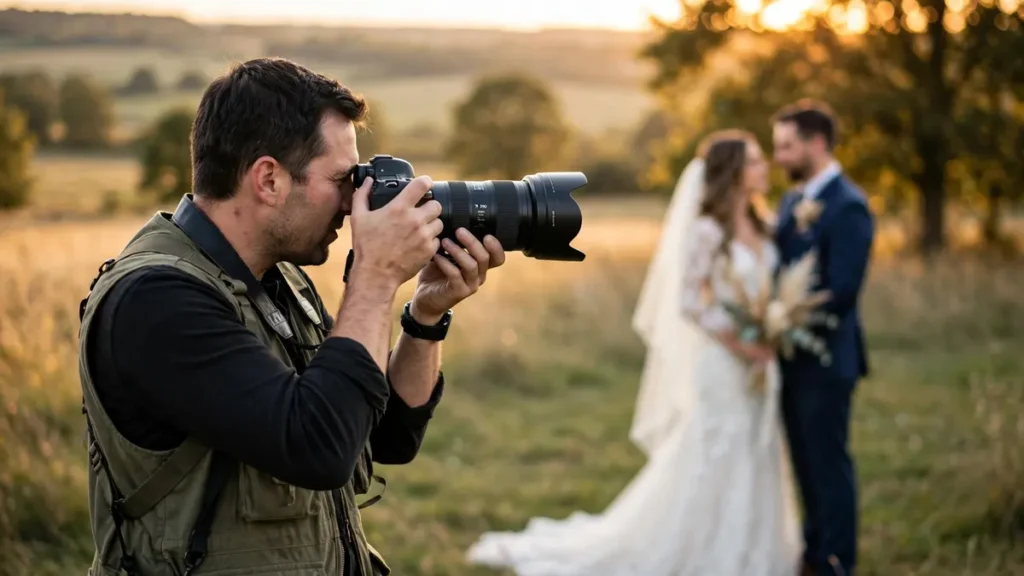
Wedding photographers work at the event end of the market. They are usually self-employed, charge per event rather than per hour, and are busiest in summer and fall. A booking bundles shooting, editing, and delivery into a single price, and reputation drives demand, so established wedding photographers with full calendars sit well above the national median, while newcomers competing on price sit below it.
Portrait photographers, including family, school, and headshot photographers, work closer to the middle of the range. Sessions are priced per sitting, with prints or digital files sold on top. School and sports portrait work pays per session but runs at scale, while boutique family portrait work charges more per client and depends on a strong local reputation.
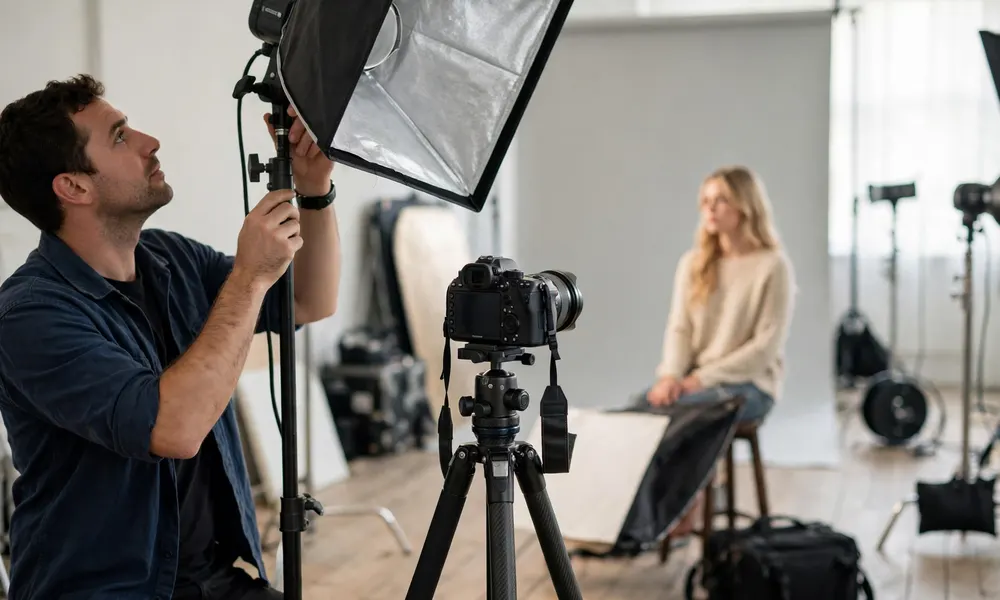
Commercial photographers, who shoot products, advertising, and corporate work, have the clearest route to the top of the pay range. Clients are businesses with marketing budgets, images are often licensed rather than sold outright, and a single campaign can pay far more than a day of portrait sessions.
Photojournalists and news photographers are more likely to be employed by a newspaper, wire service, or broadcaster, which means steadier pay but less upside, and the work can involve travel at short notice and irregular hours. Real estate and event photographers fall between the two, with per-shoot pricing that rewards speed and reliability.
The practical lesson is that speciality is a business choice as much as a creative one. Commercial and wedding work reward marketing, pricing confidence, and client management, while employed news and studio roles reward reliability and consistency. If you want to move toward the top of the pay range, the fastest lever is usually the client you serve, not the camera you own. Our guide to the Best Online Courses for Making Money 2026 covers courses that teach those business skills.
Pay by State
Location changes photographer pay more than almost any other factor. The District of Columbia had the highest median by far at $110,970 a year, though with only 260 wage and salary jobs, it reflects a small group of well-paid staff photographers in government and media. New York was next at $60,050, followed by Massachusetts at $57,990, Oregon at $53,630, and Utah at $52,140. At the other end, Arkansas had the lowest published median at $32,810, with Idaho close behind at $33,320.
The states with the most jobs tell a different story. California had the most photographer jobs at 7,980, with a median of $47,840, followed by Florida at 4,390 jobs and a $42,640 median, and Texas at 4,330 jobs and a $41,280 median. Big markets offer more work, but not necessarily the highest pay: New York pays far more than California or Texas, and Illinois, with 2,150 jobs, had a median of only $36,570. The largest metro market, Los Angeles-Long Beach-Anaheim with 4,290 jobs, had a median of $47,840, well below the New York-Newark-Jersey City area at $60,050.
| State | Median per year | Jobs |
|---|---|---|
| District of Columbia | $110,970 | 260 |
| New York | $60,050 | 3,650 |
| Massachusetts | $57,990 | 830 |
| Oregon | $53,630 | 510 |
| Utah | $52,140 | 660 |
| California | $47,840 | 7,980 |
| Colorado | $47,070 | 1,140 |
| Virginia | $46,550 | 1,580 |
| Florida | $42,640 | 4,390 |
| Texas | $41,280 | 4,330 |
| Illinois | $36,570 | 2,150 |
| North Carolina | $37,120 | 2,130 |
| Idaho | $33,320 | 190 |
| Arkansas | $32,810 | 240 |
Employed or Self-Employed: The Split That Shapes Pay
The single most important fact about photographer pay is that about two thirds of photographers were self-employed in 2025. That means the official median of $44,660 describes the minority who draw a wage, while most photographers set their own prices, find their own clients, and cover their own costs. A self-employed photographer’s income is revenue minus expenses, not a salary, so comparisons with the median need care.
Employed photographers work for studios, media companies, schools, and government agencies. Their pay is steadier, hours are more predictable, and benefits may be included, but the ceiling is lower and the work is assigned rather than chosen. Self-employed photographers keep the upside, but they also absorb slow months, unpaid admin, equipment costs, and marketing.
For anyone weighing the two paths, the honest trade is stability against control. An employed role is the safer way to learn the craft and build a portfolio, and many successful freelancers start there. Going independent makes sense once you have a client base, a body of work, and enough savings to survive a quiet season.
How to Earn More as a Photographer
Moving into the top quarter of photographer pay, above $62,740 a year, is less about gear than about positioning. The photographers who earn the most tend to serve clients with budgets, which means commercial work, high-end weddings, and corporate clients rather than low-price volume work. Raising prices is uncomfortable, but charging too little is the most common reason talented photographers stay near the bottom of the range.
Licensing is the second lever. Selling a client the right to use an image, rather than handing over unlimited use for a flat fee, turns one shoot into recurring income and protects the value of the work. Learning the basics of usage rights, contracts, and invoicing pays for itself quickly, and it is what separates a working professional from a hobbyist with a good camera.
How to Become a Photographer
The formal barrier to entry is low. The Bureau of Labor Statistics lists a high school diploma or equivalent as the typical entry education, with no related work experience required and moderate-term on-the-job training. Many photographers study through classes, a certificate, or a degree, but postsecondary education is not always required. What matters most is the portfolio: art directors and clients judge photographers by their pictures, not by their diplomas.
The usual path starts as an assistant to a professional photographer, which builds practical skill, contacts, and a portfolio at the same time. Photographers also need to learn photo-editing software, since editing is now half the job. For anyone planning to go independent, our guide to the Best Freelance Jobs 2026 covers the freelance landscape beyond photography, including how to find clients and set rates.
Job Outlook: What Comes Next
The outlook is the sobering part of the picture. The Bureau of Labor Statistics projects photographer employment to fall 0.7% between 2025 and 2035, from about 145,000 jobs to about 144,000, a loss of roughly 1,000 jobs. That compares with projected growth of 3.5% for all occupations. The Bureau names one factor behind the decline: more images are now produced by artificial intelligence tools in place of some photographers.
The decline does not mean there is no work. About 10,700 openings a year are still projected on average from 2025 to 2035, mostly from photographers who retire or move into other occupations. Demand will hold up best where a human behind the camera still matters: weddings, portraits, events, and commercial work where the client wants a specific eye and a reliable professional on site.
Frequently Asked Questions
How much does a photographer make an hour?
The median wage for photographers was $21.47 an hour in May 2025, and the average was $26.64 an hour, according to the Bureau of Labor Statistics. The lowest-paid tenth earned $14.82 an hour or less, while the highest-paid tenth earned $44.14 an hour or more.
Do you need a degree to be a photographer?
No. The typical entry education is a high school diploma or equivalent, with moderate-term on-the-job training. Clients and employers judge photographers mainly by their portfolio.
Which state pays photographers the most?
The District of Columbia had the highest median at $110,970 in May 2025, though with only 260 wage and salary jobs. Among states, New York was highest at $60,050, followed by Massachusetts at $57,990.
Is photography a dying career?
Employment is projected to fall 0.7% from 2025 to 2035, largely because artificial intelligence tools now produce some images. Even so, about 10,700 openings a year are projected, and demand remains strong for weddings, portraits, and events.
How long does it take to become a photographer?
The Bureau of Labor Statistics says the skill is typically built over years of practice, often starting as an assistant to a professional. There is no fixed timeline.
Do most photographers work for themselves?
Yes. About two thirds of photographers were self-employed in 2025. That is why official wage figures, which cover employees only, describe just part of the profession.
The Bottom Line
Photography in 2026 pays a median of $44,660 a year for employed photographers. State matters enormously, with New York and Massachusetts paying far more than Arkansas or Idaho, and speciality matters just as much, with commercial and established wedding work sitting at the top of the range. The official figures only cover employees, though, and two thirds of photographers work for themselves.
If you are considering photography as a career, go in with open eyes. The entry barrier is low and the work is rewarding, but the outlook is flat and the income is uneven. Build a strong portfolio, learn the business side early, pick a market with real budgets, and treat pricing as a skill, not an afterthought.

Keep what speaks to you.
Leave room for your own perspective.


