
The best AI tools for outdoor fruit cage installation startups in 2026 turn a garden full of raspberry canes, a customer who is tired of losing every currant to the birds, and a van full of steel posts into a booked, priced and finished cage before the first post hole is dug. A fruit cage installation startup lives on work that looks simple from the garden gate and turns complicated the moment the ground is inspected, because a cage that should take two days can take five when the soil is heavy clay, the plot slopes more than anyone admitted, the mesh arrives in the wrong width, or the customer changes their mind about the door position halfway through the build. The right tools watch all of that at once, so a small crew can quote honestly, arrive with the right kit, and finish on time while still giving each customer the feeling that their garden is the only job that matters that day.
A fruit cage installation business is really several small services sharing one van, one phone number and one reputation. Every week brings a different mix of work: a compact walk-in cage over a strawberry bed for a family that wants to pick fruit without a net thrown over the plants, a tall steel cage over rows of raspberries and blackcurrants for a keen grower, a wide cage over a mixed soft-fruit plot for a smallholding, replacement mesh on a cage whose old netting has torn or sagged, and the repair jobs where a storm has bent a post, a door has dropped on its hinges, or birds have found the one gap the last installer left. A fruit cage is an open mesh enclosure, not a covered growing house: steel or aluminium posts, bird-proof mesh or netting pulled tight over the top and sides, an access door that opens and closes cleanly, and ground anchoring that holds the whole frame square in wind. There is no climate control inside, no heating and no sealed cover, and that simplicity is the point. The fruit grows in open air and real weather, and the mesh simply keeps the birds out.
When any part of that mix is handled in a separate notebook, a separate app or a separate inbox, the whole week wobbles. A missed message becomes a lost booking, a crew sent without the right mesh width becomes a wasted day, and a quote that took three days to arrive becomes a job won by a faster rival. This guide compares the nine AI tools that fit an outdoor fruit cage installation startup best, judged on what a new business actually needs: low starting cost, no long contract, useful from the first week, and able to grow with the business from a two-person crew to a team with its own yard. The tools below cover the whole job, from the first photo of a sloping garden to the final invoice, and every one of them is specific to the mesh-enclosure build: posts, netting, doors and anchoring, not a different structure dressed up as a fruit cage.
Key Takeaways
- A fruit cage is an open mesh enclosure over soft fruit, built from posts, bird-proof mesh, an access door and ground anchoring, with no climate control and no sealed cover.
- Quote from a measured site, not from a guess: a photo-based survey and a proper materials estimate stop the two most common losses, wrong mesh widths and under-priced labour.
- Buy the cage kit, the mesh and the anchoring from suppliers who know soft fruit, and run the business side on tools built for small installation crews.
- Keep the door, the mesh tension and the ground fixings as three separate checks on every handover, because each one fails in its own way.
- Start with one cage size done brilliantly, a short list of local growers and gardeners, and a follow-up visit after the first fruit season.
What a Fruit Cage Installation Startup Actually Builds
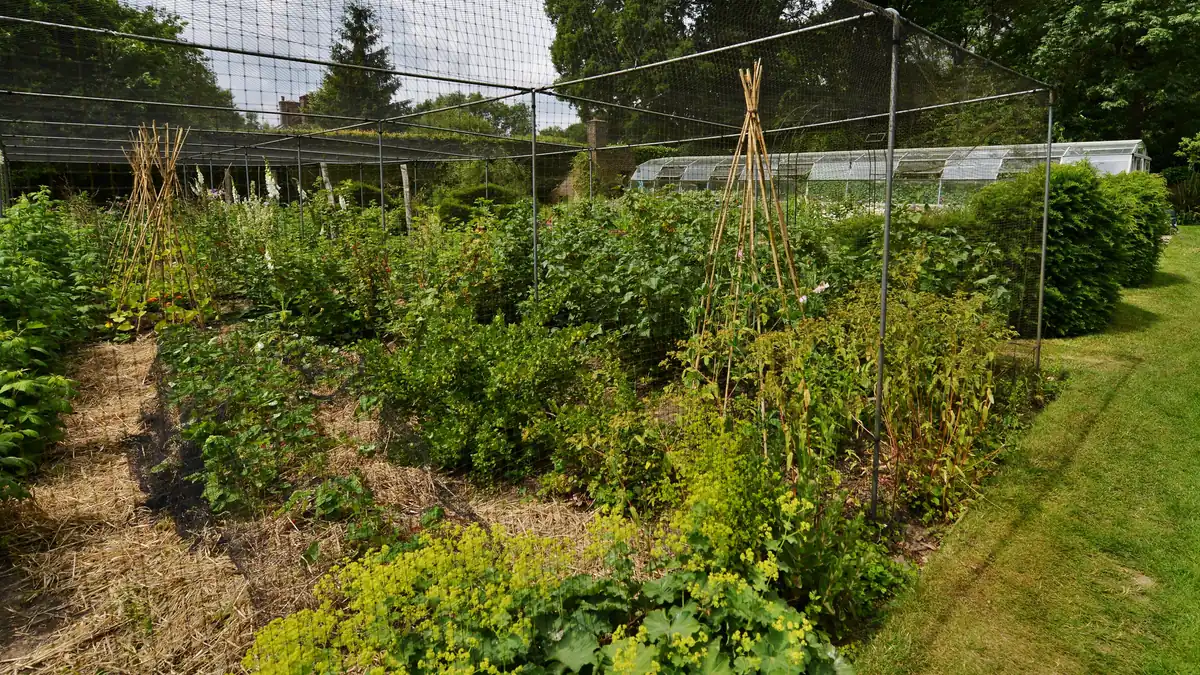
A fruit cage protects soft fruit from birds while leaving the plants in open air. The classic customers grow raspberries, blackcurrants, redcurrants, gooseberries, strawberries and blueberries, and they all share the same complaint: the birds take the crop just as it ripens. A thrown-over net tangles, sags onto the fruit and tears, so a proper cage is a permanent frame the gardener can walk inside. Posts go in at measured intervals, a roof frame carries the mesh over the top, the sides are netted down to the ground, and a door lets the gardener in with a trug and a pair of secateurs. The plants are pruned, picked and tended from inside, and the birds stay outside. That walk-in access is what separates a real fruit cage from a sheet of netting, and it is the detail customers notice first when they use the cage every day.
It helps to be clear about what a fruit cage is not, because customers often use the wrong word for the structure they want. A polytunnel is a covered tunnel that creates a sheltered growing climate, and the work of building one is different enough that polytunnel installation startups need their own kit, their own covers and their own way of pricing a job. A fruit cage has no cover to pull over a frame and no climate to manage, so the skills that matter most are accurate measuring, square framing, neat mesh work and solid anchoring. Some customers will ask whether a cage or a covered structure suits them better, and the honest answer depends on what they grow and how much shelter their plot needs, but the cage itself stays an open mesh enclosure, and a startup that keeps its offer focused on that build will quote faster, carry less stock and make fewer mistakes than one that tries to sell every garden structure at once.
How We Compared the Tools
We judged every tool on the same five questions, and we judged them for a fruit cage installer, not for a builder in general. First, does it help with the mesh-enclosure build itself, the measuring, the mesh, the door or the anchoring, rather than with a different structure? Second, can a new business afford it in month one, without a long contract or a big upfront payment? Third, does it save time on a real job, on site, in the van or at the kitchen table in the evening? Fourth, does it work for a two-person crew as well as for a larger team, so the business does not have to change systems the moment it hires? Fifth, does it make the customer experience better, with a clearer quote, a tidier handover or a faster answer to a question?
The 9 Best AI Tools for Fruit Cage Installation Startups
These nine tools cover the whole job, from the first site photo to the invoice and the follow-up visit. The first four are the trade supplies the cage itself is built from, and the last five are the AI and business tools that run the company around the build. Together they are a complete starter stack for a new outdoor fruit cage installation startup.
1. Harrod Horticultural: The Best Tool for Complete Steel Fruit Cage Kits
Harrod Horticultural is the first name most British fruit growers reach for when they want a steel fruit cage, and it earns that place by selling the cage as a complete kit rather than as a pile of parts. The kits arrive with posts, roof bars, fittings, mesh and a door, all cut and matched to the same size, so a new installer does not have to work out which tube fits which connector on a customer’s lawn. That matters more than it sounds, because the most common beginner mistake is ordering parts from three suppliers and discovering on site that nothing quite matches. A complete kit removes that risk, and it gives a new business a reliable price to quote against, since the kit price is known before the site visit ends.
The kits also suit the way a startup actually grows. A small cage over a strawberry bed uses the same system as a tall walk-in cage over raspberries, only with taller posts and a bigger footprint, so the crew learns one way of building and repeats it at different sizes. The door is part of the kit, with hinges and a latch that are made for the frame, which solves the door problem that ruins so many home-made cages. When a customer asks for a bigger cage next year, the installer can extend the same system rather than starting again, and that repeatability is worth more than a small saving on a cheaper set of parts.
2. LBS Horticulture: The Best Tool for Posts, Fittings and Spare Parts
LBS Horticulture is the supplier to know when a job is not a standard kit, or when a cage needs parts rather than a whole new frame. It stocks the posts, connectors, brackets, ground sleeves and fixings that hold a fruit cage together, and it stocks them as individual lines, so an installer can order four extra posts, a replacement door hinge or a bag of clips without buying a second cage. That is the difference between a supplier and a kit seller, and a working installer needs both. Kits cover the standard jobs, and a parts supplier covers everything else: the awkward plot, the repair, the extension and the customer who already owns a frame and only needs it re-meshed.
3. Wondermesh: The Best Tool for Bird-Proof Mesh and Netting
Wondermesh is the mesh itself, and the mesh is the part of a fruit cage the customer judges every day, because it is the part they look through. Good mesh is strong, fine enough to keep out small birds, and open enough to let in light, air and pollinators, and Wondermesh netting is made for exactly that balance. The mesh comes in widths that suit cage roofs and sides, it holds its tension without stretching out of shape, and it can be cut, joined and fixed without fraying into a mess. For a new installer, that reliability is the difference between a cage that looks crisp on handover day and one that sags within a month.
Choosing the mesh is also a pricing decision, and it is one that beginners often get wrong by buying the cheapest netting they can find. Cheap netting stretches, tears at the fixings and needs replacing sooner, and the customer remembers the installer who fitted it. A named, fit-for-purpose mesh costs more per metre and costs far less over the life of the cage, because it stays taut, it survives the seasons and it does not need an early call-back. Quote the mesh by the job, not by the roll, and show the customer a sample before you order, so they can see the difference between a fine bird-proof mesh and a coarse net that a determined blackbird will push through.
4. ScrewFast Foundations: The Best Tool for Ground Screws and Post Anchoring
ScrewFast Foundations supplies the ground screws that hold a fruit cage upright, and anchoring is the part of the job that nobody sees and everybody depends on. A fruit cage is a light, open frame with a large area of mesh, which means wind can push against it like a sail, and the only thing resisting that push is the fixing at the foot of each post. A ground screw drives into the soil, grips along its length and holds the post without a bag of concrete or a long wait for a footing to set, which suits a garden job where the customer wants the lawn back to normal by the evening. The installer can set the screws, check them for plumb, and build the frame on the same visit, and that speed is real money on a two-person job.
5. Polycam: The Best Tool for AI 3D Site Measurement From Phone Photos
Polycam turns a phone into a measuring tool, and that is exactly what a fruit cage startup needs on a first site visit. The installer walks the fruit bed with a phone, captures the plot in three dimensions, and comes away with measurements for length, width, slope and the position of trees, fences and paths, without a tape measure stretched across a raspberry bed. The AI in the app stitches the photos into a model and works out the distances, so the quote can be built from real numbers rather than from a pace count and a guess. For a new business, that accuracy is the difference between a cage that fits and a cage that arrives a metre short.
The tool also changes the way the first visit feels to the customer. Instead of a stranger with a clipboard pacing their garden, they see an installer who photographs the plot, talks through the door position and the height, and shows them a model of the space on the spot. That builds trust, and it gives the customer something to look at when they are deciding, which matters when the decision is about a structure that will stand in their garden for years. The model also helps back at the desk, because the installer can check a measurement, look at the slope again, or confirm where the door should go without driving back to the garden.
6. Buildxact: The Best Tool for Quoting and Materials Estimating
Buildxact is the estimating tool that stops a fruit cage quote from being a guess written on the back of an envelope. The installer enters the cage size, the mesh width, the number of posts and the anchoring, and Buildxact works out the materials list and the cost, line by line, so the quote the customer receives matches the order the supplier receives. That match is where small installation businesses lose money, because a quote that forgets the door hinges, the fixings or the delivery charge is a quote that pays for those items out of the installer’s own margin. A proper estimate protects the price and protects the job.
7. Housecall Pro: The Best Tool for Scheduling, Invoicing and Crew Dispatch
Housecall Pro runs the diary, the crew and the money for a small installation business, and it does it from one place. The installer books the site visit, sends the quote, schedules the build day, dispatches the crew and sends the invoice without retyping the customer’s details five times, and the customer gets reminders and updates that keep them informed without a string of phone calls. For a two-person crew, that single system replaces the notebook, the wall calendar and the spreadsheet that used to disagree with each other, and it means a missed appointment becomes rare rather than routine.
The invoicing side is where Housecall Pro earns its keep in the first year. The invoice goes out on the day the cage is finished, the customer can pay from their phone, and the business can see at a glance which jobs are paid, which are waiting and which need a polite reminder. That cash flow matters more to a new startup than almost anything else, because materials for the next cage are bought with the money from the last one. Keep the job notes in the same system, with the cage size, the mesh used and the anchoring, and the business builds a record that makes every future quote and every future repair faster.

8. DroneDeploy: The Best Tool for Aerial Site Surveys and Plot Mapping
DroneDeploy gives a fruit cage installer a view of the garden from above, and that view answers questions a walk around the plot cannot. A drone flight maps the fruit beds, the fences, the trees, the slope and the access route for the van, and the AI in the software measures the distances and marks the boundaries on the map. For a large cage, or a cage on a smallholding where the fruit rows stretch across a field, that aerial survey is faster and more accurate than pacing the ground, and it shows problems early, like the overhanging branch that will snag the roof mesh or the wet corner where the anchoring will need extra care.
9. Notion AI: The Best Tool for Client Records, Care Notes and Follow-Ups
Notion AI is the memory of the business, and a fruit cage business needs a good memory. Every customer has a cage size, a mesh type, a door position, a soil note and a fruit list, and Notion AI keeps those details in one searchable place, drafts the follow-up messages, and summarises the site notes into a handover sheet the crew can read in the van. When a customer rings in spring to ask about re-meshing, the installer who can pull up the original job in seconds sounds like a professional, and the one who has to dig through old notebooks does not.
Use Notion AI for the work that happens after the cage is built, because that is where repeat business comes from. Send a short care note after the first season, remind the customer to check the mesh after a storm, and note which fruit they grow so the follow-up feels personal rather than generic. Keep a simple page for each customer, a page for each cage size with its materials list, and a page for the lessons from jobs that went wrong. Within a year, that notebook becomes the most valuable tool in the business, because it holds everything the business has learned about real gardens and real fruit.
At a Glance: The 9 Tools Compared
| Tool | Best For | What It Replaces |
|---|---|---|
| Harrod Horticultural | Complete steel fruit cage kits | Mixed parts from several suppliers |
| LBS Horticulture | Posts, fittings and spare parts | Guessing at repair parts |
| Wondermesh | Bird-proof mesh and netting | Cheap netting that sags and tears |
| ScrewFast Foundations | Ground screws and post anchoring | Concrete footings and long waits |
| Polycam | AI 3D site measurement from photos | Tape measure and pace counts |
| Buildxact | Quoting and materials estimating | Envelope quotes that forget items |
| Housecall Pro | Scheduling, invoicing and dispatch | Notebook, calendar and spreadsheet |
| DroneDeploy | Aerial site surveys and plot mapping | Pacing large plots by hand |
| Notion AI | Client records and follow-ups | Scattered notes and lost details |
How to Price a Fruit Cage Job
Price a fruit cage job in three parts, and show the customer all three: the kit and materials, the labour, and the anchoring and extras. The materials price comes from the kit and the mesh, the labour price comes from the time the build takes on that ground, and the anchoring price comes from the soil you actually found on the visit. A small walk-in cage over a strawberry bed is a one-day job for two people, a tall cage over several raspberry rows is two days, and a wide cage on a slope with stony ground can take longer, so the quote should reflect the ground, not just the size. Never price a cage from a photograph alone without a site visit, because the ground is where the surprises live.
What to Buy First: A Starter Kit for Month One
In month one, buy the tools that win the next job, not the tools that look impressive on a shelf. That means a Polycam subscription for measuring, Buildxact for quoting, Housecall Pro for the diary and the invoices, and a first order of mesh and fittings from the suppliers above, with one standard cage kit in the size you expect to sell most. Add Notion AI for your records, because it costs little and saves hours. Leave the drone until the larger plots arrive, and leave any second cage size until the first one is selling well. A new installer who can measure, quote, build and invoice cleanly with five tools will beat a rival who owns ten tools and uses none of them properly.
Some of your first customers will already have another garden structure, and they will ask how a fruit cage fits beside it. A customer who grows under glass, for example, may want a cage for the soft fruit that does better outside, and the honest comparison is worth learning: our guide to greenhouse installation startups explains the covered-structure trade, while a fruit cage stays an open mesh enclosure for fruit that wants real weather. Knowing the difference, and being able to explain it in plain words, is what turns a one-structure enquiry into a customer who trusts your judgement.
The 6-Point Launch Checklist
Work through this list before you take your first paid booking, and check each item off only when it is genuinely done. A fruit cage business is simple enough to start quickly, and that speed is a trap if the basics are missing, so treat the checklist as the launch itself, not as paperwork to do later.
- Choose one standard cage size, price it fully, and build one for practice before you sell it.
- Set up measuring, quoting and invoicing, and test them end to end on a pretend customer.
- Order mesh, posts, fittings and ground screws, and keep the common spares in the van.
- List the fruit you protect, from raspberries to currants, and learn how each one grows.
- Visit five local gardens or allotments, measure the plots, and leave a clear quote behind.
- Plan the handover: door check, mesh tension check, anchoring check, and a care note.
That last point deserves emphasis, because the handover is where a good cage becomes a recommended business. Walk the customer around the finished cage, open and close the door together, show them how the mesh is tensioned and where the anchoring sits, and tell them what to check after a storm. Customers who understand their cage look after it better, and they remember the installer who took the time to show them. The same care applies to the fruit itself: a cage that protects a vegetable garden installation startups guide would recognise as a working food garden, with soft fruit beside the vegetables, earns its place in the garden far more easily than a cage treated as a piece of garden furniture.
Mistakes That Cost New Fruit Cage Installers Money
The most expensive mistake is quoting without measuring, because a cage ordered a metre short cannot be stretched and a cage ordered a metre long wastes mesh, posts and a day of labour. Measure the plot properly, check the slope, and confirm the door position with the customer before you order anything. The second mistake is buying cheap netting, which sags, tears and brings you back for a free repair that eats the profit from the job. The third is ignoring the ground, which is how a cage ends up leaning after the first winter. The fourth is a door that drags, because a door is used every day and a customer who fights their door every morning will not recommend you. The fifth is forgetting the follow-up, because a customer who never hears from you again will find another installer when the mesh needs replacing.
Frequently Asked Questions
How much should a fruit cage installation startup spend on AI tools?
Most new startups spend a modest monthly amount in the first year, roughly the cost of one small job spread across the month, with the measuring, quoting and scheduling tools as the first subscriptions. Start with the tools that win jobs, add the rest as the order book grows, and review every subscription each quarter against the time it actually saves.
What is the first AI tool a new fruit cage installation company should buy?
Buy the measuring tool first, because every quote depends on accurate measurements. A phone-based 3D survey tool pays for itself on the first job it saves from a wrong mesh order, and it makes the site visit feel professional from day one.
Can AI tools really measure a garden and a fruit cage site accurately?
Yes, for the measurements a fruit cage needs, which are length, width, slope and the position of fences, trees and paths. Check the model against a tape measure on your first few jobs, and keep checking on awkward plots, but a good photo-based survey is accurate enough to order mesh and posts with confidence.
Do fruit cage installers need different AI tools from greenhouse installers?
Yes, in the parts that matter. A fruit cage is an open mesh enclosure with posts, netting, a door and anchoring, while a covered structure needs a different kit, different materials and different pricing, so the suppliers and the estimating templates are different even when the business tools look similar.
How do fruit cage installation startups find clients?
Start with local growers, allotment holders and gardeners, and with the gardens you can visit and measure in person. A tidy first cage, a clear quote and a follow-up visit bring more work than any advert, because fruit growers talk to each other and recommend the installer whose cage still stands straight.
What should a fruit cage installation startup charge for a fruit cage job?
Charge for materials, labour and anchoring as three separate lines, with a deposit that covers the kit before you order it. Small walk-in cages are typically a one-day job for two people, larger cages take two days or more, and the price should reflect the ground as well as the size.
Bottom Line
A fruit cage installation startup succeeds on simple things done well: a cage measured properly, posts set square, mesh tensioned neatly, a door that closes cleanly, and anchoring matched to the ground. The nine tools in this guide cover those things and the business around them, from the first photo of a sloping garden to the invoice and the follow-up visit. Start with one cage size, learn the gardens near you, and build cages that still stand straight after five seasons, and the work will follow.

Keep what speaks to you.
Leave room for your own perspective.


