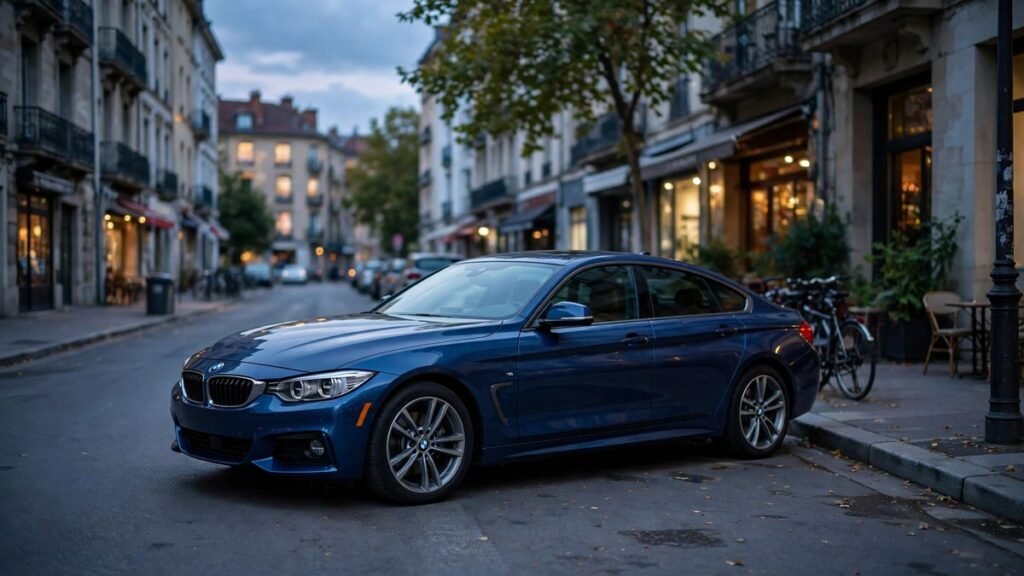
Three letters can carry a century of history. Most people who see BMW on a car know it means a premium German vehicle with sharp handling. Far fewer know what the letters stand for, or why a company that once built aircraft engines ended up making famous cars. The answer is short, but the story behind it is much bigger than a translation.
BMW stands for Bayerische Motoren Werke, which translates into English as Bavarian Motor Works. The name tells you two things: where the company comes from, and what it originally did. Bavaria is the large state in southern Germany where BMW was founded and where its headquarters still stands in Munich. Motoren Werke points to the company’s roots in building engines, long before it became known for luxury cars and motorcycles.
In this Face Zem guide, we will unpack the full meaning of the name, trace BMW from aircraft engines through motorcycles to the cars that made it famous, and clear up the long-running story about its blue-and-white logo. We will also look at the models that defined each decade and compare BMW with its great German rivals.
Key takeaways
- BMW stands for Bayerische Motoren Werke, meaning Bavarian Motor Works in English.
- The company began in Munich, Bavaria, in 1916, building aircraft engines before moving into motorcycles and cars.
- The blue-and-white roundel reflects the colours of Bavaria, not, as the famous myth claims, a spinning propeller.
- BMW built its reputation on sporty handling and strong engines, from the 2002 to the 3 Series and the M cars.
- The three letters are a German name, but the brand is now recognised in almost every country.
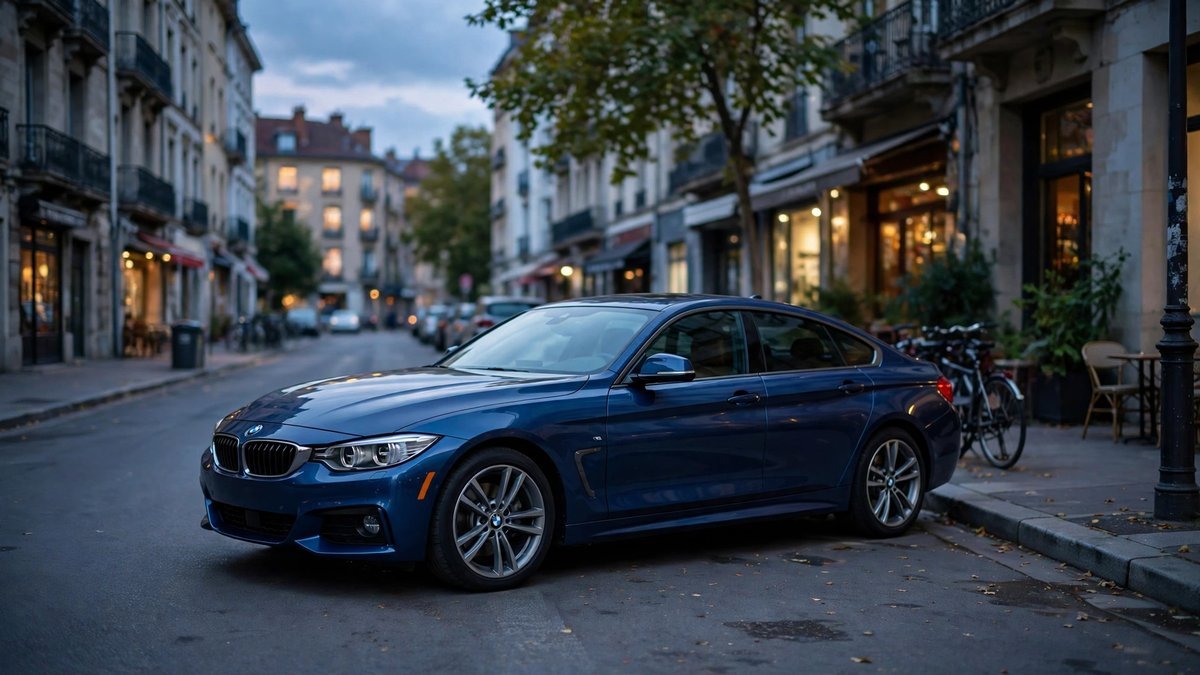
What Does BMW Stand For?
BMW is short for Bayerische Motoren Werke, or Bavarian Motor Works in English. The full name is rarely used today, because the initials have become a brand in their own right. Saying the full German name still helps, because it connects the modern car maker to its place of origin and its original trade.
The name was registered in 1917, a year after the company was founded in Munich in 1916. Until then it was known as Bayerische Flugzeugwerke, or Bavarian Aircraft Works, and the change reflected a wider ambition: to build engines of many kinds, not only for aircraft. That ambition has shaped the company ever since, from its early motorcycles to its modern sports cars and electric vehicles.
Breaking Down the German Name Word by Word
Each word carries a piece of the story. Bayerische means Bavarian, or of Bavaria, the southern German state whose capital is Munich. Even as BMW grew into a global business, it kept that Bavarian identity at the heart of its name.
Motoren is German for motors or engines, and Werke means works or factory. Together, they describe a factory that makes engines, which was exactly what the young company did. The translation sounds old-fashioned today, but it reminds us that BMW began as an engineering company first and a car brand second. The cars came later; the engines came first.
From Aircraft Engines to the Road: BMW’s Early History
BMW’s story begins in Munich in 1916, in the middle of the First World War, when demand for reliable aircraft engines was enormous. The company grew out of two earlier firms involved in aircraft and engine building, and its first products were engines designed to power planes.
After the war, the Treaty of Versailles banned Germany from building aircraft and aircraft engines, and BMW had to find a new direction. It pushed the firm into new markets, including railway brakes, farm equipment, and, most importantly, motorcycles. That forced change set BMW on the road that would lead to cars.
The First BMW Motorcycles
BMW’s first great success on two wheels came in 1923 with the R32 motorcycle, the first bike to carry the BMW name. It used a flat-twin boxer engine, with its cylinders sticking out sideways, and a shaft drive instead of a chain. Both became hallmarks of BMW motorcycles for decades, and the boxer engine is still a signature of the brand’s bikes today.
The R32 was also a racing success, and racing helped to build the BMW name in the 1920s and 1930s. Fast, reliable motorcycles proved the company could build engines that lasted under pressure. Today, BMW Motorrad, the motorcycle division, remains known for touring, adventure riding, and advanced technology.
BMW’s First Cars and the Road to Fame
BMW entered the car business in 1928, when it bought a small car maker called Dixi and began building the Dixi 3/15, based on the British Austin Seven. It was a modest start, but it gave BMW a foothold in the car market. By the 1930s, BMW was building elegant sports cars such as the 328, a lightweight roadster that won races across Europe and is still regarded as one of the great pre-war sports cars.
The road after the Second World War was harder. BMW’s Munich factory was badly damaged, and the company struggled through the 1950s, at one point coming close to being taken over by a rival. The turnaround came with the Isetta bubble car, which kept the company alive, and then with the New Class saloons of the 1960s. The New Class established the formula BMW still follows: a compact, sporty saloon with a strong engine, rear-wheel drive, and rewarding handling.
The Blue-and-White Roundel: What the Logo Really Means
The BMW logo is one of the most recognisable badges in the world: a circle divided into four quarters, blue and white, surrounded by a black ring carrying the letters BMW. The colours are not random. Blue and white are the colours of Bavaria, and the roundel is a stylised version of the Bavarian flag. It is, in other words, a badge of home, just as the name is.
The logo has changed only slightly over the decades. The letters have been refined and the blue adjusted, but the basic design has stayed the same for more than a century, so a driver today sees essentially the same badge that sat on a BMW motorcycle in the 1920s.
The Propeller Myth: True or False?
Ask many people what the BMW logo shows, and they will tell you it is a spinning aeroplane propeller against a blue sky. The story is so widely repeated that it appears in books, films, and countless articles, and BMW itself once used the image in advertising. A famous 1929 advertisement showing the roundel as a propeller helped to fix the idea in the public mind.
The truth is more ordinary. The logo was not designed as a propeller, but as a roundel in the colours of Bavaria, and the propeller reading came later, helped by that advertisement and by the company’s history as an aircraft engine maker. The myth survives because it is a good story, and it shows how clever marketing can outlive the facts.
Famous BMW Models Through the Decades
Every decade of BMW’s history has a model that sums it up. The 1930s had the 328, a graceful sports car that proved BMW could build world-class performance machines. The 1960s had the 2002, a small, fast saloon that showed a practical family car could also be fun to drive. The 1970s brought the 3 Series, the backbone of the range ever since, and the larger 5 Series.
Later decades added the M cars, built by BMW M, the motorsport division. Models such as the M3 and M5 turned good saloons into genuine sports cars. In recent years, BMW has embraced electric cars, with the i3 and the i4 showing that driving pleasure can survive the move away from petrol. Through it all, the idea has stayed the same: a BMW should be rewarding to drive. A guide to how to check car fluids is a useful starting point for keeping an engine healthy between services.
BMW vs Mercedes-Benz vs Audi: Name Origins Compared
BMW is one of three great German premium car makers, and comparing their names shows how differently each brand began. Mercedes-Benz took its name from a person, the daughter of an early customer, combined with a founder’s surname. Audi took its name from a Latin translation of its founder’s surname. BMW, by contrast, took its name from a place and a trade.
| Brand | What the name means | Origin of the name | Founded |
|---|---|---|---|
| BMW | Bayerische Motoren Werke, or Bavarian Motor Works | A place, Bavaria, and a trade, building engines | 1916, Munich |
| Mercedes-Benz | Mercedes, a personal name, plus Benz, the founder’s surname | Named after Mercédès Jellinek, daughter of an early customer, and Karl Benz | 1926 as a merged company, with roots in the 1880s |
| Audi | Audi is Latin for listen, translating the founder’s surname Horch, which means listen in German | A Latin version of August Horch’s name, chosen when he left his first company | 1909, Zwickau |
The comparison also shows why the three brands feel different. Mercedes-Benz has always leaned towards luxury and comfort, Audi towards technology and quattro all-wheel drive, and BMW towards sporty handling. The names hint at this: one is a person’s name, one is a clever translation, and one is a statement of where a company comes from and what it builds. A guide to Kelley Blue Book value can help buyers understand what a used BMW, Mercedes-Benz, or Audi is worth before they commit.
What BMW Means to Drivers Today
Today, BMW sells cars in almost every country, with factories in Germany, the United States, China, and elsewhere. Its range runs from compact hatchbacks and family SUVs to luxury saloons, electric vehicles, and high-performance M cars. The brand still promises what it promised in the 1960s: a car that is enjoyable to drive, with precise steering and strong engines.
Owning a BMW also means thinking about the whole cost of running a car, not just the badge. Fuel, insurance, servicing, and tyres all add up, and the same care applies at home, where understanding what a prepaid meter is can help households track their bills. A premium car is only a pleasure if its running costs are under control.
A quick checklist for remembering the BMW story:
- Remember the full name: Bayerische Motoren Werke, or Bavarian Motor Works.
- Remember the place: Munich, in Bavaria, southern Germany, where BMW began in 1916.
- Remember the first trade: aircraft engines, followed by motorcycles and then cars.
- Remember the logo: blue and white for Bavaria, not a spinning propeller.
- Remember the driving idea: sporty handling and strong engines, from the 2002 to the 3 Series.
- Remember the rivals: Mercedes-Benz and Audi have different name stories, but the same German engineering heritage.
Frequently Asked Questions
What does BMW stand for in English?
BMW stands for Bayerische Motoren Werke, or Bavarian Motor Works. Bayerische means Bavarian, Motoren means motors or engines, and Werke means works or factory.
What does BMW stand for in German?
In German, BMW stands for Bayerische Motoren Werke. It has been the company’s official name since 1917, when it replaced the earlier Bayerische Flugzeugwerke, or Bavarian Aircraft Works.
Is the BMW logo really a propeller?
No. The blue-and-white quarters represent the colours of Bavaria. The propeller idea came later, helped by a 1929 BMW advertisement that showed the roundel as a spinning propeller.
When was BMW founded?
BMW was founded in Munich in 1916, as a maker of aircraft engines. It built its first motorcycle, the R32, in 1923, and its first car in 1928. The company has been based in Munich ever since.
What was BMW’s first car?
BMW’s first car was the Dixi 3/15, built in 1928 after BMW bought the Dixi company. It was a small car based on the Austin Seven. The 328 sports car of the 1930s was the first model to make the brand famous for performance.
Why is BMW famous?
BMW is famous for premium cars that are enjoyable to drive, with strong engines, precise handling, and high-quality interiors. Models such as the 2002, the 3 Series, and the M3 built that reputation over decades, helped by motorsport success and the recognisable logo.
Bottom Line
BMW stands for Bayerische Motoren Werke, or Bavarian Motor Works, and those words contain the whole story: a Bavarian firm, founded in Munich in 1916, that began by building aircraft engines and went on to build some of the world’s most loved motorcycles and cars. The blue-and-white logo is a badge of Bavaria, not a propeller, and the brand’s reputation rests on a simple idea: a car should be a pleasure to drive.
Knowing what the letters mean will not change how a BMW drives, but it does change how you see one. The next time you spot that roundel, you will know it stands for a place, a trade, and a history that began long before that car was built.
Note: The history in this Face Zem article is a general guide to the meaning of the BMW name and the company’s background. Readers who want the full official record should check BMW’s own company history.

Keep what speaks to you.
Leave room for your own perspective.