

Net worth is the difference between what you own and what you owe, giving a true picture of your financial health. By regularly calculating and tracking it, you can make smarter financial decisions, set goals, and grow long-term wealth.
Introduction
According to facezem.com, calculating net worth is one of the key skills you can master to gain control of your finances. A lot of people think about their income, but income doesn’t make you rich. It’s what you have versus what you owe that matters. That’s why knowing how to calculate your net worth is a better way to assess your financial position.
The concept of net worth is based on assets less liabilities. It’s a concept that’s internationally recognised in personal finances, business and investments. And once you do, you can assess your success, set goals, and make better financial choices. You can calculate your net worth using a calculator or by hand.
What Net Worth Really Represents
Net worth is the value of all your assets minus the value of all your liabilities. This concept is based on the personal net worth formula that underpins all finance systems.
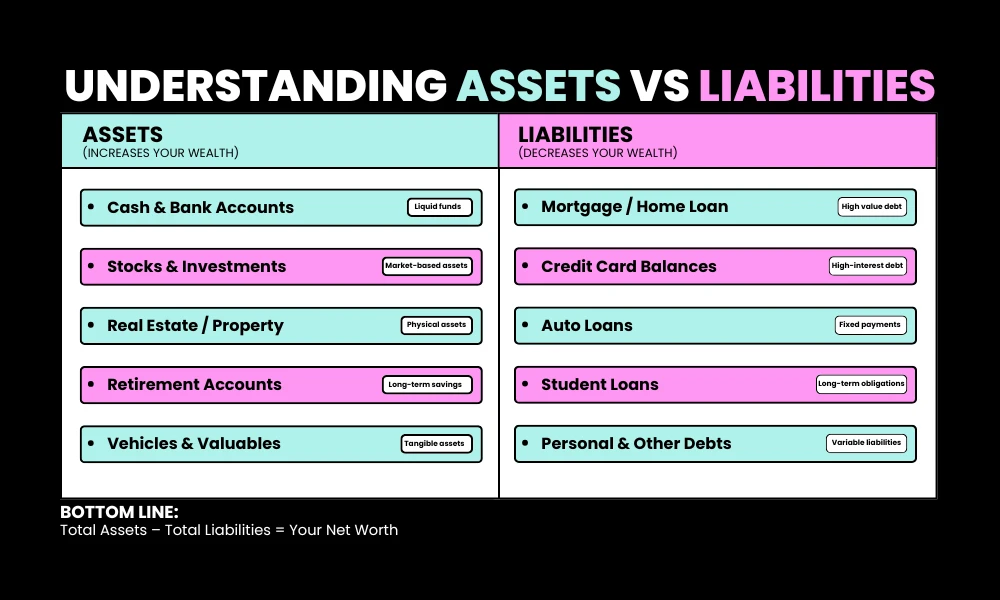
This is important because it shows your true financial state at a given time. While income measures what you earn, net worth measures what you accumulate and build. Knowing how to calculate net worth helps you think about long-term rather than short-term wealth.
To better understand the relationship, consider the structure below:
| Component | Description | Impact on Net Worth |
| Assets | Everything you own with financial value | Increases wealth |
| Liabilities | Everything you owe (debts and obligations) | Decreases wealth |
| Net Worth | Assets minus liabilities | Final financial position |
This table demonstrates the need to balance the two sides. The idea is to increase your assets and decrease your liabilities to increase your net worth.
The Personal Net Worth Formula Explained

The formula for personal net worth is simple:
Net Worth = Assets – Liabilities
All net worth calculators, whether they are spreadsheets or apps, use this formula. Calculating net worth by hand helps you better understand the components rather than blindly relying on technology.
To make this clearer, here is a simple breakdown:
| Step | Action | Result |
| 1 | Add all assets | Total assets value |
| 2 | Add all liabilities | Total debt value |
| 3 | Subtract liabilities from assets | Net worth |
This methodical process ensures clarity and accuracy in using the formula.
Understanding Your Assets in Detail
Your assets are the basis of your wealth. In learning how to calculate your net worth, you need to identify and value your assets. Assets aren’t just cash, they also include investments, real estate, and even collectibles.
A well-organized asset list might look like this:
| Asset Category | Examples | Notes |
| Cash & Bank Accounts | Savings, checking accounts | Easily measurable |
| Investments | Stocks, bonds, mutual funds | Market value changes |
| Real Estate | House, land, rental property | Use current market value |
| Vehicles | Cars, motorcycles | Depreciating assets |
| Retirement Accounts | Pension, 401(k), IRA | Long-term value |
| Personal Assets | Jewelry, electronics, collectibles | Often underestimated |
All these are part of your assets. Use reasonable current values, not cost, in your calculation. This way, your assets minus liabilities figure is accurate.
Breaking Down Liabilities
Liabilities are also important in how to calculate net worth. These are the debts that decrease your net worth. Often liabilities are underestimated, resulting in incorrect net worth calculations.
Here is a clear structure for liabilities:
| Liability Category | Examples | Notes |
| Mortgage | Home loan | Usually largest debt |
| Auto Loans | Car financing | Fixed monthly payments |
| Student Loans | Education debt | Long-term liability |
| Credit Cards | Outstanding balances | High interest rates |
| Personal Loans | Borrowed funds | Variable terms |
| Other Debts | Medical bills, taxes owed | Often overlooked |
When you calculate your liabilities, you’re making sure your personal net worth formula is an accurate representation of your actual net worth.
Applying the Formula in Real Life
With your totals, it’s time to use the formula to calculate net worth. This is where the formula of assets minus liabilities comes into play.
Here is a realistic example:
| Category | Amount |
| Total Assets | $180,000 |
| Total Liabilities | $70,000 |
| Net Worth | $110,000 |
So, a net worth of $110,000 is calculated by subtracting liabilities from assets. This is the same result you would get from a net worth calculator, but calculating it yourself gives you some insight into where all the numbers come from.
Using a Net Worth Worksheet Template
A net worth worksheet is a great way to keep track of your finances. Rather than searching for information, you can keep it organized in one location, thus making it easier to calculate net worth.
Below is a simple and practical net worth worksheet template:
| Section | Item | Value |
| Assets | Cash | – |
| Investments | – | |
| Real Estate | – | |
| Vehicles | – | |
| Other Assets | – | |
| Total Assets | — | |
| Liabilities | Mortgage | – |
| Credit Cards | – | |
| Loans | – | |
| Other Debts | – | |
| Total Liabilities | — | |
| Net Worth | Assets − Liabilities | — |
Regularly tracking net worth with a net worth worksheet helps you stay on track. And it offers a record of past net worth, which is crucial if you wish to monitor your net worth over time.
The Importance of Track Net Worth
It’s helpful to calculate your net worth once, but it’s even more useful to track net worth. This allows you to spot trends, evaluate progress and make changes to your financial plan.

Facezem.com research shows how tracking works over multiple periods:
| Time Period | Assets | Liabilities | Net Worth |
| January | $150,000 | $80,000 | $70,000 |
| June | $165,000 | $70,000 | $95,000 |
| December | $190,000 | $60,000 | $130,000 |
This table illustrates the benefits of regular tracking. You would not gain a clear understanding of how much better your financial situation is.
A net worth calculator can help keep it up-to-date, but using a net worth worksheet can give you the best of both worlds.
Net Worth vs Financial Goals
Another key element of determining how to calculate net worth is to recognise that your net worth changes. It fluctuates with market movements, inflation and the economy.
For instance, the market may increase the value of your investments or it may decrease them. Housing prices can increase, adding to your assets, or decrease, lowering your net worth. The cost of living can also increase, causing your money to be worth less, despite an increase in your net worth.
This is why you need to update your calculations regularly. The net worth calculator and the net worth worksheet help you keep track of them and react appropriately.
Common Mistakes to Watch For
Common mistakes are made when people are learning how to calculate net worth. A common one is overvaluing assets, particularly things such as vehicles or collectibles. Another is underestimating smaller liabilities, which can be substantial.

Another issue is not refreshing the data. Unless you monitor net worth, your numbers will quickly become irrelevant. And using a net worth calculator without knowing the information behind it can lead to poor investment choices.
Improving Your Net Worth Strategically
The next step after understanding how to calculate net worth is to improve it. This involves working with both sides of the net worth equation – assets and liabilities.
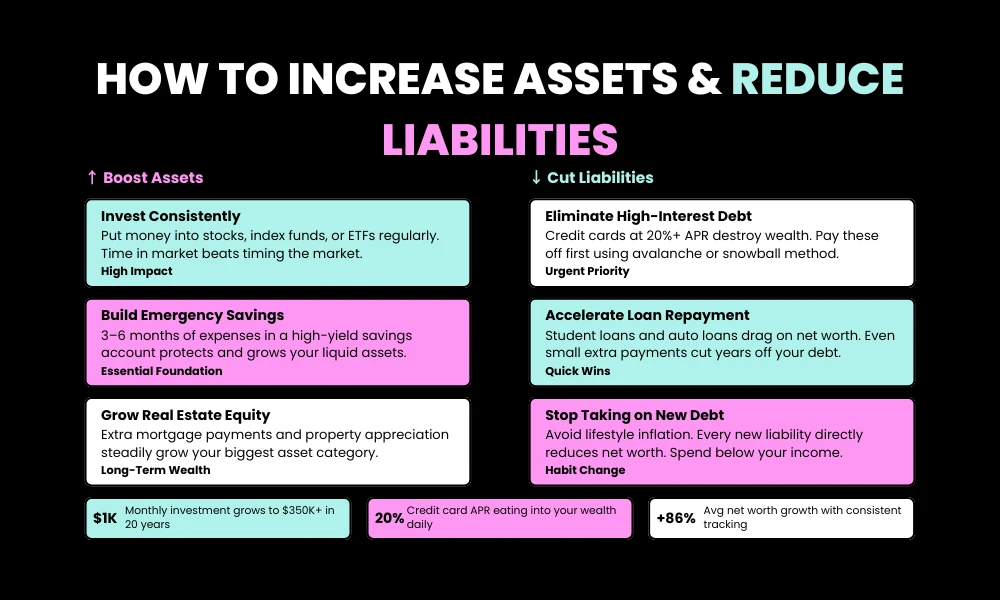
Accumulating assets means saving and investing, and generating income. Decreasing liabilities is all about paying down debt, particularly high-interest debt. Over time, increasing the difference between assets and liabilities results in a growing net worth.
Conclusion
Understanding how to calculate net worth is about more than numbers, it’s about knowledge and control. Using the personal net worth formula, a net worth worksheet, and a net worth calculator, you have a framework for success.
Regularly tracking net worth provides you with an understanding of your financial behaviour and progress. This helps you make informed choices and keep your eyes on the prize. As time passes, these small steps add up.
Ultimately, it’s not about earning money, but managing and building wealth. Being able to calculate net worth is the first step in the process. Visit facezem.com for more!
FAQs
What is net worth in simple terms?
Net worth is the value of everything you own (assets) minus everything you owe (liabilities).
How do you calculate net worth?
Add all your assets, add all your liabilities, then subtract liabilities from assets.
Why is net worth important?
It shows your true financial position and helps you plan, track progress, and build wealth.
How often should I calculate my net worth?
You should update it every 3 to 6 months to track changes and stay financially aware.
What are common mistakes when calculating net worth?
Overvaluing assets, ignoring small debts, and not updating figures regularly are the most common mistakes.