
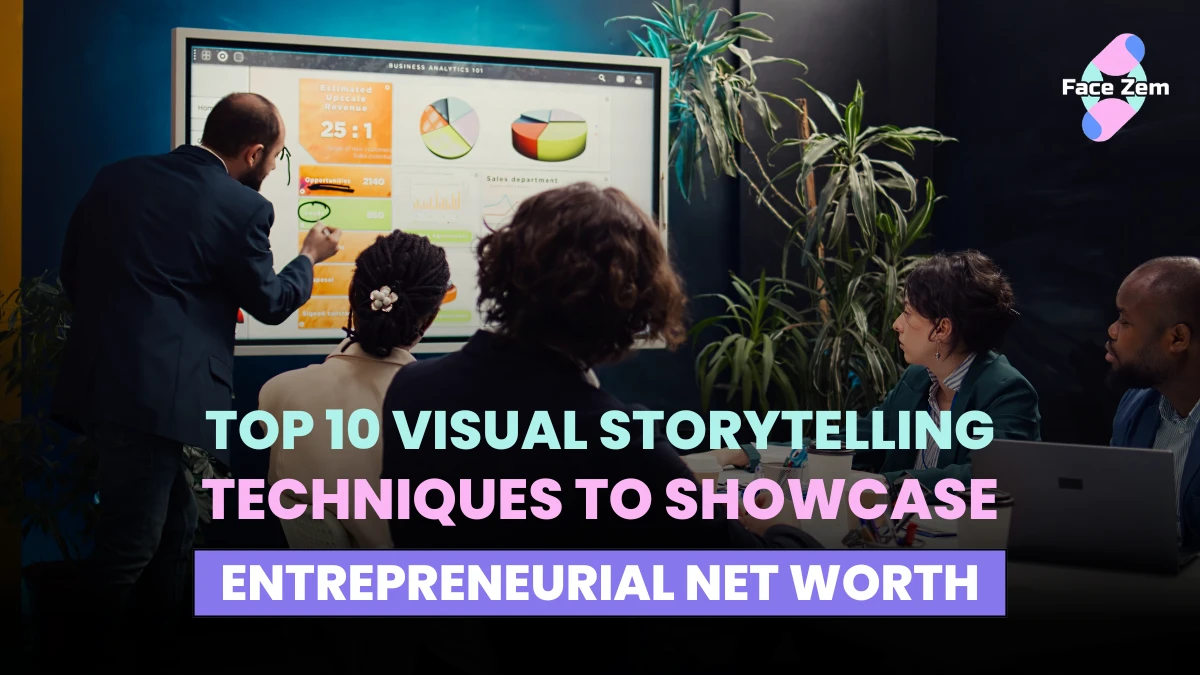
The digital era has brought us into an age of success, one that is visual rather than verbal. Entrepreneurs, marketers, and creators increasingly use visual content to convey their growth stories and economic success.
The tendency in visual storytelling in the United States is to use visuals to explain the story behind wealth creation to the audience.
From startup growth charts to brand milestone visuals, entrepreneurs are using images, infographics, and videos to narrate compelling stories about their progress. These images are not merely numbers; they tell a story of hard labor, perseverance, and strategic choices.
For educational creators and marketers, mastering these techniques can transform common content into potent wealth-narrative images that capture entrepreneurial achievement in key ways.
Why Visual Storytelling Matters for Entrepreneurs
Visual storytelling is very important in shaping people’s perceptions of success. Rather than read long descriptions, viewers can immediately understand a business’s growth trajectory through charts, pictures, and visual timelines.
That is why the concept of how visuals show success has become significant to contemporary entrepreneurs. The story of the founder going through it to become a successful organization can be easily conveyed through a simple visual contrast, such as depicting the office where the founder started and the office they have now.
Powerful images also generate emotional appeal. Real milestones, product launches, or brand performances can bring them much closer to reality, which is why viewers can relate to such stories.
Entrepreneurs should plan their journeys using effective storytelling frameworks that can be broken down into visual images. Such frameworks tend to have an easy-going sequence:
- Founding or initial challenge.
- Landmark events and turning points.
- Growth and expansion
- Getting rich or becoming financially stable.
These types of structures simplify visual storytelling and make it more influential.
Technique 1: Using Personal Brand Portraits

Personal branding is an influential narration. Leadership, credibility, and success can be demonstrated through high-quality portraits of businesspeople.
A well-crafted portrait usually serves as a visual point of reference for an entrepreneur’s history. It enables viewers to relate a face to a brand, which increases trust and recognition.
To creators who have created examples of visual narratives, portraits may reflect various phases in a founder’s life, from before the startup to a leadership position.
Such pictures bring success to life and remind people that all paths to wealth start with a person.
Technique 2: Infographics of Growth & Revenue
Among the best visual storytelling techniques that United States creators consider using to illustrate financial progress, infographics take place.
Complex data can be simplified using revenue charts, business timelines, and milestone graphs.
As an illustration, an infographic can show:
- Startup launch year
- First significant revenue target.
- Market expansion stages
- Financial performance in effect.
Such images help viewers quickly identify growth trends and bring to the forefront visuals of the wealth narrative, presented in a simple format.
Infographics are also well-suited to creative storytelling tips, as they merge design, storytelling, and data into a single visual.
Technique 3: Narrative Photography of Milestones

Key moments in an entrepreneur’s journey can be captured in photography.
There can be pictures of product roll-outs, office growth, team building, or award nights that can be visually documented.
Such instances provide strong examples of visual narratives that demonstrate how a business evolves over time.
Narrative photography does not tell, but shows viewers the results. This strategy enhances the emotional appeal of the entrepreneurial story to the viewers.
Technique 4: Animated Visual Stories
Animation brings life and vibrancy to telling stories.
Short animated videos can be used to depict start-up experiences, periods of growth, or financial success.
An example of this is a simple animated timeline that demonstrates the growth of a business, from the first client to thousands of clients.
Animation can be used to great effect in explaining how visuals depict success, as it brings change and development to life.
These cartoon-based tales are also compatible with current storytelling models, particularly for educational or commercial material.
Technique 5: Behind-the-Scenes Visuals
The audience usually values authenticity. The background images give one an insight into the running of a business.
This could be photographs of brainstorming, product development, or teamwork.
These images make the audience realize the effort that went into the success. They show that wealth creation is not only about the outcomes but also about actions and collaboration.
These are some of the moments that add to the significant wealth narrative visuals as they show the process involved in the result.
Technique 6: Storyboards & Visual Planning

Many creators plan their stories with storyboards before creating visual content.
Storyboarding helps organize the visual narrative so that every detail supports the overall message.
The storyboard of a typical entrepreneurial storytelling could consist of:
- The initial position of the entrepreneur.
- Early challenges
- Breakthrough moments
- Business growth
- Financial achievements
The visual content is structured with well-ordered storytelling, making it relevant and keeping the audience entertained.
One of the most practical creative storytelling tips for creators creating educational or marketing content is to use storyboards.
Technique 7: Using Data Visualization for Wealth
One of the most influential ways to demonstrate financial success is through data visualization.
The increase in revenue, investments reached, or market development can be presented in charts, graphs, and dashboards.
For example, a line graph of steady growth over a number of years can convey the company’s success at a glance.
This is one of the methods at the heart of visual storytelling in the United States because it converts financial information into visuals that are easy to comprehend.
Another way data visualization supports the visuals’ demonstration of success is by transforming numbers into compelling visual stories.
Technique 8: Video Testimonials & Success Stories

Video testimonials give real-life evidence of success.
Experiences of entrepreneurs, team members, or clients can be captured on camera, making the story believable.
When paired with visual elements such as product footage or milestone graphics, these videos become effective examples of visual narratives.
Testimonials are also effective because they build trust, as viewers can see real individuals with real experiences.
This credibility adds visual elements to the narrative of wealth and supports the success story’s message.
Visual consistency across platforms is a technique in which a platform’s visual elements match those of other platforms.
Technique 9: Visual Consistency Across Platforms
Business owners need to ensure they use consistent visuals across websites, social media, and advertisements.
This involves regular colors, fonts, and image styles and design patterns.
Unchanging images help viewers identify with the brand quickly and reinforce the message of success.
A high degree of consistency also enhances visual storytelling in the United States, as it creates a unified visual identity.
Technique 10: Engaging Interactive Visuals

Digital storytelling is becoming increasingly popular, with an interactive outlook.
Such can be interactive charts, clickable timelines, or a dynamic dashboard.
Interactive material enables the audience to learn about the narrative independently. They do not sit back and watch; they are actively involved in the story.
This technique now makes visual narratives’ examples more immersive and memorable.
Interactive illustrations are among the best tips for creative storytelling by educational creators and marketers when presenting intricate financial journeys.
FAQs
1. What are visual storytelling techniques for showcasing net worth?
Visual storytelling techniques net worth United States refer to using images, infographics, videos, and charts to present entrepreneurial success and financial growth.
2. Why is visual storytelling important for entrepreneurs?
Visual storytelling helps entrepreneurs communicate their growth journey clearly and demonstrate how visuals show success to audiences.
3. What are some examples of visual narratives in business storytelling?
Common visual narratives examples include revenue growth infographics, startup milestone timelines, and founder journey videos.
4. How do visuals help explain financial success?
Visuals simplify complex financial data and show progress through charts, images, and timelines, highlighting key milestones.
5. What role do storytelling frameworks play in visual content?
Storytelling frameworks organize visual content into a clear narrative structure such as starting point, challenges, growth milestones, and success.
6. How can entrepreneurs create effective wealth narrative visuals?
Entrepreneurs can create strong wealth narrative visuals using infographics, data charts, narrative photography, and visual timelines.
7. What are some creative storytelling tips for visual content creators?
Some creative storytelling tips include using consistent branding, clear data visuals, authentic storytelling, and engaging multimedia content.
8. How do infographics support visual storytelling about wealth?
Infographics present financial growth, milestones, and achievements in an easy-to-understand visual format.
9. Why do audiences respond strongly to visual success stories?
People process images faster than text, making visuals more engaging and memorable.
10. What mistakes should be avoided in wealth-focused visual storytelling?
Creators should avoid misleading visuals, overcomplicated charts, and focusing only on wealth without explaining the journey.
11. How can marketers use visual storytelling for brand growth?
Marketers can use visuals to showcase company achievements, customer testimonials, and business growth milestones.
12. What types of visuals work best for entrepreneurial success stories?
Charts, infographics, milestone photos, videos, and interactive dashboards are effective formats.
13. What is the future of visual storytelling in entrepreneurship?
The future includes interactive visuals, AI-powered design tools, and data-driven storytelling for stronger audience engagement.